February 19, 2026


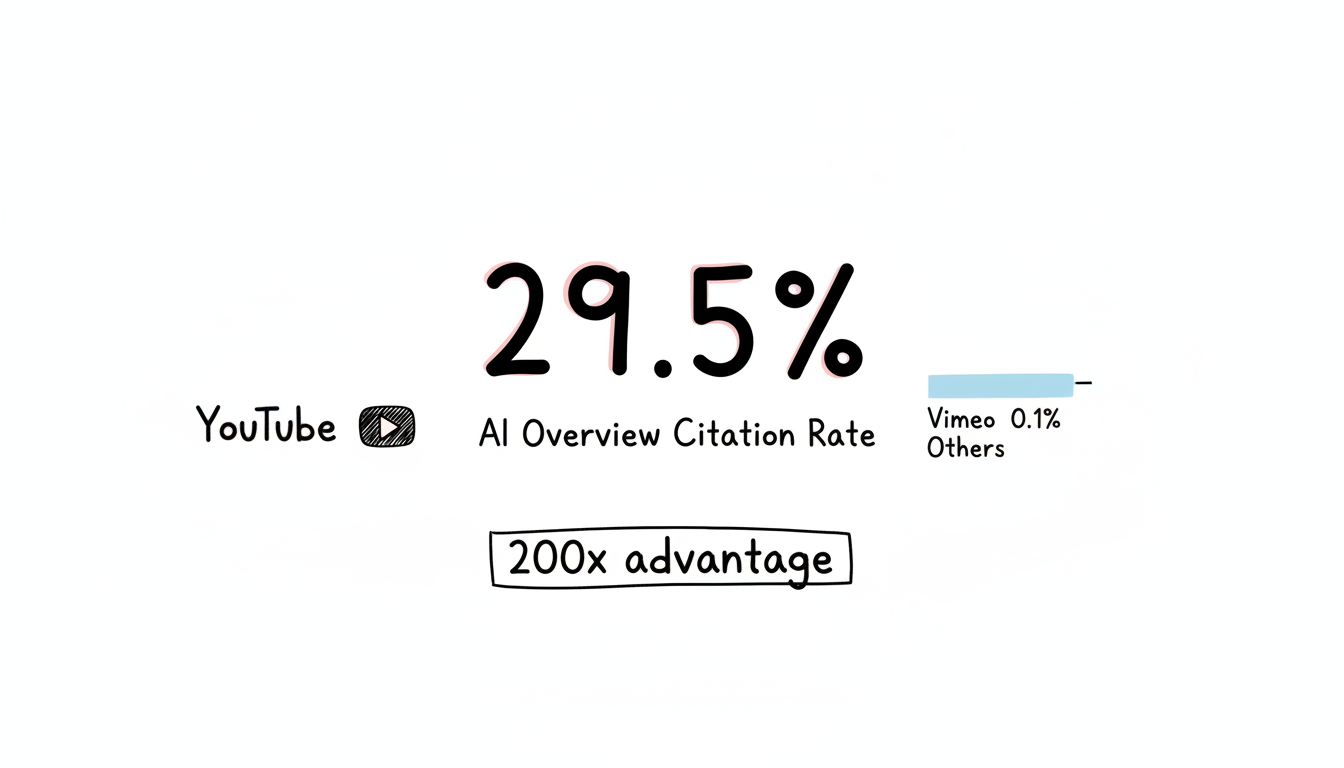
YouTube has become the dominant source for AI-generated answers. According to BrightEdge data reported by Search Engine Land, up to 29.5% of Google AI Overviews cite YouTube—making it the single most-cited domain in AI search results.
This represents a 200x advantage over YouTube's nearest direct competitor (Vimeo at 0.1%). For businesses and content creators, the implication is clear: YouTube SEO is no longer optional in the age of AI search.
This guide covers how to optimize your YouTube content for AI citations, from metadata fundamentals to advanced strategies for earning visibility in ChatGPT, Perplexity, and Google AI Overviews.
The statistics are striking. YouTube captures nearly a third of all AI Overview citations, outpacing every other domain by an enormous margin.
MetricValueSourceAI Overview Citation Rate29.5%BrightEdge/Search Engine LandAdvantage vs. Vimeo200xSearch Engine LandSocial Platform Citations in AI Mode36%Industry dataQuery Types Where YouTube ExcelsTutorials, reviews, how-toMultiple studies
According to LinkedIn analysis of AI SEO trends, social sites now appear in 36% of AI Mode queries, with YouTube leading alongside Reddit, Quora, and LinkedIn.
AI engines favor YouTube content for several structural reasons:
Multimodal richness: Video combines visual demonstrations with audio explanations, providing comprehensive answers that text alone cannot match.
Structured metadata: Titles, descriptions, chapters, and transcripts give AI systems multiple signals to understand and excerpt content.
Authority signals: YouTube's engagement metrics (views, watch time, comments) provide clear quality indicators.
Google integration: As a Google property, YouTube content flows seamlessly into Google's AI systems.
YouTube videos are most likely to appear in AI responses for:
If your content addresses these query types, YouTube optimization for AI citations should be a priority.
Understanding how AI systems process YouTube videos helps inform optimization strategy.
AI engines extract information from YouTube through multiple channels:
Transcripts and captions: AI systems read video transcripts to understand content. This is the primary textual signal.
Metadata parsing: Titles, descriptions, and tags provide keyword and topic signals.
Chapter markers: Timestamps create navigable content sections that AI can cite specifically.
Engagement signals: Views, watch time, likes, and comments indicate content quality and relevance.
Visual analysis: Advanced AI systems can analyze video thumbnails and in-video text.
When AI systems cite YouTube, they typically:
This means your optimization must address each extraction method—not just traditional YouTube SEO elements.
Metadata optimization forms the foundation of YouTube AI visibility. Here's how to structure each element for AI citation potential.
Traditional YouTube titles optimize for click-through rates. AI-optimized titles must also serve as clear content descriptors.
Before (CTR-focused):
You WON'T BELIEVE These Excel Hacks! 🤯
After (AI-optimized):
Excel Pivot Table Tutorial: Create Your First Pivot Table in 5 Minutes
AI Title Best Practices:
YouTube descriptions provide extensive space for AI-parseable content. Use them fully.
Description Structure for AI:
`[Opening summary - 2-3 sentences covering video topic and value]
In this video, you'll learn:
• [Key point 1]
• [Key point 2]
• [Key point 3]
• [Key point 4]
TIMESTAMPS:
0:00 Introduction
1:30 [Section 1 topic]
4:45 [Section 2 topic]
8:00 [Section 3 topic]
12:00 [Section 4 topic]
15:30 Summary
[Expanded content - 200-300 words elaborating on video topics]
RESOURCES MENTIONED:
• [Link 1]
• [Link 2]
[Channel info and CTA]
#keyword1 #keyword2 #keyword3`
Key Elements:
While YouTube tags have diminished in algorithmic importance, they still provide AI systems with topical signals.
Tag Strategy:
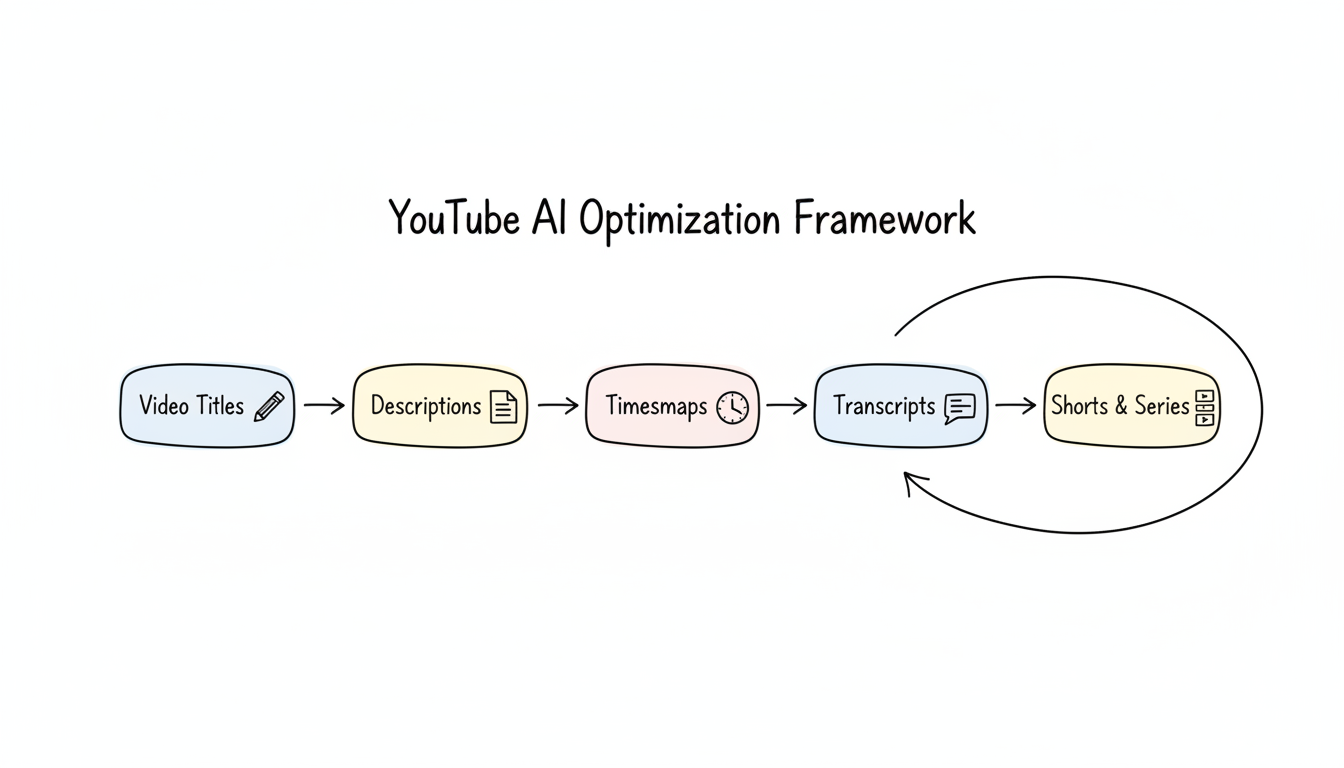
Timestamps (chapters) are crucial for AI citation optimization. They enable AI systems to cite specific video segments rather than entire videos.
AI systems prefer specific answers over general references. Timestamps allow:
Format Requirements:
0:00 Introduction 1:30 What is [Topic] 3:45 Step 1: [Action] 6:20 Step 2: [Action] 9:00 Step 3: [Action] 11:30 Common Mistakes to Avoid 14:00 Advanced Tips 16:30 Summary and Next Steps
Best Practices:
Chapter titles should function as standalone topic descriptors:
Weak:
5:00 The process
Strong:
5:00 How to Set Up Google Analytics 4 Tracking
Each chapter title becomes a potential citation anchor point for AI systems.
YouTube transcripts are the primary text source AI systems use to understand video content. Auto-generated captions contain errors that can corrupt AI extraction.
YouTube's automatic speech recognition typically achieves 85-90% accuracy. That 10-15% error rate causes problems:
For AI visibility, manually review and correct captions:
Step 1: Access transcript
Step 2: Review auto-generated content
Step 3: Upload corrected transcript
Priority Correction Areas:
While natural speech should guide video content, strategic keyword inclusion helps AI citation:
YouTube Shorts (videos under 60 seconds) have gained significant traction in AI search, particularly for quick-answer queries.
According to industry analysis, short-form video including YouTube Shorts achieves visibility that longer content cannot reach. Shorts work for AI because:
Content Strategy:
Metadata for Shorts:
Example Shorts Topics for AI:
AI systems evaluate channel-level authority, not just individual video quality. Building topical clusters through video series strengthens AI citation potential.
Structure topical clusters:
Example Series Structure:
`Excel Mastery Series:
Playlists provide additional AI indexing opportunities:
Beyond video series, strengthen channel-level signals:
Traditional YouTube analytics don't capture AI citation performance. You need additional measurement approaches.
YouTube Analytics (baseline):
Search Console (supplementary):
Manual monitoring:
AI visibility tools:
MetricTargetMeasurement FrequencyAI Citation RateIncrease 10% monthlyWeeklyExternal Traffic from AITrack growthMonthlyQuery CoverageExpand queries with citationsMonthlyChapter-level CitationsTrack section referencesQuarterly
Real examples demonstrate YouTube AI optimization success.
Situation: B2B software company with 50 tutorial videos, minimal AI visibility.
Actions Taken:
Results (90 days):
Situation: Individual creator with strong YouTube presence but no ChatGPT/Perplexity visibility.
Actions Taken:
Results (60 days):
Situation: Product review channel seeing traffic decline from AI zero-click searches.
Actions Taken:
Results (90 days):
Most creators see initial AI citations within 30-60 days of optimization. Full impact typically requires 90 days as AI systems re-index content and build citation history.
Existing content can be optimized through metadata updates, transcript corrections, and timestamp additions. However, new content designed with AI visibility in mind typically performs better.
Both short and long videos can earn AI citations. Shorts work well for quick-answer queries, while longer tutorials are cited for comprehensive explanations. Match length to query complexity.
Manually search your topics in ChatGPT, Perplexity, and Google AI Mode. Look for your video title, channel name, or content excerpts in responses. AI visibility tools like Otterly.ai can automate this monitoring.
Not necessarily. The 29.5% citation rate shows YouTube's importance, but written content still captures 70%+ of citations. Most businesses benefit from both formats, with YouTube handling visual/demonstration content and written content covering detailed guides.
Want to leverage YouTube for AI visibility? Our team audits your YouTube channel for AI optimization opportunities and develops custom strategies for AI Overview citations. Get our YouTube GEO audit and start capturing the 29.5% of AI citations that go to video content.
Related Articles:
By submitting this form, you agree to our Privacy Policy and Terms & Conditions.