February 19, 2026


The shift to AI-powered search has created measurable winners and losers in digital marketing. This article examines documented AI SEO case studies from 2026, revealing the strategies that delivered traffic growth, citation increases, and revenue gains.
According to DemandSage's 2026 AI SEO statistics, AI-driven SEO campaigns produce a 45% increase in organic traffic and a 38% rise in e-commerce conversions on average. These aggregate numbers tell only part of the story—individual case studies reveal far more dramatic results.
An e-commerce business experienced declining organic traffic as AI Overviews captured clicks that previously went to their product pages. Traditional SEO rankings remained stable, but traffic continued falling.
Growth.pro documented how their AI Citation Engineering approach addressed this challenge through:
The key insight: as traditional organic clicks declined, AI-referred traffic more than compensated when properly optimized.
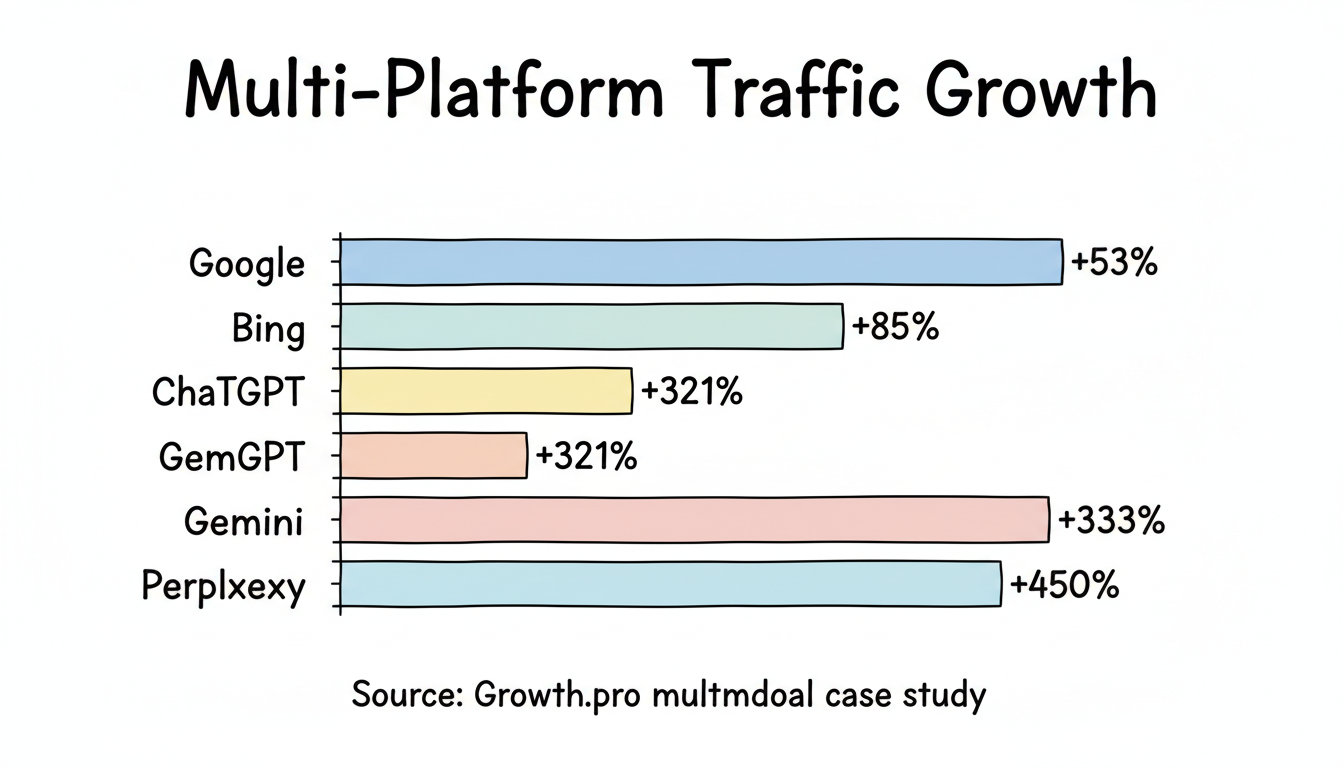
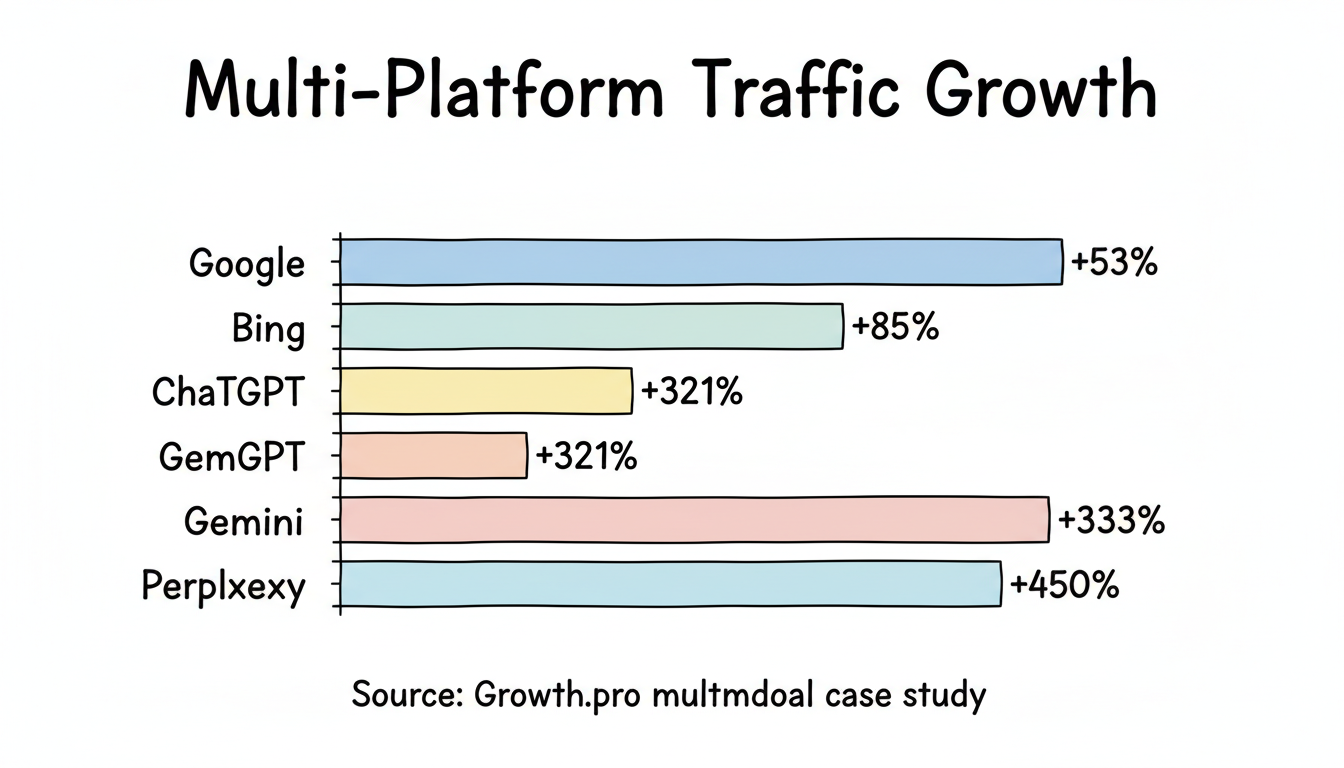
A retail brand saw fragmented visibility across different AI platforms—appearing in some ChatGPT responses but absent from Perplexity and Google AI Overviews.
The team implemented a multimodal content strategy targeting all major AI search platforms:
According to Growth.pro's multimodal case study:
The data confirms that AI search optimization requires multi-platform thinking, not single-channel focus.
A B2B software company found that AI Overviews appeared on 25% of their target informational queries, according to The Ad Firm's 2026 analysis. Prospects researching solutions encountered AI summaries before reaching vendor websites.
The company restructured their content strategy around citation-worthiness:
This case demonstrates that B2B companies can leverage AI search visibility to capture high-intent prospects earlier in the research process.
Beyond individual case studies, aggregate data reveals consistent patterns across AI SEO implementations.
According to DemandSage's 2026 research:
Semrush's analysis of 10 million keywords found:
Analyzing these case studies reveals consistent elements across successful AI SEO campaigns:
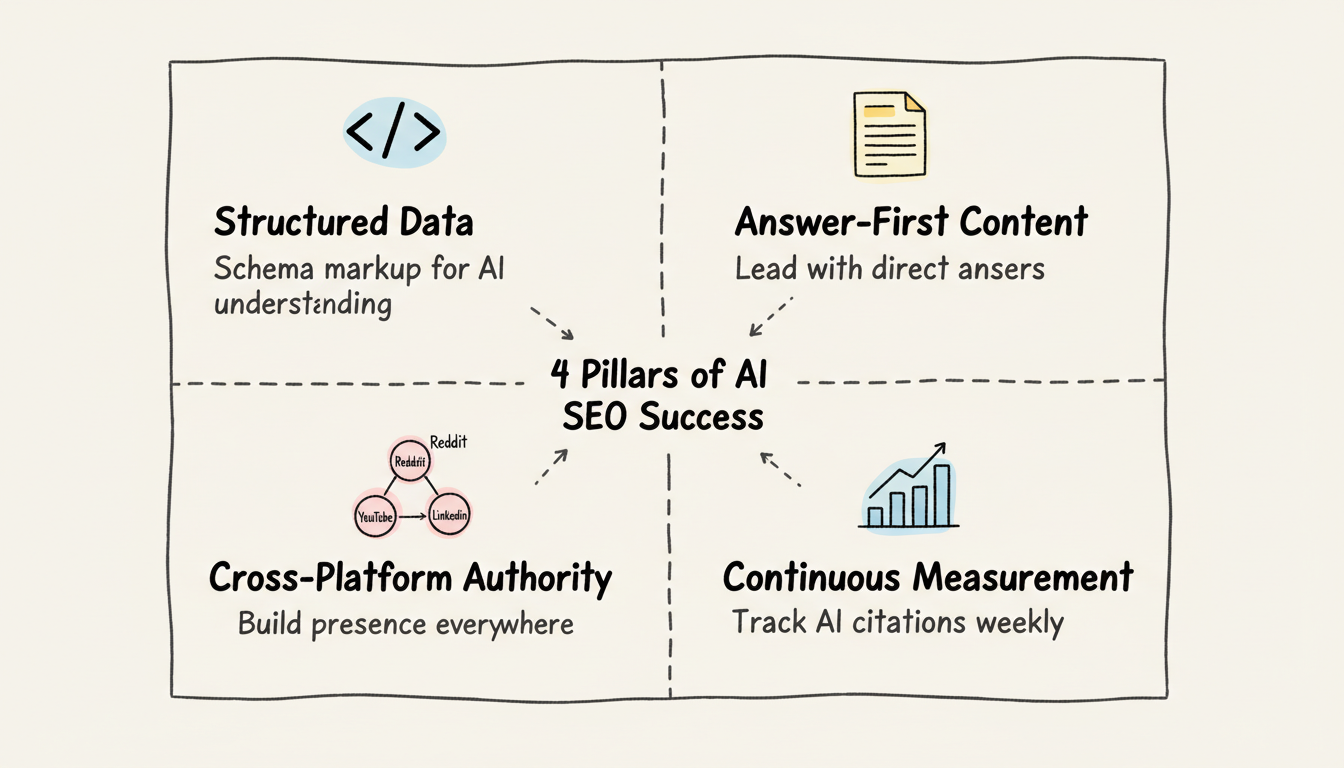
Every successful case study featured comprehensive schema markup. JSON-LD formatted structured data helps AI systems understand and cite content correctly.
Content that leads with direct, concise answers to specific questions consistently outperformed traditional SEO content in AI visibility.
Success required presence across multiple platforms—not just website optimization but active engagement on Reddit, YouTube, LinkedIn, and industry-specific communities.
Top performers tracked AI citations weekly, monitoring which content earned mentions and adjusting strategy based on data.
These case studies offer actionable guidance for businesses beginning their AI SEO journey:
Start with technical foundation: Schema markup and site structure must be in place before content optimization can deliver results.
Focus on citation-worthy content: Original research, expert quotes, and specific statistics earn citations. Generic content does not.
Think multi-platform: AI systems pull from diverse sources. Building authority across platforms creates compounding visibility.
Measure AI-specific metrics: Track brand citations, share of voice in AI responses, and referral quality from AI platforms—not just traditional rankings.
The case studies from 2026 demonstrate that AI SEO delivers measurable business results when implemented systematically. Traffic increases of 300-500% are achievable, but they require strategic focus on what makes content citation-worthy across AI platforms.
The brands succeeding in AI search share a common characteristic: they've become so authoritative on their topics that AI systems cannot provide quality answers without referencing them.
By submitting this form, you agree to our Privacy Policy and Terms & Conditions.