
February 19, 2026


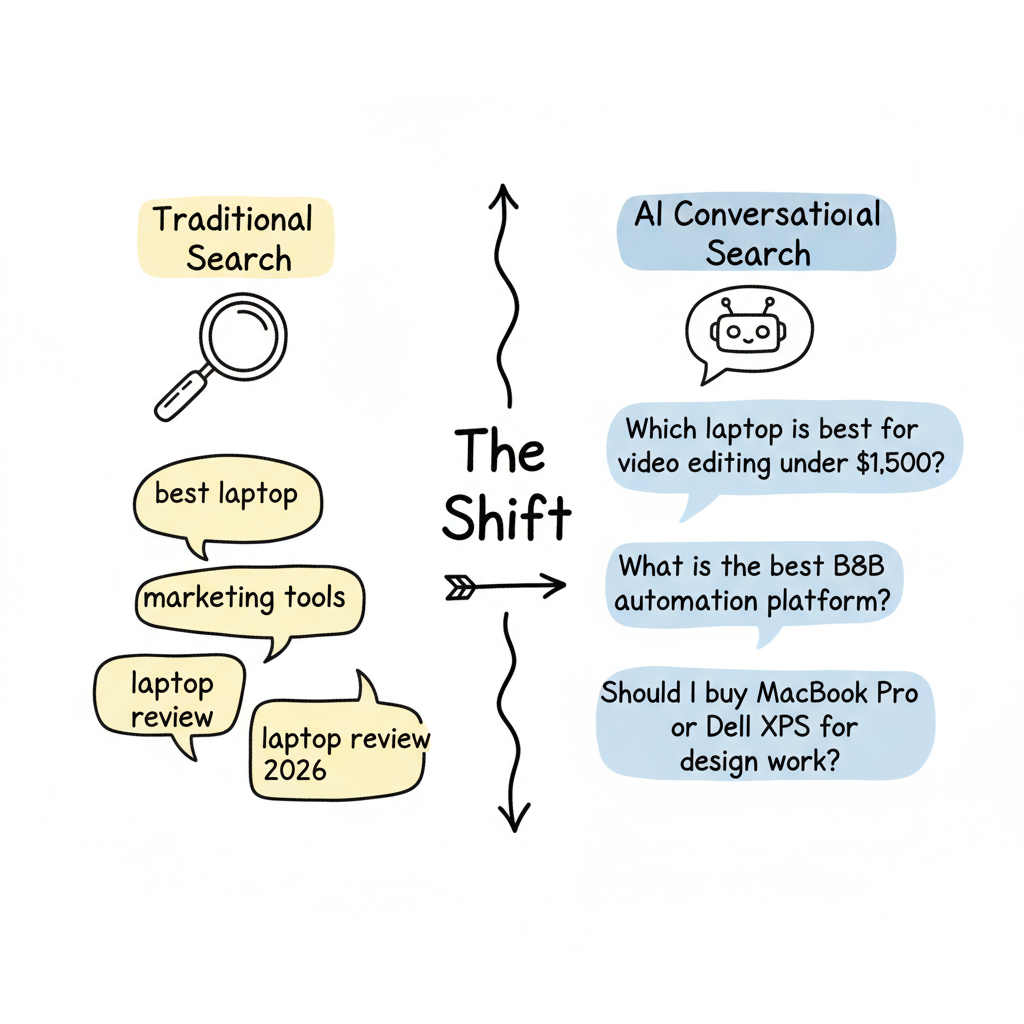
Users don't search the way they used to. Instead of typing "best laptop," they ask: "Which laptop offers the best performance for video editing under $1,500?" AI answer engines mirror how people actually talk—and content that matches conversational patterns earns more citations.
Writing for answer engines isn't about keyword density or algorithmic tricks. It's about sounding like a knowledgeable expert explaining concepts to an intelligent friend. Here's how to craft content that AI systems naturally want to cite.
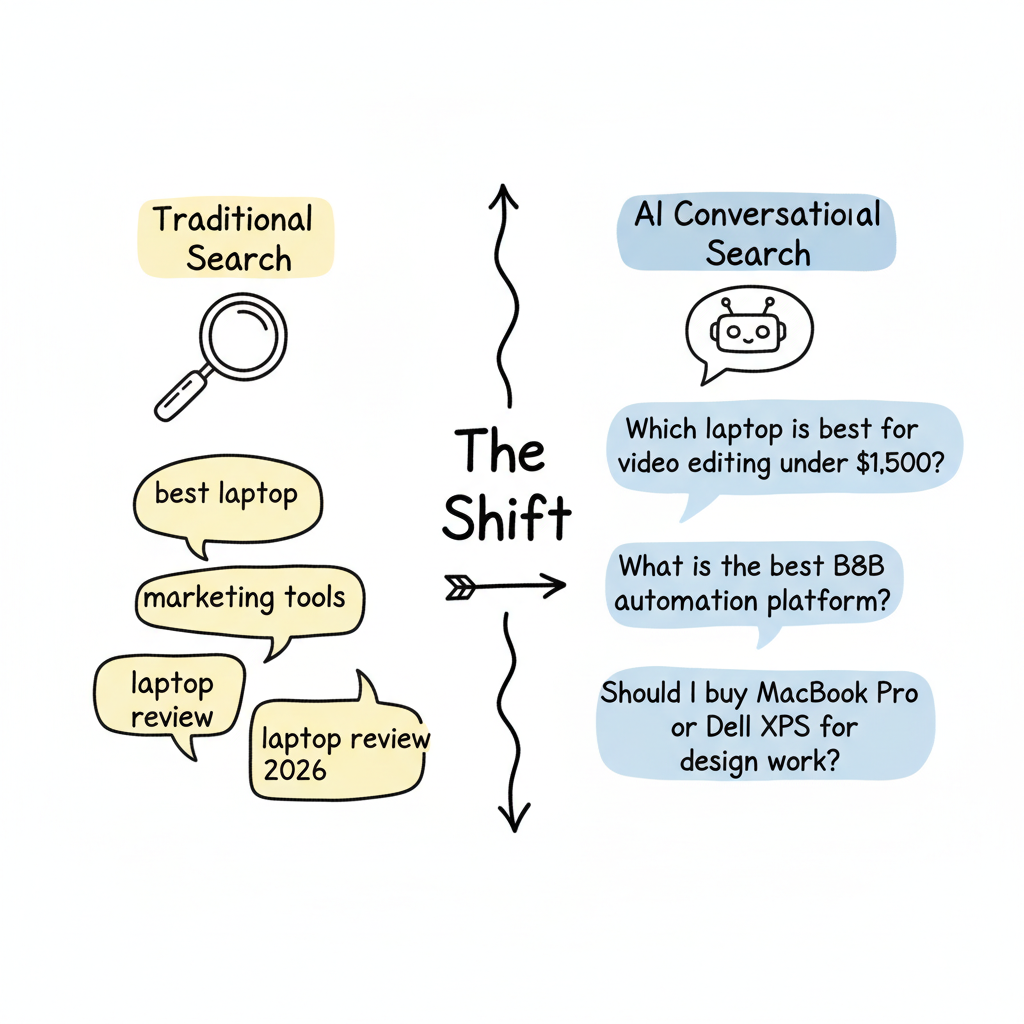
AI platforms prioritize natural, conversational content because that's how users interact with them. People ask ChatGPT questions the way they'd ask a colleague. They phrase Perplexity queries like they're talking to a research assistant.
The conversational shift:
Traditional Search | AI Search |
"best Italian restaurant San Francisco" | "Where can I find authentic Italian food near me in SF?" |
"marketing automation tools" | "What's the best marketing automation platform for B2B?" |
"laptop review 2026" | "Should I buy the MacBook Pro or Dell XPS for design work?" |
Content written for keyword matching often sounds stilted when AI systems try to cite it. Content written conversationally flows naturally into AI-generated answers.
Research shows that natural language content receives significantly more AI citations than formally structured alternatives. AI systems can recognize when content sounds human—and they prefer it. This aligns with broader aeo optimization techniques conversion strategies that prioritize user-centric content.
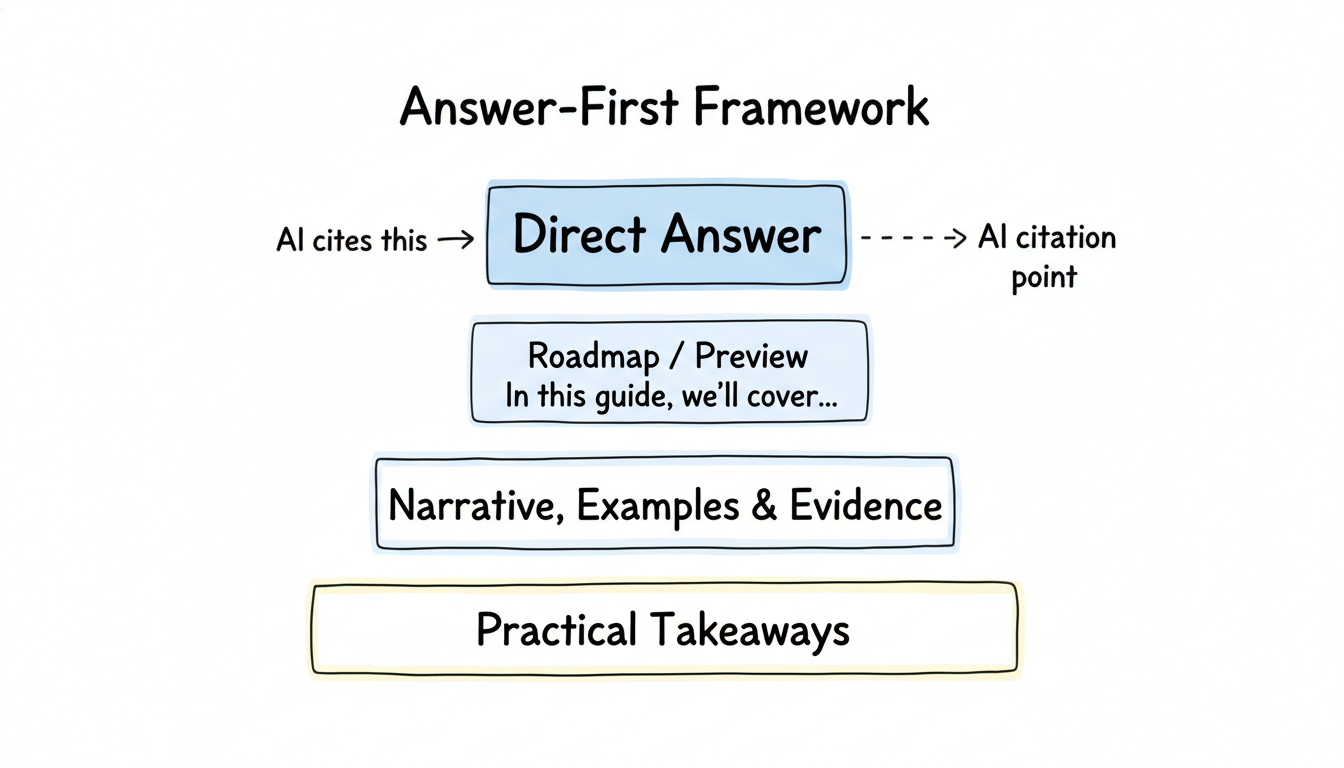
AI systems scan content for extractable answers. If your key insight is buried in paragraph eight, it may never surface in AI responses.
Answer-first framework:
This structure respects how both humans and AI consume information. Users scanning your page find answers quickly. AI systems extracting citations find quotable content immediately.
Example transformation:
Before (buried answer): "Marketing automation has evolved significantly over the past decade. As businesses grow, they often struggle with manual processes. Email campaigns become difficult to manage. Lead scoring gets complicated. Eventually, teams need software solutions..."
After (answer-first): "HubSpot is the best marketing automation platform for mid-sized B2B companies, combining ease of use with powerful integrations. Here's why it outperforms alternatives—and when you might choose a different solution instead."
The second version gives AI systems a quotable recommendation in the first sentence.
People don't ask AI for "marketing automation solutions overview." They ask specific questions. Your headings should match the exact phrasing users type into AI platforms.
Effective question headings:
Question headings create "hooks" that match real user queries. When someone asks ChatGPT your exact heading question, AI systems find your matching content more easily.
Heading optimization tactics:
Listen to how your sales team answers questions. Those phrasings often match how customers query AI platforms.
Conversational content uses varied sentence structures, natural transitions, and accessible vocabulary. It sounds like explanation, not documentation.
Natural language markers:
AI models compare your content against everything available on a topic. Content that reads like a knowledgeable human explaining concepts—not like an algorithm wrote it for robots—earns trust. Understanding the difference between agentic ai vs generative ai examples can help you leverage the right AI tools for content optimization.
What to avoid:
Voice queries represent the purest form of conversational search. Users speak to AI assistants exactly as they'd speak to another person.
Voice search characteristics:
Content optimized for voice search performs well across all conversational AI platforms. The same natural phrasing that helps Alexa cite your content helps ChatGPT and Perplexity too.
Voice optimization tactics:
AI systems don't just evaluate what you say—they evaluate how trustworthy you sound. Conversational authority combines expertise with accessibility.
Authority signals in conversational content:
Expertise doesn't require academic formality. The most cited content often combines deep knowledge with accessible explanation. This approach is particularly effective for businesses leveraging generative ai and seo strategies to enhance their content marketing.
FAQ sections remain powerful for AEO because they directly match question-answer query patterns. But generic FAQs underperform strategically crafted ones.
FAQ best practices:
FAQ structure example:
Q: How much does enterprise AEO cost?
A: Enterprise AEO programs typically range from $50,000 to $500,000 annually, depending on scale and tool requirements. Mid-market companies often start in the $10,000-75,000 range. The investment covers monitoring tools, content optimization, and ongoing strategy—but ROI depends on current visibility gaps and competitive landscape.
This answer provides specific numbers, acknowledges variation, and adds context—all in citation-ready format.
Validate your conversational content by testing it against actual AI platforms.
Simple testing process:
Testing reveals gaps between how you think AI interprets your content and how it actually does. Regular testing creates feedback loops for continuous improvement.
No. Conversational writing combines expertise with accessibility—it's not the same as casual or unprofessional writing. The most cited sources in AI responses often balance deep knowledge with clear, natural explanation.
Analysis shows 2,900+ word articles receive more citations, but length alone doesn't determine success. Depth matters more than word count. Cover topics comprehensively while maintaining readable, conversational flow throughout.
Prioritize high-value pages first. Start with content targeting questions users ask AI frequently—how-to guides, comparison pages, and FAQ content. Test current performance before and after rewrites to measure impact.
By submitting this form, you agree to our Privacy Policy and Terms & Conditions.



