
February 19, 2026


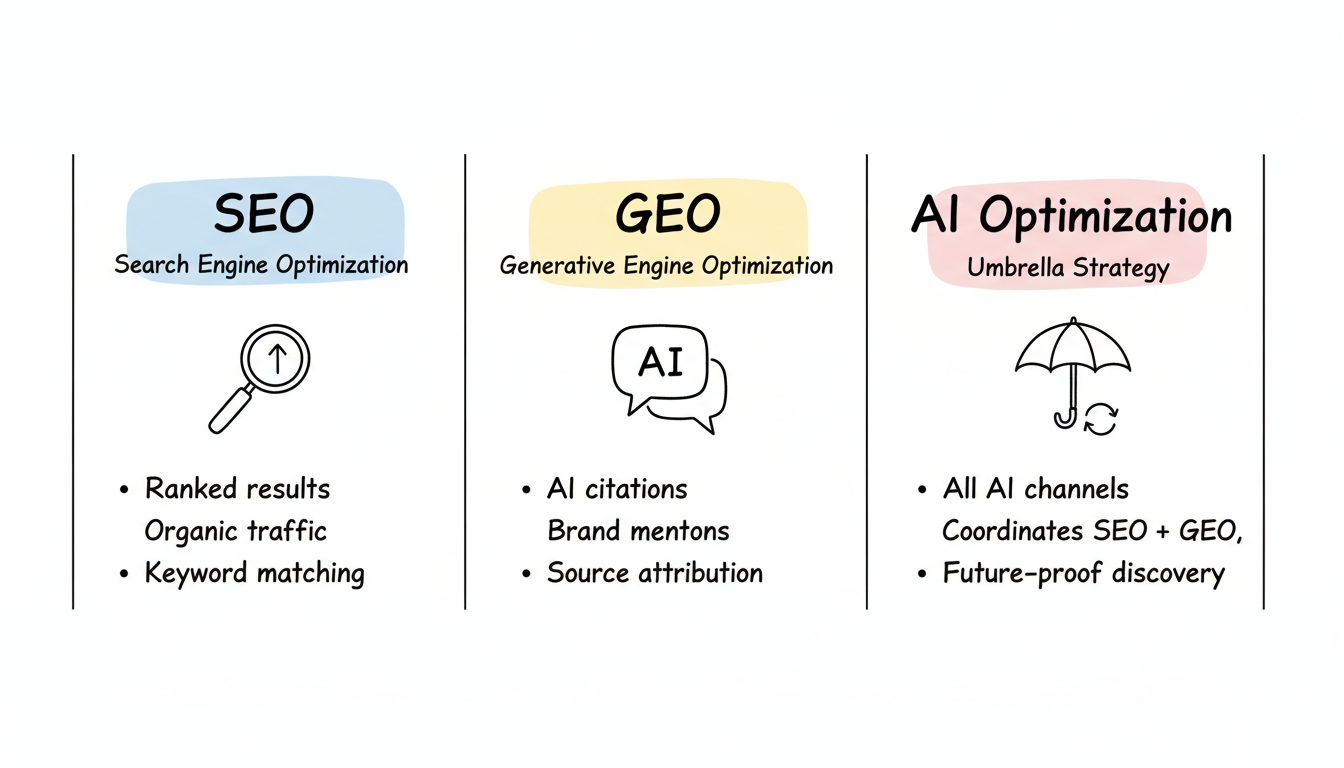
The search optimization landscape now includes three distinct but interconnected disciplines: SEO (Search Engine Optimization), GEO (Generative Engine Optimization), and AI optimization broadly. Understanding how these approaches differ—and where they converge—helps marketers allocate resources effectively and capture visibility across all discovery channels.
This guide breaks down each approach and explains how they work together in the current search environment.
Each optimization discipline addresses different platforms and user behaviors, though they share common foundations.
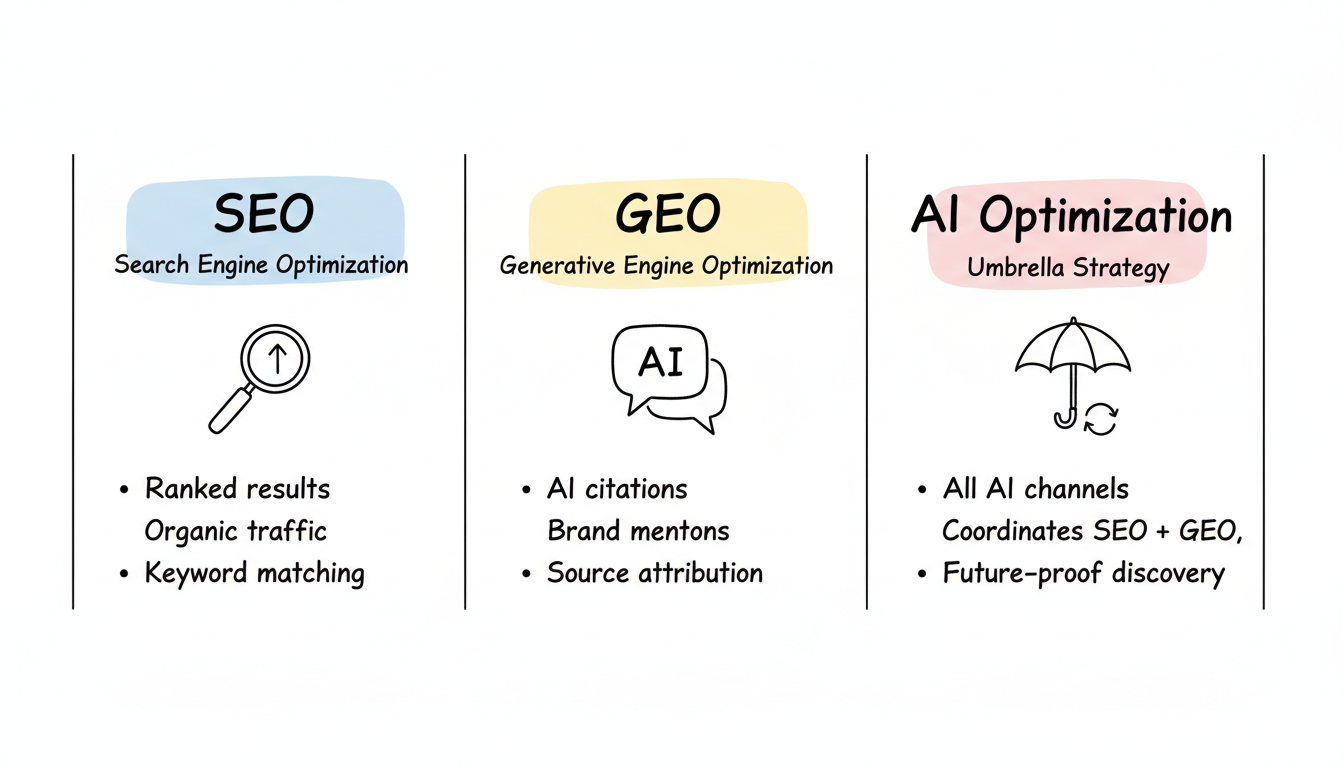
SEO focuses on earning positions in traditional search engine results pages. When users search on Google, Bing, or other search engines, they see ranked lists of links. SEO aims to place your content as high as possible in these rankings.
What SEO optimizes for:
Core SEO tactics:
SEO remains foundational. Despite AI search growth, billions of searches still return traditional ranked results daily.
GEO emerged as AI platforms began generating synthesized responses rather than returning link lists. ChatGPT, Perplexity, Google AI Overviews, and similar platforms answer questions directly, citing sources within their responses.
What GEO optimizes for:
Core GEO tactics:
GEO addresses a different visibility challenge—being quoted rather than ranked. Understanding the perplexity-vs-chatgpt-seo differences helps optimize for each platform's unique citation patterns.
AI optimization encompasses all efforts to appear in AI-mediated discovery, including both answer engines (like Google AI Overviews) and conversational AI (like ChatGPT). It serves as an umbrella covering GEO, AEO (Answer Engine Optimization), and related tactics.
What AI optimization addresses:
AI optimization recognizes that users now discover information through multiple AI interfaces, requiring coordinated strategy rather than platform-by-platform tactics.
These disciplines complement rather than compete with each other. Success in one typically supports success in the others.
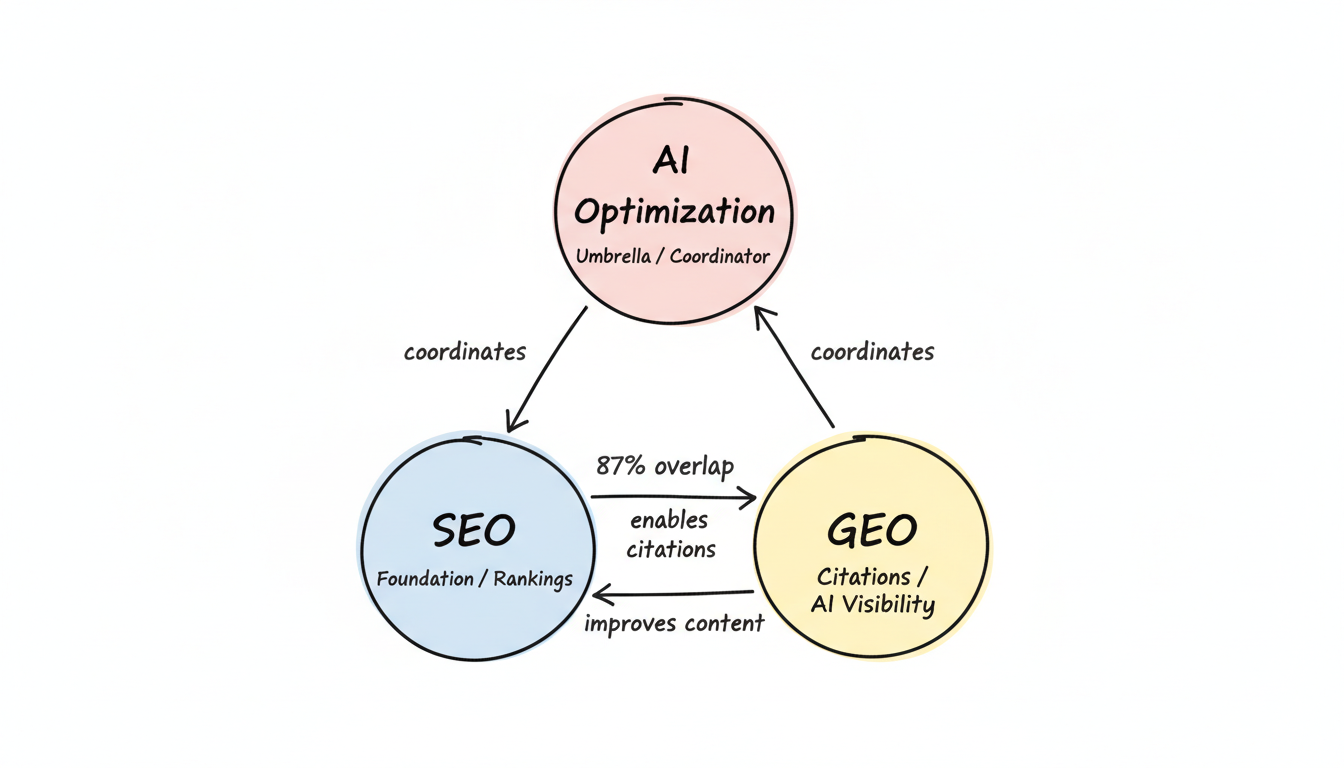
Research consistently shows that traditional SEO performance directly influences AI citation likelihood. Studies find that 87% of Google AI Overview citations come from content ranking in organic positions 1-10. Without strong organic rankings, content rarely earns AI citations regardless of other optimization efforts.
This connection exists because:
Many GEO optimizations simultaneously benefit traditional SEO. Content structured for AI extraction—clear headings, direct answers, organized information—also helps search engines understand and rank content effectively. For teams looking to implement this dual approach, following a comprehensive llm-optimization-guide ensures both traditional and AI-powered search visibility.
Improvements that benefit both include:
Strategic AI optimization ensures SEO and GEO efforts reinforce each other rather than competing for resources. This integration addresses the full user journey—from traditional search discovery through AI-assisted research to final decisions.
Understanding practical distinctions helps prioritize efforts appropriately.
SEO content aims to rank for specific keywords and earn clicks to your site. Success means appearing in search results and attracting visitors.
GEO content aims to be cited when AI systems generate responses. Success means being quoted as an authoritative source, potentially without generating direct traffic.
AI-optimized content serves both goals—structured for extraction while still compelling enough to earn clicks when users want to learn more.
SEO metrics include rankings, organic traffic, click-through rates, and conversion from search visitors.
GEO metrics include citation frequency, mention context, cross-platform visibility, and competitive citation share.
AI optimization metrics combine both dimensions—tracking total visibility across ranked results and AI responses together. When evaluating tools for this measurement, reviewing best-aeo-tools-reviews helps identify platforms that track both traditional and AI search performance.
SEO results often take 3-6 months as search engines discover, index, and evaluate content.
GEO results can appear faster for content structure changes (weeks) but slower for authority building (months).
Integrated AI optimization requires sustained effort across both dimensions for compounding returns.
Resource constraints require prioritization. Consider these factors when allocating effort.
The boundaries between these disciplines continue blurring. Google's search results increasingly feature AI Overviews alongside traditional rankings. ChatGPT now includes search functionality. Perplexity bridges conversational AI with source citations.
This convergence means:
The most effective strategies treat SEO, GEO, and AI optimization as interconnected layers rather than separate disciplines. Strong SEO foundations enable GEO success. GEO tactics enhance SEO performance. AI optimization coordinates both into coherent strategy.
No. GEO extends SEO rather than replacing it. Traditional organic visibility remains essential—both for direct traffic and because SEO success directly influences AI citation likelihood. The 87% correlation between top-10 rankings and AI citations demonstrates that GEO builds on SEO foundations rather than substituting for them.
Start with SEO. Without organic rankings and domain authority, GEO efforts produce limited results. Once you have visibility for important terms, layer in GEO-specific optimizations like content structure for AI extraction and entity clarity across properties.
Not necessarily. Well-structured, authoritative content serves both SEO and GEO purposes. The key is ensuring content is organized for AI extraction (clear headings, direct answers, FAQ sections) while maintaining the depth and quality that earns organic rankings.
By submitting this form, you agree to our Privacy Policy and Terms & Conditions.



