February 19, 2026


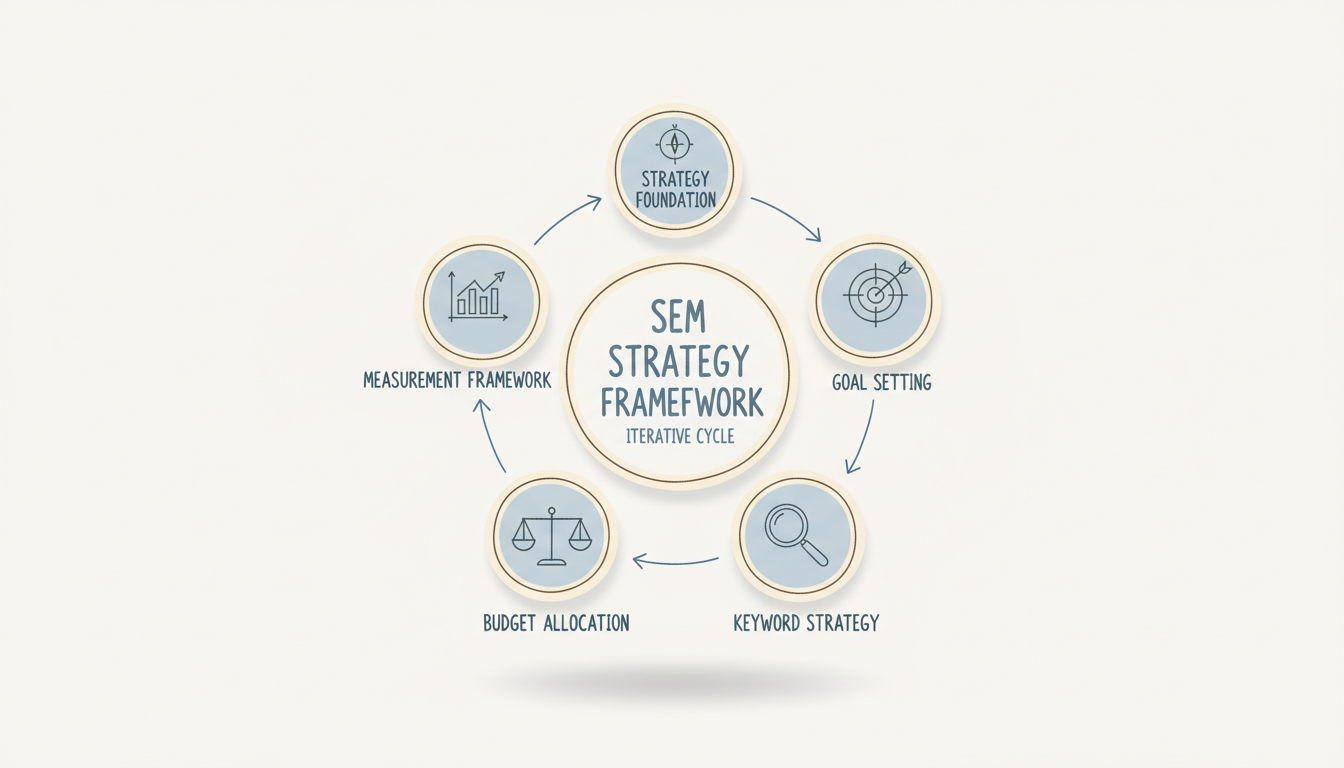
Successful search engine marketing doesn't happen by accident. Behind every profitable SEM program is a strategic framework that aligns goals, keywords, budgets, and measurement into a cohesive system.
This guide provides a complete SEM strategy framework for 2026—practical steps you can apply immediately to build or refine your paid search program.
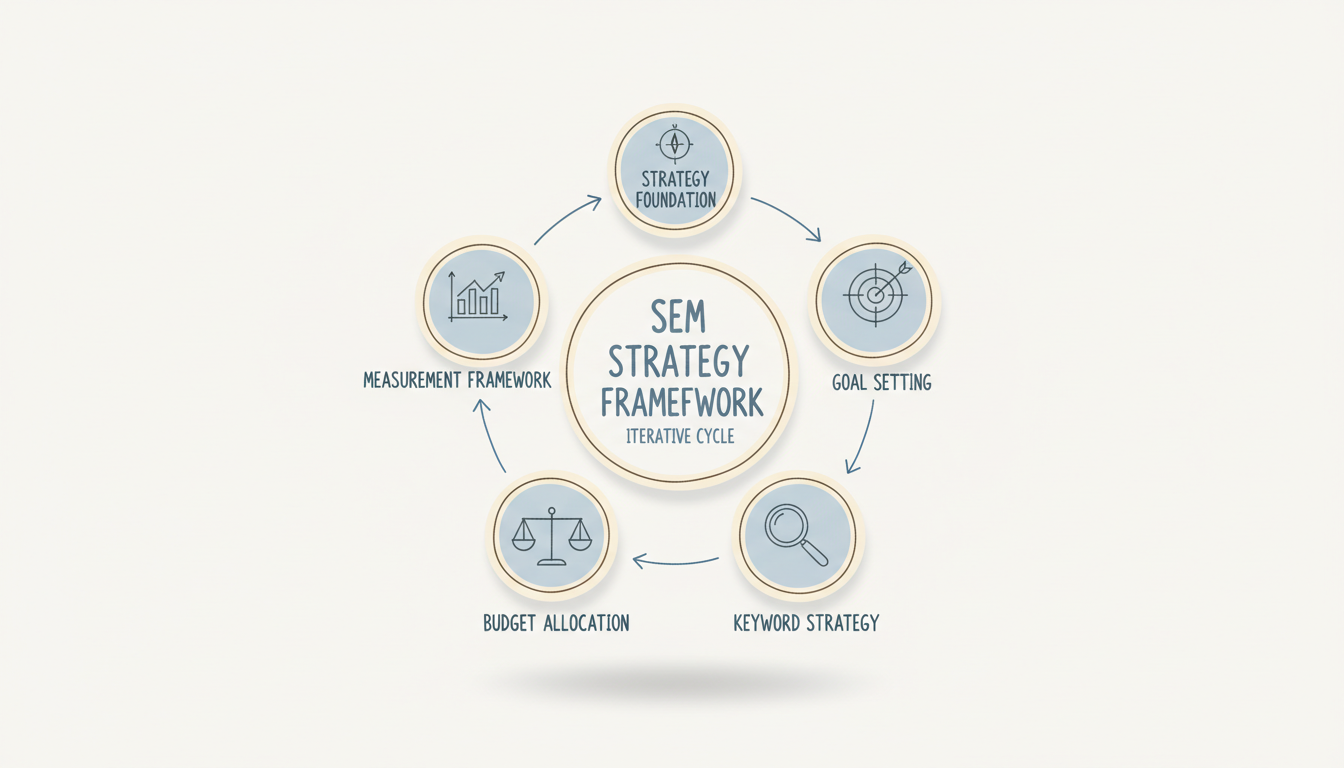
Before diving into tactics, establish the strategic foundation that makes everything else work.
Where does SEM fit in your marketing ecosystem? SEM works best in combination with other marketing strategies—syncing data across SEO and SEM strategies for integrated marketing amplifies results across all channels.
Consider your current state:
Your SEM strategy must communicate what makes you different. Generic ads produce generic results. Before writing a single ad:
This clarity shapes everything from keyword selection to ad copy to landing page design.
Clear goals determine strategy, tactics, and measurement. Vague goals produce wasted budgets.
Revenue goals: Target specific revenue outcomes from SEM campaigns. Example: "Generate $100,000 in attributed revenue from paid search this quarter."
Lead generation goals: Focus on acquiring prospects at target costs. Example: "Generate 200 qualified leads at under $75 cost per acquisition."
Awareness goals: Build brand visibility in target markets. Example: "Achieve 1 million impressions among decision-makers in our target accounts."
Market entry goals: Establish presence in new geographic or product markets. Example: "Validate demand in the UK market through $10,000 in test spend."
Make goals specific and measurable:
Plan in 90-day cycles with specific quarterly outcomes. Quarterly planning creates focused timeframes to execute, measure, and adjust while keeping teams synchronized.
Example quarterly progression:
Keywords are the foundation of SEM. Strategic keyword selection determines who sees your ads and whether clicks convert.
Match types control how closely search queries must match your keywords:
Exact match: Most control, lowest volume. Use for proven high-converting terms where you want precision.
Phrase match: Moderate control, moderate volume. Good balance for testing and scaling.
Broad match: Least control, highest volume. Use with caution and strong negative keyword lists, or paired with smart bidding.
Start with phrase and exact match to maintain control while learning, then consider broad match as you accumulate conversion data for smart bidding to optimize against.
Negative keywords prevent wasted spend on irrelevant queries. Build comprehensive lists:
Review search term reports weekly and add negatives proactively.
Smart budget allocation maximizes return on your SEM investment. Understanding PPC agency pricing and what to expect helps you set realistic budgets whether managing in-house or working with partners.
Match budget to keyword costs. If target keywords average $10 CPC, a $50/day budget means only 5 clicks daily—not enough data for optimization. Budget should support at least 20-30 clicks daily per campaign for meaningful learning.
Fund winners, starve losers. Allocate budget based on performance, not equal distribution. Campaigns generating profitable results deserve more budget; underperformers deserve analysis and optimization or elimination.
Account for learning periods. New campaigns need 2-4 weeks to gather data. Budget accordingly and resist making judgments based on small sample sizes.
Most advertisers should run on multiple platforms:
Google Ads: Primary spend for most businesses due to search volume dominance. Typically 60-80% of SEM budget.
Microsoft Advertising: Complementary spend for incremental reach at often lower costs. Typically 20-40% of SEM budget. Understanding the Microsoft Advertising cost and pricing guide helps optimize your platform allocation.
Test allocation shifts based on performance. Some businesses find Microsoft delivers better ROI despite lower volume.
Limited budget ($2,000-$5,000/month):
Moderate budget ($5,000-$20,000/month):
Substantial budget ($20,000+/month):
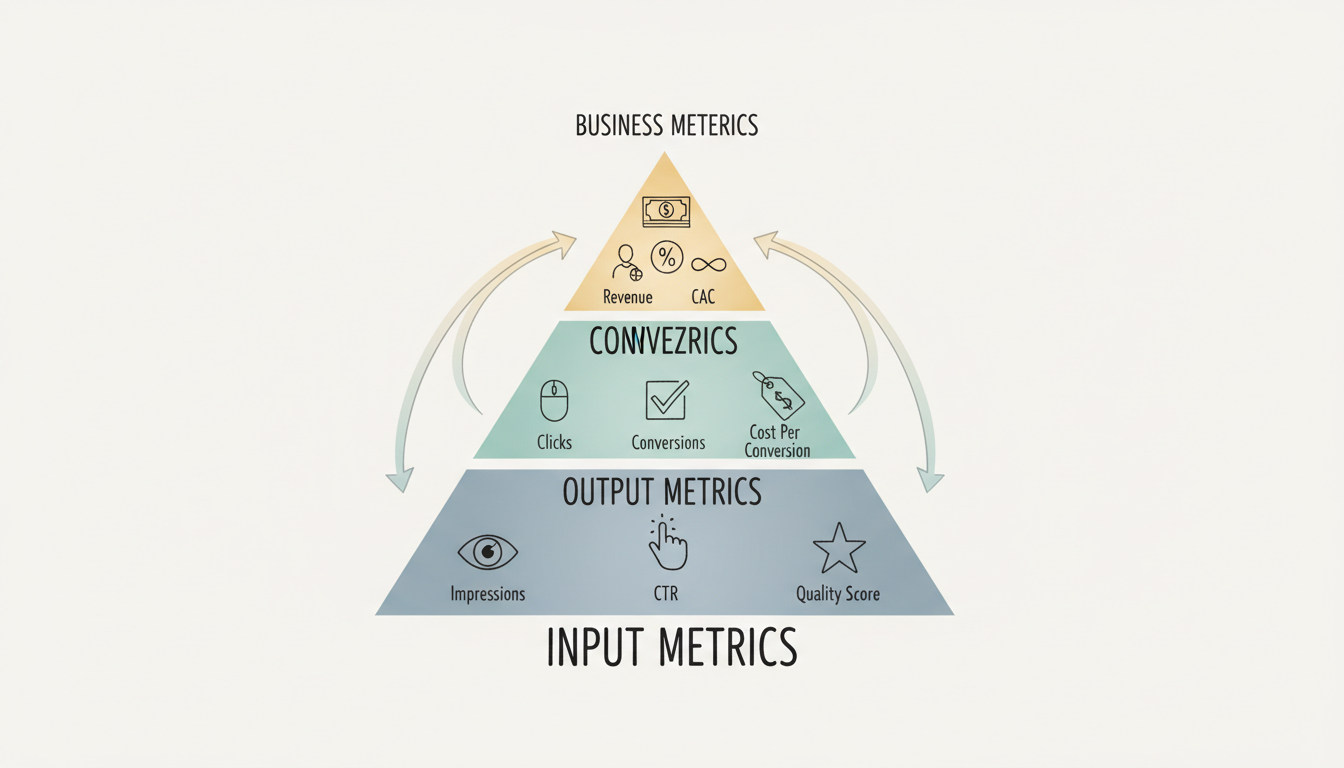
Focus on engagement, conversions, and business outcomes—not vanity metrics alone. Build a measurement framework that tracks what actually matters.
Input metrics (what you control):
Output metrics (what you're buying):
Business metrics (what matters most):
Attribution in 2026 is complex. Multiple touchpoints contribute to conversions, and SEM often plays different roles:
Use platform attribution as a starting point, but supplement with Google Analytics, CRM data, and customer research to understand true SEM contribution.
Daily: Monitor for anomalies—sudden performance drops or spend spikes Weekly: Review search term reports, add negatives, check key metrics Monthly: Comprehensive performance analysis, optimization priorities Quarterly: Strategic review, goal assessment, strategy adjustments
Compare your results against industry benchmarks, but recognize that your specific situation differs. Key benchmarks to track:
Improvement over your own historical performance matters more than hitting arbitrary industry numbers. Apply proven PPC campaign optimization tips to continuously refine your approach.
You'll see traffic immediately after launch. Meaningful performance data typically requires 2-4 weeks. A fully optimized strategy usually develops over 2-3 months as you accumulate data, test variations, and refine targeting.
It depends on your resources and expertise. In-house management provides more control and institutional knowledge; agency management provides specialized expertise and scalability. Many businesses use hybrid approaches—strategic oversight in-house with agency execution.
Review strategy quarterly with formal reassessment. Tactics should evolve continuously based on performance data. Major strategic shifts should align with business changes—new products, markets, or competitive dynamics.
By submitting this form, you agree to our Privacy Policy and Terms & Conditions.