
February 19, 2026


Direct-to-consumer brands and TikTok are a perfect match. The platform's discovery-first algorithm, impulse-buy culture, and integrated shopping features create ideal conditions for D2C growth. According to Consumer Edge data, U.S. spending on TikTok Shop grew 52% year-over-year in November 2025—now surpassing both Sephora and Ulta in transaction volume.
This playbook covers everything D2C brands need to know to win on TikTok in 2026.
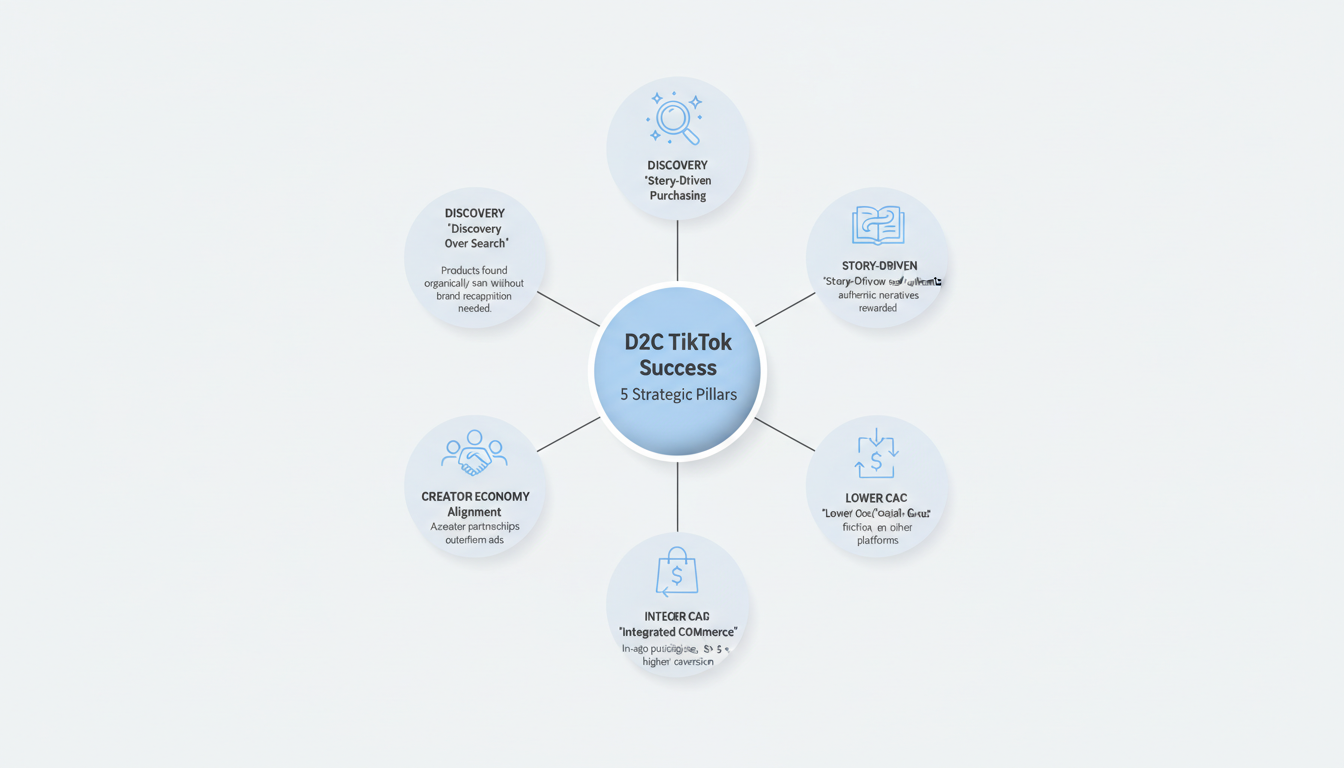
TikTok's unique characteristics align perfectly with D2C brand strengths:
Unlike Google or Amazon where users search with intent, TikTok users discover products organically. This benefits D2C brands without established search volume—your product can go viral without brand recognition.
D2C brands typically have compelling founder stories and product narratives. TikTok rewards exactly this kind of authentic storytelling. Research shows 31% of Gen Z and Millennials say creator expertise in a product category matters most when making purchases.
With CPCs averaging $0.50-$1.50 compared to $3-5+ on Meta platforms, TikTok often delivers lower CAC for D2C brands willing to embrace native creative. For more detailed benchmarks on cost efficiency, see our tiktok-cpc-benchmarks-2026 guide.
TikTok Shop allows in-app purchasing, reducing friction in the buying journey. For D2C brands, this means higher conversion rates and lower cart abandonment.
D2C brands can leverage creators more authentically than traditional brands. The platform's culture rewards genuine product enthusiasm over polished endorsements.

D2C success on TikTok requires native-feeling creative that resonates with the platform's culture. Understanding tiktok-ad-creative-best-practices-2026 is essential for creating content that converts.
According to Shopify's ecommerce trends, there's a growing appetite for longer, more aesthetic content on TikTok. D2C brands are finding success with:
Skin care brand Sonsie saw significant engagement with a leisurely-paced video featuring cofounder Pamela Anderson sharing her garden routine—demonstrating that not every TikTok needs a rapid-fire hook.
D2C brands have an advantage: authentic founders with real stories. Founder-led content builds trust and differentiation:
Content Type | Example |
Origin story | "Why I started this brand after [personal experience]" |
Problem-solution | "I couldn't find X, so I made it" |
Behind the scenes | "How we make [product] in our facility" |
Direct response | "You asked about X, here's the answer" |
Hook Type | Example |
Personal stake | "I spent 2 years developing this formula..." |
Social proof | "Why our customers keep reordering..." |
Problem-first | "If you struggle with [issue], watch this" |
Trend integration | Use trending sounds with brand twist |
Before/after | Visual transformation content |
User-generated content is the engine driving D2C success on TikTok. Implementing a solid tiktok-ugc-ads-strategy can dramatically improve your campaign performance.
According to 2026 influencer marketing predictions, authentic UGC continues to outperform polished brand content because:
The most successful D2C brands treat creators as long-term partners, not one-time promoters:
Ambassador Program Structure:
For D2C brands, micro-creators (10K-100K followers) often deliver better ROI than mega-influencers:
Audience Size | Typical Cost | Engagement | Best For |
Nano (1-10K) | Free product | Highest | Testing products |
Micro (10-100K) | $100-1,000 | High | Conversion |
Mid-tier (100K-500K) | $1,000-10,000 | Medium | Brand awareness |
Macro (500K+) | $10,000+ | Lower | Mass reach |
TikTok's Spark Ads allow brands to boost organic creator content as paid ads. This maintains authenticity while scaling reach:
TikTok Shop is becoming essential infrastructure for D2C brands in 2026.
According to ecommerce experts, most brands fail on TikTok Shop because they lack an operating system. Key success factors:
Product Listings:
Promotion Strategy:
Creator Integration:
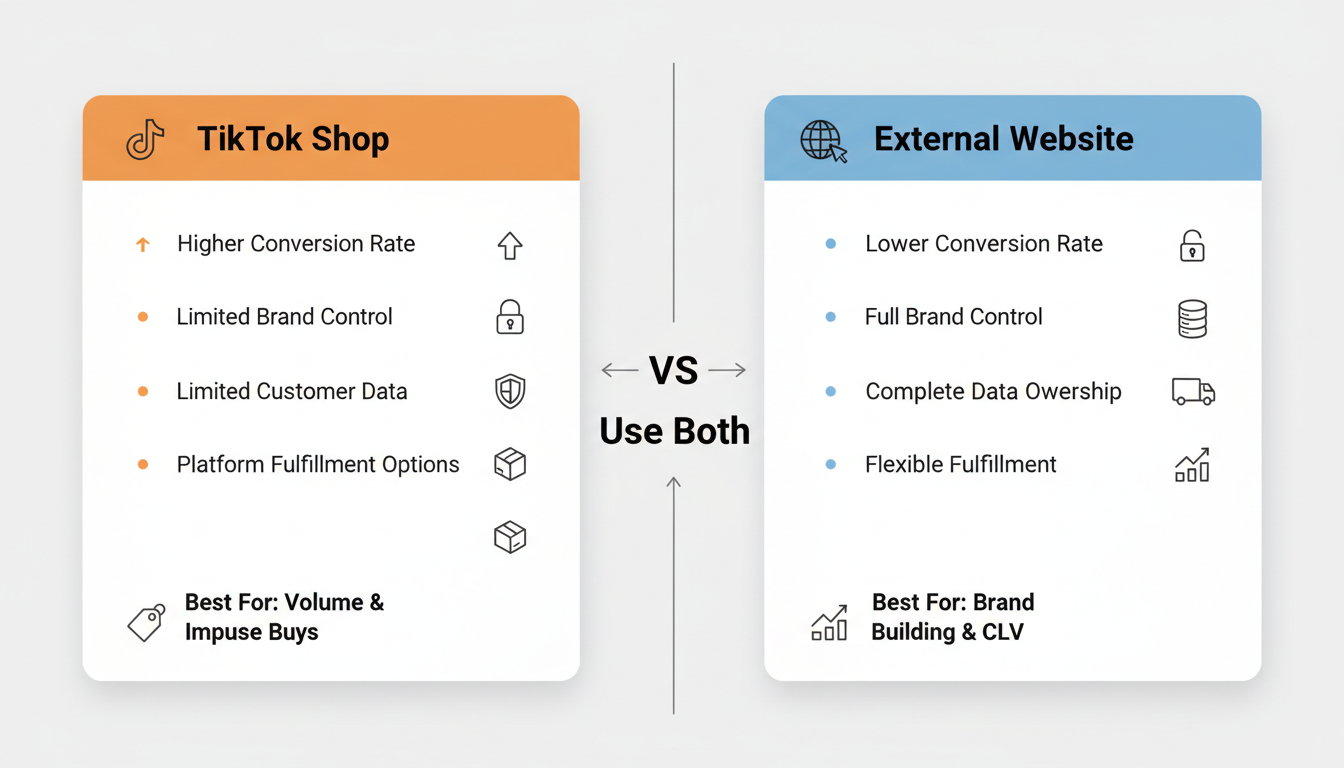
Factor | TikTok Shop | External Site |
Conversion rate | Higher (less friction) | Lower |
Brand control | Limited | Full |
Customer data | Limited access | Full ownership |
Fulfillment | Platform options | Your choice |
Best for | Volume, impulse buys | Brand building, CLV |
Recommendation: Use both. TikTok Shop for acquisition and impulse buys; retarget Shop customers to your site for repeat purchases and email capture.
Challenge: New skin care brand with no brand awareness Strategy:
Results:
Challenge: Breaking into crowded snack market Strategy:
Results:
Both successful D2C brands shared:
Start with $3,000-$5,000 monthly for meaningful testing and learning. This allows testing 3-5 creative concepts across different audiences while gathering enough data for optimization. Scale budget once you achieve consistent positive ROAS over 2+ weeks. Include budget for creator partnerships—often $1,000-$3,000 monthly for micro-creator content.
Use both strategically. TikTok Shop captures impulse purchases with higher conversion rates due to reduced friction. Your website offers better margin control, customer data ownership, and lifetime value optimization. Many successful D2C brands use TikTok Shop for acquisition, then retarget those customers to their website for repeat purchases.
Prioritize authenticity over production value. Founder-led content, behind-the-scenes footage, and genuine UGC from creators outperform polished brand videos. Create a mix: 60% organic/educational content, 30% creator UGC, and 10% promotional content. Maintain a consistent posting schedule (3-5x weekly minimum) and boost top performers as Spark Ads.
By submitting this form, you agree to our Privacy Policy and Terms & Conditions.



