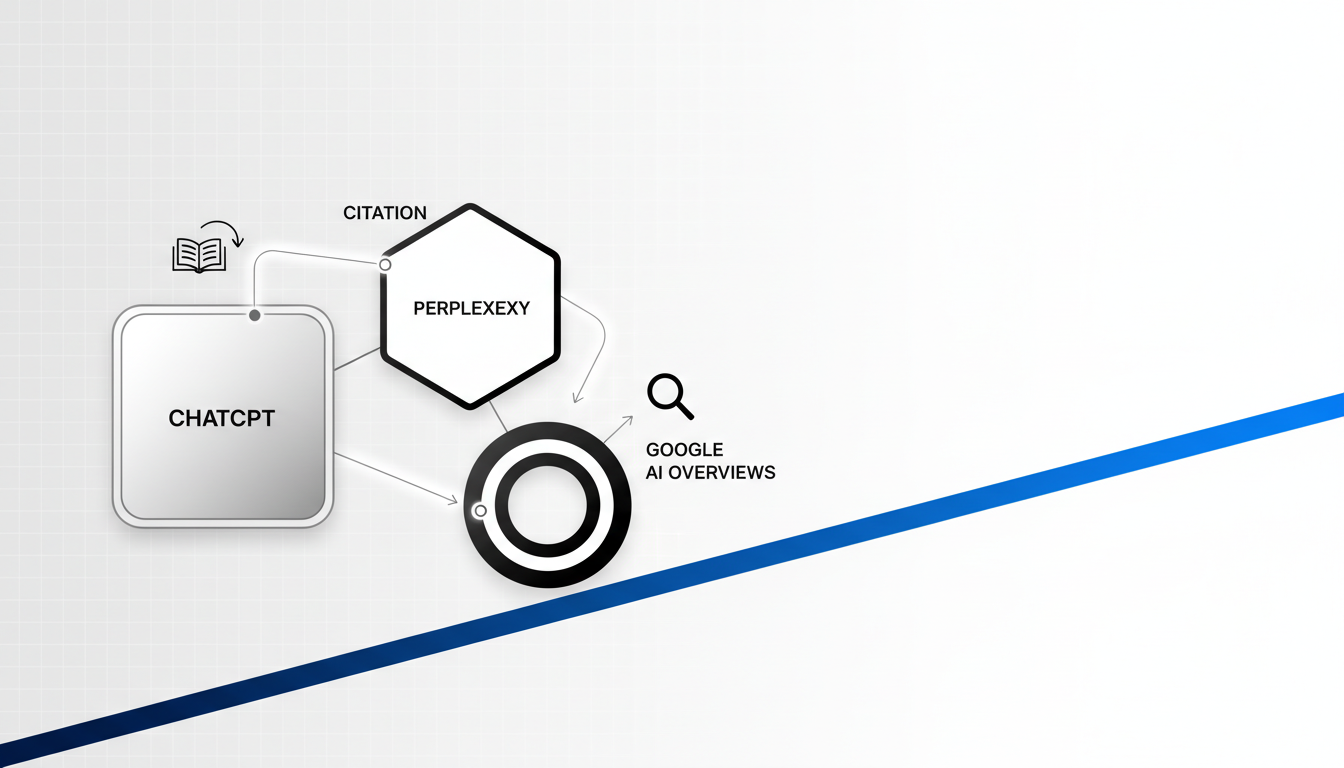
Different AI platforms evaluate and cite content through distinct mechanisms. Effective AEO strategy requires understanding these differences and optimizing accordingly. This comparison examines the three dominant AI search platforms—ChatGPT, Perplexity, and Google AI Overviews—analyzing their citation behaviors, source preferences, and optimization requirements.
Each major AI platform approaches information retrieval and citation differently.
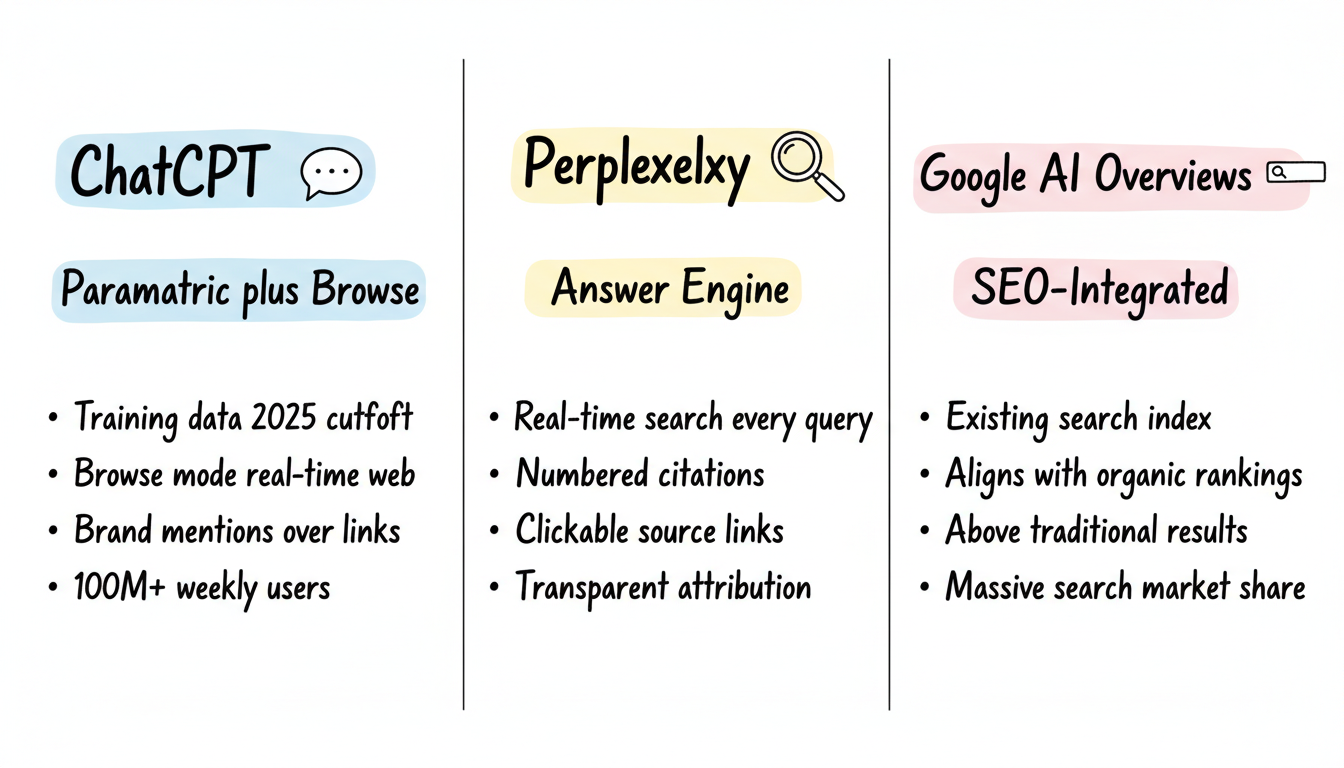
ChatGPT
OpenAI's ChatGPT operates in two primary modes affecting citation behavior.
Parametric knowledge mode:
- Draws from training data (current cutoff through 2025)
- No real-time web access
- Cites based on information absorbed during training
- Brand mentions reflect historical authority and content presence
Browse mode (with web search):
- Real-time web access for current information
- Active source evaluation and citation
- More dynamic citation behavior
- Can discover and cite recently published content
ChatGPT's massive user base (over 100 million weekly active users by 2026) makes optimization essential despite attribution challenges.
Perplexity AI
Perplexity positions itself as an "answer engine" with citation-first design.
Core characteristics:
- Real-time web search on every query
- Transparent source citations with numbered references
- Direct links to source pages in responses
- Focus on current, authoritative information
- Growing rapidly with strong engagement metrics
Perplexity's explicit citation model makes visibility tracking more straightforward than other platforms.
Google AI Overviews
Google's AI Overviews integrate AI-generated summaries into traditional search results.
Distinguishing features:
- Leverages Google's existing search index and ranking signals
- Sources often (but not always) align with organic rankings
- Prominent placement above traditional results
- Integration with existing SEO signals
- Massive reach through Google's dominant search market share
Understanding the differences between Google AI Overviews vs featured snippets helps optimize for both formats effectively.
Citation Behavior Differences
Understanding how each platform selects and displays citations guides optimization strategy.
Source Selection Criteria
ChatGPT source preferences:
- Authoritative domains with established reputation
- Content that appeared frequently in training data
- Well-structured, factually accurate information
- Strong E-E-A-T signals in original content
- Recent content (in browse mode) from credible sources
Perplexity source preferences:
- Current, recently updated content
- Clear answers to specific questions
- Well-organized information with explicit structure
- Sources matching query intent precisely
- Mix of authoritative and niche expert sources
Google AI Overviews source preferences:
- Strong organic search performance
- Existing featured snippet eligibility
- High-quality content meeting Google's standards
- Established domain authority
- Content directly answering the query question
How platforms display citations affects traffic potential.
ChatGPT citations:
- Inline mentions within response text
- No consistent link formatting
- Variable citation inclusion
- Brand mentions more common than direct links
Perplexity citations:
- Numbered superscript references
- Source panel with clickable links
- Consistent attribution format
- Clear connection between claims and sources
Google AI Overviews citations:
- "Learn more" expandable sections
- Links to source pages below AI content
- Integration with traditional search results
- Varied visibility depending on query type
Tailor approaches to each platform's unique characteristics.
ChatGPT Optimization
Focus on long-term authority building and comprehensive content.
Key strategies:
- Build topical authority AI training processes recognize
- Create definitive resources on target topics
- Ensure consistent brand mentions across authoritative sources
- Develop content that answers questions comprehensively
- Maintain technical accessibility for AI crawlers (GPTBot)
Content characteristics ChatGPT favors:
- Thorough coverage of topics
- Clear, accurate factual information
- Authoritative tone with expertise signals
- Well-structured with logical organization
- Updated regularly to maintain relevance
Perplexity Optimization
Emphasize freshness, structure, and direct answer formatting.
Key strategies:
- Publish timely content on emerging topics
- Structure content with clear question-answer formats
- Use descriptive headings that match query patterns
- Provide specific, citable facts and statistics
- Ensure PerplexityBot crawler access
Content characteristics Perplexity favors:
- Recent publication or update dates
- Direct answers within first paragraphs
- Numbered lists and structured data
- Specific statistics and figures
- Clear source attribution in your content
Google AI Overviews Optimization
Leverage existing SEO investment while adapting for AI summaries.
Key strategies:
- Maintain strong traditional SEO foundations
- Optimize for featured snippets (overlap with AI Overviews)
- Use structured data extensively
- Target question-based queries explicitly
- Build authority through traditional link building
Content characteristics Google AI Overviews favor:
- Featured snippet-optimized formatting
- Comprehensive schema markup
- Strong organic ranking performance
- E-E-A-T compliance
- Mobile-optimized delivery
Technical Requirements Comparison
Each platform has specific technical requirements for content access. Tracking visibility across platforms requires Google Search Console AEO monitoring alongside manual testing.
Crawler Access
ChatGPT (GPTBot):
- User-agent: GPTBot
- Respects robots.txt directives
- Requires explicit allowance for indexing
- Crawls for training and real-time search
Perplexity (PerplexityBot):
- User-agent: PerplexityBot
- Active crawling for real-time queries
- Respects standard robots.txt
- Frequent crawling of authoritative sources
Google AI Overviews:
- Standard Googlebot crawling
- No separate AI-specific crawler
- Existing Google indexing applies
- Same technical requirements as traditional SEO
Robots.txt Configuration
Ensure all AI crawlers can access your content:
User-agent: GPTBot
Allow: /

User-agent: PerplexityBot
Allow: /

User-agent: Googlebot
Allow: /

User-agent: ClaudeBot
Allow: /
Review and update robots.txt to avoid inadvertently blocking AI crawlers.
Track visibility differently based on platform capabilities.
ChatGPT Visibility Tracking
- Manual testing with relevant queries
- Brand mention monitoring in responses
- Third-party AI visibility tools
- Indirect traffic attribution analysis
Measurement remains challenging due to limited referrer data and variable citation behavior.
Perplexity Visibility Tracking
- Direct query testing with target keywords
- Citation appearance monitoring
- Referrer traffic analysis (cleaner than ChatGPT)
- Third-party monitoring tools
More measurable than ChatGPT due to consistent citation formatting.
Google AI Overviews Tracking
- Google Search Console data (partial)
- Manual SERP monitoring
- Third-party rank tracking tools
- Integration with existing SEO analytics
Benefits from established SEO measurement infrastructure.
Resource Allocation Recommendations
Prioritize platforms based on your audience and resources. Understanding the AEO optimization timeline helps set realistic expectations for multi-platform strategies.
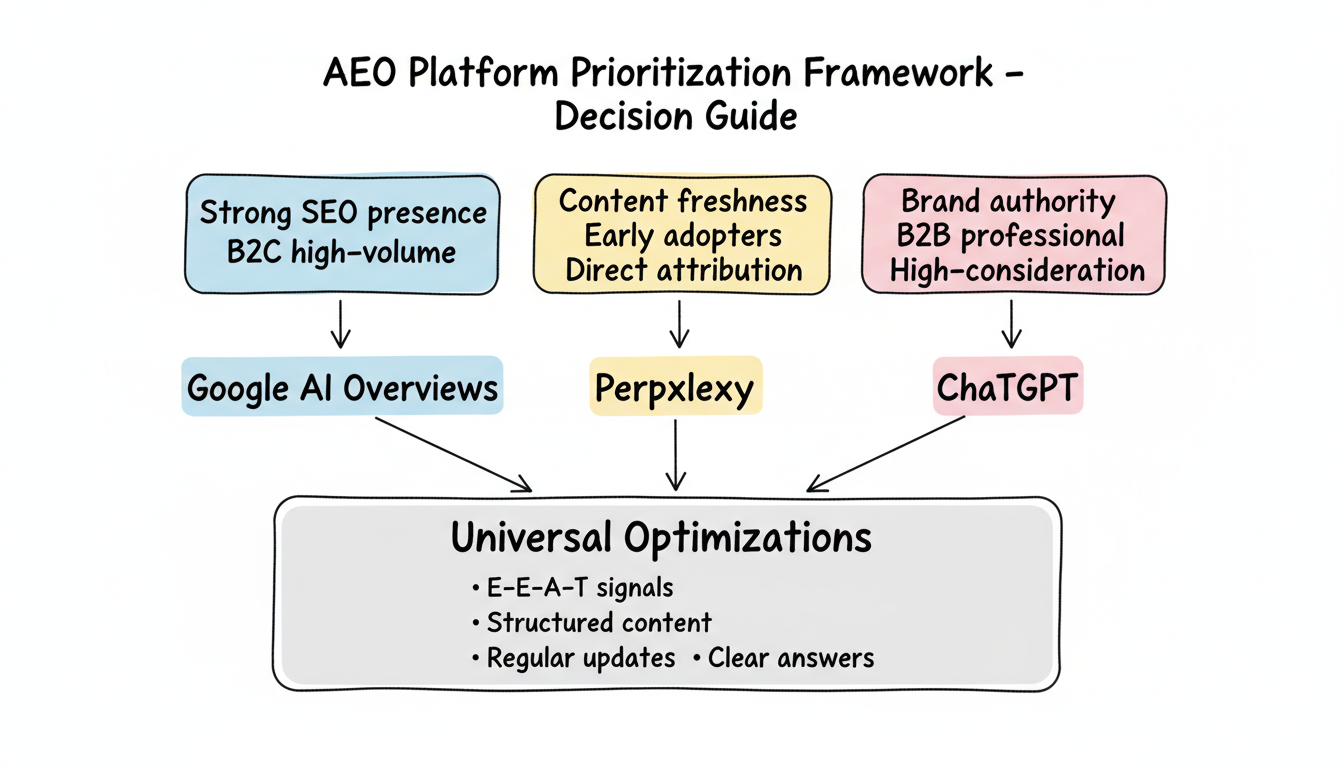
Prioritization Framework
Prioritize Google AI Overviews when:
- Existing strong organic search presence
- Limited resources for new optimization efforts
- Primary audience uses Google search
- B2C or high-volume query targets
Prioritize Perplexity when:
- Targeting early adopter audiences
- Content freshness is a strength
- Direct attribution matters for measurement
- Technical or research-focused topics
Prioritize ChatGPT when:
- Building long-term brand authority
- Targeting conversational queries
- High-consideration purchase journeys
- Professional or B2B audiences
Balanced Approach
Most organizations should optimize for all three platforms since many optimizations overlap:
Universal optimizations:
- Strong E-E-A-T signals
- Well-structured, comprehensive content
- Technical accessibility for all crawlers
- Regular content updates
- Clear answer formatting
These foundational elements improve visibility across all AI platforms simultaneously.
Avoid these errors when optimizing across platforms.
Single-platform focus: Optimizing only for Google neglects growing ChatGPT and Perplexity audiences.
Ignoring technical access: Blocking AI crawlers (intentionally or accidentally) eliminates visibility regardless of content quality.
Static optimization: AI platforms evolve rapidly—strategies effective in 2025 may not work in 2026.
Overlooking measurement: Without platform-specific tracking, you can't evaluate strategy effectiveness or allocate resources appropriately.
FAQs
Start with Google AI Overviews if you have existing SEO investment—optimizations transfer most directly. Add Perplexity for measurable citation tracking and ChatGPT for authority building. Resource-limited organizations should focus on universal optimizations benefiting all platforms.
Core optimizations (content quality, structure, technical access, authority signals) benefit all platforms. However, each platform has specific preferences requiring tailored approaches for maximum visibility.
Monthly monitoring catches major changes. Quarterly comprehensive audits evaluate strategy effectiveness across platforms. More frequent monitoring during major platform updates or algorithm changes.