February 19, 2026


AI search engine optimization combines artificial intelligence with traditional SEO practices to improve how websites rank and perform in search results. Rather than replacing human expertise, AI tools amplify what SEO professionals can accomplish—automating repetitive tasks, uncovering hidden patterns in data, and providing optimization recommendations at scale.
This guide covers what AI SEO means, how it works, and why it matters for businesses competing online in 2026.
AI search engine optimization uses machine learning algorithms and artificial intelligence to enhance various aspects of SEO. This includes:
The distinction from traditional SEO isn't about different goals—both aim to improve search visibility. The difference lies in methodology. Traditional SEO relies heavily on manual research and intuition. AI SEO processes vast datasets to surface insights humans might miss or take much longer to discover.
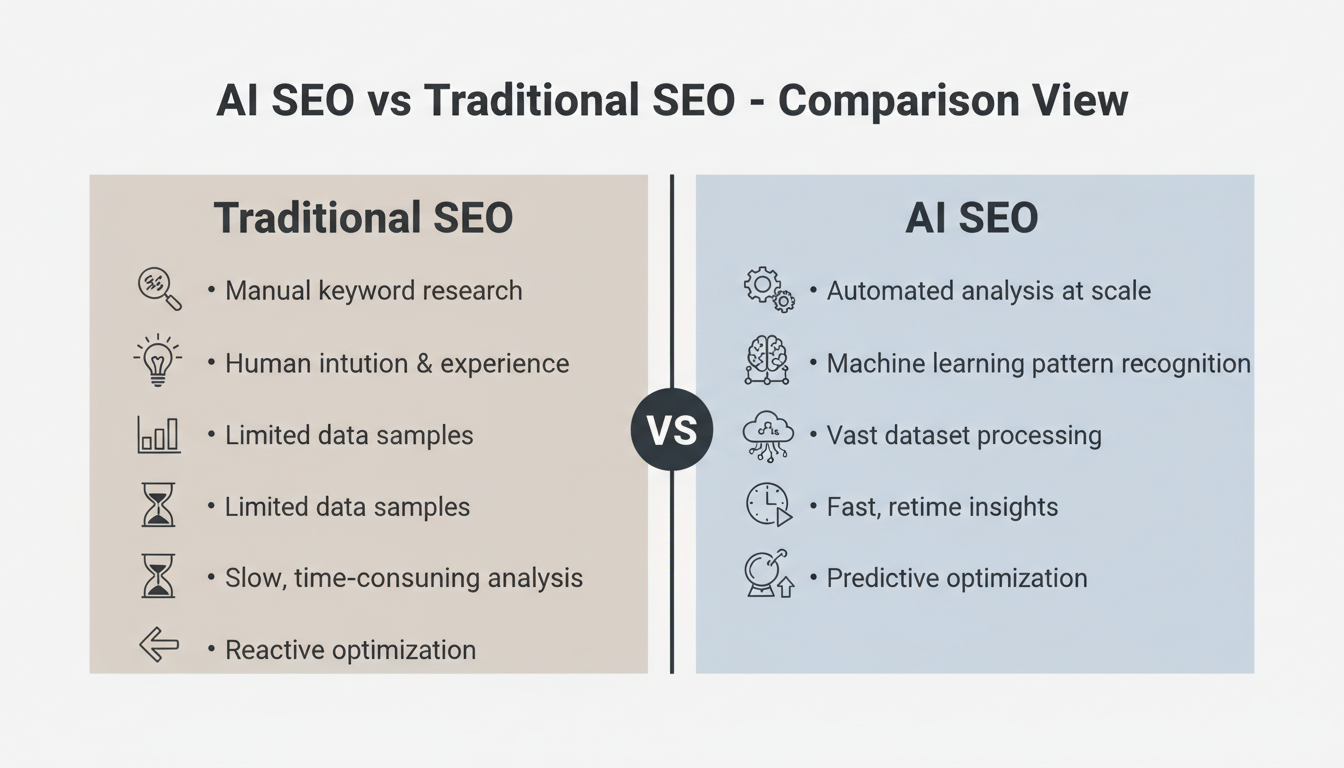
AI integration changes how SEO teams operate across multiple dimensions.
Traditional keyword research involved manually exploring seed keywords and reviewing suggestions. AI-powered tools now:
Machine learning models analyze thousands of ranking factors to estimate which keywords offer the best opportunities for specific domains.
AI optimization tools score content in real-time against top-ranking pages. They analyze:
This shifts optimization from guesswork to data-driven refinement. Writers see exactly where content falls short compared to competitors, similar to how platform-specific content strategies adapt content for different search environments.
AI enhances technical audits by:
Modern platforms process technical data faster and more comprehensively than manual audits ever could. For businesses looking to strengthen their technical foundation, implementing organization schema knowledge graph can significantly improve how search engines understand your entity.
AI analytics dashboards track performance across multiple dimensions simultaneously:
Pattern recognition surfaces insights that would take human analysts significantly longer to identify. Those evaluating comprehensive solutions should consider AI search platform comparison to understand which tools best fit their workflow.
Organizations adopting AI search engine optimization see several advantages:
Increased efficiency. Tasks that took hours now take minutes. Keyword research, content audits, and competitive analysis all accelerate significantly.
Better data utilization. AI processes more data than humans can manually review. This means decisions based on comprehensive analysis rather than limited samples.
Consistent optimization. AI tools apply the same rigorous analysis to every piece of content. Nothing gets overlooked due to time constraints or fatigue.
Predictive capabilities. Machine learning models forecast which actions will likely impact rankings, helping teams prioritize effectively.
Scalable operations. Small teams can manage large websites or multiple properties with AI automation handling routine work.
For teams new to AI search engine optimization, a practical approach works best.
Rather than adopting multiple AI platforms simultaneously, master one tool first. Popular entry points include:
Each platform applies AI differently. Understanding one deeply provides better results than surface-level use of several. Organizations requiring expert implementation support may benefit from partnering with AI SEO services providers who specialize in tool integration.
AI tools provide recommendations, not commands. SEO professionals must evaluate suggestions against:
The best results come from humans directing AI capabilities rather than blindly following automated suggestions.
Track how AI-assisted work performs compared to previous approaches:
Data guides refinement of how teams use AI tools.
AI search engine optimization enhances rather than replaces traditional SEO practices. The technology accelerates research, improves analysis quality, and enables optimization at scale.
For beginners: Start with one AI tool and learn it thoroughly before expanding your toolkit.
For experienced SEOs: AI amplifies existing expertise. Focus on applying AI to your highest-value tasks first.
For organizations: AI SEO provides competitive advantage through efficiency and data utilization. Investment in tools typically pays back through time savings and improved results.
The future of SEO belongs to practitioners who combine human creativity and strategic thinking with AI's analytical power.
AI SEO uses machine learning and artificial intelligence to automate and enhance SEO tasks. Regular SEO relies more on manual research and analysis. The goals are identical—improved search visibility—but AI SEO processes more data faster and provides predictive insights unavailable through manual methods.
Most AI SEO platforms are designed for marketers without technical backgrounds. They provide user-friendly interfaces with recommendations in plain language. More advanced features may require technical knowledge, but basic usage is accessible to anyone comfortable with standard marketing software.
No. AI tools augment human expertise rather than replace it. Strategic thinking, creative content development, and quality judgment still require human input. AI handles data processing and routine optimization while humans provide direction and make final decisions.
Pricing varies widely. Entry-level tools start around $15-50 per month. Comprehensive platforms range from $100-300 monthly. Enterprise solutions with advanced AI capabilities can cost $500-1,000+ per month depending on scale and features.
By submitting this form, you agree to our Privacy Policy and Terms & Conditions.