
February 19, 2026


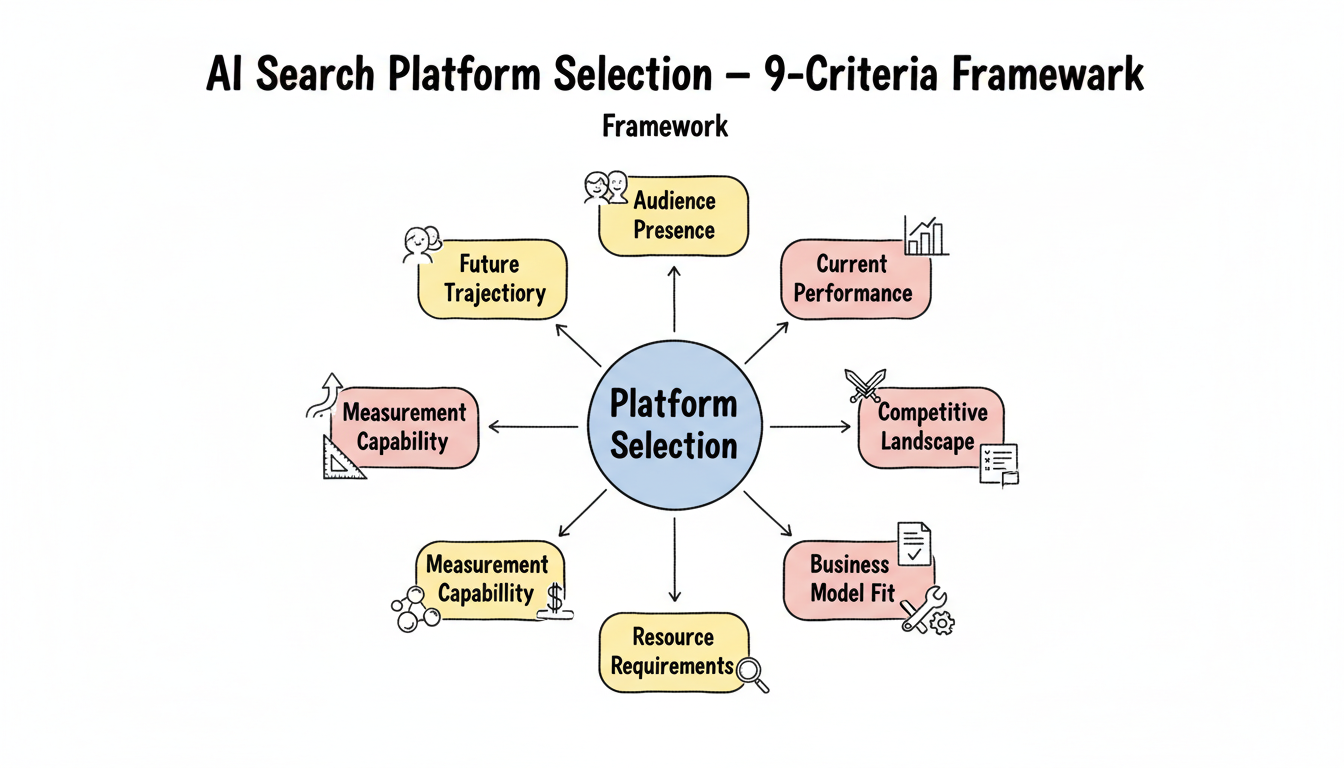
Organizations optimizing for AI search face a fundamental question: which platforms deserve investment? With Google AI Overviews, ChatGPT, Perplexity, Microsoft Copilot, and emerging alternatives all commanding attention, spreading resources across every platform guarantees mediocre results everywhere. A systematic selection framework helps organizations prioritize platforms based on audience behavior, competitive opportunity, and resource constraints.
The AI search landscape fragments further each year, making platform selection increasingly consequential.
Current platform landscape:
Each platform uses different ranking factors and citation criteria. Research reveals only approximately 12% result overlap between ChatGPT and Google for identical queries. Success on one platform doesn't transfer automatically to others.
The selection imperative: Organizations cannot optimize effectively for all platforms simultaneously. Platform selection determines where concentrated effort generates maximum returns versus where minimal investment maintains baseline presence.
Nine criteria inform platform selection decisions.
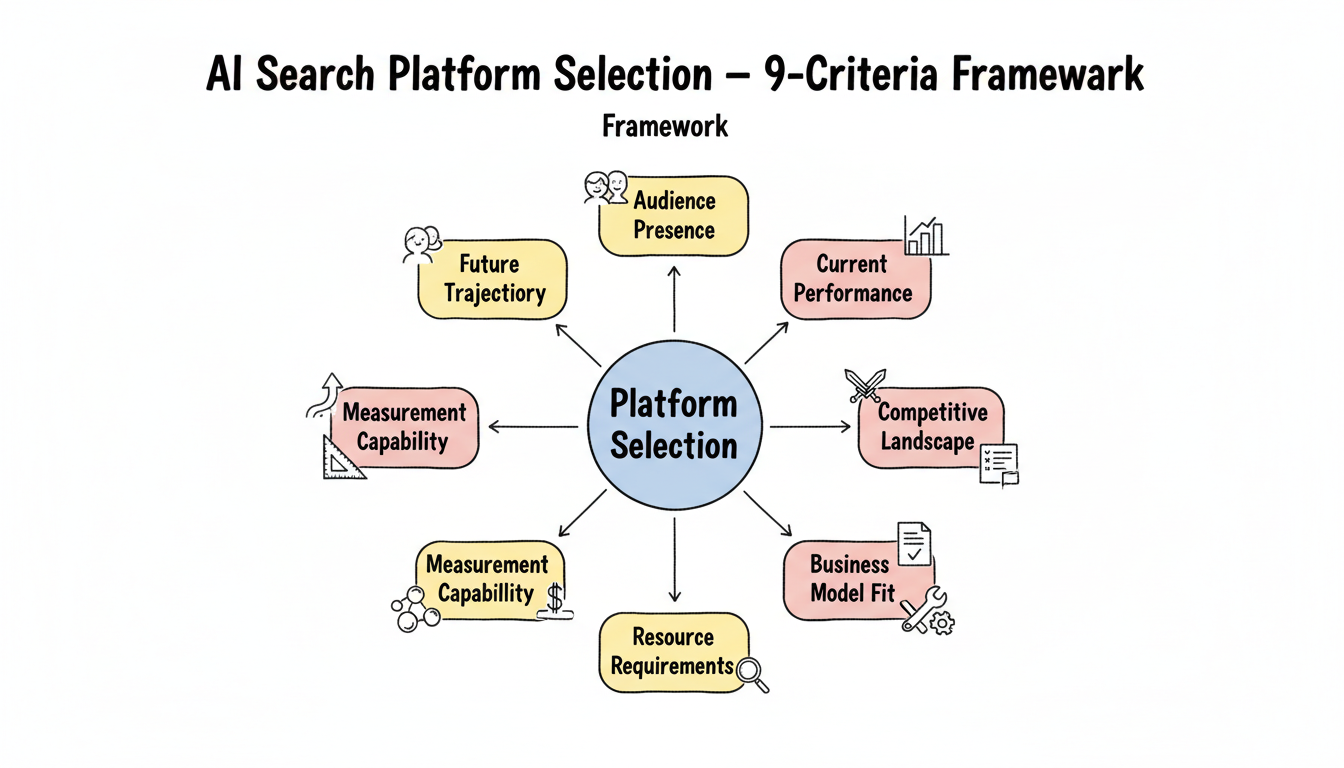
Where does your target audience actually search?
Assessment questions:
Tech-savvy audiences increasingly favor Perplexity for research. Professionals use ChatGPT for work-related queries. Younger demographics adopt emerging platforms earlier. General consumers still default to Google. Match platform priority to audience behavior, not platform popularity.
How visible is your brand on each platform today?
Assessment questions:
Platforms where you already have presence offer optimization opportunities. Platforms where competitors dominate require more investment to gain visibility. Current performance indicates both opportunity and required effort level. Organizations should leverage AI citation tracking tools to monitor their brand mentions across platforms systematically.
Where can you realistically win?
Assessment questions:
Some organizations find easier wins on emerging platforms with less entrenched competition. Others benefit from Google's established ecosystem where existing rankings support AI visibility. Competitive analysis reveals realistic opportunity versus aspirational presence.
Which platforms favor your content strengths?
Platform-content alignment:
Organizations with deep, research-grade content may find Perplexity more receptive. Brands with strong domain authority may perform better on ChatGPT. Businesses with video content gain advantages in Google AI Overviews. Implementing structured data for AI search helps platforms understand and cite your content more effectively.
Which platforms align with your conversion goals?
Assessment considerations:
Perplexity users often conduct active research with purchase intent. ChatGPT users may be in learning or task-completion modes. Google AI Overview users span the full intent spectrum. Platform fit affects not just visibility but conversion.
What does each platform demand for competitive presence?
Resource assessment:
Some platforms require significant technical implementation. Others demand continuous content investment. Assess whether your organization can sustain the required investment level. Understanding AEO optimization cost helps budget appropriately for multi-platform strategies.
Can you track performance on each platform?
Measurement considerations:
Platforms with robust tracking enable optimization iteration. Platforms with limited measurement make ROI assessment difficult. Prioritize platforms where you can measure and improve.
How does platform presence support broader goals?
Ecosystem considerations:
Google investment often provides ecosystem benefits beyond the platform itself. Consider platform interdependencies when prioritizing.
Where is each platform heading?
Trajectory assessment:
Invest ahead of growth curves rather than chasing past trends. Platforms gaining momentum may offer better long-term positioning even with smaller current audiences.
Apply criteria systematically to reach platform decisions.
Rate each platform 1-5 on each criterion based on your specific situation.
Criterion | Google AI | ChatGPT | Perplexity | Copilot |
Audience Presence | ? | ? | ? | ? |
Current Performance | ? | ? | ? | ? |
Competitive Landscape | ? | ? | ? | ? |
Content Alignment | ? | ? | ? | ? |
Business Model Fit | ? | ? | ? | ? |
Resource Requirements | ? | ? | ? | ? |
Measurement Capability | ? | ? | ? | ? |
Ecosystem Effects | ? | ? | ? | ? |
Future Trajectory | ? | ? | ? | ? |
Total | ? | ? | ? | ? |
Not all criteria matter equally to every organization.
Weight adjustment examples:
Based on weighted scores, categorize platforms.
Primary platforms (top 1-2): Receive majority of investment. Full optimization effort. Comprehensive content development. Active monitoring and iteration.
Secondary platforms (2-3): Maintain presence with moderate investment. Apply universal best practices. Monitor for opportunity changes.
Minimal presence platforms: Basic coverage only. No platform-specific optimization. Watch for relevance changes.
Develop differentiated approaches for each priority level.
Primary platform strategy elements:
Secondary platform strategy elements:
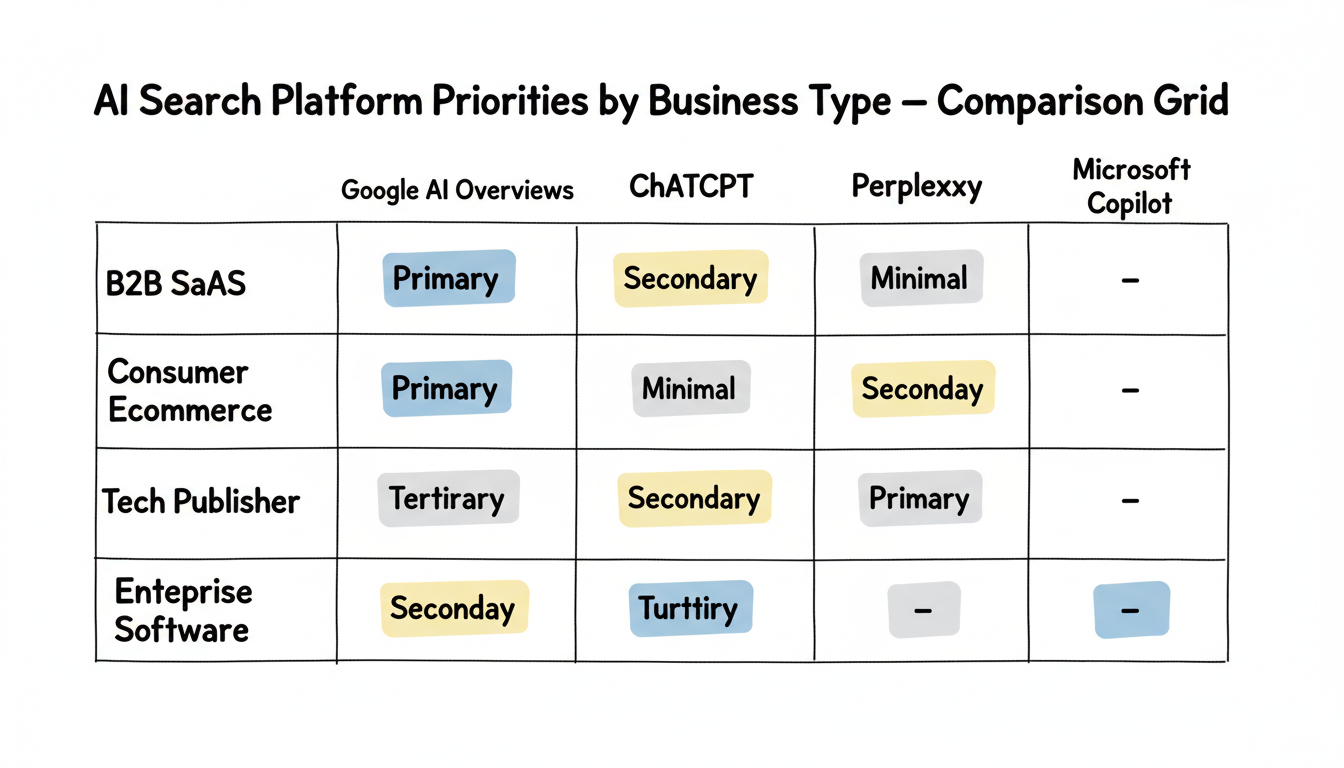
Typical patterns emerge from framework application.
Scenario: B2B SaaS Company
Scenario: Consumer Ecommerce
Scenario: Technology Publisher
Scenario: Enterprise Software
Platform selection requires periodic reassessment.
Reassessment triggers:
Review cadence: Conduct formal platform prioritization review quarterly. Monitor platform developments continuously. Adjust strategies when data indicates opportunity or threat.
Translate selection decisions into action.
For primary platforms:
For secondary platforms:
For minimal presence:
Strategic platform selection focuses resources where they generate maximum returns rather than spreading effort thin across every possible surface.
No. Resource constraints make equal optimization impractical, and platform importance varies by audience and business model. Use the evaluation framework to prioritize platforms based on your specific situation. Concentrated effort on 2-3 platforms outperforms diluted effort across many.
Review priorities quarterly at minimum. AI search evolves rapidly—platforms gain and lose relevance, audiences shift behavior, and new opportunities emerge. However, avoid reactive pivoting. Changes should reflect sustained trends, not temporary fluctuations.
Measurement limitations affect optimization capability but don't eliminate platform importance. For high-audience platforms with limited tracking, implement universal best practices and develop proxy measurements. As tools mature, monitoring capability typically improves.
By submitting this form, you agree to our Privacy Policy and Terms & Conditions.



