February 19, 2026


Schema markup has evolved from a nice-to-have SEO enhancement to a critical requirement for AI visibility. In 2026, AI systems like ChatGPT, Perplexity, and Google AI Overviews rely heavily on structured data to understand, verify, and cite content accurately.
Content with proper schema markup has a 2.5x higher chance of appearing in AI-generated answers. Here's how to implement structured data that earns AI citations.
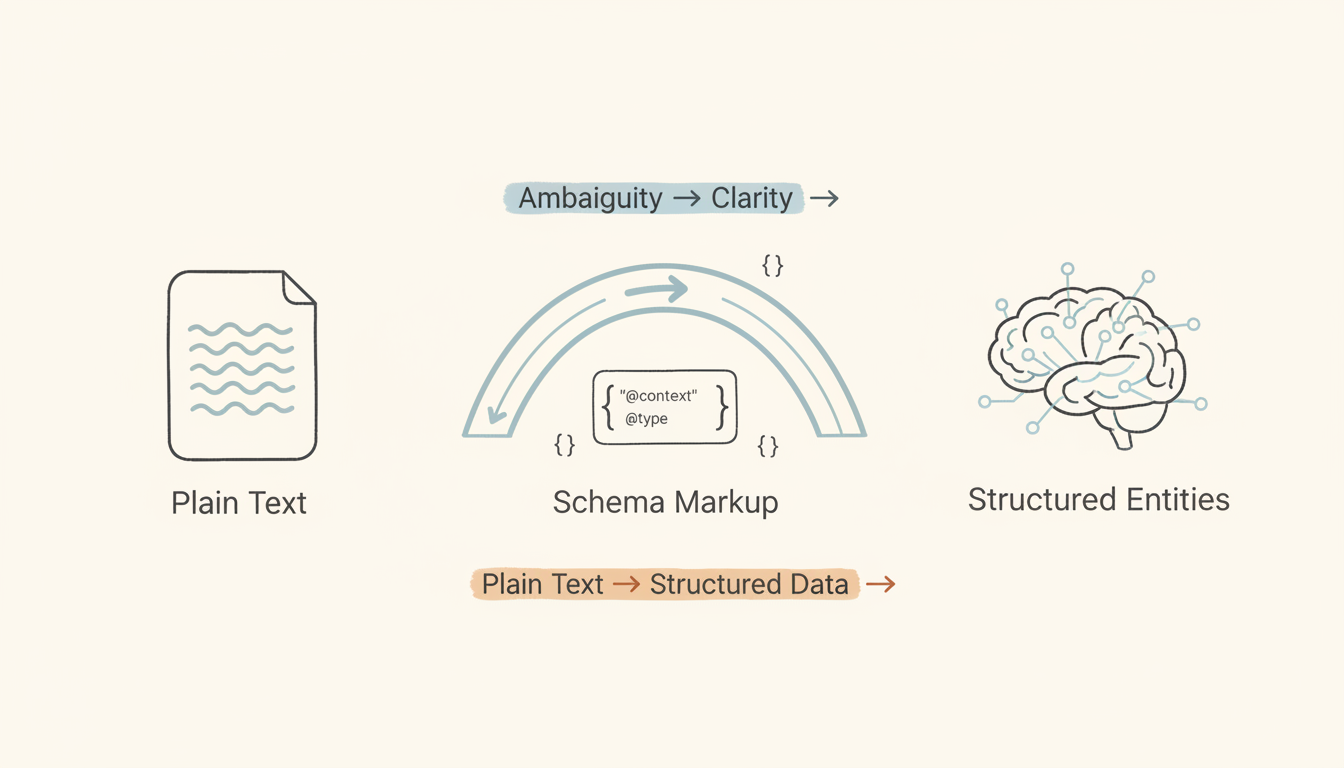
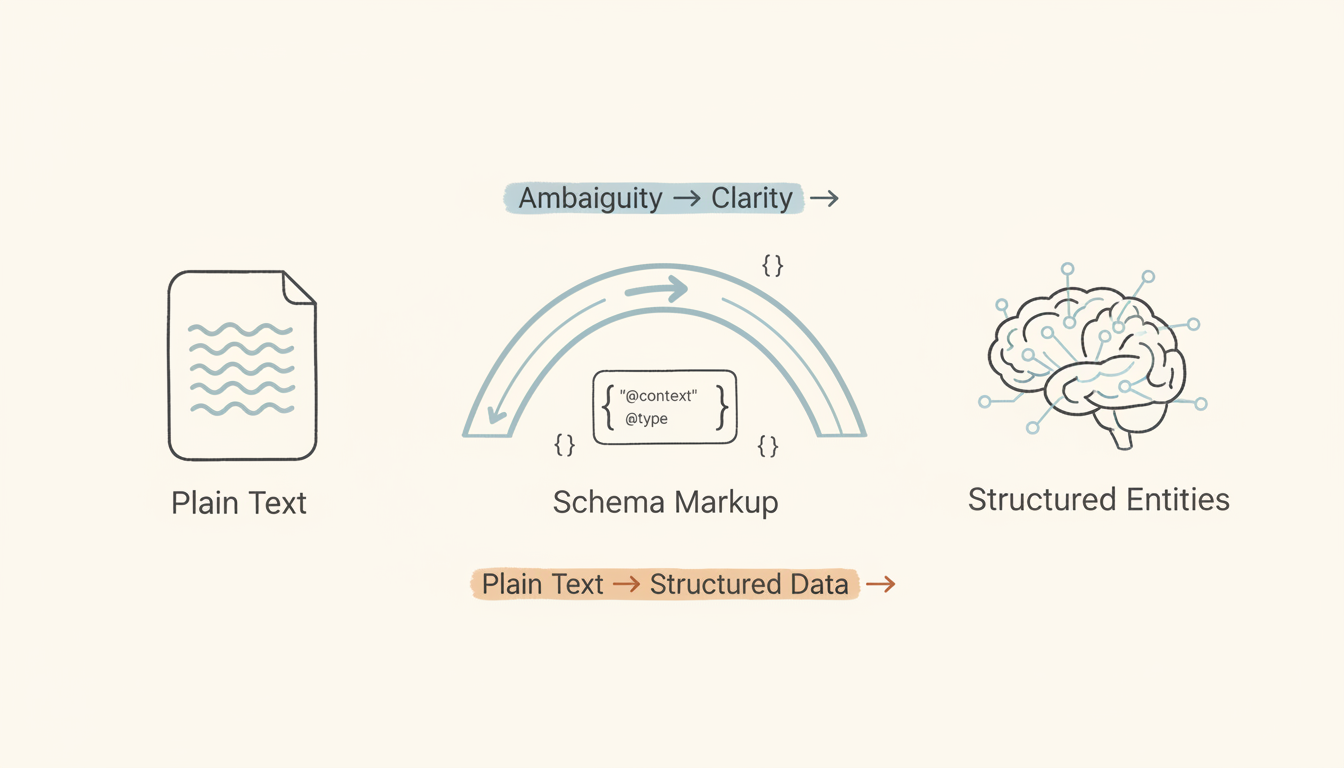
Structured data acts as a translation layer between your content and AI systems. Rather than forcing AI to parse and guess meaning through natural language processing, schema provides explicit signals about what your content represents.
Without Schema | With Schema |
AI interprets meaning from context | AI receives explicit definitions |
Higher risk of misinterpretation | Reduced extraction errors |
Content treated as plain text | Content organized as entities |
Lower confidence in citations | Higher citation confidence |
Schema transforms your pages from unstructured text into organized information that AI can confidently analyze, summarize, and reference.
When processing queries, AI systems use schema to:
Not all schema types contribute equally to AI citations. Focus on these high-impact options.
FAQPage schema is essential for question-answer content. AI systems parse FAQ schema to extract concise answers that match user queries directly, similar to how optimizing FAQ schema for Google AI Overviews can improve visibility in search results.
Best for:
Implementation tip: Keep answers between 40-60 words for optimal extraction.
HowTo schema structures step-by-step instructions in a format AI can easily process and cite. When implementing instructional content, understanding HowTo schema for AI search is crucial for maximizing extraction accuracy.
Best for:
Implementation tip: Number steps explicitly and keep each step to 1-2 sentences.
Article schema establishes content type and authorship, reinforcing expertise and credibility signals that AI systems evaluate. Using Article schema for AI platforms helps search engines understand content context and authorship signals.
Best for:
Implementation tip: Include author information with credentials for E-E-A-T signals.
Organization schema helps AI distinguish your brand from competitors and establishes entity recognition in knowledge graphs.
Best for:
Implementation tip: Include official logo, social profiles, and specific location data.
Speakable schema marks content suitable for voice assistants to read aloud—increasingly important as AI assistants handle more voice queries.
Best for:
Implementation tip: Mark only the most important 2-3 sections as speakable.
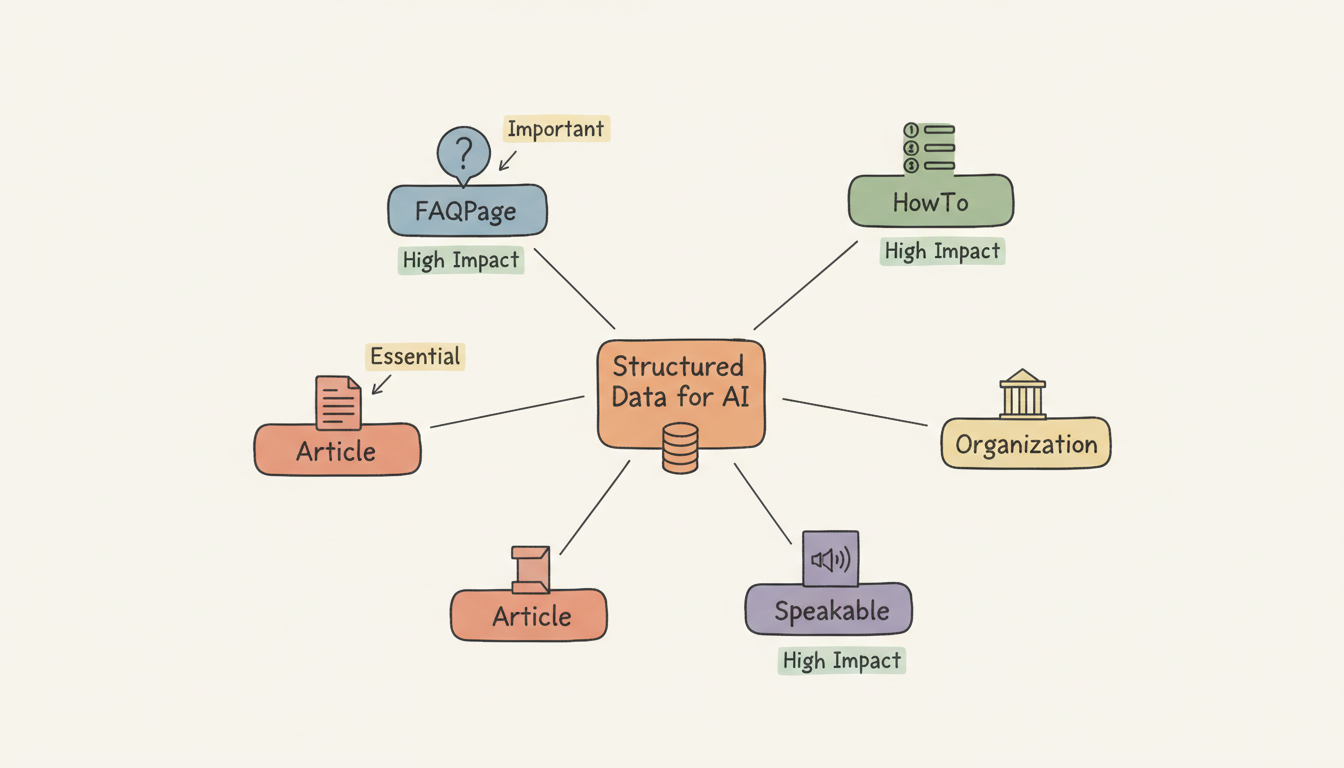
Schema Type | AI Citation Impact | Implementation Priority |
FAQPage | High | Essential for Q&A content |
HowTo | High | Essential for tutorials |
Article | Medium-High | Essential for all content |
Organization | Medium | Essential for brand pages |
Product | Medium-High | Essential for e-commerce |
Speakable | Medium | Important for voice |
Review | Medium | Important for testimonials |
JSON-LD (JavaScript Object Notation for Linked Data) is the preferred format for schema implementation. It separates structure from content, making it easier for machines to parse without disrupting readability.
{
  "@context": "https://schema.org",
  "@type": "FAQPage",
  "mainEntity": [{
    "@type": "Question",
    "name": "How does schema markup help AI search?",
    "acceptedAnswer": {
      "@type": "Answer",
      "text": "Schema markup helps AI search by providing explicit signals about content meaning. AI systems use structured data to identify content types, extract specific answers, and cite sources with higher confidence."
    }
  }]
}
Always validate schema before publishing:
Invalid schema can be worse than no schema—AI may ignore malformed markup entirely.
Schema should describe visible content. Marking up content users can't see violates guidelines and risks penalties.
Not every page needs every schema type. Match schema to actual content purpose. A simple blog post doesn't need Product schema.
Schema with outdated dates or information damages trust. When tracking content freshness signals for answer engines, update dateModified when content changes.
Each schema type has required fields. FAQPage needs both question and answer; HowTo needs steps. Missing properties render schema ineffective.
Copy-paste schema that doesn't reflect actual page content provides no value. Customize schema to match specific content.
Check existing pages using Google's Rich Results Test. Identify which high-value pages lack schema or have errors.
Start with:
Content Type | Primary Schema | Secondary Schema |
FAQ content | FAQPage | Article |
Tutorials | HowTo | Article |
Blog posts | Article | FAQPage (if Q&A included) |
Product pages | Product | FAQPage, Review |
Company info | Organization | LocalBusiness |
Add JSON-LD to page headers. Test each implementation before publishing. Monitor for errors in Search Console.
Monitor AI visibility changes after implementation. Schema effects may take 2-4 weeks to manifest as AI systems re-index content.
Beyond individual pages, schema contributes to knowledge graph positioning. When AI systems build understanding of entities and relationships, structured data provides the explicit connections.
Building entity recognition:
Strong knowledge graph presence increases the likelihood AI will recognize and trust your brand as an authoritative source.
No. Schema increases the probability of AI citations by reducing ambiguity and building confidence, but doesn't guarantee selection. Content quality, authority, freshness, and relevance still matter. Schema is one optimization layer among several.
Use JSON-LD for all new schema implementations. It's the format preferred by Google, supported by all major AI systems, and easiest to maintain. Avoid microdata and RDFa for new implementations.
Implement schema that accurately describes your content—no more, no less. Multiple schema types on one page are fine if each reflects actual content. Over-marking with irrelevant schema wastes effort and may trigger quality reviews.
By submitting this form, you agree to our Privacy Policy and Terms & Conditions.