February 19, 2026


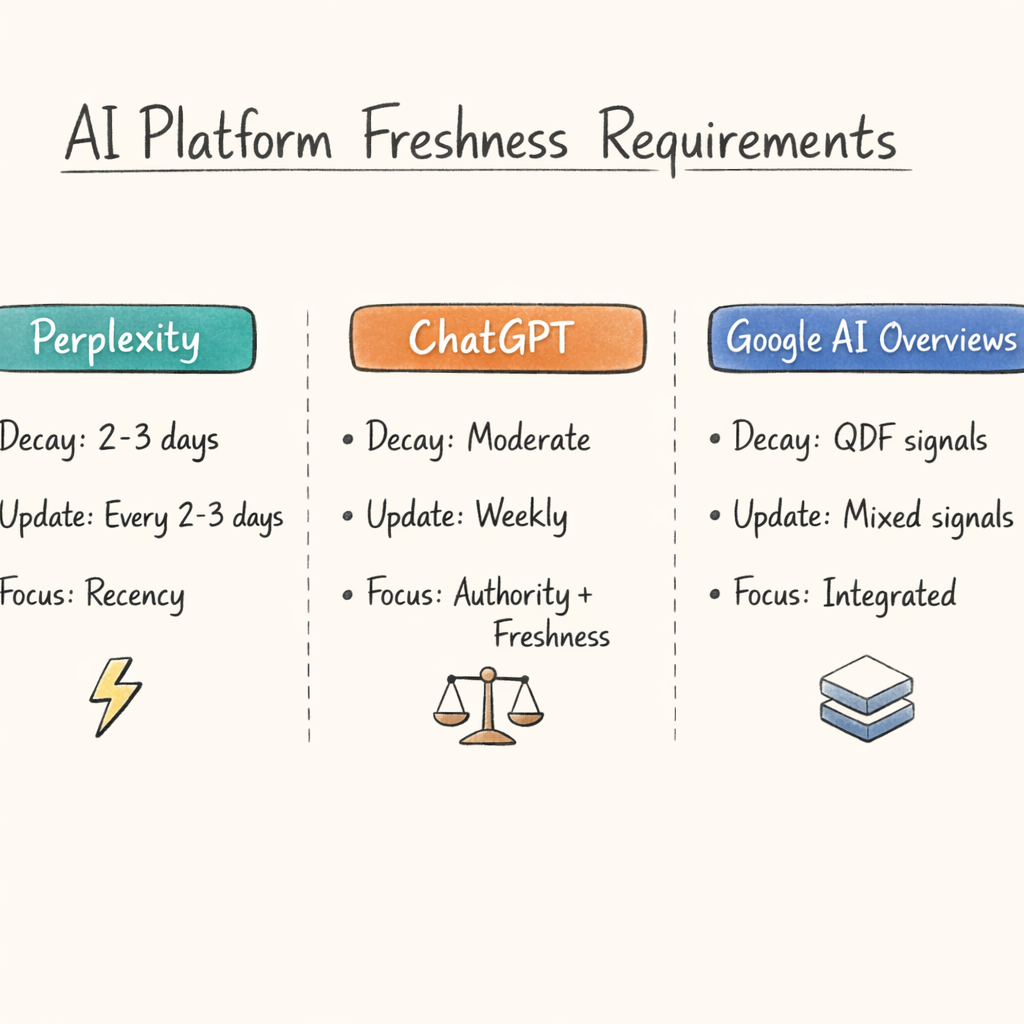
Content decay happens far faster in AI search than traditional SEO. Research shows that Perplexity visibility begins dropping just 2-3 days after publication without strategic refreshes. Over 70% of pages cited by ChatGPT were updated within 12 months, but content updated in the last 3 months performs best across all intents.
Freshness isn't optional for AI visibility—it's a core ranking signal that determines whether your content gets cited or ignored.
AI search engines show a strong preference for recent content because users expect current information. When someone asks an AI assistant about pricing, trends, or best practices, outdated answers destroy trust in the platform.
The freshness imperative:
This creates both challenge and opportunity. The challenge: content requires constant maintenance. The opportunity: consistent updates become a competitive advantage that compounds over time.
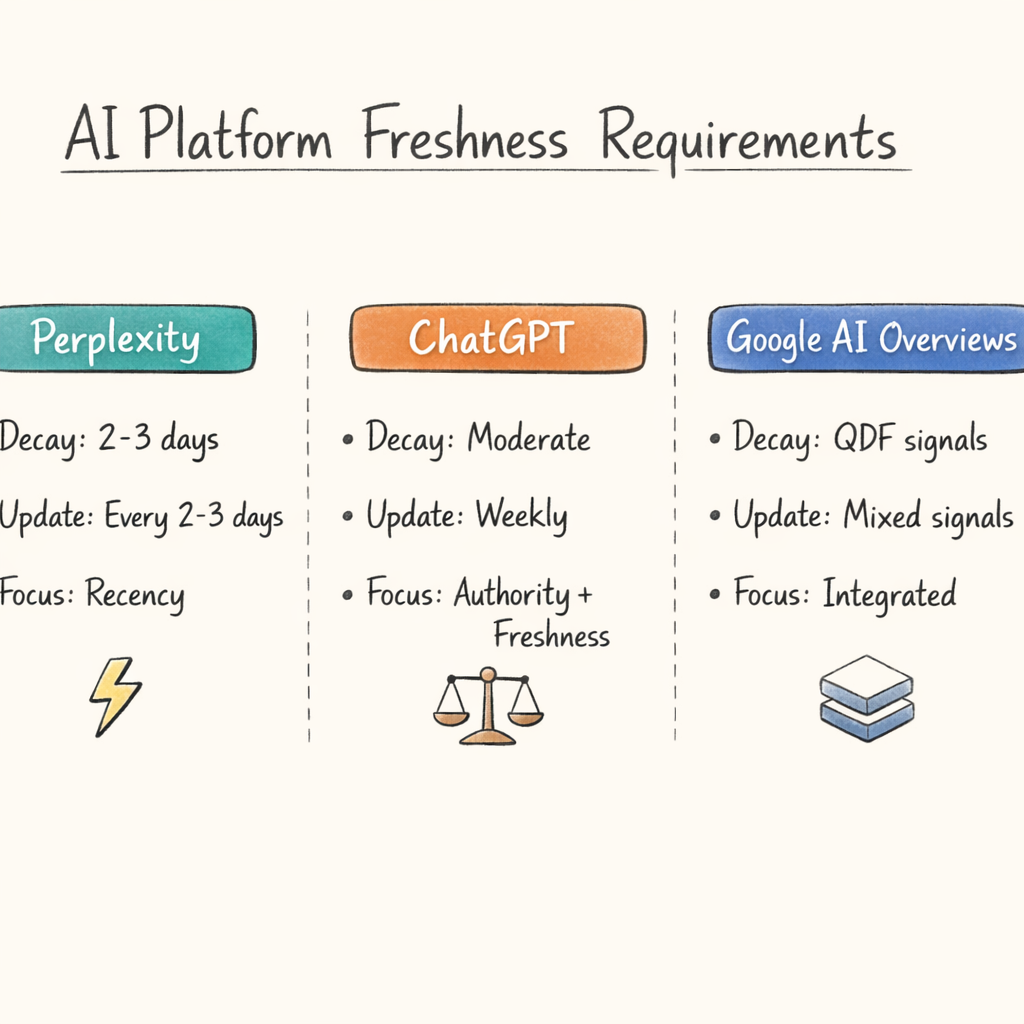
Different AI platforms weight freshness differently:
Perplexity operates as a real-time retrieval system with the most aggressive freshness requirements:
Perplexity serves researchers and early adopters who value source transparency and current information. Stale content quickly loses citation eligibility. For more on this platform's approach, see our Perplexity AI powered search engine analysis.
ChatGPT balances parametric memory (training data) with real-time browsing:
ChatGPT's 200+ million daily users expect current information for certain query types while accepting historical knowledge for others.
Google AI Overviews leverage existing search infrastructure:
Google's scale means your freshness signals compete against the entire indexed web. Understanding the differences between Google AI Overviews vs featured snippets helps clarify how freshness signals apply in each context.
AI platforms look for specific indicators of content currency:
Include clear temporal markers that AI systems can parse:
Example: "As of Q1 2026, enterprise AEO programs typically cost $50,000-500,000 annually."
Technical signals that indicate content currency:
IndexNow has become critical—it pushes notifications directly to search engines the moment content is published or updated, making content available for AI citation faster.
Within the content itself, freshness signals include:
AI systems recognize when content cites 2023 statistics while claiming to be a 2026 guide. That inconsistency hurts citation probability.
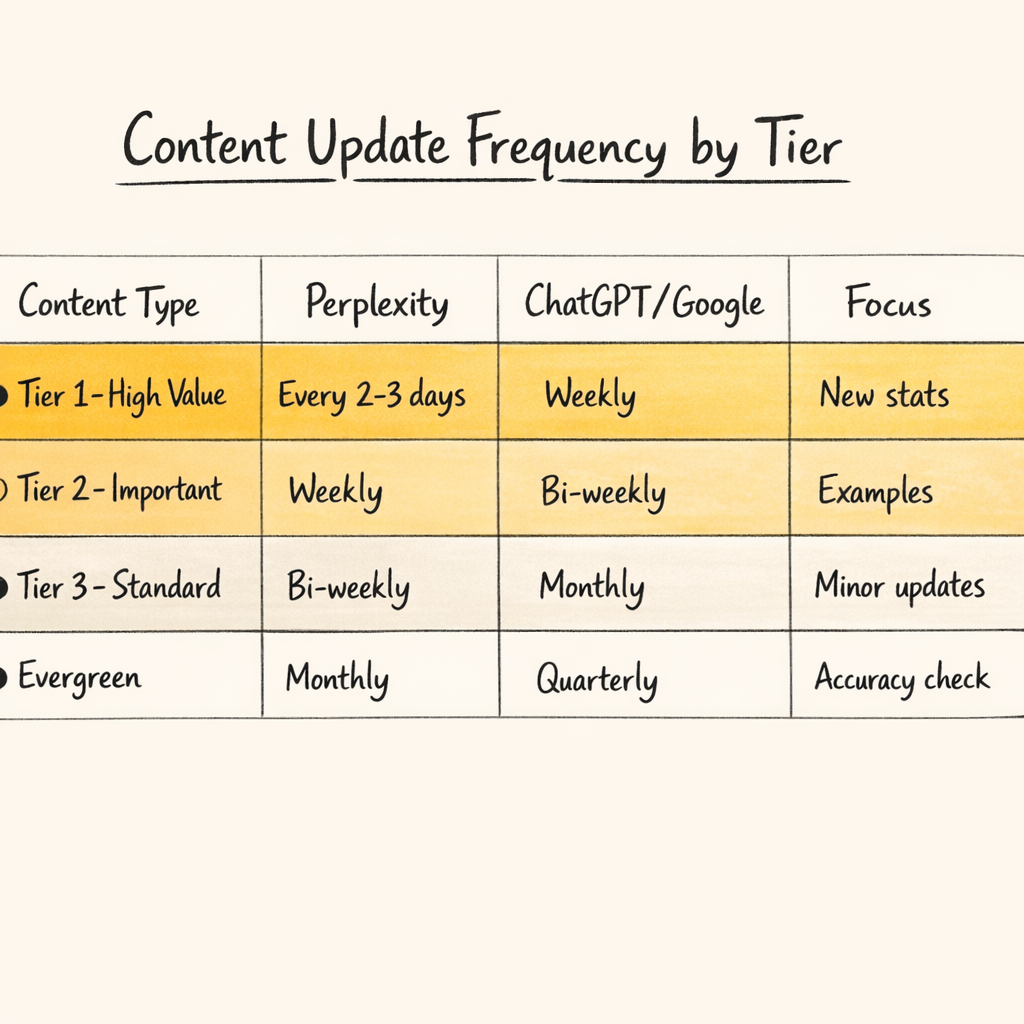
Not all content needs the same refresh schedule:
Content Type | Perplexity | ChatGPT/Google | Update Focus |
Tier 1 (highest value) | Every 2-3 days | Weekly | New sections, statistics |
Tier 2 (important) | Weekly | Bi-weekly | Examples, recent developments |
Tier 3 (standard) | Bi-weekly | Monthly | Minor refreshes, date updates |
Evergreen foundational | Monthly | Quarterly | Accuracy validation |
Updates don't require complete rewrites. Adding new sections, refreshing statistics, incorporating recent examples, or expanding based on reader questions all signal freshness while maintaining AI visibility. A well-planned AEO strategy incorporates these update cycles into content workflows.
Identify content with freshness problems:
Create systematic refresh workflows:
Measure how updates affect AI visibility:
Setting appropriate metrics is critical—see our guide on AI search KPI goal setting for tracking frameworks.
Changing dates without adding value doesn't fool AI systems. They can detect superficial updates versus meaningful content changes.
Visible date updates without corresponding schema changes create inconsistency. AI systems parse both—mismatches hurt credibility.
Not all content needs the same frequency. Technical documentation needs less updating than pricing guides. Match schedules to content volatility.
Base content still needs periodic validation. Even "timeless" topics evolve—ensure foundational content remains accurate.
AI systems can discover and begin citing new content within days—far faster than traditional SEO. Well-structured content on authoritative domains may appear in AI responses within 24-48 hours of publication, especially on Perplexity.
No. Prioritize updates based on content value and topic volatility. High-priority pages targeting competitive, time-sensitive topics need frequent updates. Evergreen foundational content can follow monthly or quarterly schedules.
Small but meaningful updates work: adding new statistics, incorporating recent examples, updating date references with actual content changes, or expanding sections based on emerging questions. Date changes alone without content changes don't provide sustainable freshness signals.
By submitting this form, you agree to our Privacy Policy and Terms & Conditions.