February 19, 2026


Understanding who uses AI search engines helps businesses target their optimization efforts effectively. The demographic profile of AI search users differs significantly from traditional search users—skewing younger, more male, and more tech-forward.
According to Superlines' ChatGPT statistics, ChatGPT has surged to 800 million weekly active users and 190 million daily users, commanding 81% market share among AI assistants. These numbers represent a massive audience with distinct characteristics.
This guide breaks down the demographics of AI search users across platforms, helping you understand exactly who encounters your content in AI-generated answers.
AI search adoption has reached mainstream status, but usage patterns vary significantly by demographic group.
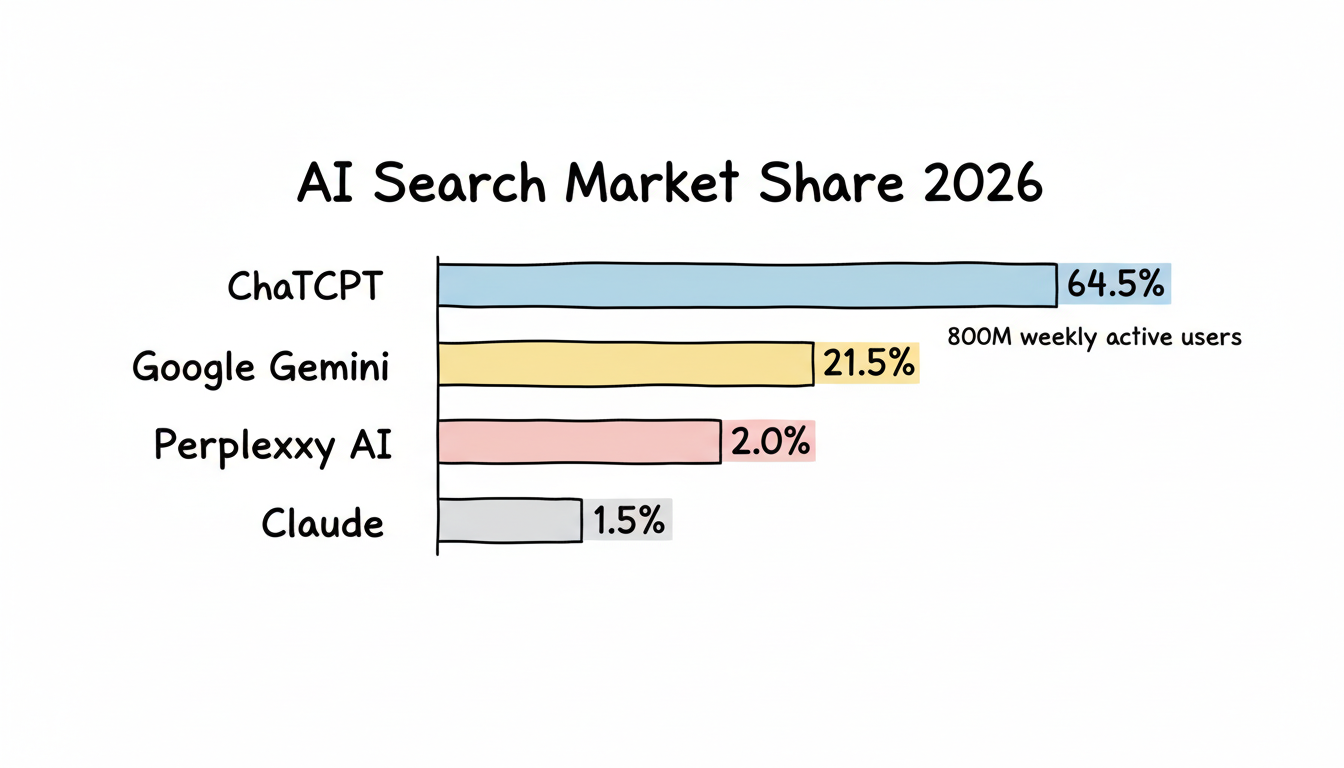
According to ALM Corp's market share analysis, ChatGPT dominates AI search traffic with 64.5% market share, followed by Google Gemini at 21.5% and Perplexity at 2.0%. These platforms collectively serve billions of queries monthly.
Platform market share (2026):
Platform | Traffic Share | Monthly Active Users |
ChatGPT | 64.5% | 800M weekly |
Google Gemini | 21.5% | Not disclosed |
Perplexity AI | 2.0% | 22M monthly |
Claude | 1.5% | Not disclosed |
According to Master of Code's research, ChatGPT generates 4.7 billion website visits per month—demonstrating the scale of AI search interaction.
AI search engines attract younger users at dramatically higher rates than older demographics.
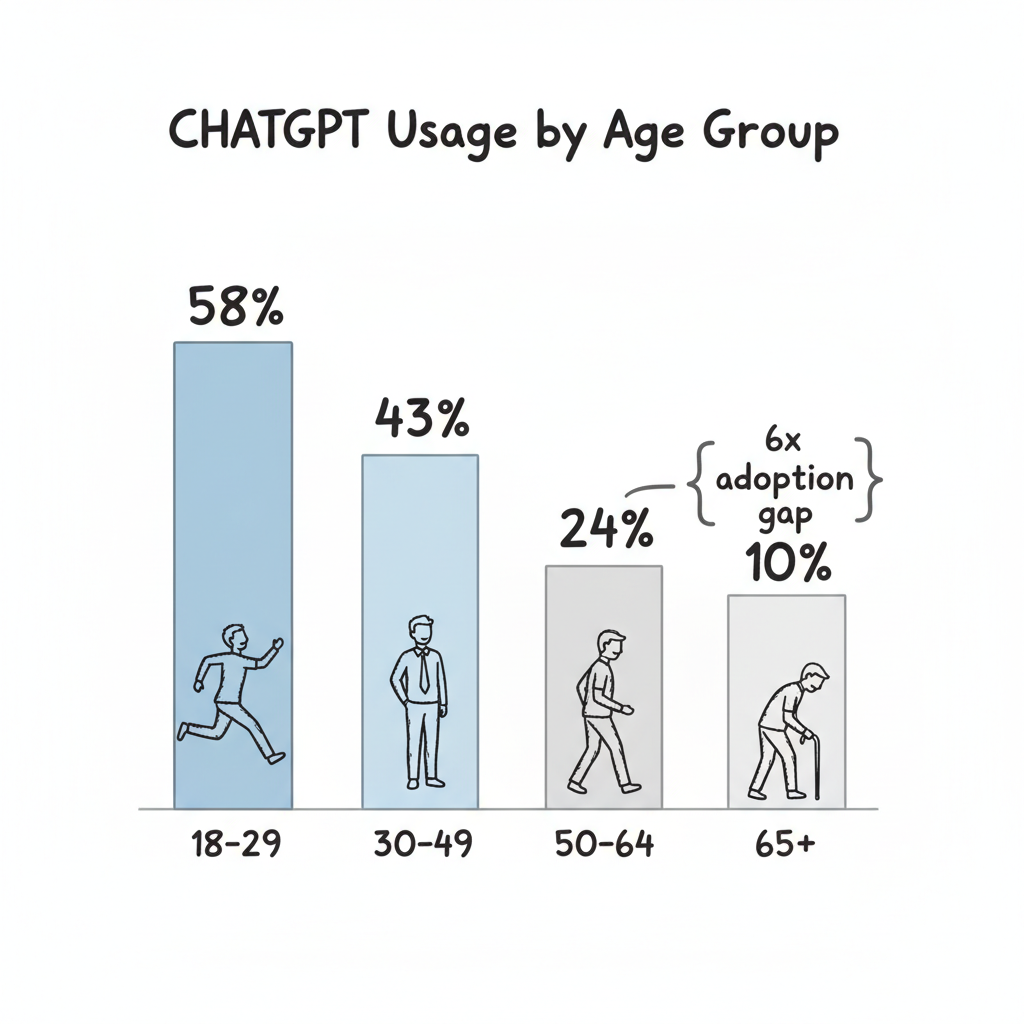
According to Backlinko's ChatGPT research, 58% of adults ages 18-29 in the US have used ChatGPT. Only 10% of American adults 65 years and older have ever tried it—a nearly 6x adoption gap.
ChatGPT usage by age group:
Age Group | Ever Used ChatGPT |
18-29 | 58% |
30-49 | 43% |
50-64 | 24% |
65+ | 10% |
According to DataGlobeHub's analysis, the age distribution of ChatGPT users breaks down further:
Perplexity shows similar patterns:
According to DemandSage's Perplexity statistics, 57.29% of Perplexity AI visitors are between 18 and 34 years old. The platform's research-focused interface appeals particularly to students and young professionals seeking answers through answer engine optimization strategies.
AI search platforms show a male-skewed user base, though the gap varies by platform.
According to Superlines, ChatGPT users are 54.69% male and 45.31% female. This represents a relatively balanced split compared to other tech platforms.
Gender distribution by platform:
Platform | Male | Female |
ChatGPT | 54.69% | 45.31% |
Perplexity AI | 60.19% | 39.81% |
ChatGPT Mobile | ~85% | ~15% |
According to DemandSage, Perplexity AI shows a more pronounced male skew at 60.19% male visitors versus 39.81% female.
According to TechCrunch analysis, approximately 85% of ChatGPT mobile app users are male, and more than 50% are under age 25. The mobile demographic differs significantly from desktop users.
AI search usage concentrates in specific regions, with the United States leading globally.
According to Superlines, geographic distribution of ChatGPT users shows:
Top countries by ChatGPT traffic:
Country | Traffic Share |
United States | 15.22% |
India | 7.04% |
Brazil | 4.49% |
Indonesia | 3.70% |
Philippines | 3.57% |
The US accounts for the largest single-country share, but international usage combined represents the majority of AI search traffic. For businesses targeting specific markets, understanding regional adoption patterns informs localization strategy.
Beyond raw usage numbers, generational attitudes toward AI search differ significantly.
According to Capgemini research, Gen Z shows the highest openness to AI tools, with 69% reporting they enjoy using chatbot features. This comfort level translates into more frequent and diverse AI search usage, which businesses must account for when developing their AI SEO strategy.
Generational AI comfort levels:
Generation | Primary Characteristic |
Gen Z (1997-2012) | Most open to AI; 69% enjoy chatbots |
Millennials (1981-1996) | High adoption; primary workforce users |
Gen X (1965-1980) | Growing adoption; professional use cases |
Boomers (1946-1964) | Lowest adoption; privacy concerns higher |
According to Master of Code, 70% of consumers use AI for product recommendations—indicating commercial search behavior has already shifted toward AI platforms.
How people use AI search differs from traditional search patterns.
Query types by demographic:
Younger users (18-34) tend toward:
Older users (35+) focus on:
According to Backlinko, younger users engage more frequently and for longer sessions, while older users show more targeted, task-specific usage patterns.
Understanding AI search demographics shapes optimization strategy in several ways.
For reaching younger audiences (18-34):
For reaching older audiences (35+):
Gender considerations:
The male skew in AI search means certain industries see disproportionate AI search traffic:
Female-majority topics may see relatively more traditional search traffic, though this gap is narrowing as businesses recognize the differences between traditional SEO vs AI search optimization.
Each AI search platform attracts different user profiles.
ChatGPT users:
Perplexity users:
Google Gemini users:
AI search demographics reveal clear patterns for optimization strategy:
For businesses optimizing for AI search, these demographics suggest focusing resources on content that appeals to younger, tech-forward audiences while maintaining traditional SEO for broader demographic reach. As AI search adoption continues growing across all demographics, these patterns will evolve—but the current opportunity lies with the early adopter audience already using these platforms daily.
By submitting this form, you agree to our Privacy Policy and Terms & Conditions.