February 19, 2026


An effective AI SEO strategy addresses visibility across both traditional search engines and AI-powered discovery platforms. With users now moving between Google, ChatGPT, Perplexity, and voice assistants, brands need strategic frameworks that work across all channels.
This guide outlines a practical AI SEO strategy framework you can implement to maintain and grow digital visibility.
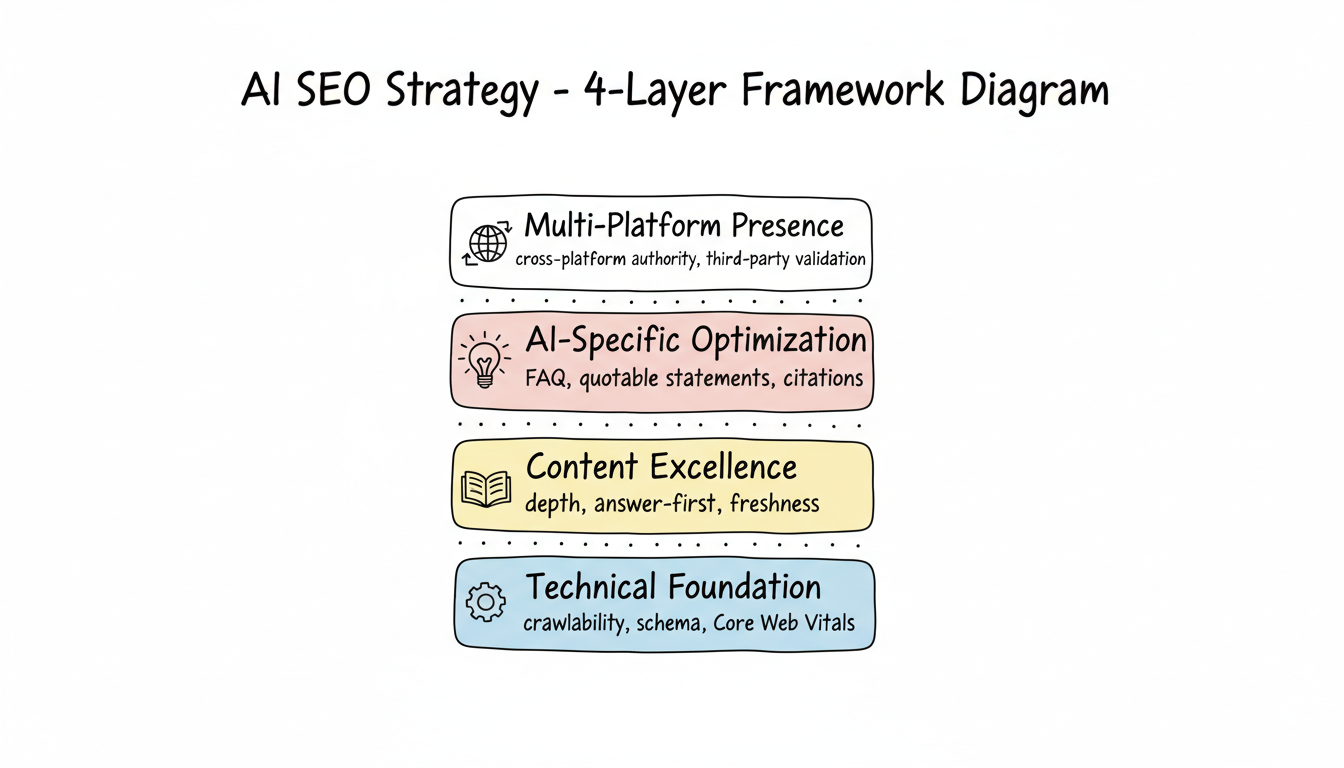
Modern AI SEO strategy operates across multiple layers, each addressing different aspects of how users discover information.
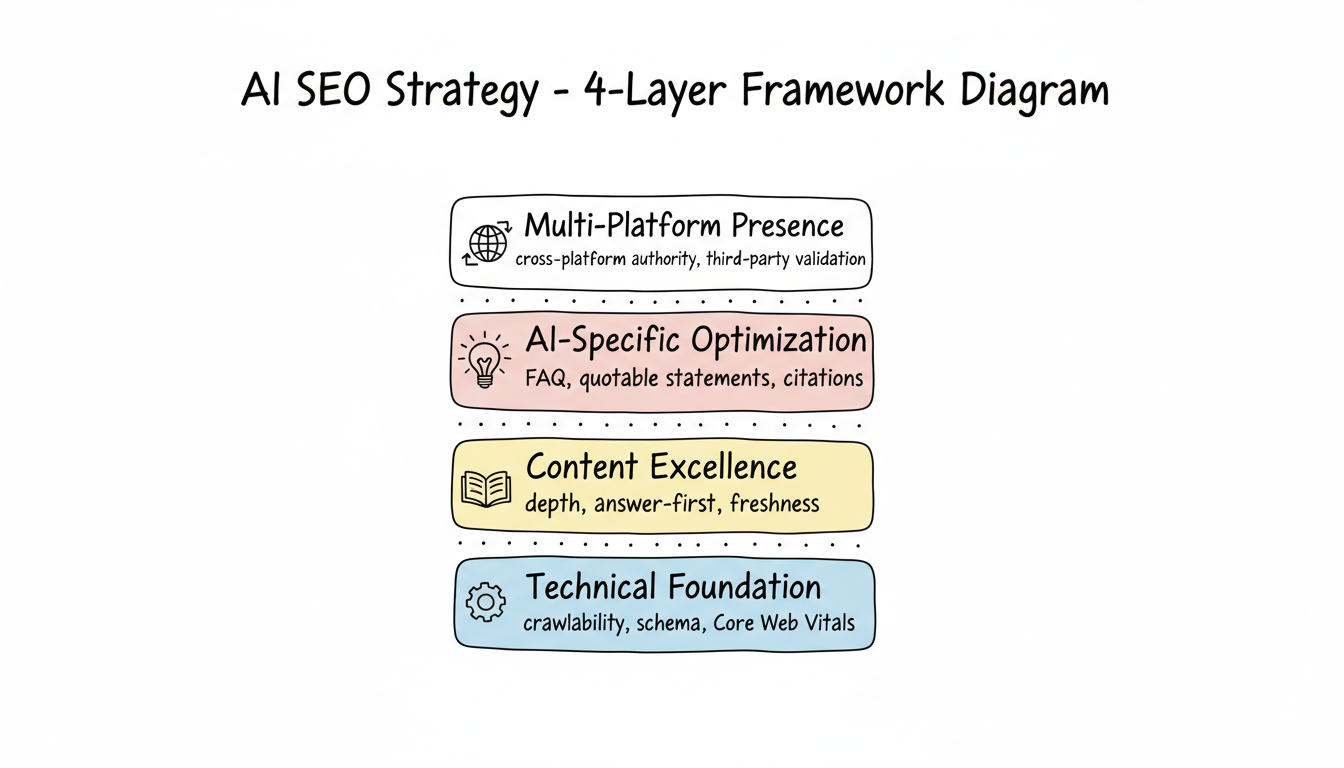
Technical SEO remains essential for AI visibility. Without proper technical foundations, AI systems cannot effectively crawl, understand, or cite your content.
Core technical requirements:
This foundation supports everything else in your AI SEO strategy.
Quality content serves both traditional search rankings and AI citations. Your content strategy should address:
Comprehensive topic coverage: Build depth on core subjects rather than thin pages targeting individual keywords. AI systems prefer authoritative sources that demonstrate expertise.
Answer-first formatting: Structure content so direct answers appear immediately after headings. AI systems extract information at the paragraph level—front-load key points.
Entity consistency: Maintain consistent brand information across all platforms AI systems reference. Inconsistency reduces trust signals.
Regular updates: Content freshness matters. Research shows content updated within the last 13 weeks is significantly more likely to be cited by answer engines.
Beyond traditional SEO, optimize specifically for AI discovery:
Schema implementation: Deploy FAQ, HowTo, and Speakable schemas to explicitly mark content for AI search optimization.
Quotable statements: Create clear, concise statements that AI systems can quote directly. Aim for standalone paragraphs under 50-60 words.
FAQ sections: Add comprehensive FAQ sections that address questions users actually ask. These formats align with how answer engines select sources.
Citation-worthy content: Include statistics, expert quotes, and verifiable data points that give AI systems confidence to cite your content.
AI systems evaluate your brand across multiple platforms, not just your website.
Cross-platform authority: Build presence on platforms AI systems reference—LinkedIn, industry publications, reputable directories, and review sites.
Consistent messaging: Ensure brand information remains accurate and consistent across all platforms.
Third-party validation: Secure mentions and citations from authoritative third-party sources that AI systems trust.
Follow this implementation sequence to build your AI SEO strategy systematically.
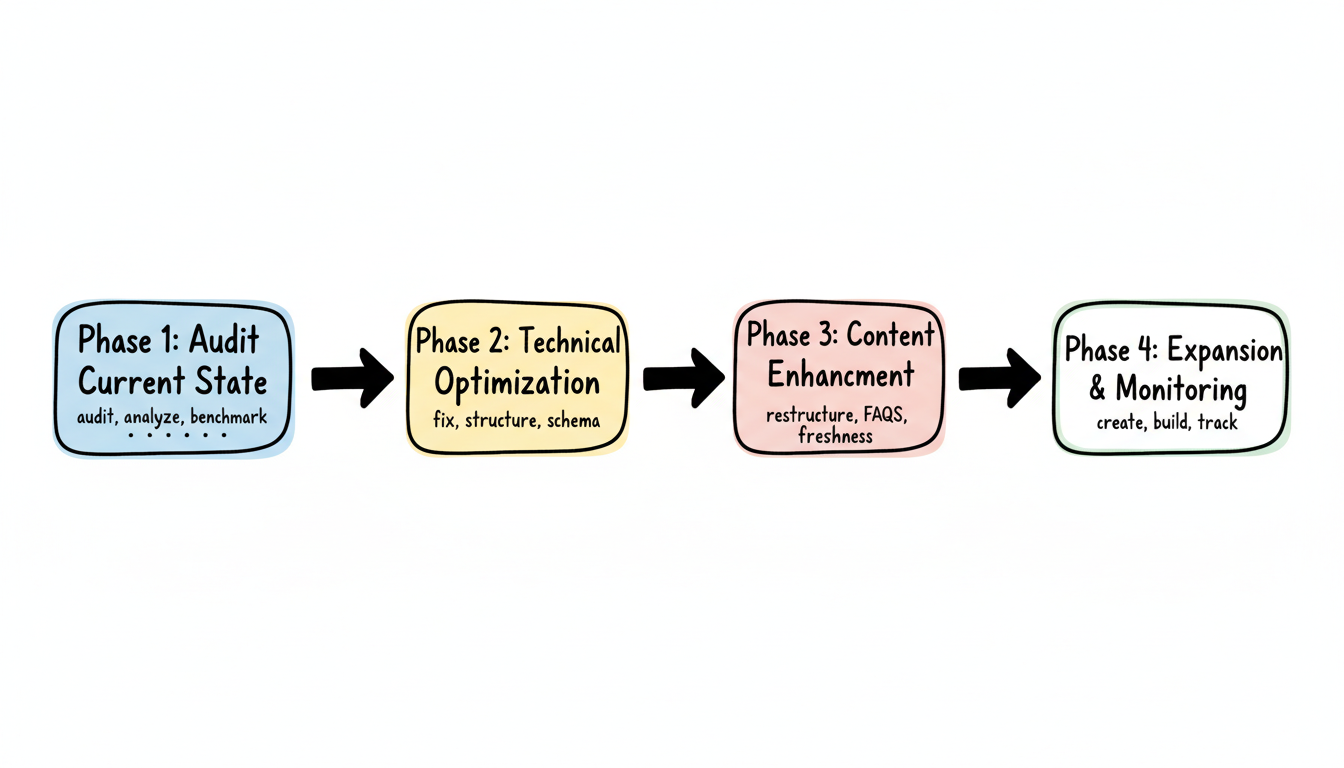
Before implementing changes, understand your starting position:
Address foundational issues first:
Optimize existing content for AI visibility:
Implementing a comprehensive AEO strategy ensures your content remains discoverable across both traditional search engines and emerging AI platforms.
Build on your foundation with ongoing work:
AI tools can enhance your SEO work when used appropriately.
Research and analysis: AI-powered tools excel at keyword research, intent analysis, competitor analysis, and identifying content gaps at scale.
Content support: Use AI for content briefs, outline generation, and draft assistance—but maintain human oversight for quality, accuracy, and brand voice.
Automation: Automate routine tasks like technical audits, rank tracking, and performance reporting to free time for strategic work.
Monitoring: Leverage AI search citation tracking tools that monitor citations across AI platforms, not just traditional rankings.
The most effective approaches use AI as a tool to enhance human strategy rather than replace strategic thinking.
Track metrics across both traditional and AI dimensions:
Traditional SEO metrics:
AI visibility metrics:
Build dashboards that show both metric types together for comprehensive visibility understanding.
An effective AI SEO strategy addresses visibility across traditional search and AI-powered discovery through a multi-layer approach.
The framework: Technical foundation, content excellence, AI-specific optimization, and multi-platform presence work together for comprehensive visibility.
The implementation: Start with technical foundations, enhance existing content, then expand systematically while monitoring performance across both traditional and AI channels.
The tools: Use AI tools to enhance efficiency while maintaining human oversight for strategy and quality.
Organizations implementing structured AI SEO strategies position themselves for visibility wherever users look for information—whether clicking through traditional results or receiving AI-generated answers. For practical implementation examples, review our AEO case studies to see how organizations have successfully adapted their strategies.
Technical improvements can show results within weeks. Content optimization typically takes 1-3 months to affect rankings. AI citation improvements may take 3-6 months as models update their knowledge bases. Plan for 6-12 months for comprehensive, measurable impact across all channels.
Focus on SEO foundations first. Strong traditional SEO creates the authoritative, well-structured content that AI systems need to cite. Once SEO fundamentals are solid, layer AI-specific optimizations on top of that foundation.
Popular options include Semrush and Ahrefs for traditional SEO with AI features, Surfer SEO and Clearscope for content optimization, and specialized tools like Conductor for AI citation tracking. Start with tools that address your specific gaps rather than adopting everything at once.
Start with technical issues that block visibility entirely. Then optimize your highest-performing existing content for AI extraction. Finally, expand with new content and multi-platform presence. Prioritize based on impact and resource requirements.
By submitting this form, you agree to our Privacy Policy and Terms & Conditions.