February 19, 2026


Traditional SEO analytics track rankings, impressions, and clicks. AI search visibility requires entirely different measurement approaches. When ChatGPT, Perplexity, or Google AI Overviews cite your content, standard analytics tools miss these interactions entirely. Citation tracking—monitoring when and how AI systems reference your brand—has emerged as the essential measurement layer for AI-first search strategies.
According to StubGroup's GEO guide, AI citation tracking monitors how often AI engines mention your brand. Tools like Profound, Superlines, and custom monitoring solutions track brand mentions and citations across ChatGPT, Claude, Gemini, Perplexity, and Google AI Overviews. Share of AI voice is replacing traditional search market share as the primary visibility metric.
AI search platforms don't provide webmaster tools or analytics dashboards showing your performance.
According to SEO.com's AI search optimization guide, AI search optimization goes beyond keyword optimization—it's about sharing the right information with AI engines to get your business cited in responses. Without effective AI search citation tracking, you're optimizing blind, unable to measure what's working.
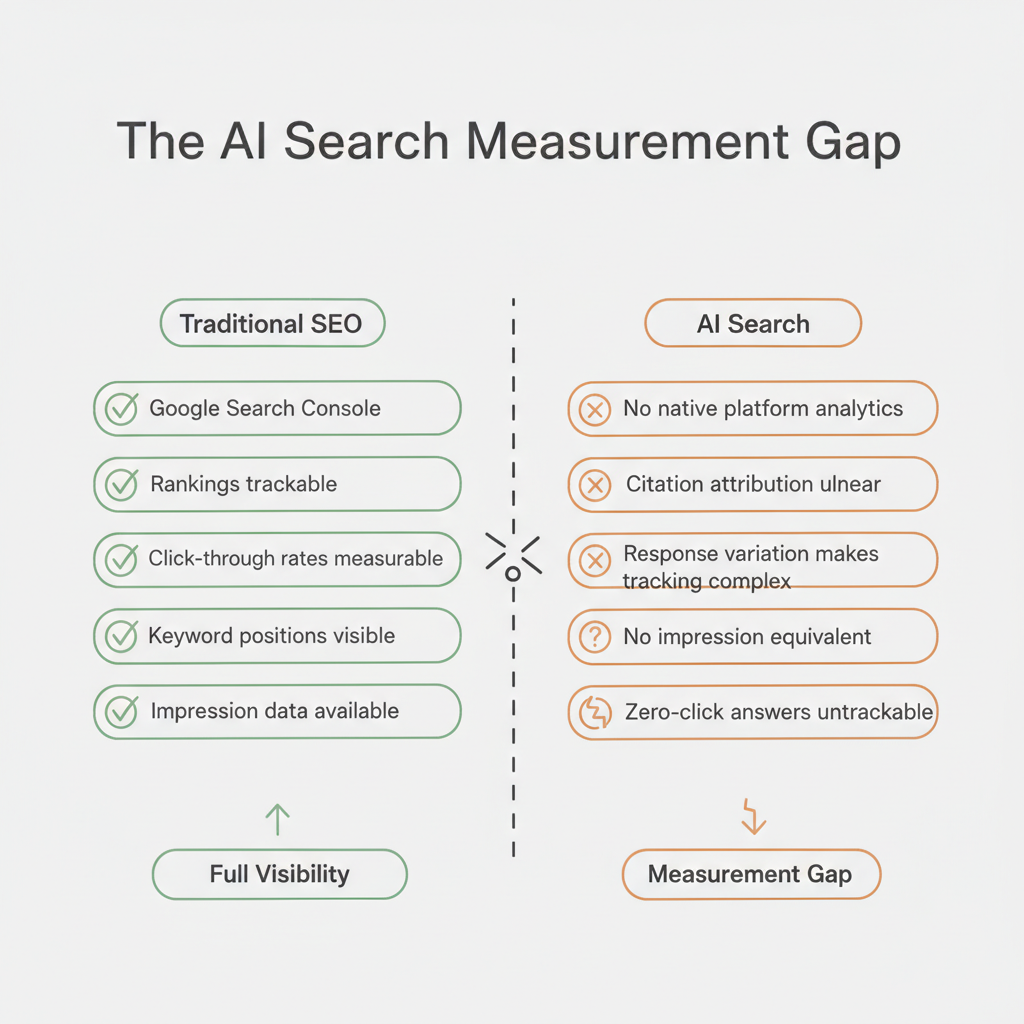
The measurement gap:
Traditional SEO | AI Search |
Google Search Console shows rankings | No native AI platform analytics |
Click-through rates measurable | Citation attribution unclear |
Keyword positions trackable | Response variation makes tracking complex |
Impression data available | No impression equivalent exists |
Citation tracking distinguishes between different types of AI visibility.
According to MarketerMilk's AI monitoring guide, AI monitoring tools track both mentions (direct brand recommendations in responses) and citations (when AI uses your content as a source). These serve different purposes: mentions indicate brand recognition, while citations indicate content authority. Understanding Copilot citation patterns helps reveal how different AI platforms attribute sources differently.
Citation types explained:
AI Visibility Types
├── Direct Citations
│   ├── AI links to your content
│   ├── Explicit source attribution
│   ├── "According to [brand]" references
│   └── Highest trust indicator
│
├── Brand Mentions
│   ├── Name appears in response
│   ├── Recommended as solution
│   ├── Listed among options
│   └── Brand recognition signal
│
├── Indirect References
│   ├── Your data/insights used
│   ├── No explicit attribution
│   ├── Content influenced answer
│   └── Difficult to track
│
└── Sentiment Context
    ├── Positive recommendation
    ├── Neutral mention
    ├── Comparative context
    └── Critical reference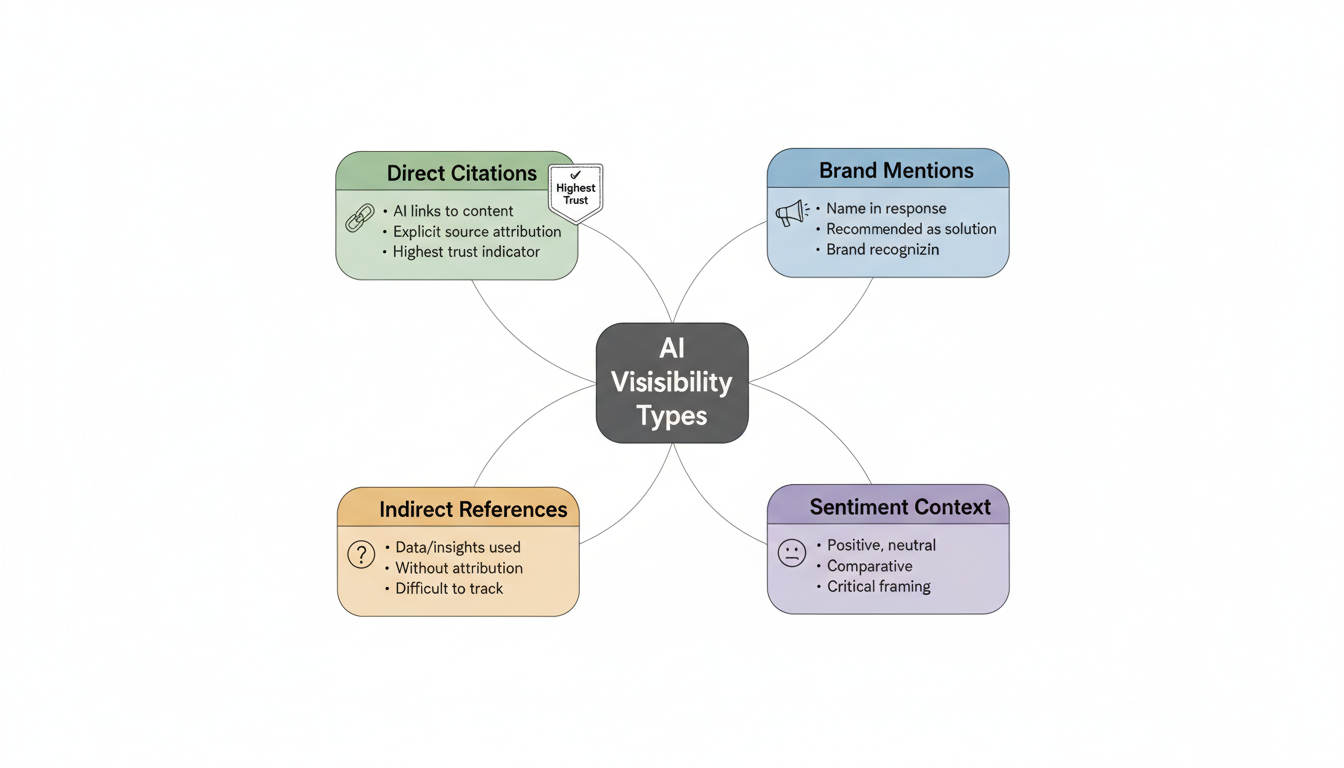
Several platforms now offer AI visibility monitoring capabilities.
According to LinkedIn's LLM SEO tools comparison, the leading AI visibility tracking tools include Semrush AI Toolkit ($99+/month), Ahrefs Brand Radar ($188+/month), Otterly AI ($29+/month), Writesonic GEO, LLMrefs, and Peec AI. Each offers different coverage across AI platforms and varying feature depth. Many marketers also leverage free AI SEO software tools for basic monitoring before upgrading to paid solutions.
Tool comparison:
Tool | Starting Price | Key Features | Platforms Covered |
Otterly AI | $29/month | LLM monitoring, query tracking | ChatGPT, Perplexity, Gemini |
Semrush AI Toolkit | $99/month | Integrated SEO + AI tracking | Multiple platforms |
Ahrefs Brand Radar | $188/month | Competitor comparison | ChatGPT, Claude, others |
SE Visible | Custom | Enterprise features | Comprehensive coverage |
LLMrefs | Varies | Citation-focused | Major LLMs |
For businesses seeking expert guidance on tool selection and implementation, AEO services consultation provides strategic support for citation tracking programs.
Citation tracking requires new measurement frameworks beyond traditional SEO metrics.
According to SE Visible's AI tracking guide, in AI results, positions can flip multiple times in a single day—staying visible means constant monitoring and fast tweaks. Key metrics include citation frequency, share of AI voice, sentiment analysis, and competitive positioning. These AEO optimization metrics differ fundamentally from traditional search analytics.
Essential AI visibility metrics:
AI Visibility Metrics Framework
├── Citation Metrics
│   ├── Citation frequency (daily/weekly)
│   ├── Citation rate (% of relevant queries)
│   ├── Source attribution accuracy
│   └── Link inclusion rate
│
├── Share of Voice
│   ├── Brand mentions vs competitors
│   ├── Category visibility percentage
│   ├── Topic-specific share
│   └── Platform-specific share
│
├── Quality Metrics
│   ├── Sentiment analysis (positive/negative)
│   ├── Context accuracy
│   ├── Recommendation strength
│   └── Competitive positioning
│
└── Trend Metrics
    ├── Visibility changes over time
    ├── Query pattern shifts
    ├── Platform-specific trends
    └── Seasonal variations
Effective monitoring requires systematic approach across platforms.
According to Passionfruit's AI brand monitoring guide, AI brand monitoring tools track the continuously changing answers that AI assistants provide. You need to monitor regularly since AI responses vary based on timing, user context, and platform updates. Following a comprehensive AI SEO implementation checklist ensures you establish proper tracking from the start.
Monitoring setup checklist:
Step | Action | Purpose |
1 | Define tracking queries | Cover key topics/questions |
2 | Select monitoring tools | Match budget and needs |
3 | Establish baseline | Know current visibility |
4 | Set tracking frequency | Daily for competitive terms |
5 | Configure alerts | Catch significant changes |
6 | Track competitors | Benchmark performance |
Supplement automated tools with systematic manual checking.
According to StubGroup, start with a manual baseline: ask chatbots about your niche and note whether they cite you, which page they pull, and how they describe you. Manual auditing catches nuances automated tools miss. This process complements the broader LLM optimization guide strategies for improving AI visibility.
Manual audit process:
AI citation tracking faces inherent measurement limitations.
According to eesel.ai's AI search traffic analysis, AI search attribution remains challenging because many AI interactions don't generate trackable referral traffic. Users may get answers without clicking through, or traffic may be attributed to other sources. Understanding cross-platform AI search ROI helps contextualize these measurement gaps.
Attribution gaps:
Citation tracking reveals competitive positioning in AI responses.
According to AIclicks' competitive analysis guide, monitoring competitor AI citations shows which brands AI systems trust for different topics. This intelligence informs content strategy and identifies visibility gaps. Many organizations leverage AI-powered search tools to automate competitive monitoring.
Competitive tracking priorities:
Analysis Area | What to Track | Strategic Value |
Citation frequency | Who gets cited most | Authority benchmark |
Topic coverage | Which topics cite whom | Content gap identification |
Recommendation context | How competitors are described | Positioning intelligence |
Platform variance | Who wins on which platform | Platform-specific strategy |
Citation tracking only matters if it drives optimization decisions.
According to Grow and Convert's AI SEO strategy, the best approach is to track real AI citations—as well as traffic and leads from AI—then double down on what's working. Citation data should inform content updates, topic prioritization, and authority building efforts. Teams should regularly review AI search KPI goal setting to align citation metrics with business objectives.
Data-to-action framework:
Citation Insights → Actions
├── Low citation rate
│   └── Restructure content for AI extraction
│
├── Competitor winning specific topics
│   └── Create deeper, more authoritative content
│
├── Negative sentiment in mentions
│   └── Address criticism, improve offerings
│
├── High mentions, low citations
│   └── Add structured data, improve sourcing
│
└── Platform-specific gaps
    └── Optimize for underperforming platforms
AI search citation tracking enables data-driven AEO strategies:
According to LinkedIn's AI search thought leadership, brands must track AI visibility with the same rigor they apply to traditional search rankings. Citation tracking provides the feedback loop necessary for continuous AI search optimization.
By submitting this form, you agree to our Privacy Policy and Terms & Conditions.