Optimizing for AI search engines requires a systematic approach that goes beyond traditional SEO tactics. This comprehensive checklist covers every step needed to improve your visibility across ChatGPT, Google AI Overviews, Perplexity, and other AI-powered search platforms.
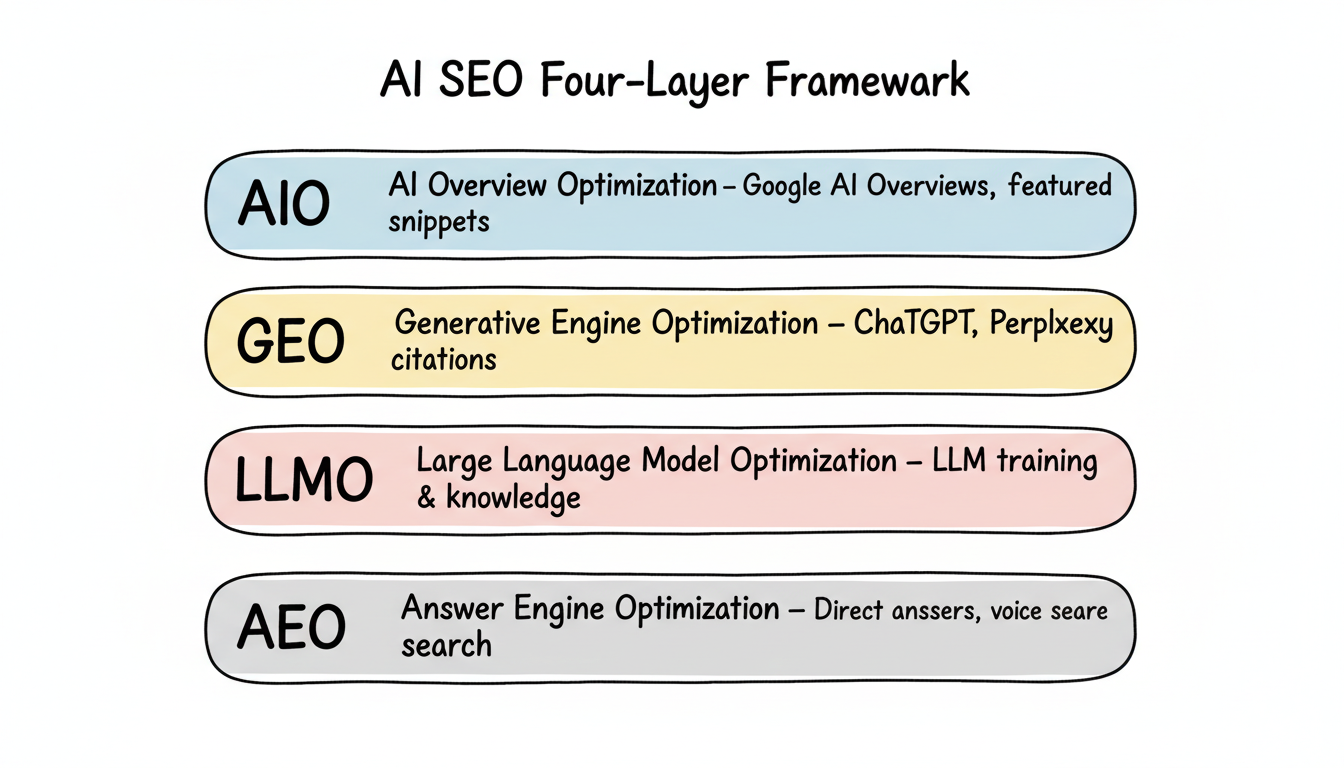
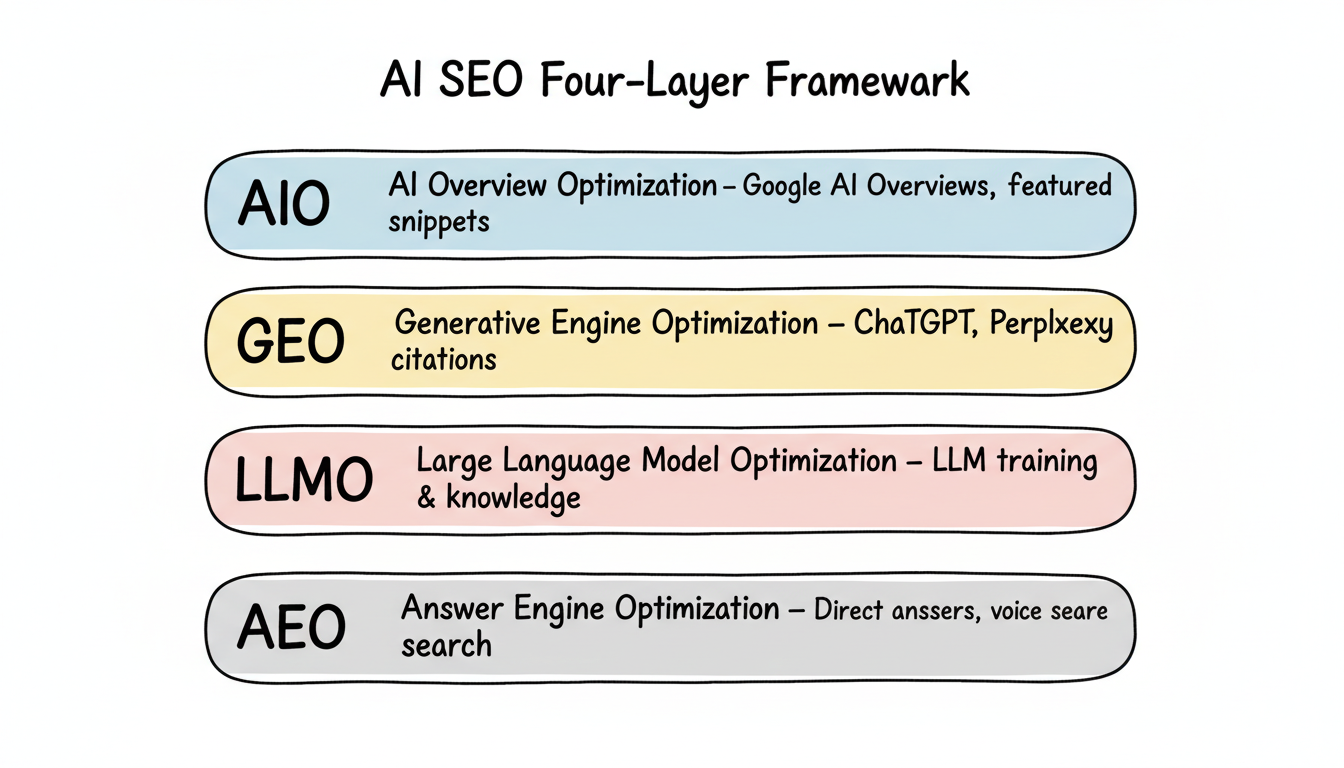
According to Growth Engines' 2026 framework, successful AI SEO implementation follows a four-layer approach: AI Overview Optimization (AIO), Generative Engine Optimization (GEO), Large Language Model Optimization (LLMO), and Answer Engine Optimization (AEO).
Pre-Implementation Foundation
Technical Setup Checklist
Before optimizing content, ensure your technical foundation supports AI discovery:
- Verify site crawlability: Confirm your robots.txt allows AI crawlers (OAI-SearchBot, PerplexityBot, AndiBot)
- Check page speed: Target under 3 seconds load time; AI systems favor fast-loading pages
- Enable HTTPS: Secure connections are baseline requirements for AI citations
- Implement XML sitemap: Submit updated sitemaps to Google Search Console
- Fix broken links: AI systems penalize sites with poor user experience signals
Schema Markup Foundation
Kevin Indig's State of AI Search Optimization 2026 emphasizes that structured data is critical for AI comprehension:
- Organization schema: Include name, logo, sameAs properties linking to social profiles
- Article schema: Add author, datePublished, dateModified, and publisher properties
- FAQ schema: Mark up common questions and answers on relevant pages
- HowTo schema: Structure step-by-step content with proper markup
- Product schema: Include specifications, pricing, and review data where applicable
Content Optimization Checklist
Answer-First Structure
AI systems extract direct answers from content. Structure every page with:
- Lead with the answer: First 40-60 words should directly answer the primary query
- Use clear headings: Implement logical H1 → H2 → H3 hierarchy
- Short paragraphs: Keep to 2-3 sentences maximum per paragraph
- Bullet points for lists: Format key information as scannable lists
- Tables for comparisons: Present comparative data in structured tables
Entity Optimization
Move beyond keywords to entity-based optimization:
- Define entities clearly: Use proper nouns consistently across your site
- Link to authoritative sources: Reference Wikipedia, Wikidata, and industry databases
- Build entity relationships: Use schema properties like about, mentions, and sameAs
- Maintain consistency: Ensure entity names match across all platforms and pages
Citation-Worthy Content
According to Addlly.ai's AEO Checklist, content must be authoritative enough for AI to cite:
- Include original statistics: Add unique data from surveys, research, or case studies
- Use expert quotes: Attribute insights to named industry experts
- Cite credible sources: Reference authoritative publications with hyperlinks
- Provide specific examples: Replace generic claims with concrete, measurable outcomes
- Update regularly: Refresh statistics and information quarterly
Google AI Overviews
- Target question-based queries: Optimize for "how to," "what is," and comparison queries
- Monitor Search Console: Track AI Overview appearances in performance reports
- Optimize featured snippet potential: Structure content for position-zero extraction
ChatGPT and Perplexity
- Build cross-web authority: Earn mentions on Wikipedia, news sites, and industry publications
- Create comprehensive guides: Develop definitive resources on core topics
- Maintain brand consistency: Ensure identical positioning across all digital properties
Microsoft Copilot
- Optimize LinkedIn presence: Update company pages with comprehensive information
- Target enterprise queries: Create B2B-focused content addressing business needs
Authority Building Checklist
Digital PR Activities
- Secure guest contributions: Publish on industry publications monthly
- Provide expert commentary: Respond to journalist queries via HARO alternatives
- Earn unlinked mentions: Focus on brand mentions even without backlinks
- Create linkable assets: Develop original research and data studies
- Wikipedia entry: Create or update where notable (follow Wikipedia guidelines)
- LinkedIn optimization: Complete all company page sections
- Industry directories: List in relevant professional databases
- Review platforms: Maintain profiles on G2, Capterra, or industry-specific sites
Measurement and Tracking
Weekly Monitoring Tasks
- Query AI platforms: Test 10-20 relevant queries across ChatGPT, Perplexity, and AI Overviews
- Document citations: Track when and where your brand appears
- Monitor competitors: Note competitor citations for benchmark comparison
- Check sentiment accuracy: Verify AI descriptions of your brand are correct
Monthly Review Tasks
- Analyze citation trends: Identify patterns in what content gets cited
- Update outdated content: Refresh statistics, dates, and examples
- Expand question coverage: Add content addressing new queries discovered
- Review schema implementation: Validate markup with testing tools
- Assess competitor shifts: Track changes in competitor AI visibility
Common Implementation Mistakes to Avoid
According to SEO.AI's optimization guide, these errors undermine AI SEO efforts:
- Blocking AI crawlers unnecessarily: Allow search-focused bots while blocking training-only crawlers
- Using vague language: Replace "innovative solution" with specific, measurable claims
- Hiding content in tabs or accordions: Keep critical information visible on page load
- Inconsistent entity references: Use identical names, titles, and descriptions everywhere
- Ignoring mobile optimization: AI systems factor in mobile user experience
Implementation Timeline
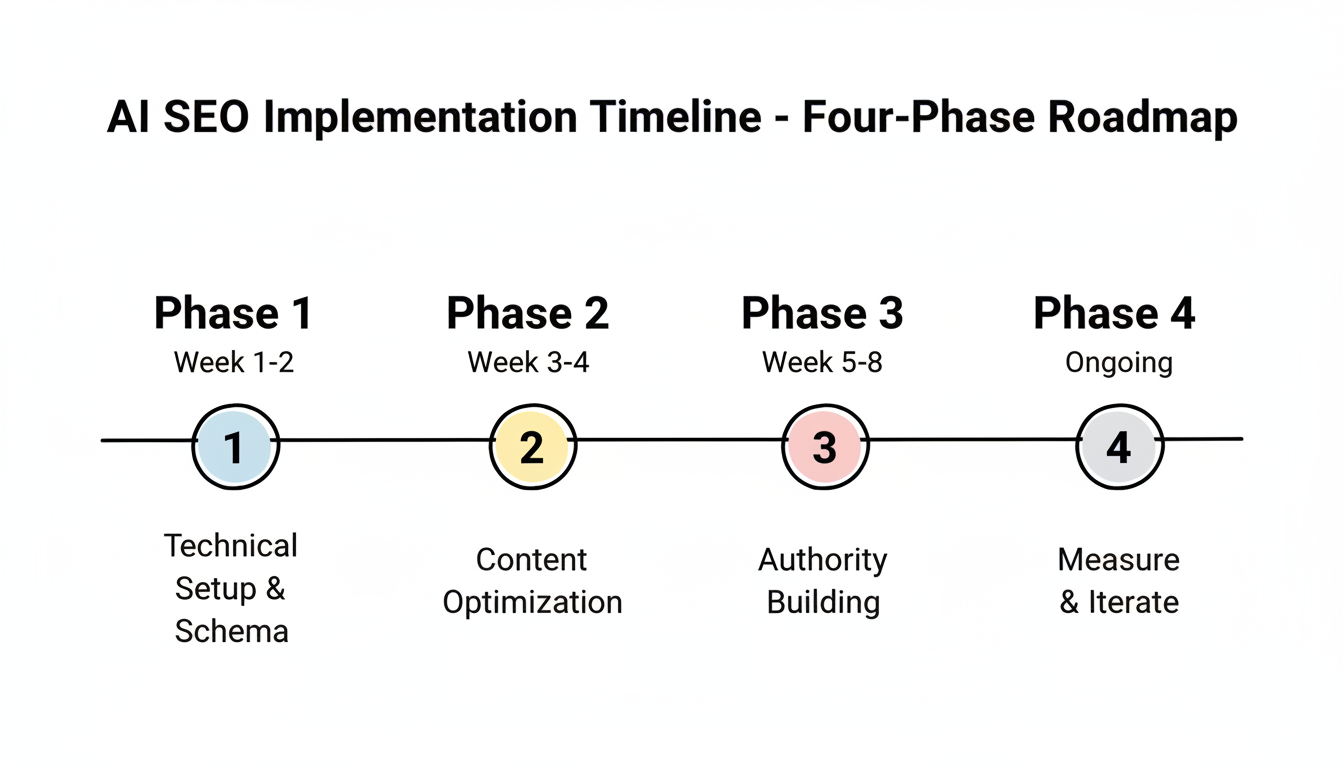
This checklist can be implemented in phases:
Phase 1 (Week 1-2): Complete technical setup and schema foundation Phase 2 (Week 3-4): Optimize existing content with answer-first structure Phase 3 (Week 5-8): Build authority through PR and platform presence Phase 4 (Ongoing): Measure, iterate, and expand content coverage
Businesses seeking professional guidance can leverage AEO consulting services to accelerate implementation. For organizations ready to formalize their approach, an AEO services contract ensures accountability and measurable results. Additionally, tracking performance requires an AI search analytics dashboard to monitor citations and visibility trends across platforms.
AI SEO implementation requires methodical execution across technical, content, and authority dimensions. Use this checklist as your ongoing reference, revisiting each section quarterly to ensure your optimization efforts remain current with evolving AI search algorithms.