
February 19, 2026


Last Updated: January 2026
AI search engines like ChatGPT, Perplexity, and Google AI Overviews have changed how people find information. Instead of returning lists of links, these platforms generate direct responses by synthesizing content from across the web. Optimizing for AI search engines requires specific approaches that differ from traditional SEO.
This guide explains practical steps for improving your visibility in AI-generated responses.
Understanding how AI search works helps inform optimization strategies.
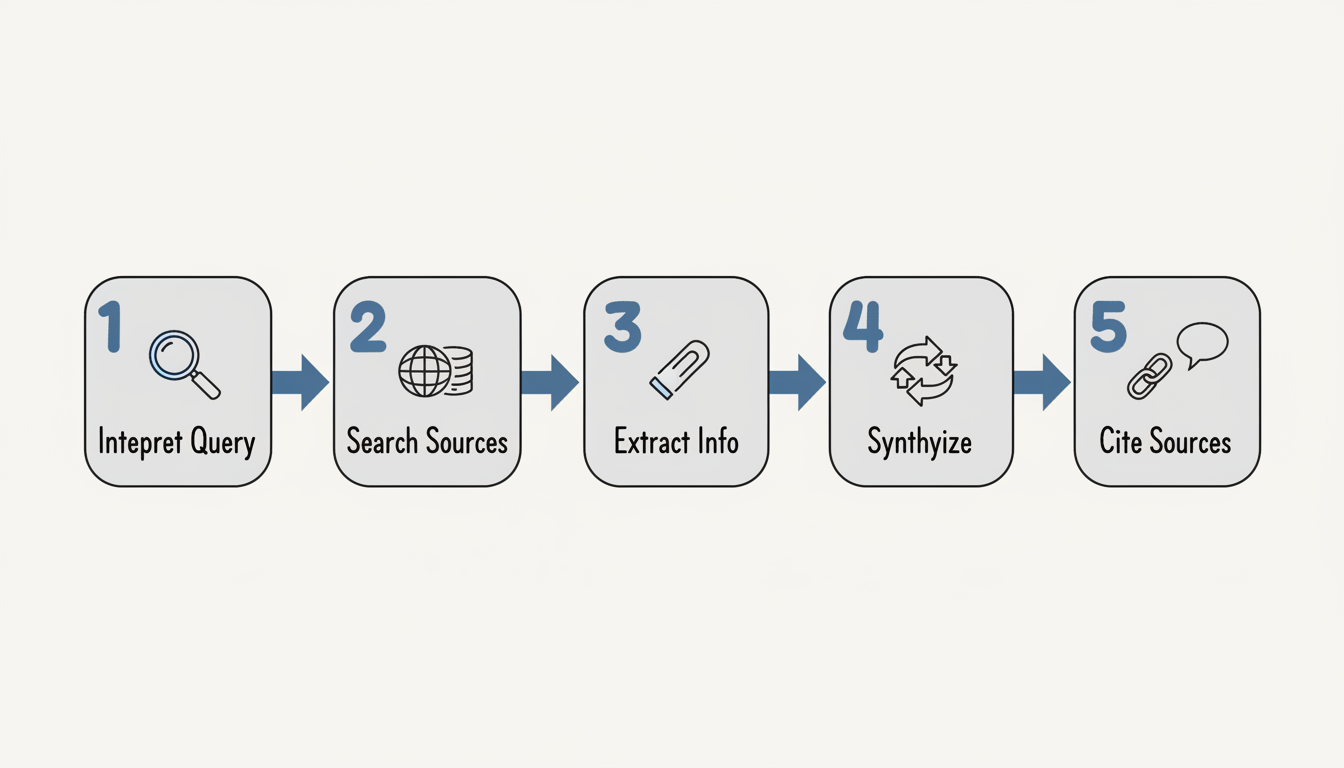
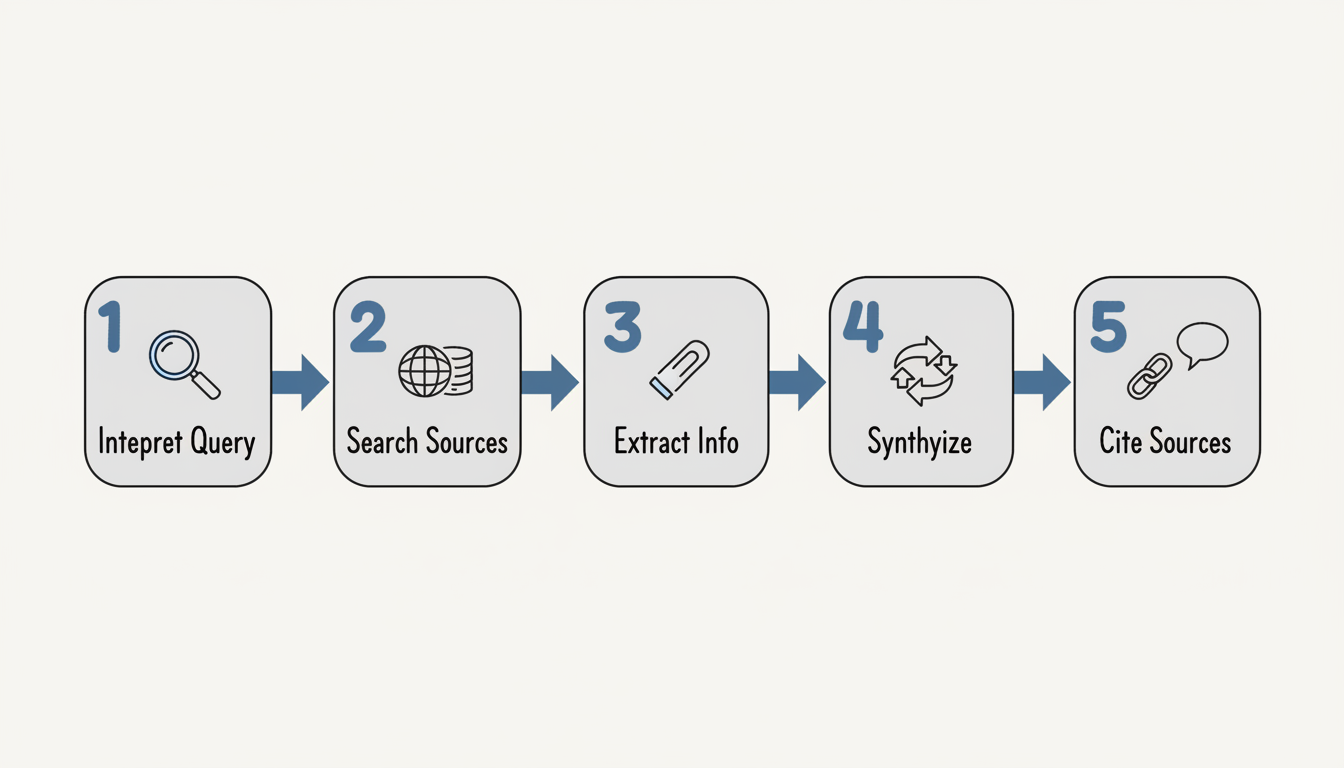
When users ask AI search engines questions, these platforms:
Your optimization goal is making your content easy for each of these steps.
AI search engines favor content that:
These factors differ somewhat from traditional ranking signals.
Start with technical foundations that enable AI access.
AI platforms use specific crawlers to access content. Check your robots.txt file to ensure these aren't blocked:
User-agent: GPTBot
Allow: /

User-agent: ChatGPT-User
Allow: /

User-agent: PerplexityBot
Allow: /

User-agent: ClaudeBot
Allow: /
If you've blocked these crawlers, AI platforms cannot include your content in responses.
AI crawlers need direct access to content:
Test by viewing your pages with JavaScript disabled to see what crawlers encounter.
Structured data helps AI systems understand your content:
FAQ Schema: Marks question-answer pairs for easy extraction
{
  "@type": "FAQPage",
  "mainEntity": [{
    "@type": "Question",
    "name": "Your question here",
    "acceptedAnswer": {
      "@type": "Answer",
      "text": "Your answer here"
    }
  }]
}
Article Schema: Provides context about your content
Organization Schema: Establishes entity identity across your site.
Structure content for AI extraction and citation.
AI engines extract specific statements to cite. Many businesses implementing AI SEO services find that restructuring content for extraction significantly improves citation rates. Optimize by:
Before: "There are many factors that influence pricing in this industry, and it really depends on what you're looking for and your specific situation."
After: "Industry pricing typically ranges from $5,000 to $25,000 depending on scope. Small projects start around $5,000, while comprehensive programs reach $25,000 or more."
Format headings as questions users actually ask:
This alignment increases chances that your content matches query interpretation.
Dedicated FAQ sections perform well for AI citation:
FAQs give AI engines pre-formatted question-answer pairs.
AI engines evaluate content recency:
Stale content loses citation priority over time.
AI engines assess source trustworthiness when selecting citations.
Ensure your brand information matches across platforms:
Inconsistent information confuses AI systems about your identity.
Build signals that indicate topic authority:
Strong SEO performance supports AI citation. Content ranking well in traditional search often gets cited more frequently by AI engines. Understanding what is AEO in marketing helps bridge the gap between traditional optimization and AI-specific approaches. Maintain solid SEO foundations while adding AI-specific optimization.
Track whether optimization efforts work.
Test your visibility directly:
Watch referral traffic from AI platforms in your analytics. Look for traffic from:
Growing AI referral traffic indicates improving visibility. Consider conducting an AI overview impact analysis to quantify changes in visibility and traffic patterns.
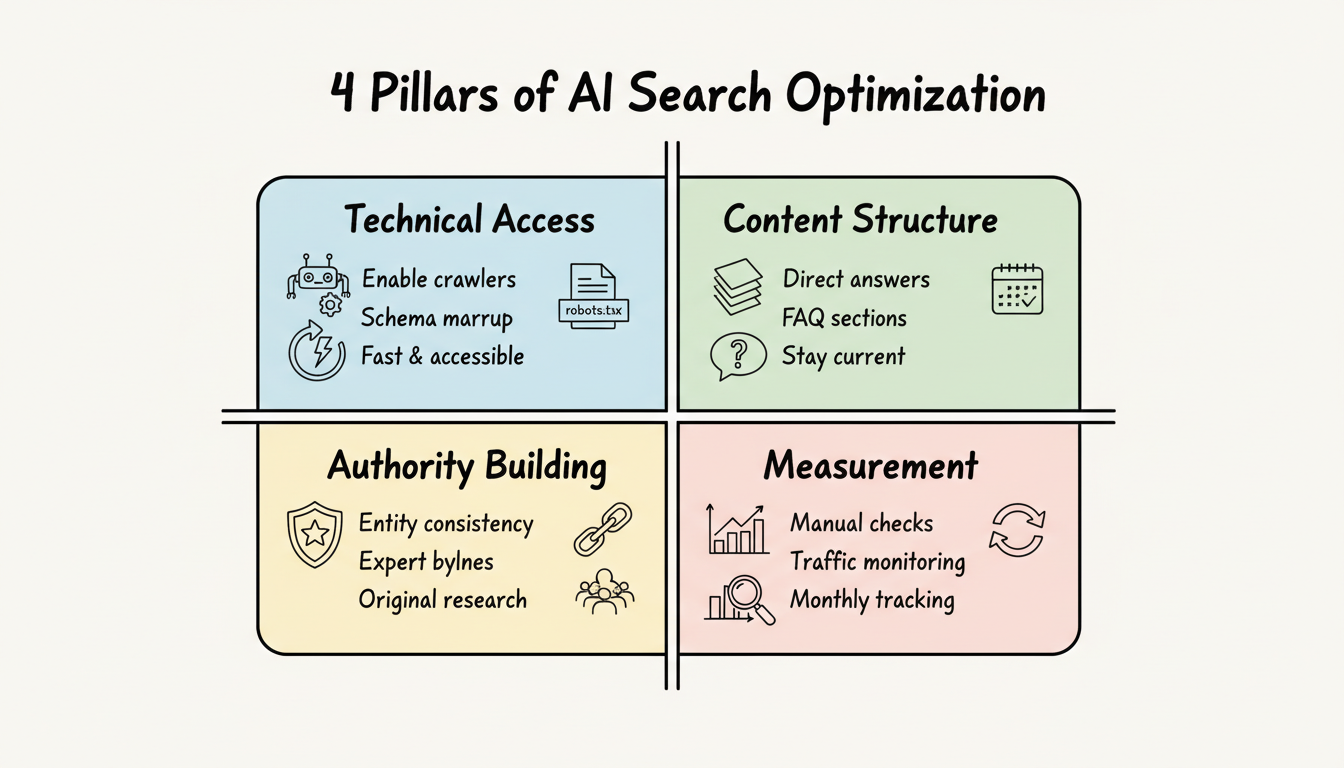
Technical access comes first. If AI crawlers can't reach your content, optimization efforts are wasted. Verify crawler access before other work.
Content structure matters significantly. AI engines extract specific statements. Short, direct, standalone paragraphs get cited more than dense text.
Authority influences citation. AI engines consider source trustworthiness. Build entity consistency and expertise signals through comprehensive AEO strategy framework implementation.
Measurement enables improvement. Without tracking visibility, you can't know what works. Build manual and automated monitoring habits.
Technical changes like crawler access can impact visibility within weeks. Content restructuring typically shows changes in 1-3 months as AI systems re-crawl and re-evaluate your content. Authority building takes 6-12 months for meaningful impact.
Yes. AI search engines often reference content that performs well in traditional search. Strong SEO foundations support AI citation success. The disciplines are complementary rather than competitive.
Focus on ChatGPT and Perplexity first due to their search volumes. Google AI Overviews matter for users who start on Google. Optimization tactics largely overlap across platforms, so improvements benefit all.
By submitting this form, you agree to our Privacy Policy and Terms & Conditions.



