February 19, 2026


Last Updated: January 2026
If you've encountered the term "AEO" in marketing discussions and wondered what it means, you're not alone. Answer Engine Optimization has become one of the most talked-about concepts in digital marketing—yet many professionals are still unclear about what it actually involves.
This guide explains AEO in plain terms: what it is, why it matters, and how it fits into modern marketing strategy.
AEO stands for Answer Engine Optimization. It's the practice of optimizing your digital content so AI-powered platforms cite and recommend it when users ask questions.
The term emerged as AI assistants like ChatGPT, Perplexity, and Google's AI Overviews became mainstream ways people search for information. These platforms don't just show links—they generate direct answers by pulling from sources they consider trustworthy and relevant.
AEO is how marketers ensure their content becomes one of those trusted sources.
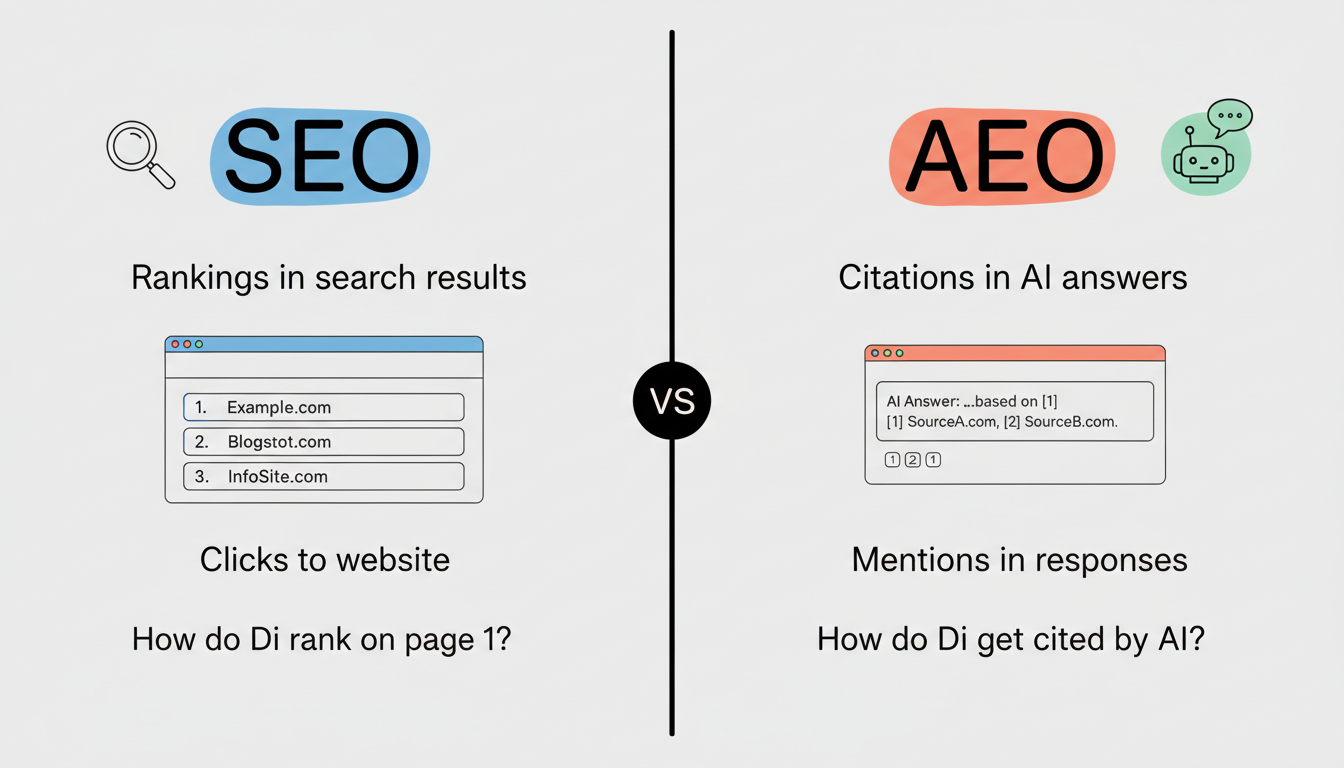
To understand AEO, it helps to contrast it with SEO (Search Engine Optimization), which most marketers already know:
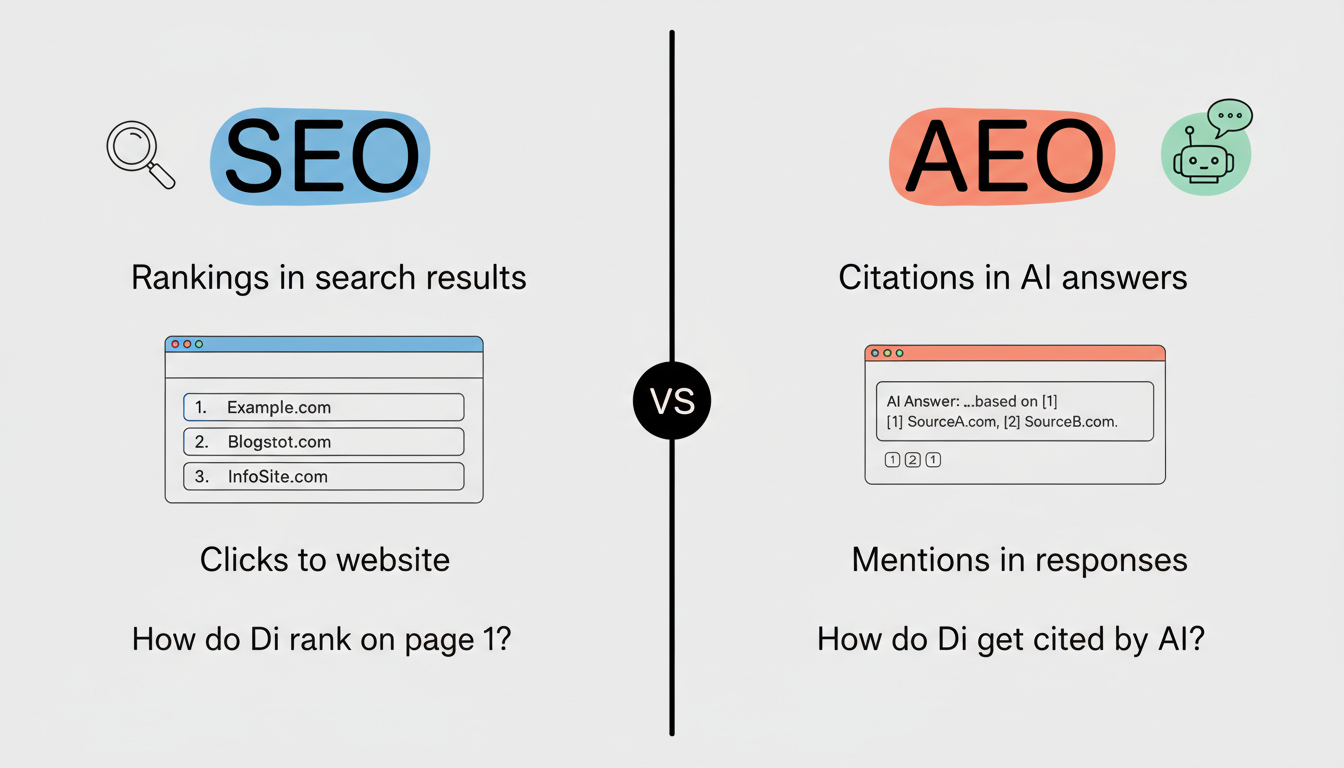
SEO focuses on ranking in search results. When someone searches Google, SEO determines whether your page appears on page one, page two, or not at all. Success means earning clicks to your website.
AEO focuses on being cited in AI answers. When someone asks ChatGPT or Perplexity a question, AEO determines whether the AI references your content in its response. Success means your information becomes part of the answer users receive.
Here's a practical example:
Both matter, but they require different approaches.
Several trends make AEO increasingly important:
ChatGPT reached 800 million weekly active users by the end of 2025. Perplexity, Google AI Overviews, and Microsoft Copilot have similarly grown. A significant portion of your potential customers now get information from AI assistants rather than traditional search.
Research shows 60% of searches now end without anyone clicking through to a website. Users get their answers directly from AI-generated responses. If you're only optimizing for clicks, you're missing the majority of information-seeking behavior.
When an AI system cites your content, users perceive it as a recommendation. This third-party validation carries weight—similar to being quoted in a news article. Brands appearing in AI responses benefit from implied endorsement.
Most marketers haven't adapted to AEO yet. Early adoption creates differentiation while competitors focus exclusively on traditional SEO. Learning from the history of AEO can provide valuable insights into how this field has evolved and where it's heading.
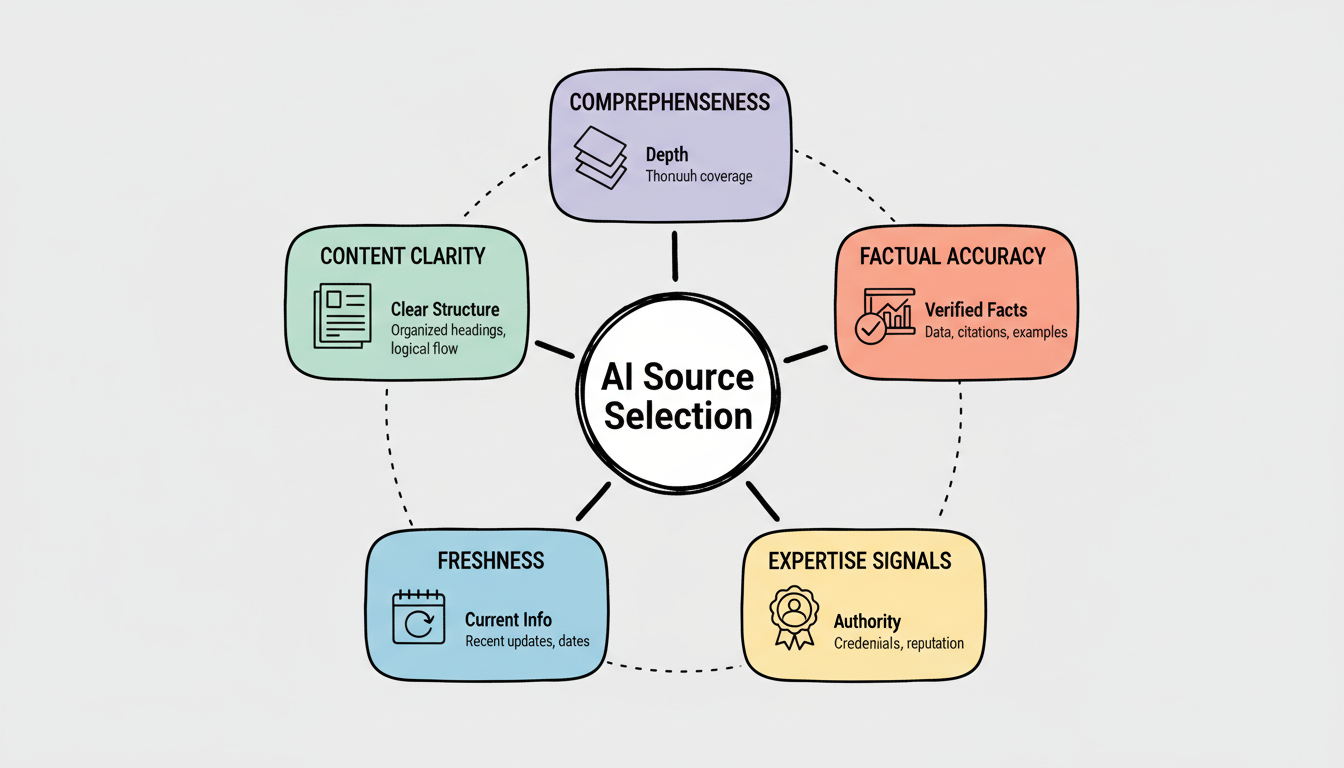
Understanding what AI systems look for helps you optimize effectively:
AI systems favor content that's clearly structured and easy to parse. Direct answers, organized headings, and logical flow make your content more citable.
AI systems evaluate whether content contains verifiable facts versus opinions or speculation. Content with data, citations, and specific examples gets cited more frequently.
AI systems assess whether content comes from authoritative sources. Author credentials, organizational reputation, and depth of coverage all influence selection.
AI systems prefer current information. Regularly updated content with accurate publication dates performs better than stale material.
AI systems often pull from sources that thoroughly cover a topic. Superficial content rarely earns citations over comprehensive alternatives.
Getting started with AEO doesn't require overhauling your entire marketing operation. These foundational strategies deliver impact:
Think about what questions your audience asks, then structure content to answer them directly. Use question-format headings like "What is [topic]?" and "How does [process] work?"
Place clear, concise answers near the top of each section. AI systems extract these direct responses for their answers. Developing a comprehensive AEO strategy ensures your content consistently meets AI system requirements.
Schema markup helps AI systems understand your content. Implement FAQ schema for question-and-answer content, Article schema for blog posts, and Organization schema for your company information.
Rather than creating scattered content across many topics, develop deep expertise in your core areas. AI systems recognize and prefer authoritative sources that consistently cover specific domains.
Regularly audit your content for outdated information. Update statistics, refresh examples, and ensure facts remain accurate. Display clear publication and update dates.
Experience, Expertise, Authoritativeness, and Trustworthiness matter to AI systems. Show author credentials, cite reputable sources, and demonstrate genuine expertise in your content.
AEO doesn't replace your existing marketing efforts—it extends them:
Content marketing gains new distribution. The same quality content you create for SEO becomes more valuable when it also earns AI citations.
Brand building gets amplified. AI recommendations increase brand visibility and trust beyond what traditional advertising achieves.
Lead generation expands. Appearing in AI responses reaches prospects during their research phase, often before they're ready to click or convert. Using the right AEO tools and software can help measure and improve your performance across these channels.
SEO efforts compound. Strong SEO helps AI systems discover your content; AEO ensures they select it for citation.
As AEO gains attention, some misunderstandings have spread:
"AEO replaces SEO" — False. Both matter. SEO drives discovery; AEO drives citation. They work together.
"AEO requires completely different content" — Mostly false. Quality content that serves users well performs for both. AEO optimization adds structural and technical elements.
"Only big brands can do AEO" — False. AI systems evaluate content quality, not brand size. Smaller organizations with excellent content can outperform larger competitors.
"AEO results are instant" — False. Building AI visibility takes time, similar to SEO. Consistency and quality compound over months.
If you're new to AEO, begin with these steps:
AEO in marketing means optimizing your content so AI systems cite and recommend it when users ask questions. As AI assistants become primary information sources for millions of users, AEO becomes essential for comprehensive digital visibility.
The good news: AEO builds on marketing fundamentals you likely already practice. Quality content, genuine expertise, and user value remain the foundation. AEO ensures these assets reach audiences through the channels they're increasingly choosing.
By submitting this form, you agree to our Privacy Policy and Terms & Conditions.