February 19, 2026


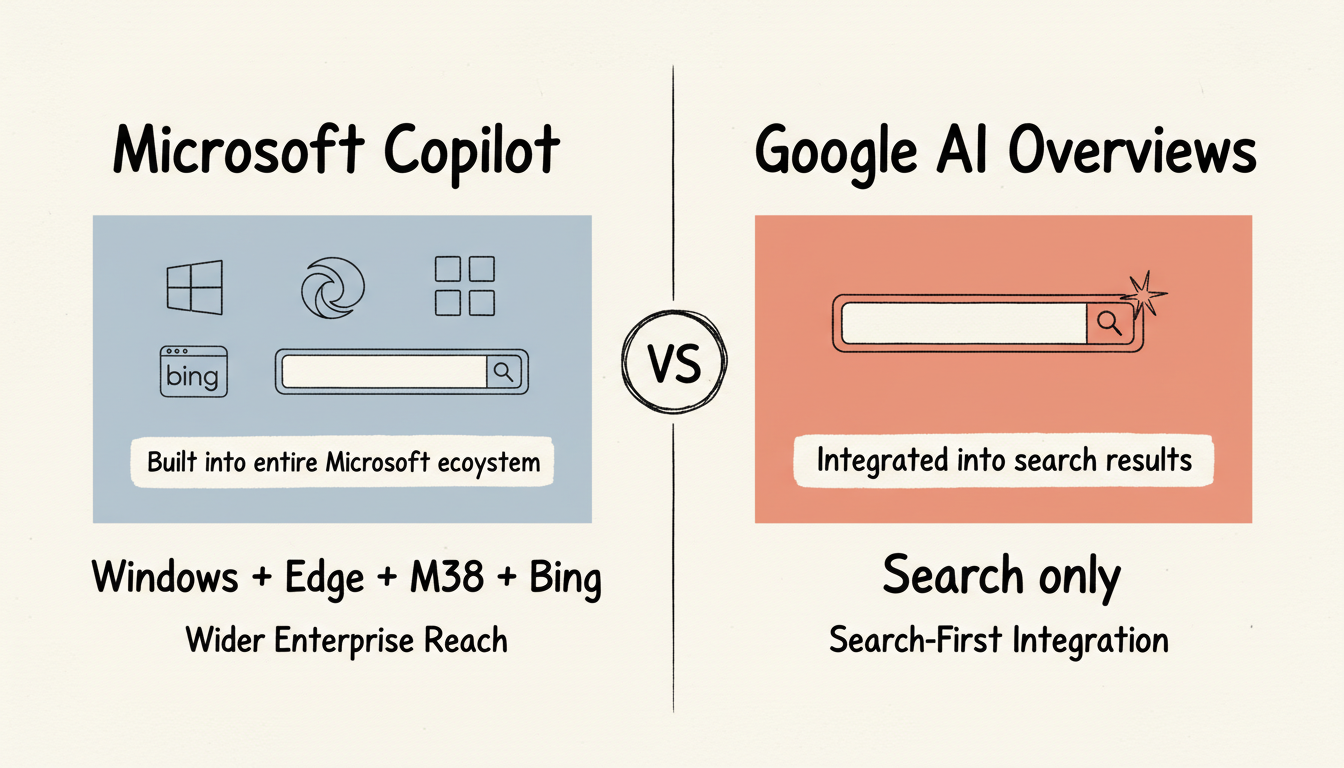
Google dominates search market share, but Bing's early adoption of AI through Microsoft Copilot has made it essential for answer engine optimization. The two platforms handle content differently—and optimizing for one doesn't automatically optimize for the other.
Here's how Bing SEO and Google SEO differ for AEO success in 2026.
According to NoGood's analysis of future search marketing, Microsoft moved first on AI integration. Bing integrated ChatGPT technology into Copilot before Google launched AI Overviews, giving Microsoft a head start in AI-powered search experiences.
Platform AI capabilities:
Platform | AI Feature | Integration Depth |
AI Overviews | Integrated into search results | |
Bing | Microsoft Copilot | Built into Windows, Edge, Microsoft 365, and Bing |
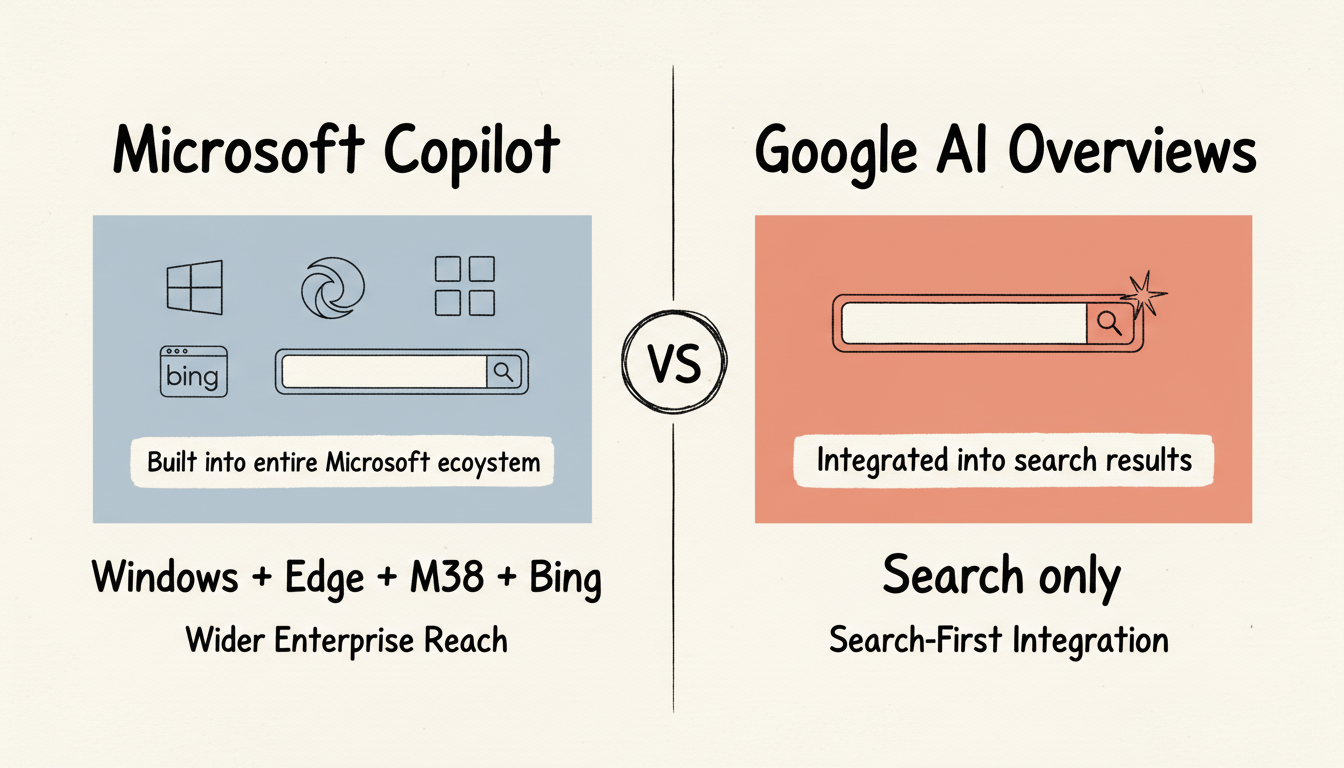
According to Conductor's analysis of generative AI and SEO, Microsoft Copilot reaches users across the entire Microsoft ecosystem—not just search. This enterprise integration makes Bing optimization critical for B2B visibility.
According to SEO Sherpa's comparison of Bing and Google SEO, the platforms handle ranking signals differently. Understanding these differences determines which optimization tactics work where, especially when implementing an aeo-marketing-audit strategy.
Key algorithm differences:
Factor | Bing | |
Keyword matching | Semantic, context-based | Still rewards exact-match keywords |
Meta descriptions | Often rewrites them | Uses them more directly |
Social signals | Minimal direct impact | More influential in rankings |
Domain age | Less weight | Stronger ranking factor |
Backlinks | Quality over quantity | Quality matters, but volume helps |
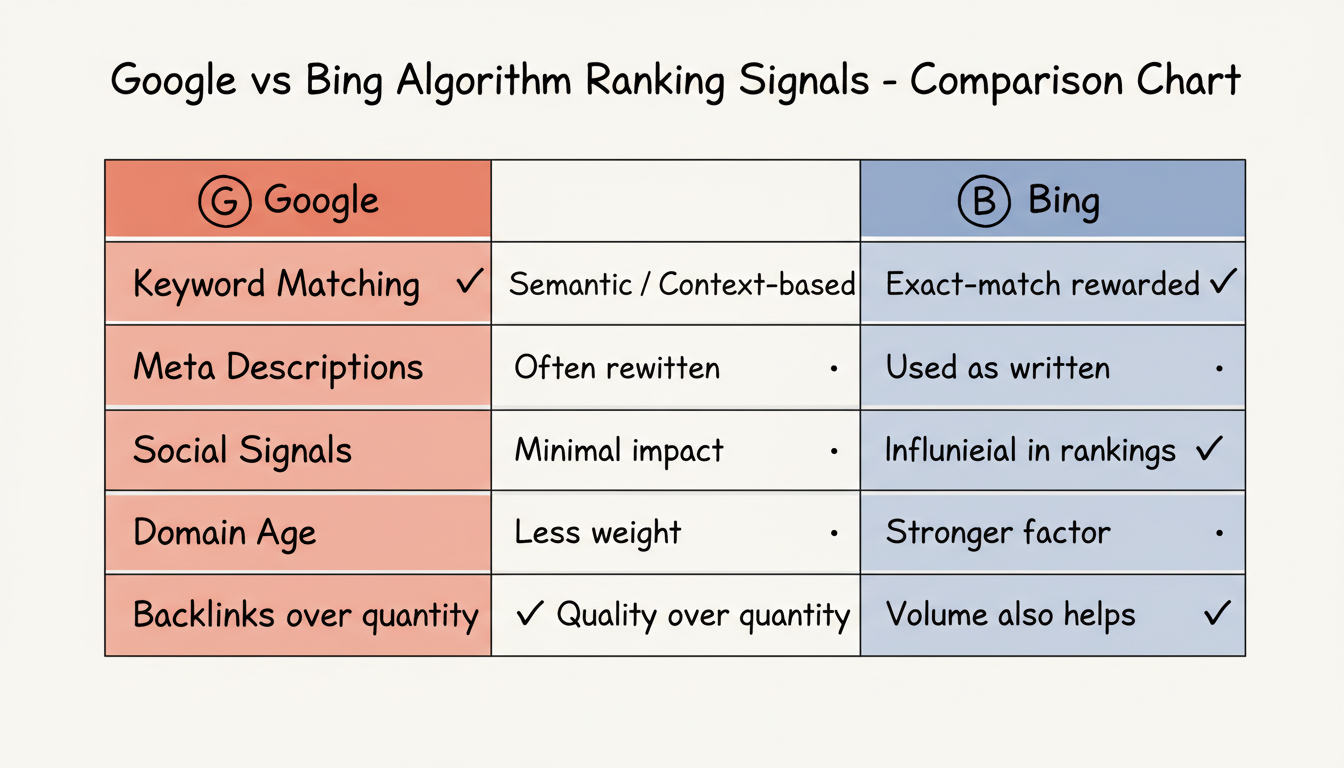
According to RedSEO's Bing optimization guide, Bing's algorithm still favors traditional SEO signals that Google has deprioritized. This means older SEO tactics often work better on Bing.
According to Apricorn Solutions' comparison, meta descriptions matter more for Bing. While Google frequently rewrites meta descriptions based on query context, Bing displays them more consistently.
Meta optimization by platform:
Element | Google Approach | Bing Approach |
Title tags | 50-60 characters optimal | Same, but exact keywords matter more |
Meta descriptions | Often rewritten | Displayed as written more frequently |
Keywords meta tag | Ignored | Still may be considered |
Alt text | Important for images | Very important for image search |
For AEO purposes, well-crafted meta descriptions on Bing content can influence how Copilot summarizes your page in AI responses.
According to Search Engine Journal's platform comparison, Bing considers social media engagement as a ranking factor more directly than Google.
Social signal impact:
For answer engine optimization, strong social signals may help Copilot recognize your brand as authoritative. Building social presence supports both traditional Bing rankings and AI citation potential.
According to Glowing Digital's Microsoft Copilot SEO guide, optimizing for Copilot requires understanding how it sources information differently than Google AI Overviews. This connects directly to broader seo-for-generative-ai principles.
Copilot citation factors:
According to ColorWhistle's Bing optimization strategies, content that ranks well in Bing's organic results has higher likelihood of Copilot citation—similar to how featured snippets predict Google AI Overview citations.
According to Microsoft's Clarity documentation, the Microsoft ecosystem dominates enterprise environments. Windows, Office 365, and Azure create natural touchpoints where Copilot serves as the default AI assistant.
Enterprise visibility factors:
For B2B companies, Bing SEO often delivers higher-value traffic than market share suggests. Enterprise decision-makers encounter Copilot throughout their workday.
According to SEOProfy's dual optimization guide, effective AEO requires platform-specific tactics rather than one-size-fits-all approaches. Understanding the distinctions outlined in our seo-aeo-geo-aio comparison helps clarify these differences.
Dual optimization strategy:
Tactic | Google Priority | Bing Priority |
Semantic content | High | Medium |
Exact-match keywords | Medium | High |
Meta description optimization | Medium | High |
Social media presence | Low | High |
Technical SEO | High | High |
E-E-A-T signals | High | Medium |
Structured data | High | High |
Both platforms reward comprehensive, authoritative content—but the path to authority differs.
According to Search Engine Land's structured data analysis, both Google and Bing use schema markup, but implementation priorities differ.
Schema priority by platform:
Schema Type | Google Use | Bing Use |
FAQPage | High (AI Overviews) | High (Copilot) |
HowTo | High | Medium |
Article | High | High |
Product | High | High |
LocalBusiness | High | High |
Implementing comprehensive structured data improves visibility in both platforms' AI features.
According to Copy.ai's AEO measurement guide, tracking visibility requires platform-specific tools. Leveraging google-search-console-aeo data alongside Bing Webmaster Tools provides comprehensive insights.
Measurement by platform:
Platform | Key Tools |
Google Search Console, GA4 | |
Bing | Bing Webmaster Tools, Microsoft Clarity |
AI Features | Dedicated AEO tracking tools |
Submit sitemaps and verify ownership in both Google Search Console and Bing Webmaster Tools. Monitor separately to identify platform-specific opportunities.
Bing SEO and Google SEO require different approaches for answer engine optimization:
Ignoring Bing in your AEO strategy means missing enterprise audiences who encounter Copilot throughout their Microsoft-powered workday.
By submitting this form, you agree to our Privacy Policy and Terms & Conditions.