
February 19, 2026


Last Updated: January 2026
Generative engine optimization (GEO) has emerged as a critical marketing discipline, yet formal training remains limited. As AI search platforms reshape how users find information, professionals need structured learning paths to develop GEO expertise. This guide helps you evaluate GEO courses and identify the skills worth developing.
The rapid growth of AI search platforms has created a skills gap. Marketing teams understand traditional SEO but lack systematic knowledge of optimizing for AI-generated responses. GEO training bridges this gap.
Most marketers learned SEO when search meant blue links on a results page. AI search works differently:
Without formal training, teams often apply outdated traditional SEO tactics that don't translate to AI visibility.
Organizations with GEO-trained teams can:
These capabilities translate to competitive advantage as AI search usage grows.
Evaluate GEO courses across several dimensions.
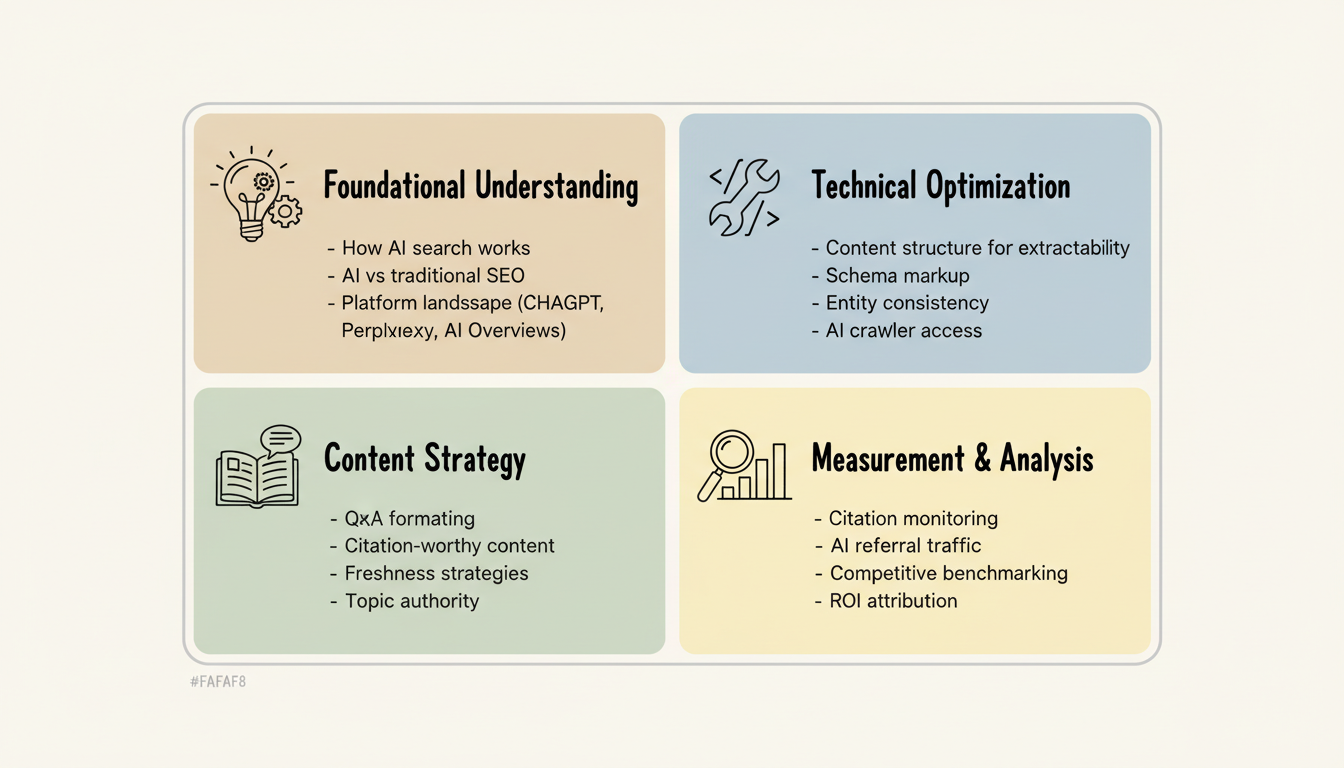
Quality GEO courses should cover:
Foundational Understanding
Technical Optimization
Content Strategy
Measurement and Analysis
Courses missing any of these areas leave significant gaps in practical application.
Theory without practice has limited value. Look for courses that include:
Hands-on work translates knowledge into applicable skills.
GEO evolves rapidly. Evaluate whether courses:
Courses teaching 2023-era tactics may include outdated information.
Assess who teaches the course:
Practical experience matters more than theoretical knowledge in an emerging field.
GEO education takes several forms.
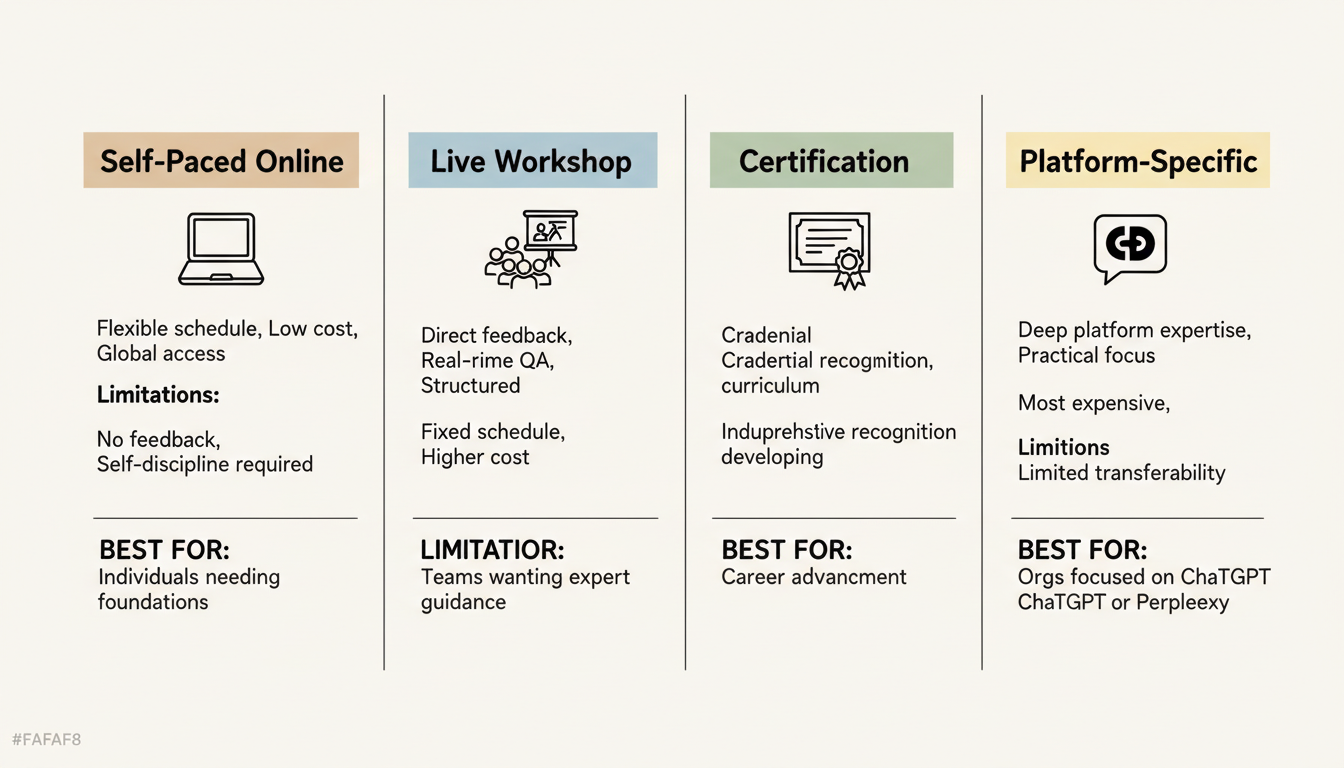
These provide flexibility for busy professionals:
Advantages: Learn at your own pace, lower cost, accessible globally
Limitations: No instructor feedback, requires self-discipline, quality varies significantly
Best for: Individuals wanting foundational knowledge without schedule constraints
Instructor-led training offers interactive learning:
Advantages: Direct feedback, real-time Q&A, structured progression
Limitations: Fixed schedules, higher cost, limited availability
Best for: Teams wanting structured skill development with expert guidance
Formal certifications validate skills:
Advantages: Credential recognition, comprehensive curriculum, assessment verification
Limitations: Most expensive option, may require prerequisites, industry recognition still developing
Best for: Professionals seeking career advancement or agency credibility
Some training focuses on specific AI platforms:
Advantages: Deep expertise in one platform, practical implementation focus
Limitations: Knowledge may not transfer across platforms, incomplete market coverage
Best for: Organizations prioritizing specific AI platforms like ChatGPT or Perplexity
Formal training isn't the only path to GEO expertise.
Build skills through:
Understanding the competitive landscape across different AI search engines can inform your learning priorities.
Practical experience accelerates learning:
Most effective learning combines formal training with practical application. Courses provide frameworks; implementation provides mastery.
Before investing in GEO training, consider:
GEO training fills a real gap. Most marketing education doesn't cover AI search optimization. Structured learning accelerates skill development.
Curriculum comprehensiveness matters. Quality courses cover foundations, technical optimization, content strategy, and measurement. Gaps in any area limit practical application.
Practical application is essential. Theory alone doesn't build skills. Look for courses with hands-on exercises and real-world projects, including developing AEO optimization strategies and implementing AEO marketing strategy frameworks.
Consider multiple learning paths. Formal courses, self-directed study, and practical experimentation can all contribute to GEO expertise.
GEO certification recognition is still developing. Unlike established SEO certifications, GEO credentials don't yet have universal industry acceptance. Focus on actual skills and demonstrable results rather than credentials alone. As the field matures, certain certifications may gain broader recognition.
Foundational GEO understanding can develop in weeks through focused study. Practical proficiency typically takes 2-3 months of combined learning and implementation. Expertise develops over 6-12 months of consistent practice and adaptation as platforms evolve.
SEO fundamentals support GEO success. Traditional optimization creates the authority signals and quality content that AI systems reference. Learn SEO basics first, then layer GEO-specific techniques. The disciplines complement rather than replace each other.
By submitting this form, you agree to our Privacy Policy and Terms & Conditions.



