February 19, 2026


"GEO is the new SEO" has become one of the most debated statements in digital marketing. As AI-powered search transforms how users discover information, the relationship between traditional search engine optimization and generative engine optimization demands careful examination. The reality is nuanced—GEO represents evolution, not replacement.
According to Bluefish's GEO analysis, GEO is the modern counterpart to SEO, built for generative engines. While traditional SEO focuses on appearing in search engine result pages, GEO focuses on being cited, referenced, or recommended by AI-powered search tools.
The statement reflects a fundamental shift in how discovery happens. Users increasingly bypass search result pages entirely, getting synthesized answers from AI systems.
According to LinkedIn analysis by Brendan Wong, GEO is emerging as the successor to SEO in an AI-driven search environment. As generative AI systems like ChatGPT, Perplexity, and Google's AI Overviews become the primary interface for information discovery, brands need new strategies to remain visible.
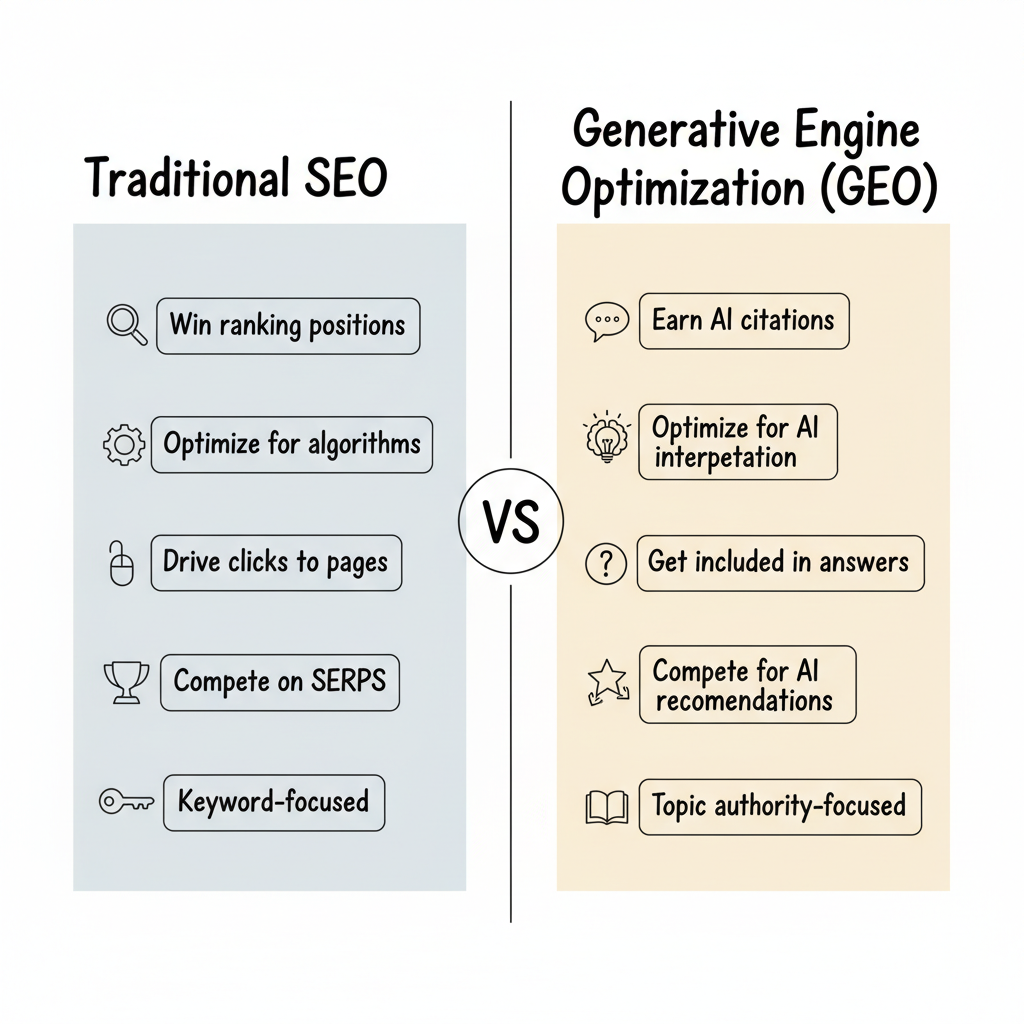
The paradigm shift:
Traditional SEO | Generative Engine Optimization |
Win ranking positions | Earn AI citations |
Optimize for algorithms | Optimize for AI interpretation |
Drive clicks to pages | Get included in answers |
Compete on SERPs | Compete for AI recommendations |
Keyword-focused | Topic authority-focused |
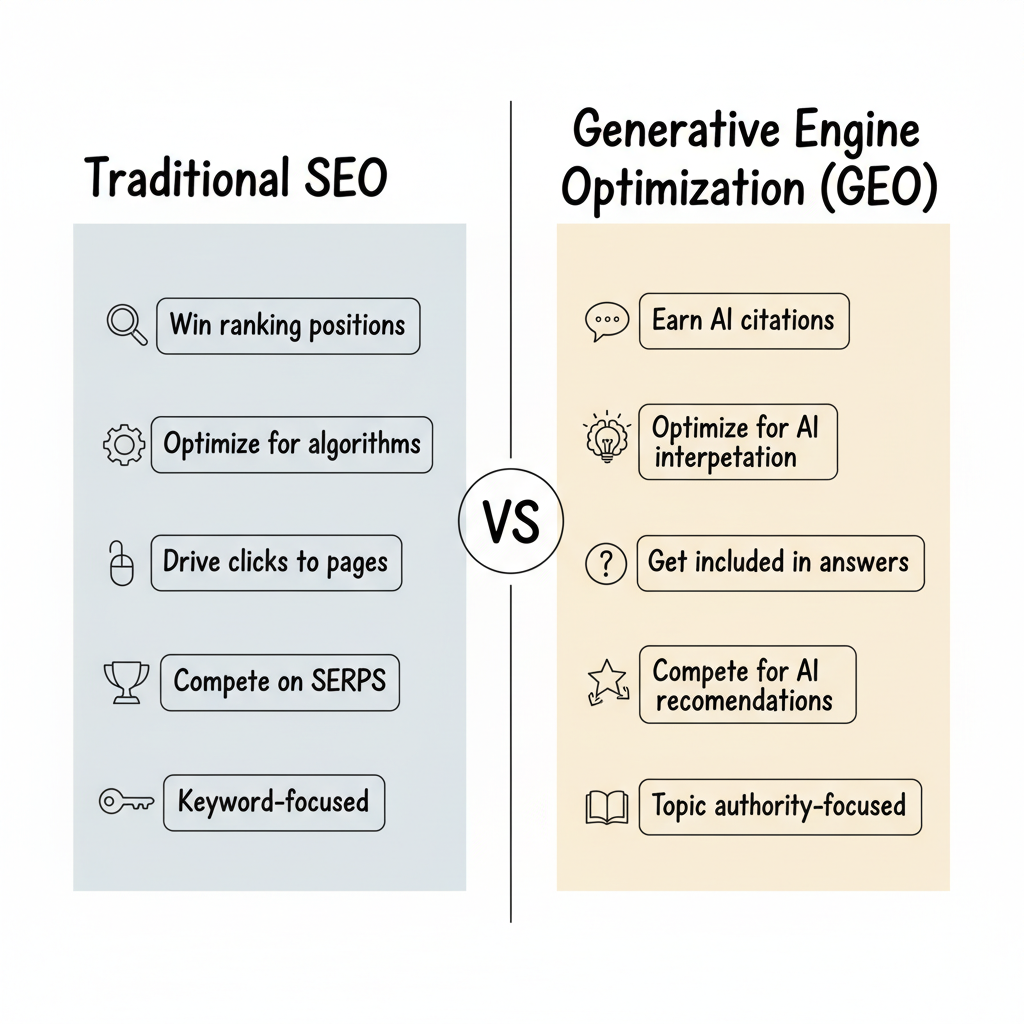
According to SEO.com's analysis, the question "Is GEO the new SEO?" reflects how generative engine optimization is changing the search landscape by prioritizing AI visibility alongside traditional rankings.
While GEO addresses new discovery channels, declaring traditional SEO dead oversimplifies the landscape.
According to Econsultancy's search analysis, the narrative that "traditional SEO is dead" deserves retirement. Brands still need organic search traffic, and the fundamentals of creating quality, relevant content haven't disappeared—they've expanded to include AI optimization.
Why traditional SEO still matters:
According to WordStream's 2026 predictions, GEO will surge in importance, but traditional SEO still won't go away. The two approaches complement each other rather than competing.
The core shift is from optimizing for ranking positions to optimizing for AI citations and recommendations.
According to Spoclearn's SEO playbook, SEO in 2026 is no longer just about rankings—it's about being referenced, trusted, and reused by machines. Understanding the differences between SEO, GEO, and AEO helps marketers allocate resources effectively across all three disciplines.
The new success metrics:
Old Metric | New Metric | Why It Changed |
SERP position | Share of voice in AI | AI provides synthesized answers |
Click-through rate | Citation frequency | Users don't always click through |
Keyword rankings | Topic coverage | AI evaluates comprehensive expertise |
Backlink count | Cross-web authority signals | AI cross-references multiple sources |
Page views | AI referral traffic | New traffic channel emerging |
According to eMarketer's AI search analysis, the fight isn't for position one anymore—it's for contextual inclusion inside the model's response. This represents a fundamental shift in what "winning" search means.
Rather than abandoning SEO for GEO, successful brands integrate both approaches.
According to Previsible's strategy guide, answer engine optimization represents a new search strategy that builds on SEO foundations while addressing how AI systems evaluate and cite sources. For organizations ready to implement these changes, working with specialized AEO implementation services can accelerate results.
The integrated optimization framework:
SEO Foundation (Still Required)
├── Technical health
├── Quality content
├── Domain authority
└── User experience
    ↓
GEO Layer (New Priority)
├── AI-extractable structure
├── Citation-worthy content
├── Entity consistency
└── Cross-platform authority
    ↓
Unified Results
├── Traditional organic traffic
├── AI-referred visitors
└── Brand citations in AI answers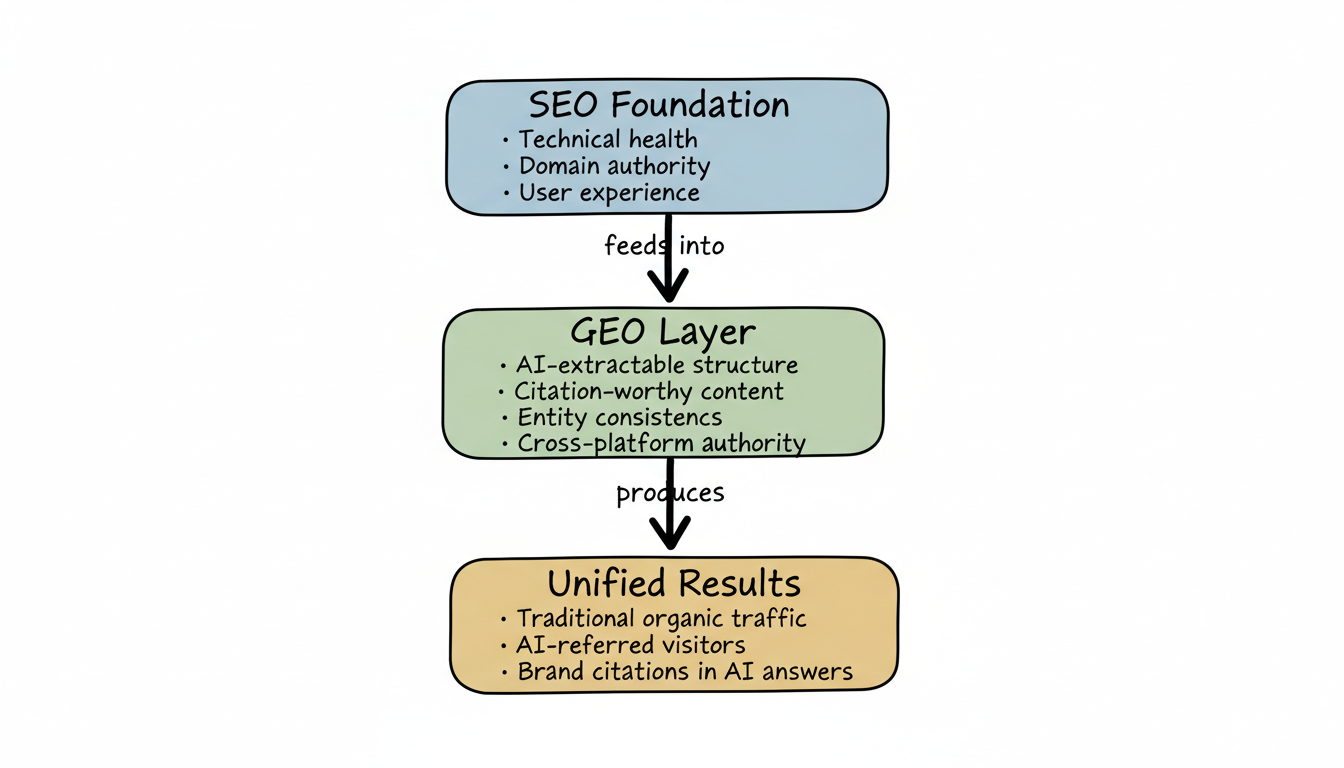
Practical adaptation steps:
Action | SEO Benefit | GEO Benefit |
Add statistics and citations | Improves E-E-A-T | Makes content citable |
Structure with clear headers | Helps crawling | Enables AI extraction |
Build topical authority | Strengthens rankings | Earns AI trust |
Maintain fresh content | Supports rankings | Meets AI recency preferences |
Develop external mentions | Builds backlinks | Creates authority signals |
Brands often make errors when responding to the "GEO is the new SEO" narrative.
According to LinkedIn analysis by Tanguy De Keyzer, many organizations either ignore GEO entirely or abandon SEO prematurely. Neither extreme serves business goals effectively.
Mistakes to avoid:
The most accurate framing isn't "GEO is the new SEO" but rather "GEO is the new addition to SEO."
According to Laura Jawad Marketing, brands need presence across both traditional search and AI-generated answers. The winners in 2026 optimize for multiple discovery channels simultaneously, leveraging comprehensive AEO tools to measure performance across platforms.
The balanced approach:
Understanding the "GEO is the new SEO" narrative helps brands navigate the transition:
According to Bluefish, while GEO may not fully replace SEO, it represents a critical evolution in how brands achieve visibility. The organizations that thrive will be those that master both disciplines, understanding when each approach serves their goals.
By submitting this form, you agree to our Privacy Policy and Terms & Conditions.