February 19, 2026


Search has fundamentally changed. Users increasingly bypass traditional search results entirely, asking AI assistants direct questions and receiving synthesized answers. Generative search engine optimization (generative SEO) is the practice of ensuring your content becomes a trusted source that AI systems cite when generating these responses.
According to Search Engine Land, generative engine optimization is the practice of optimizing content so it's more likely to be surfaced, cited, or recommended by AI-driven search and discovery platforms. This represents a fundamental shift from ranking on results pages to being cited in AI-generated answers.
Generative search engine optimization focuses on making your content discoverable, trustworthy, and citation-worthy within AI-powered search systems. Unlike traditional SEO where success means ranking on a results page, generative SEO success means getting mentioned, quoted, or recommended in AI-synthesized responses.
According to WordStream's SEO guide, GEO is like traditional SEO but specifically optimized for AI search engines such as ChatGPT, Perplexity, Google AI Overviews, and similar platforms that generate direct answers rather than link lists.
Key generative search platforms:
Platform | How It Works | Citation Style |
ChatGPT | Synthesizes from training + web search | Inline citations with links |
Perplexity | Real-time web search + synthesis | Numbered source citations |
Google AI Overviews | Combines search index + AI generation | Expandable source cards |
Claude | Training data + web tools | Contextual references |
Gemini | Google index + generative synthesis | Source attribution |
According to Exploding Topics' research, 67% of organizations adopted large language models in 2025, fundamentally changing how users discover information and how content must be optimized.
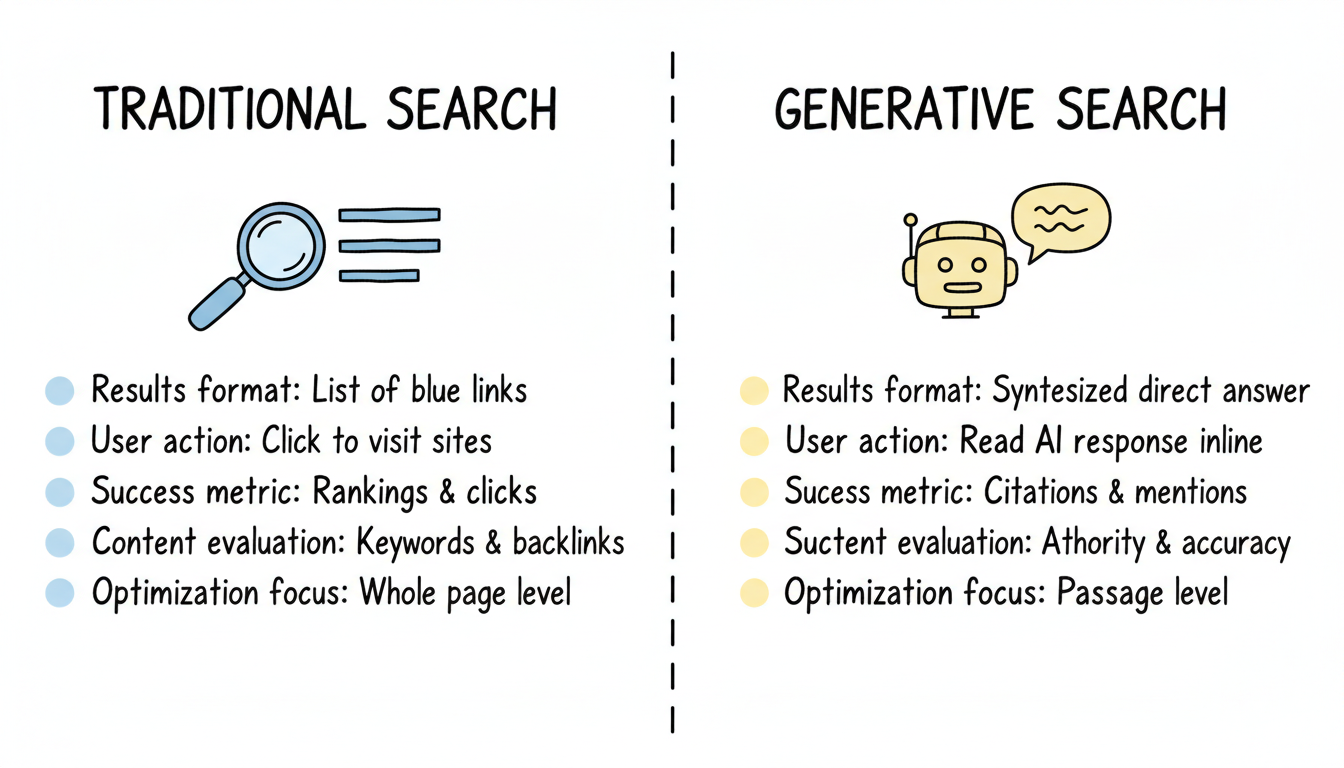
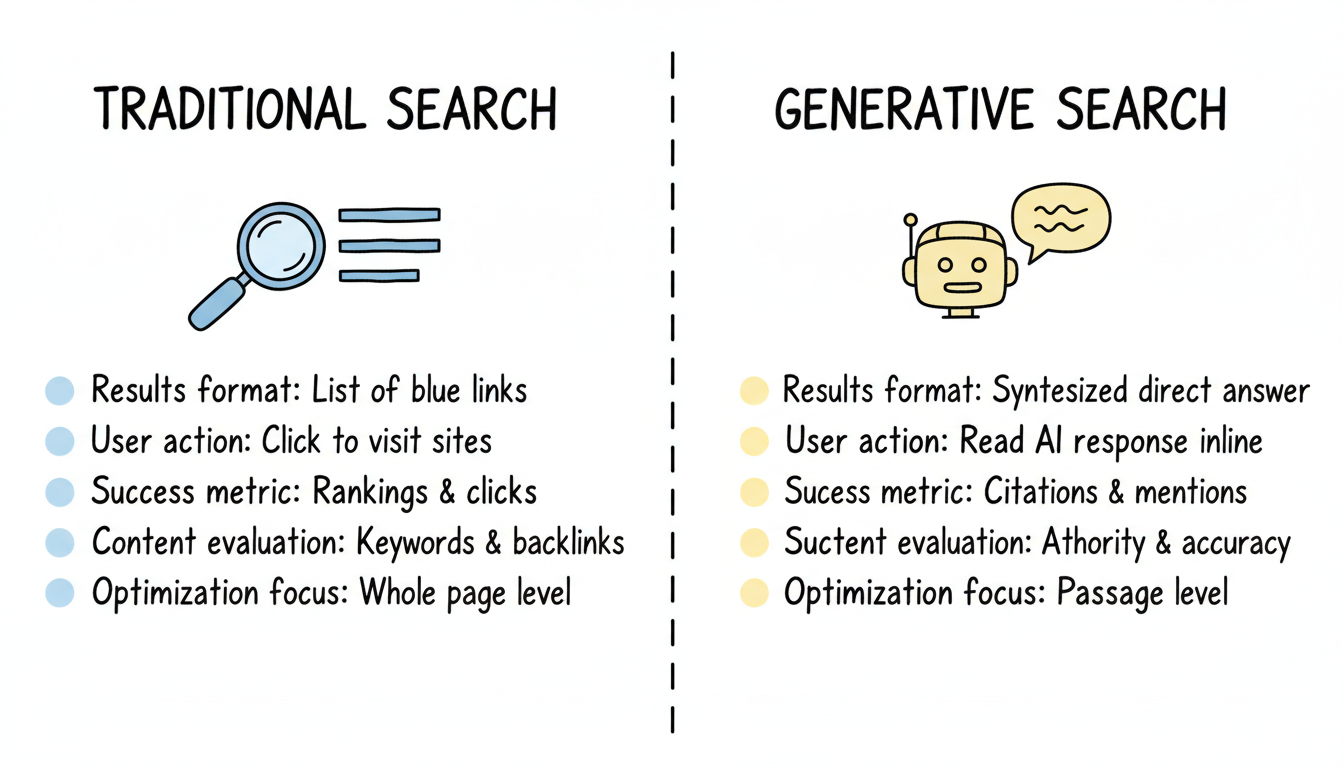
Traditional search vs generative search:
Aspect | Traditional Search | Generative Search |
Results format | List of links | Synthesized answers |
User action | Click to visit sites | Read answer directly |
Success metric | Rankings, clicks | Citations, mentions |
Content evaluation | Keywords, backlinks | Authority, accuracy, structure |
Optimization focus | Page-level | Passage-level |
According to PR News Online's analysis, AI search traffic is converting at 4.4x the rate of traditional organic search, making generative search optimization increasingly valuable for businesses.
According to Search Engine Journal, 63% of marketers prioritized generative engine optimization in their 2024-25 strategies, recognizing that traditional SEO alone doesn't capture AI-driven discovery.
Where traditional SEO falls short for AI search:
Understanding these differences is critical when evaluating how to choose an AI SEO agency that can handle both traditional and generative optimization strategies. According to Omnius's industry report, LLMs focus on semantic relevance, topical authority, and trustworthiness rather than traditional ranking factors, requiring different optimization approaches.
AI systems extract specific passages rather than evaluating entire pages. Structure content so key information stands alone.
According to Siege Media's GEO guide, AI search engines pull from specific sections rather than evaluating entire pages, making passage-level optimization essential for citations.
Passage optimization tactics:
AI systems evaluate topical expertise across your content ecosystem, not just individual pages.
Semantic authority building:
Element | Purpose | Implementation |
Topic clusters | Demonstrate comprehensive coverage | Interlinked content hubs |
Entity consistency | Strengthen brand recognition | Consistent naming and information |
Expert signals | Establish credibility | Author bios, credentials, citations |
Content depth | Show expertise | Comprehensive topic treatment |
According to Tailored Tactiqs' optimization guide, AI systems prefer content with verifiable, specific information because they can cross-reference claims against multiple sources.
Fact-density requirements:
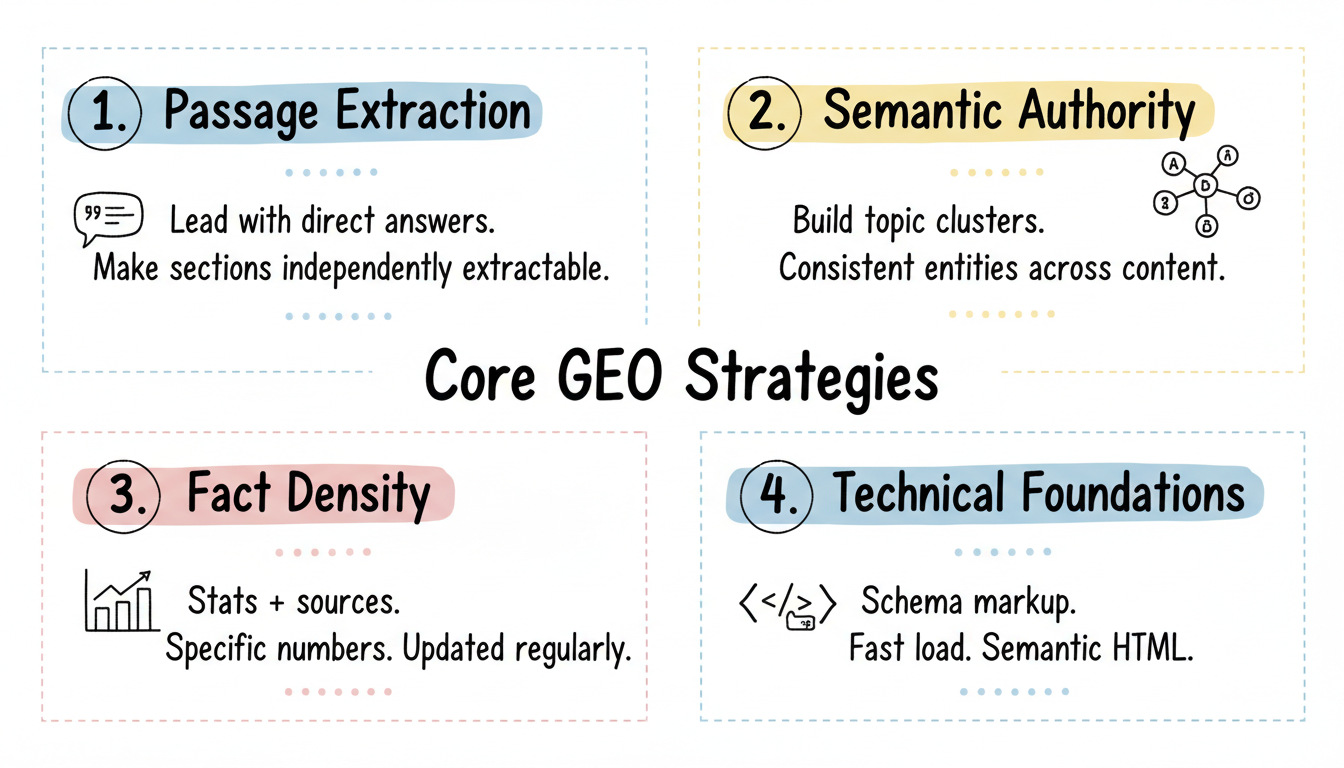
Technical factors affect how AI systems access and interpret your content. For a deeper dive into technical optimization for AI-powered search platforms, explore our generative engine optimization guide.
Technical optimization checklist:
Traditional SEO metrics don't capture generative search performance. New measurement frameworks are required.
Generative SEO metrics:
Metric | What It Measures | Tracking Method |
Citation frequency | How often AI mentions your brand | AI monitoring tools |
Share of voice | Visibility vs competitors | Competitive analysis |
Citation accuracy | Correctness of AI brand mentions | Manual audits |
AI referral traffic | Visitors from AI platforms | Analytics segmentation |
Sentiment | Tone of AI mentions | Sentiment analysis |
According to JSA's SEO analysis, many brands make optimization mistakes that prevent their content from being cited, even when content quality is high.
Mistakes to avoid:
For businesses seeking expert support, researching affordable AEO services can provide cost-effective solutions for implementing these optimization strategies without common pitfalls.
According to Exploding Topics, 58% of consumers now rely on AI for product recommendations, signaling continued growth in AI-powered discovery.
Emerging trends:
Understanding the distinctions between platforms like Google AI Mode vs AI Overview helps marketers prepare for these evolving AI search experiences.
Generative search engine optimization is essential for 2026 visibility:
According to Search Engine Land, brands that invest in generative search engine optimization now will capture visibility as AI-powered search adoption accelerates. The practices complement traditional SEO but require specific focus on how AI systems evaluate and cite sources.
By submitting this form, you agree to our Privacy Policy and Terms & Conditions.