
February 19, 2026


Last Updated: January 2026
Choosing the right AI SEO agency determines whether your investment translates to meaningful visibility or wasted budget. As AI-powered search transforms how users find information, selecting an agency with genuine AI optimization expertise has become more important—and more difficult—than ever.
This guide provides a practical framework for evaluating AI SEO agencies and making an informed decision.
Before evaluating agencies, understand what distinguishes AI SEO from conventional search optimization:
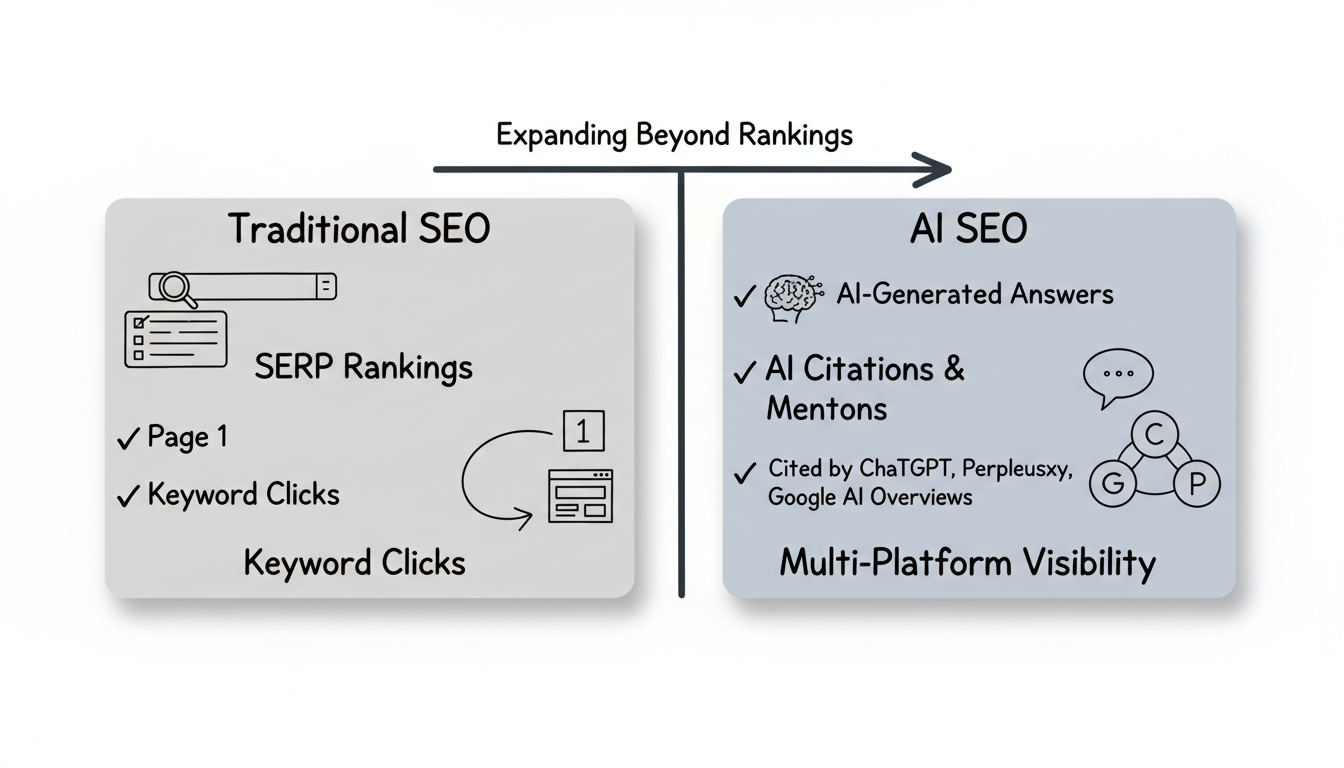
Traditional SEO focuses on ranking in search engine results pages (SERPs). Success means appearing on page one for target keywords and earning clicks to your website.
AI SEO expands beyond rankings to include visibility in AI-generated answers. Success means being cited by ChatGPT, Perplexity, Google AI Overviews, and other AI platforms when they answer user questions. Understanding the key differences between SEO and AEO helps clarify this evolution.
The best AI SEO agencies address both dimensions—maintaining traditional search performance while building AI visibility that competitors haven't yet prioritized.
Ask agencies to demonstrate their understanding of AI search specifically. Agencies implementing LLM optimization should be able to explain their methodology in detail.
Red flag: Agencies that repackage traditional SEO tactics as "AI SEO" without demonstrating genuine AI platform expertise.
Request evidence of AI-specific outcomes:
Red flag: Agencies that only show traditional ranking improvements without AI visibility metrics.
AI SEO requires multiple integrated capabilities:
Content strategy: Creating content structured for AI extraction—question-based headings, direct answers, comprehensive topic coverage.
Technical implementation: Schema markup, site architecture optimization, and technical health that supports AI discovery.
Authority building: Multi-platform presence on sources AI systems trust—industry publications, Reddit, LinkedIn, and earned media.
Measurement infrastructure: Tools and processes for tracking AI visibility, not just traditional rankings. Consider how you'll track results with Google Analytics 4 AI search tracking.
Evaluate whether agencies address all four areas or only some.
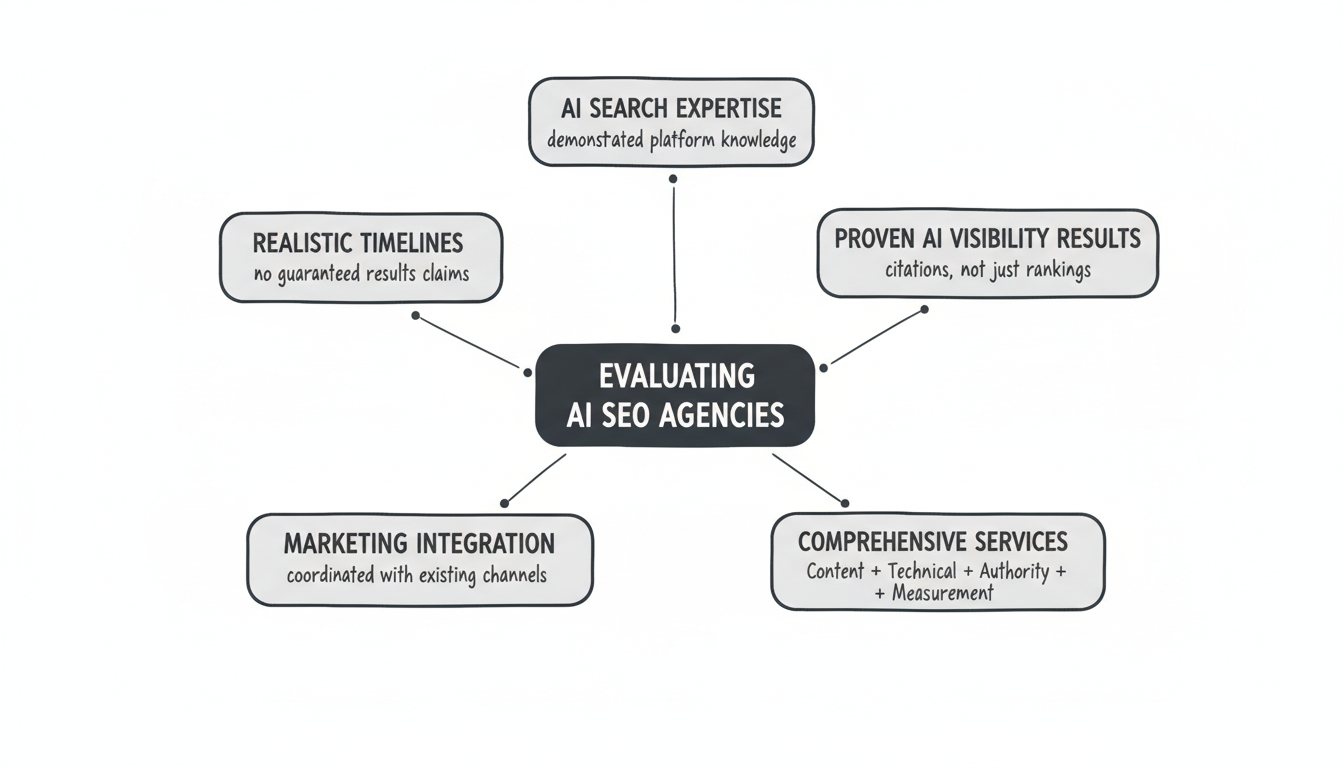
AI SEO works best when coordinated with related disciplines:
Red flag: Agencies treating AI SEO as completely separate from your existing marketing ecosystem.
AI SEO builds over time, similar to traditional SEO:
Red flag: Claims of guaranteed AI citations or rapid visibility gains.
AI SEO agency pricing varies significantly based on scope and positioning. If you're building internal capabilities, an AEO marketing course might be more cost-effective than agency retainers.
Lower-cost options exist for smaller businesses; enterprises typically require more comprehensive programs. Price alone doesn't indicate quality—evaluate value relative to the expertise and results demonstrated.
Consider whether an agency partnership or internal capability makes more sense:
Build internal capability when:
Partner with an agency when:
Many organizations start with an agency partnership to establish foundations, then gradually build internal capability.
Vague AI claims: Agencies describing AI SEO only in general terms without specific methodologies or platform expertise.
Traditional SEO rebranding: Services that are essentially traditional SEO marketed as "AI SEO" without substantive differences.
No measurement approach: Agencies that can't explain how they'll track AI visibility specifically.
Guaranteed results: Claims of guaranteed AI citations or specific placement outcomes.
Platform-narrow focus: Agencies only addressing one AI platform while ignoring the broader ecosystem.
Choosing an AI SEO agency requires evaluating expertise that's genuinely new—not just traditional SEO capabilities repackaged with AI terminology. The right agency demonstrates published research, specific methodologies for AI visibility, multi-platform expertise, and realistic expectations about timelines and results.
Take time to evaluate multiple agencies, ask specific questions about their AI search approach, and request evidence of AI-specific outcomes—not just traditional ranking improvements. The agencies that will deliver value are those building genuine expertise in this emerging discipline, not those chasing a marketing buzzword.
By submitting this form, you agree to our Privacy Policy and Terms & Conditions.



