February 19, 2026


Last Updated: January 2026
As AI search has grown, two terms have emerged to describe optimization for these platforms: GEO (Generative Engine Optimization) and AEO (Answer Engine Optimization). While both refer to optimizing content for AI-powered search, they emphasize slightly different aspects.
This guide clarifies the distinction between GEO and AEO, when each term applies, and why the practices overlap significantly.
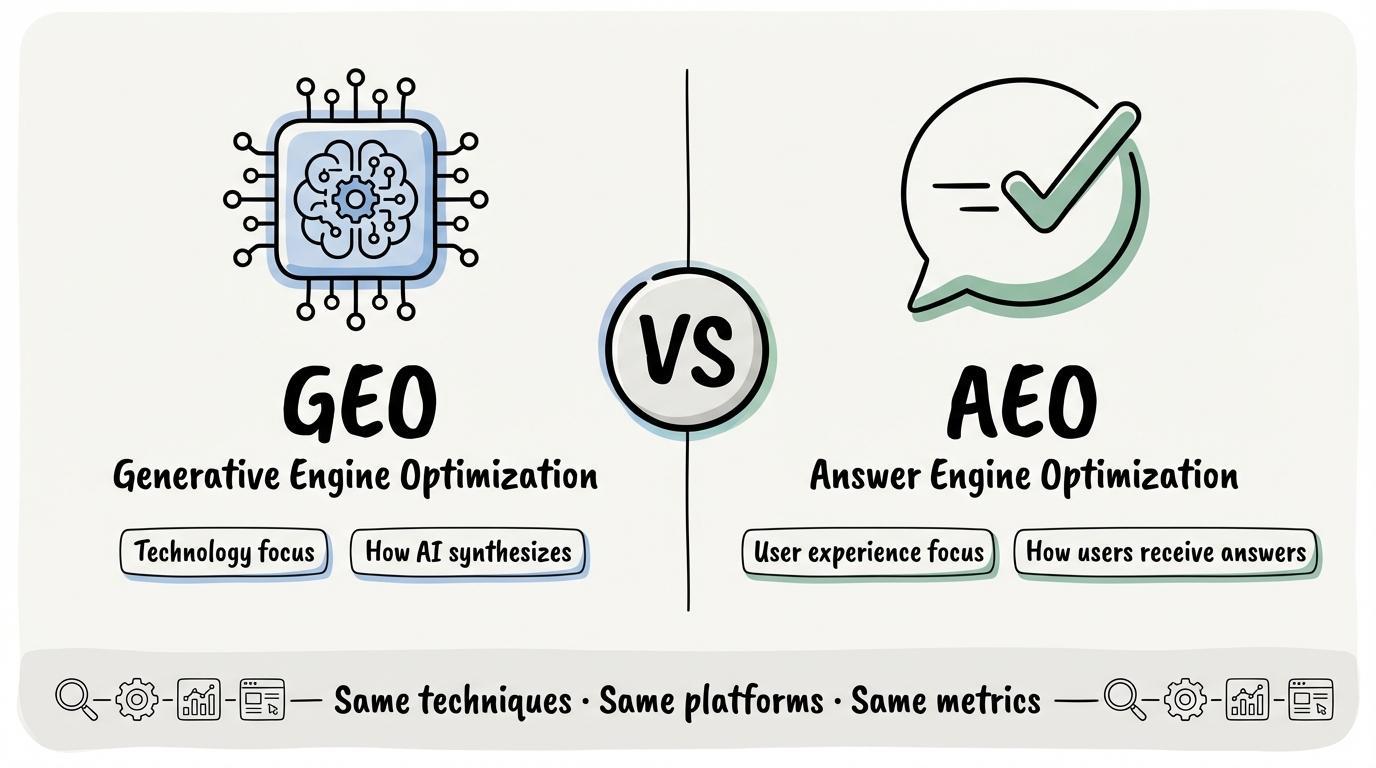
Generative Engine Optimization (GEO) refers to optimizing content for generative AI systems—platforms that synthesize new responses rather than returning pre-existing content. The term emphasizes the generative nature of AI responses.
GEO targets visibility in:
The "generative" framing highlights that these systems create original responses by synthesizing information from multiple sources.
Answer Engine Optimization (AEO) refers to optimizing content to appear in direct answer responses. The term emphasizes the user experience—people receive answers rather than links.
AEO targets visibility in:
The "answer" framing highlights that users seek direct responses rather than needing to click through to websites.
Aspect | GEO | AEO |
Full Name | Generative Engine Optimization | Answer Engine Optimization |
Emphasis | Generative AI systems | Direct answer delivery |
Origin | Academic and industry research | Marketing and SEO industry |
Scope | Primarily AI chatbots and overviews | Includes featured snippets and voice |
Focus | How AI generates responses | How users receive answers |
GEO emphasizes the technology behind AI responses. These systems generate new content by:
Optimizing for generative systems means understanding this synthesis process and structuring content to be selected and accurately represented. This approach shares foundational principles with AEO optimization strategies that focus on content structure and entity authority.
AEO emphasizes the user experience. Users querying these systems want direct answers, not lists of links to explore. This shift affects:
AEO optimization focuses on making content the source when users seek answers.
Despite different framings, GEO and AEO describe fundamentally similar practices:
Both GEO and AEO require:
Understanding these shared techniques is essential when evaluating top generative engine optimization companies for implementation support.
The primary platforms for both disciplines overlap almost entirely:
Both GEO and AEO measure success through:
In practice, GEO and AEO are often used interchangeably. The choice often depends on context:
Most practical discussions of optimizing for AI search can use either term effectively. The underlying practices, techniques, and goals align regardless of terminology. For a comprehensive comparison of optimization approaches, explore our AEO platform comparison guide.
You may also encounter:
All these terms describe aspects of the same fundamental shift: optimizing content for AI-powered search platforms that synthesize answers rather than returning ranked links. For deeper insights into these emerging practices, see our article on AI search optimization.
Whether you call it GEO or AEO, the optimization approach remains the same:
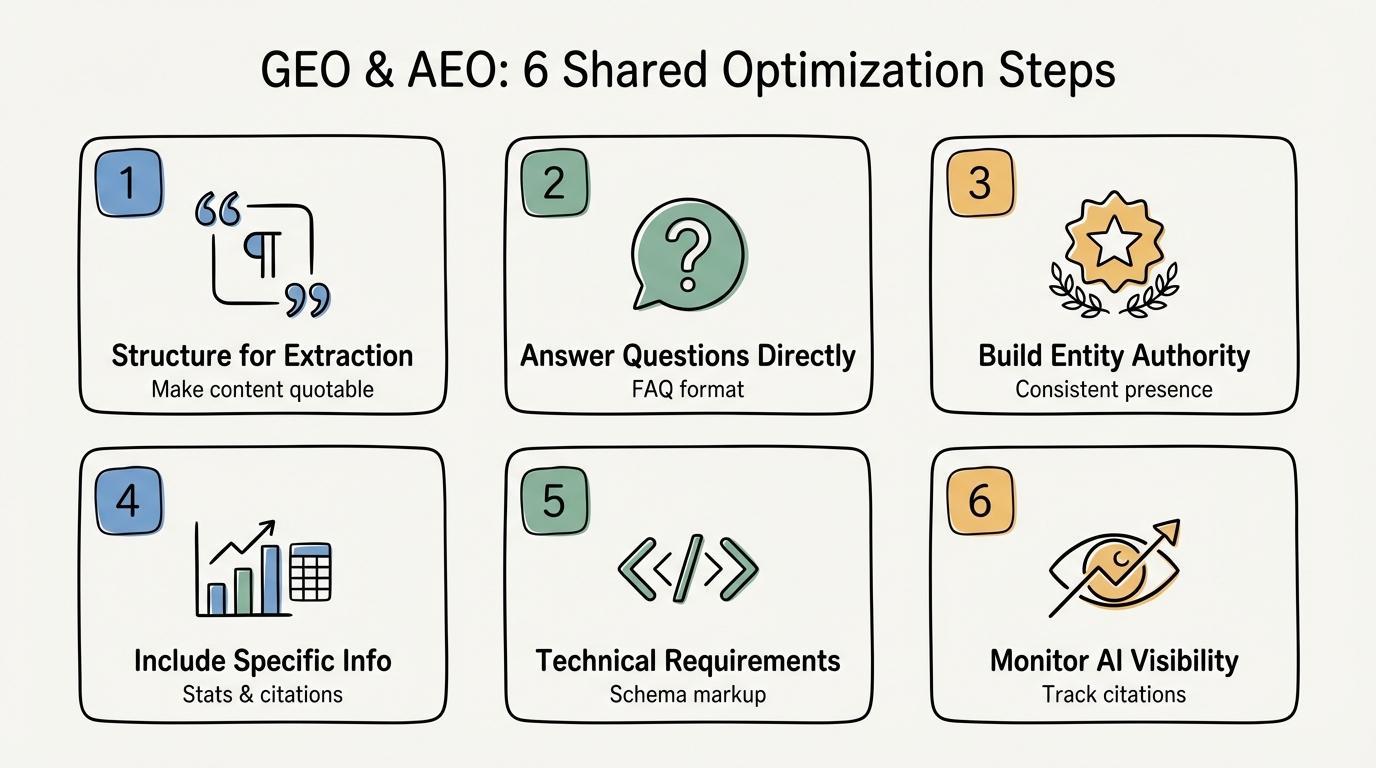
The terminology matters less than understanding and implementing the underlying practices.
GEO and AEO describe the same fundamental practice—optimizing content for AI-powered search platforms. The terms emphasize different aspects (generative technology vs. answer delivery) but the techniques are nearly identical.
Use whichever term fits your context. Neither is more correct. GEO may resonate better in technical discussions; AEO may resonate better in business and marketing contexts.
Focus on the practices, not the label. Content extraction, entity authority, technical accessibility, and citation monitoring matter regardless of what you call them.
No. The optimization techniques for GEO and AEO overlap almost entirely. Both require extractable content, entity authority, technical accessibility, and similar measurement approaches. The terms describe the same practice from different perspectives.
Usage varies by industry and region. AEO appears more frequently in marketing and SEO discussions, while GEO appears more in academic and technical contexts. Both terms are growing in usage as AI search becomes more prominent.
Look for capabilities rather than terminology. Agencies using either term should demonstrate the same core competencies: content restructuring, entity optimization, technical implementation, and AI visibility monitoring.
By submitting this form, you agree to our Privacy Policy and Terms & Conditions.