
February 19, 2026


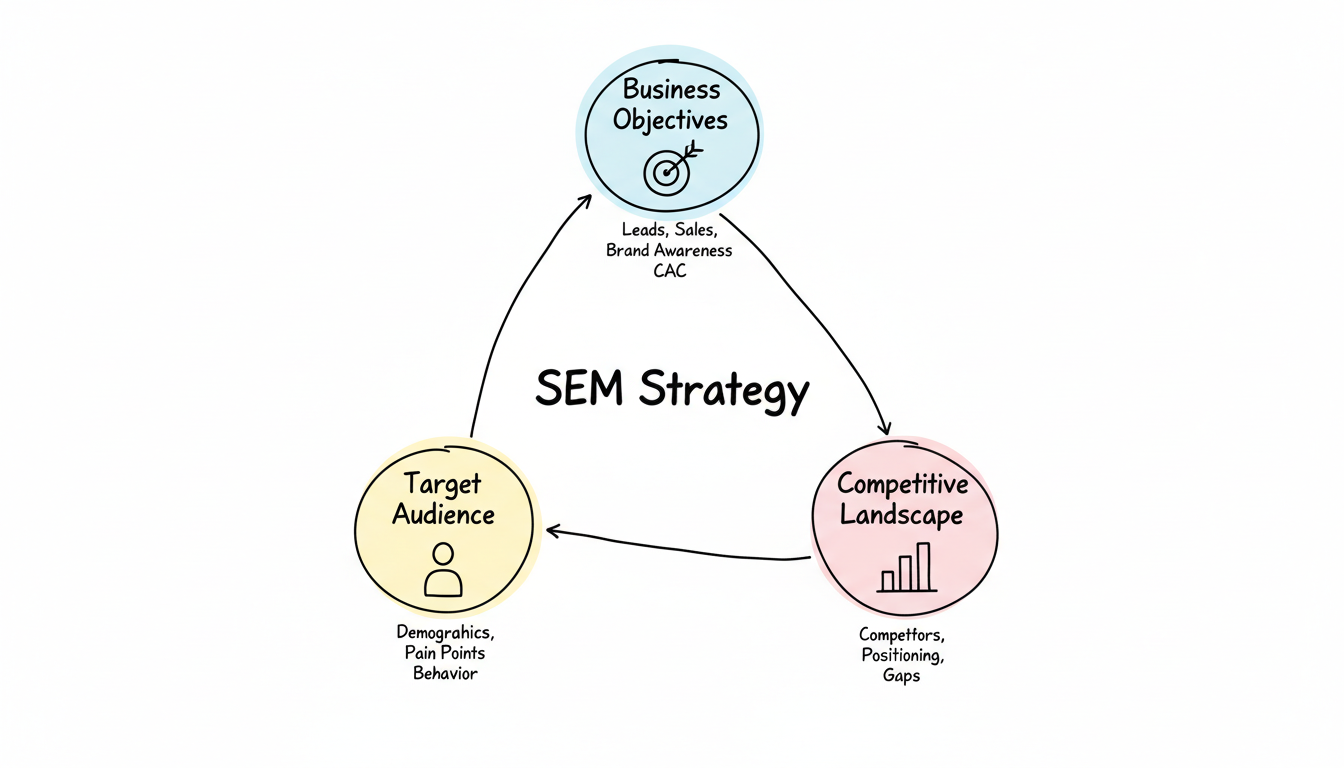
A solid SEM strategy is the difference between campaigns that drain your budget and campaigns that drive profitable growth. Search engine marketing puts your business in front of people actively searching for solutions you offer—but only if you approach it strategically.
In 2026, the search landscape has evolved significantly. According to NoGood's analysis, search marketing now extends beyond traditional Google results to include AI-powered platforms and multiple search engines. Your SEM strategy needs to account for this expanded landscape while staying focused on what matters: reaching the right audience with the right message at the right time.
This guide walks you through building a comprehensive SEM strategy from the ground up.
Every successful SEM strategy starts with understanding three core elements: your business objectives, your target audience, and your competitive landscape.
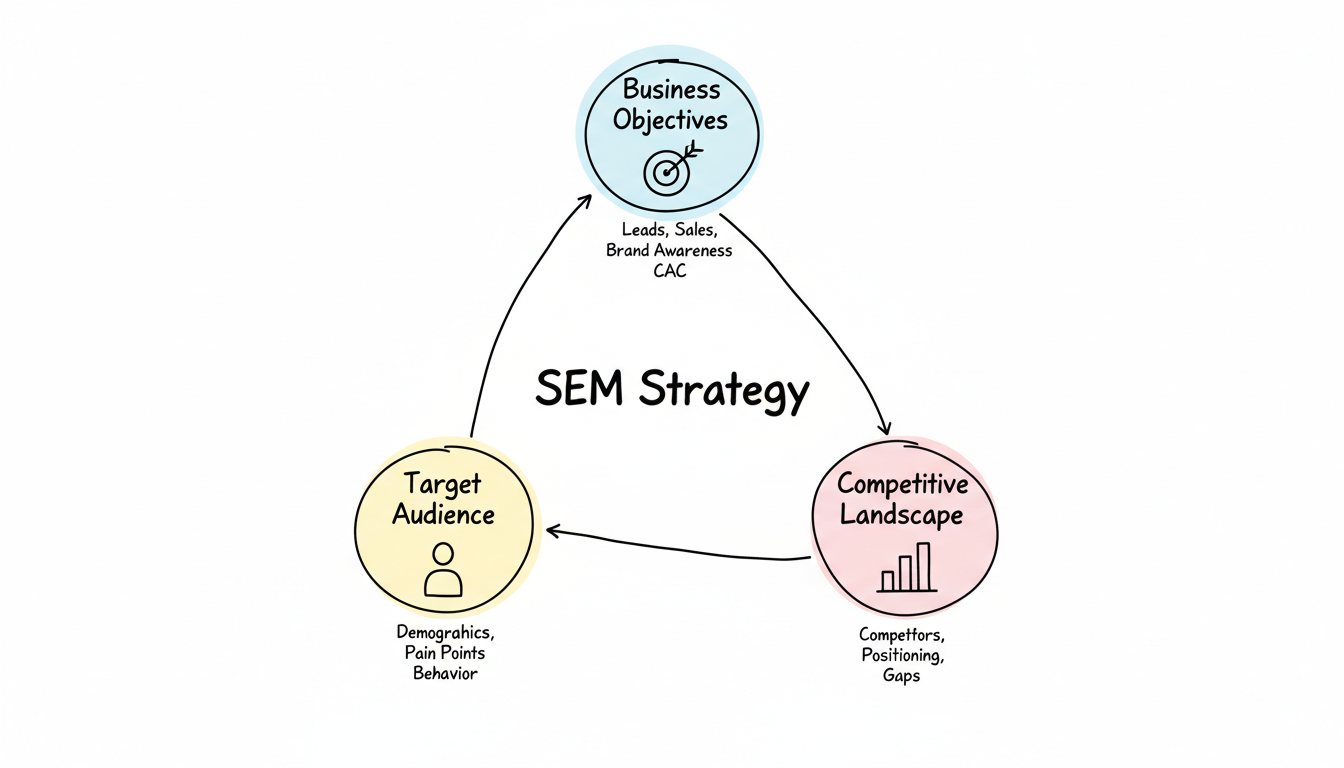
Your SEM campaigns should tie directly to business outcomes. Common objectives include:
Avoid the common mistake of chasing rankings and traffic instead of revenue. Your SEM strategy exists to generate measurable business results.
Before spending a dollar on ads, understand who you're competing against:
Tools like SEMrush, SpyFu, and the Microsoft Advertising Intelligence tool help you gather competitive data quickly.
Clear goals guide every decision in your SEM strategy. Use the SMART framework to define measurable targets.
Key performance indicators for SEM campaigns typically include:
KPI | What It Measures | Why It Matters |
Cost Per Click (CPC) | Average cost for each ad click | Budget efficiency |
Click-Through Rate (CTR) | Percentage of viewers who click | Ad relevance |
Conversion Rate | Percentage of clicks that convert | Landing page effectiveness |
Cost Per Acquisition (CPA) | Cost to acquire a customer/lead | Campaign profitability |
Return on Ad Spend (ROAS) | Revenue generated per dollar spent | Overall campaign success |
According to SEO KPI research, focusing on conversion-related metrics like ROI and organic conversion provides more actionable insights than traffic-based metrics alone.
Start with industry benchmarks, then refine based on your own data:
Your first month of campaigns provides baseline data. After 90 days, you'll have enough information to set meaningful goals.
Understanding your audience shapes everything from keyword selection to ad copy to landing page design.
Document key characteristics of your ideal customers:
Different search queries indicate different stages in the buying process:
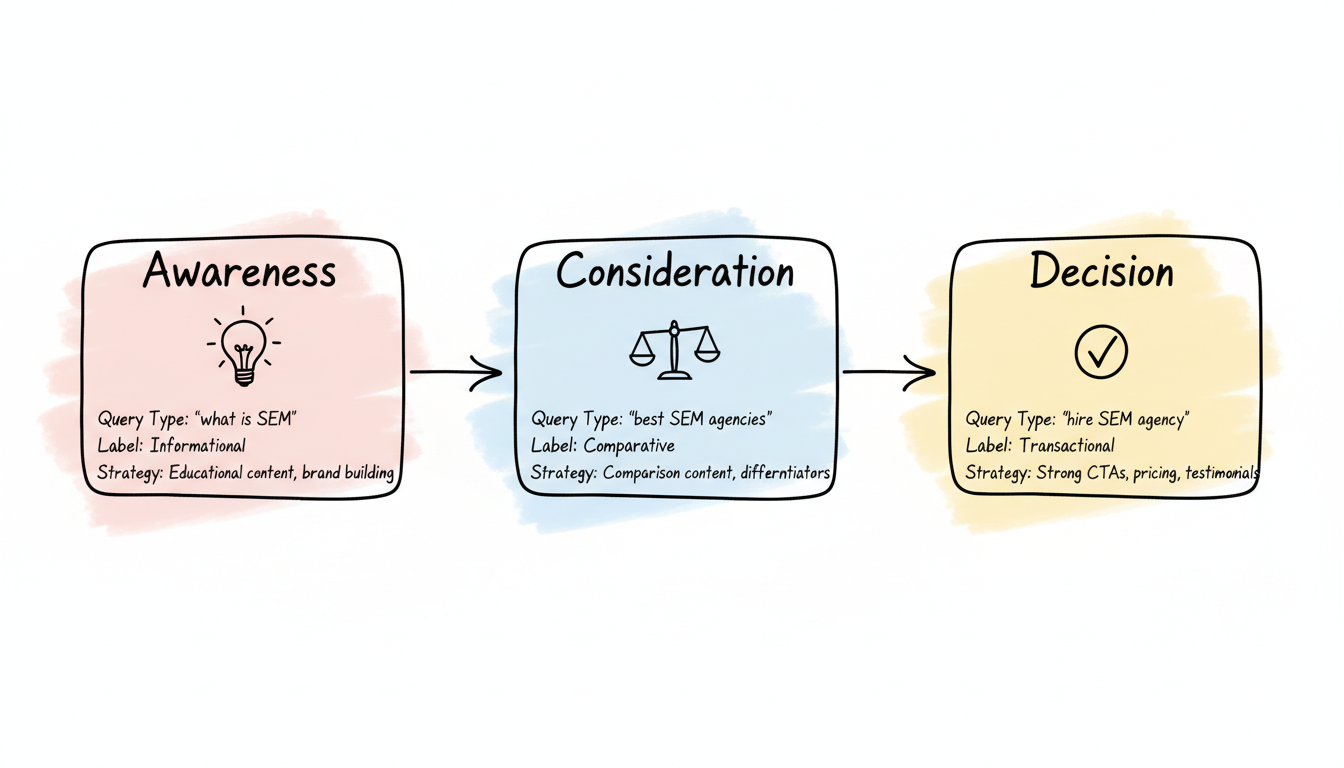
Stage | Query Type | Example | Strategy |
Awareness | Informational | "what is SEM" | Educational content, brand building |
Consideration | Comparative | "best SEM agencies" | Comparison content, differentiators |
Decision | Transactional | "hire SEM agency" | Strong CTAs, pricing, testimonials |
Allocate budget across all stages. According to search engine marketing agency experts, SEM generates immediate wins while SEO builds long-term visibility—use both strategically.
Microsoft Advertising offers unique targeting options unavailable on other platforms:
These targeting capabilities help you reach high-value prospects efficiently.
Keywords connect your ads to searcher intent. A strategic approach maximizes relevance while controlling costs.
Use match types strategically:
According to PPC advertising strategy best practices, bid management tools help ensure bids align with keyword performance, optimizing spend automatically.
Long-tail keywords (3+ words) often deliver better ROI:
Example: "SEM strategy template for B2B" converts better than "SEM strategy" because it targets a specific need.
With goals, audience, and keywords defined, structure your campaigns for success.
Organize campaigns by:
Within each campaign, create ad groups around tightly themed keywords:
Write ads that stand out and drive action:
Your landing page should:
Set realistic budgets based on:
Start with manual bidding to understand baseline performance, then transition to automated bidding strategies as you gather data. For businesses just getting started, review our guide on PPC for beginners to understand foundational concepts before diving into advanced bidding tactics.
Start with enough budget to generate statistically significant data—typically at least $1,000-3,000 per month for most B2B campaigns. This provides enough clicks to identify winning keywords and ad variations within 30-60 days. For detailed budget planning, consult PPC agency pricing expectations to understand typical investment levels.
Unlike SEO, SEM delivers immediate visibility. You'll see traffic as soon as campaigns launch. However, optimizing for profitability typically takes 2-3 months as you refine targeting, keywords, and landing pages based on performance data.
Both platforms reach different audiences. Microsoft Ads often delivers lower CPCs and reaches an older, higher-income demographic. Most businesses benefit from running both, with Microsoft Ads generating 5-6x ROAS due to lower costs and less competition. For a detailed breakdown, see our paid search advertising platforms comparison.
By submitting this form, you agree to our Privacy Policy and Terms & Conditions.



