February 19, 2026


Understanding how TikTok's algorithm works gives advertisers a significant advantage. Whether you're running paid campaigns or boosting organic content with Spark Ads, the algorithm determines who sees your content and when.
In 2026, TikTok's recommendation system has become more sophisticated than ever. This guide breaks down the algorithm signals that matter for advertisers and how to optimize your campaigns accordingly.
TikTok's algorithm is a recommendation engine that decides which videos appear on each user's For You Page (FYP). According to Buffer's 2026 algorithm guide, the algorithm analyzes thousands of signals per user to determine what content they most want to see.
At its foundation, TikTok's algorithm pursues one objective: maximize watch time and engagement by showing the right content to the right person at the right time. Unlike follower-based feeds on other platforms, TikTok prioritizes content relevance over creator popularity.
This means even accounts with zero followers can have their content pushed to massive audiences—if it aligns with what the algorithm predicts people want to see.
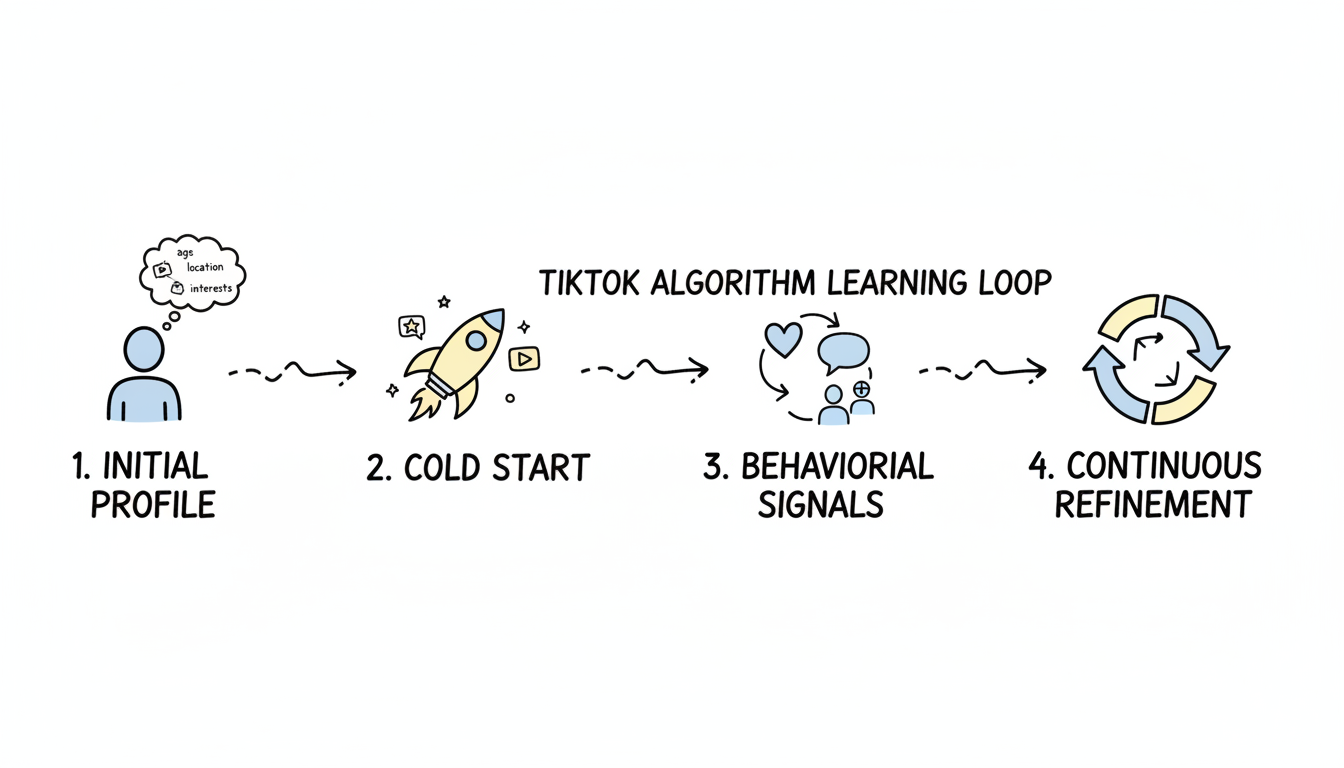
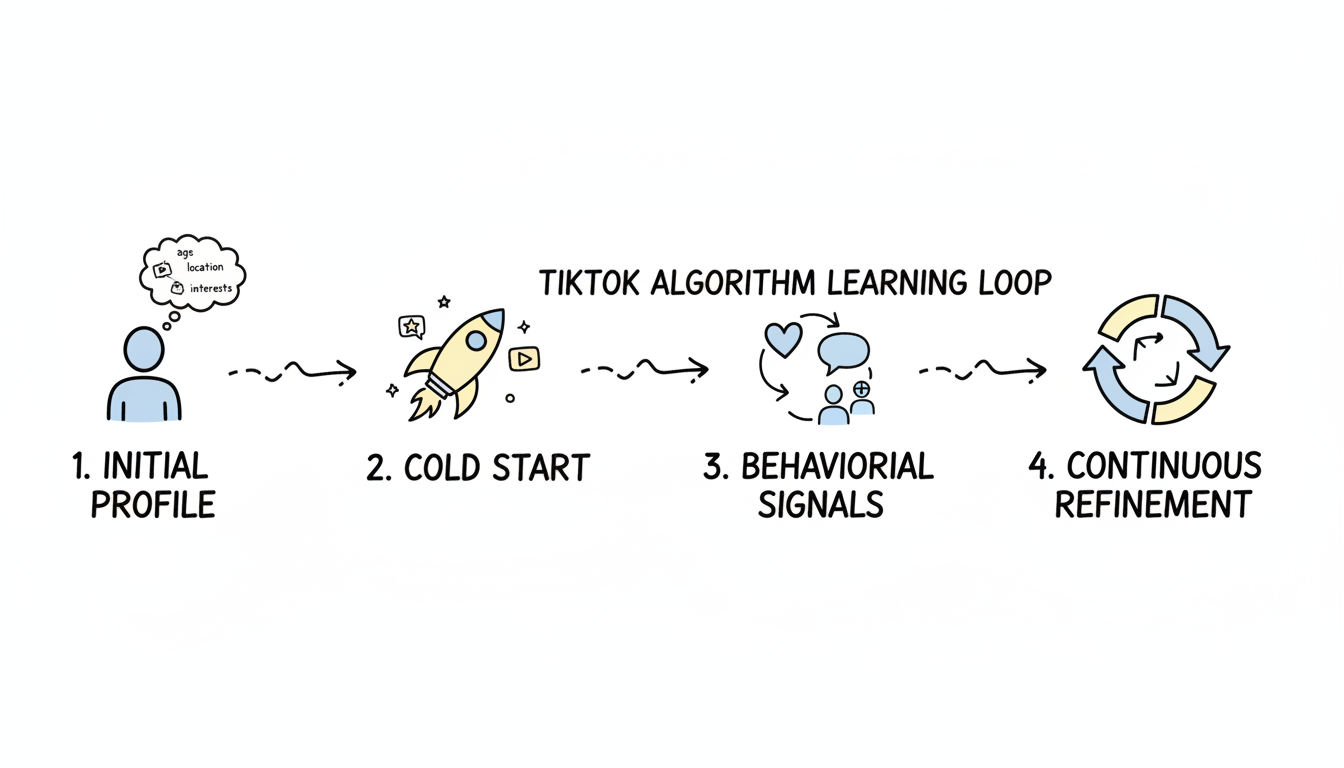
The algorithm learns through a continuous feedback loop:
For advertisers, this means your content competes in a system optimized for genuine engagement—not just reach.
TikTok's algorithm weighs multiple signals when deciding whether to show your content. Understanding these signals is essential for TikTok advertising success.
Signal | Weight | Impact on Ads |
Watch time/completion rate | Very High | Hook viewers immediately |
Engagement velocity | High | First-hour performance matters |
Shares and saves | High | Indicates high-value content |
Comments | Medium-High | Drives discussion = more reach |
Likes | Medium | Basic positive signal |
Profile visits | Medium | Shows interest in creator/brand |
According to industry research, 71% of whether users continue watching is determined in the first three seconds. This isn't marketing hyperbole—it's algorithmic reality.
Your hook needs to be immediate and compelling. The "scroll stopper" concept directly influences whether TikTok pushes your content to more users, which is why mastering TikTok ad creative best practices is crucial for campaign success.
TikTok's algorithm responds to engagement velocity—how quickly videos accumulate interactions. As alm's 2026 guide notes, a video that gets 100 engagements in the first hour will be pushed to more users than one that gets 1,000 engagements over 24 hours.
This creates strategic implications for:
TikTok also uses these signals to categorize and match content:
Understanding the relationship between organic performance and paid distribution is crucial for TikTok advertisers.
Organic content on TikTok follows a progressive testing pattern:
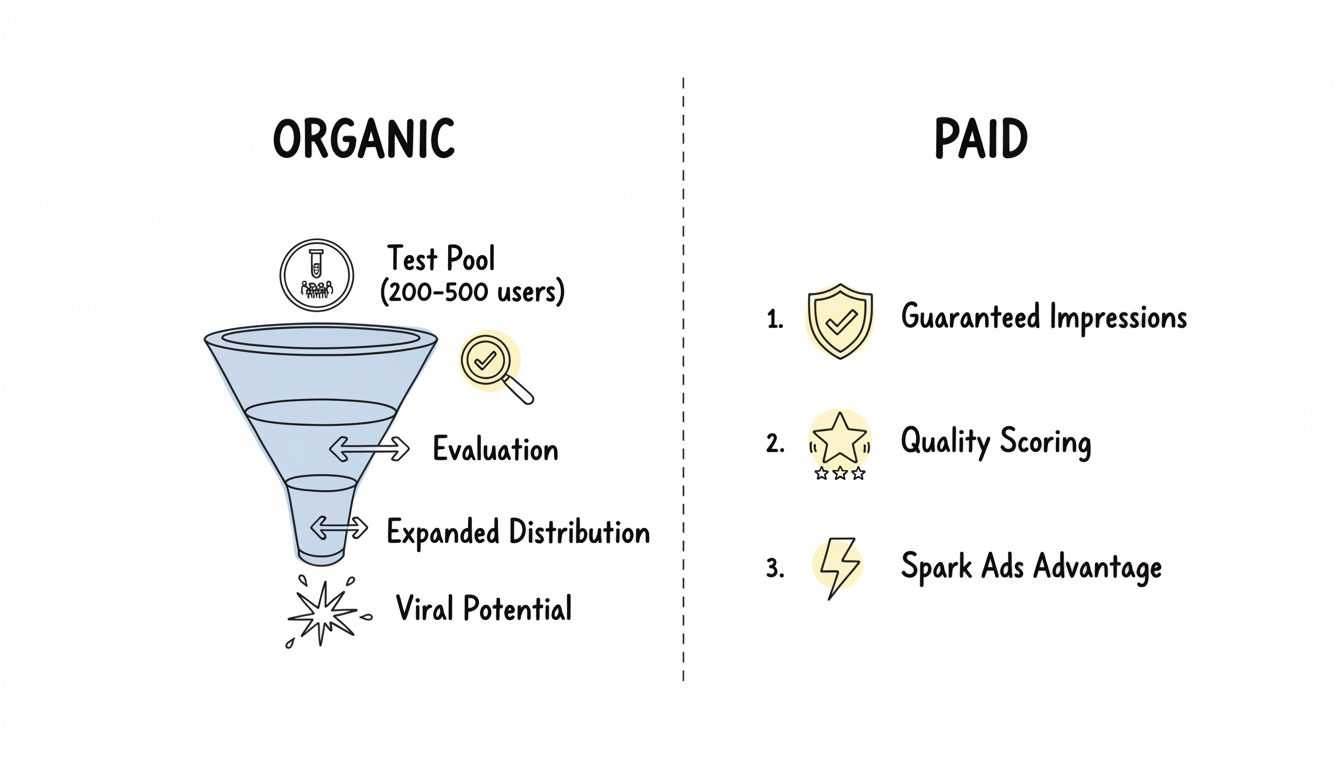
Paid TikTok ads operate differently but aren't immune to algorithmic influence:
According to Outfy's e-commerce guide, when you use trending audio in your video ad, TikTok's algorithm is more likely to boost it—meaning you get free reach beyond your paid impressions. Understanding TikTok Spark Ads can help you leverage this hybrid approach.
The most effective approach in 2026 combines organic and paid:
Rather than fighting TikTok's algorithm, successful advertisers learn to work with it.
Based on Wordstream's algorithm research, here are proven tactics:
The sweet spot in 2026 appears to be 15-30 seconds for ads and 60-90 seconds for organic branded content. Longer videos can work, but every second must earn its place. Understanding TikTok ad specs and requirements ensures your content meets platform standards.
The algorithm prioritizes completion rate, so a fully-watched 20-second video often outperforms a half-watched 60-second video.
Outfy's research confirms that TikTok users instantly scroll past anything that "looks like an ad." The more your ad feels like organic content, the better it performs—both with users and the algorithm.
TikTok's algorithm continues to evolve. Staying current with updates is essential for maintaining ad performance.
According to algorithm tracking reports, TikTok introduced new ranking factors that prioritize original content over reposts. The algorithm now gives extra visibility to creators who produce original material.
Key changes include:
Some fundamentals remain constant:
Track these metrics to understand how the algorithm treats your content:
Not directly—paid and organic distribution are separate systems. However, high engagement on paid ads can signal quality to the algorithm, and Spark Ads specifically bridge organic and paid by boosting existing posts that maintain their engagement signals.
For advertising accounts, TikTok's learning phase typically requires 50 conversions before the algorithm optimizes effectively. For organic content, consistent posting for 2-4 weeks helps the algorithm understand your content niche and ideal audience.
You cannot fully reset the algorithm, but you can influence it by posting consistently in a new direction. The algorithm responds to recent signals more heavily than historical data, so a strategic content pivot can shift your distribution within weeks.
By submitting this form, you agree to our Privacy Policy and Terms & Conditions.