February 19, 2026


TikTok has transformed from an entertainment platform into a full-fledged ecommerce powerhouse. With TikTok Shop projected to exceed $20 billion in GMV in 2026 and users who actively seek product discoveries, the platform has become essential for ecommerce brands. This guide covers everything you need to build a high-performing TikTok ecommerce advertising strategy.
TikTok's unique combination of discovery-driven algorithms, engaged audiences, and native shopping features creates an ideal environment for ecommerce brands.
Traditional marketing operates on a funnel: Awareness → Consideration → Conversion. TikTok collapses this into a single moment. A user scrolls, sees a creator demonstrating a product, checks other creators' reviews, and buys—often without leaving the app.
This compression is why TikTok delivers:
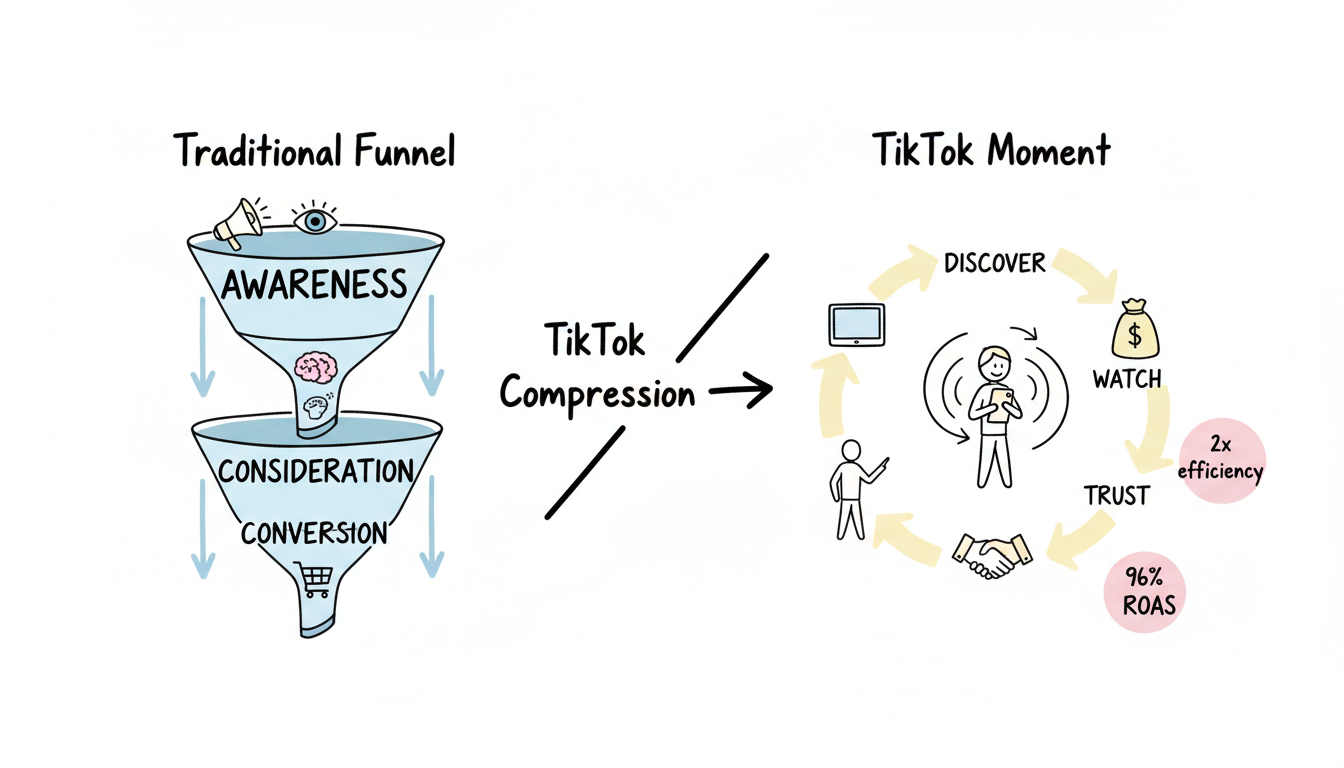
Unlike search-based platforms where users know what they want, TikTok users discover products they didn't know they needed. This creates opportunities for:
For brands targeting beauty audiences specifically, our guide on TikTok advertising for beauty brands explores category-specific strategies in depth.
The hashtag #TikTokMadeMeBuyIt has billions of views, demonstrating the platform's influence on purchasing decisions. According to industry data, 71.2% of TikTok users have purchased something after seeing it on the platform.
TikTok Shop has rapidly become one of the most significant ecommerce platforms globally. US TikTok Shop sales increased by 120% in the 12 months to June 2025.
TikTok Shop is the platform's native ecommerce solution that allows users to:
To get started with TikTok Shop:
For a deeper dive into selling on the platform, see our comprehensive TikTok Shop marketing strategy guide.
Feature | Description | Best For |
Product Showcase | Display products on your profile | Brand awareness |
Video Shopping | Tag products in organic videos | Discovery |
LIVE Shopping | Sell products during livestreams | High engagement |
Shop Tab | Dedicated storefront in-app | Full catalog browsing |
Affiliate Program | Creators promote your products | Scaled reach |
TikTok currently takes a 6% commission on US sales (9% in the UK). Additional costs include:
For brands with healthy margins, these fees often deliver better ROI than traditional marketplaces due to lower customer acquisition costs.
Video quality directly impacts your TikTok ecommerce success. Native, engaging content outperforms polished advertisements.
Based on top-performing TikTok ecommerce content:
To optimize your creative testing process, explore our TikTok A/B testing guide for data-driven ad optimization.
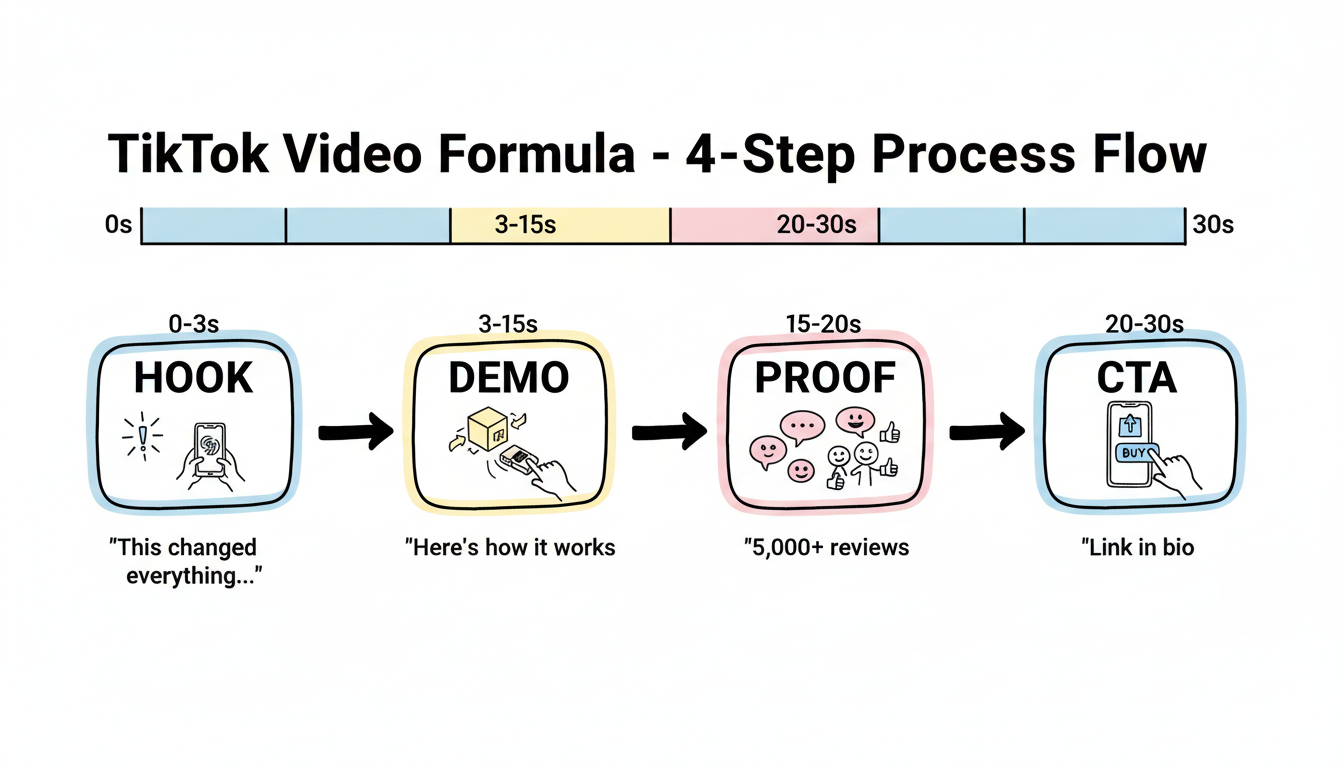
Element | Recommendation |
Length | 15-30 seconds (sweet spot) |
Format | 9:16 vertical |
Resolution | 1080x1920 minimum |
Sound | Essential (use trending audio when appropriate) |
Captions | Required (many users watch with sound off) |
Based on ecommerce advertising analysis:
For user-generated content strategies that drive authentic engagement, our TikTok UGC ads strategy guide provides actionable frameworks.
For ecommerce brands with multiple SKUs, TikTok's catalog ads deliver personalized product recommendations at scale.
Ad Type | Description | Best For |
Collection Ads | Cover video + product catalog | Product launches |
Dynamic Showcase Ads | Personalized products per user | Retargeting |
Product Cards | Static product display in feed | Catalog awareness |
Optimize your catalog for better performance:
TikTok's system can automatically:
Enable Dynamic Creative when running catalog campaigns for maximum efficiency.
Retargeting on TikTok captures users who've shown interest but haven't converted yet. For advanced remarketing tactics, see our TikTok retargeting and remarketing guide.
The TikTok Pixel tracks user behavior on your website. Install via:
Essential events to track:
Audience | Definition | Best Use |
Website Visitors | Users who visited your site | Broad retargeting |
Product Viewers | Users who viewed specific products | Product-specific ads |
Cart Abandoners | Users who added but didn't buy | Urgency messaging |
Past Purchasers | Existing customers | Upsells, cross-sells |
Engaged Users | Users who engaged with TikTok content | Nurture campaigns |
Beyond standard retargeting, TikTok Lookalike Audiences enable you to scale your best-performing customer segments.
Build a retargeting funnel:
Layer 1: Warm Audiences (7-14 days)
Layer 2: Hot Audiences (0-7 days)
Layer 3: Customers
Track these metrics to measure and optimize your TikTok ecommerce performance. For cost benchmarking, consult our TikTok CPC benchmarks.
Metric | Benchmark | How to Improve |
ROAS | 3-5x (varies by margin) | Better targeting, stronger creative |
CPA | Industry-dependent | Optimize for purchase, not clicks |
AOV | Match/exceed site average | Bundling, upsells, thresholds |
CVR | 2-5% from click | Landing page optimization |
TikTok's influence often extends beyond direct attribution:
Use tools like Triple Whale or Northbeam for multi-touch attribution across TikTok and other channels.
A D2C skincare brand achieved:
Strategy used:
For more on leveraging creator content with native features, explore our TikTok Spark Ads guide.
An apparel brand scaled TikTok to 40% of total revenue:
Strategy used:
Fashion brands can find additional vertical-specific tactics in our TikTok advertising for fashion brands guide.
For more detailed ecommerce success stories, see our TikTok advertising case study for ecommerce.
Ready to launch TikTok ads for your ecommerce brand? Follow this sequence:
For foundational knowledge before launching your first campaign, review our complete guide to TikTok advertising.
Start with $1,500-$3,000/month to gather sufficient data. To exit TikTok's Learning Phase effectively, you need approximately 50 conversions per week per ad group. Scale once you've identified winning creative and audiences.
Yes, if you're selling products that appeal to TikTok's demographics (primarily under-35). The lower fees and built-in audience make it accessible, but success requires consistent content creation. Learn more in our TikTok ads for small business guide.
Options include: (1) TikTok Creator Marketplace for direct outreach, (2) TikTok Shop Affiliate Program where creators earn commission, (3) Direct partnerships negotiated off-platform. The affiliate program is often easiest for scaling. For detailed creator partnership strategies, see our TikTok Creator Marketplace guide and TikTok influencer rates breakdown.
Products that perform well are typically: demonstrable (show clear before/after), visually interesting, solve a problem, under $50 (impulse-friendly), or have viral/trend potential. Beauty, fashion, gadgets, and home goods are top categories.
Both platforms can drive strong ecommerce results. TikTok often delivers lower CPMs and better engagement, while Meta provides more sophisticated targeting and attribution. Most successful brands use both. See our TikTok vs Facebook Ads comparison for a detailed platform breakdown.
By submitting this form, you agree to our Privacy Policy and Terms & Conditions.