February 19, 2026


Understanding TikTok influencer rates is essential for budgeting effective creator campaigns. According to creator payment data, TikTok creators typically charge based on follower count, engagement rate, content type, and usage rights—but rates vary dramatically across the platform.
This guide breaks down what to expect at every influencer tier and how to negotiate fair rates for your campaigns.
Creator rates on TikTok continue evolving as the platform matures. According to Lumanu payment data, the average TikTok creator payment was $2,049 in early 2025—a 23% increase from the previous year.
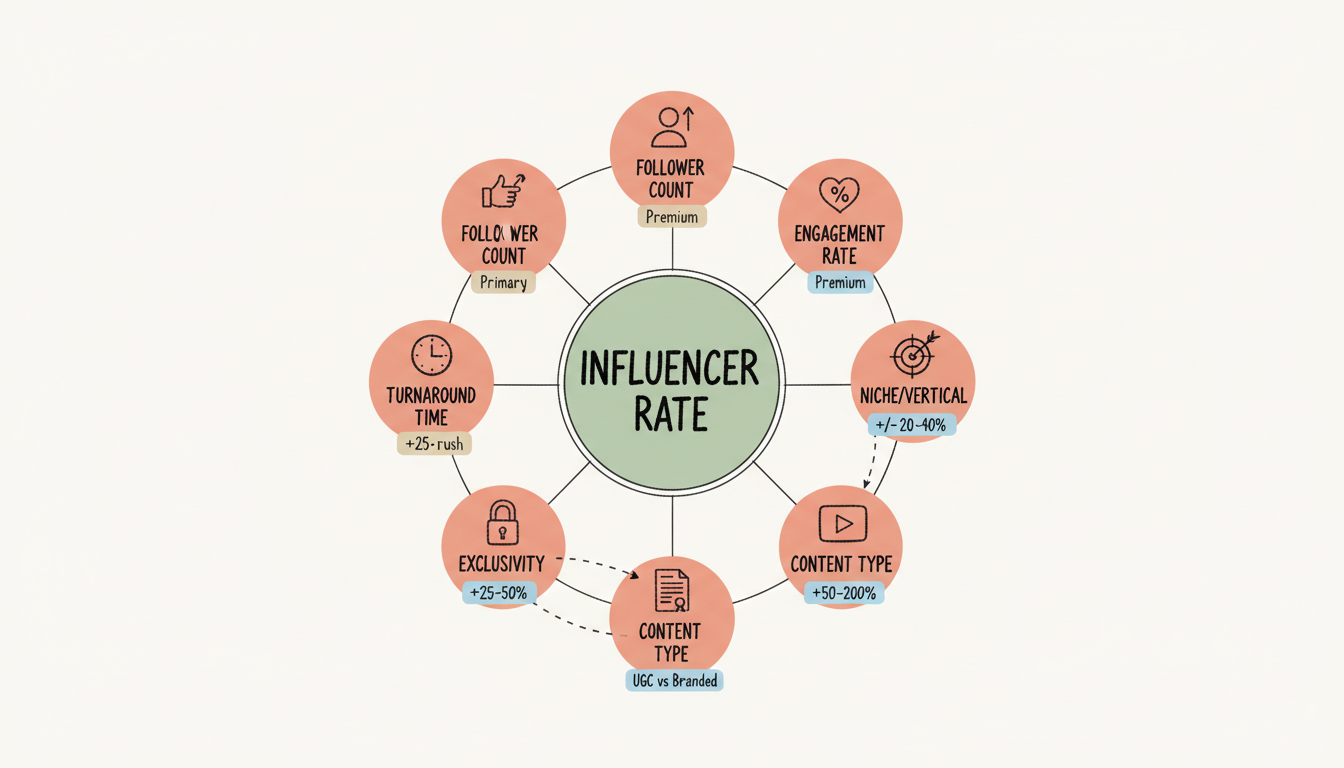
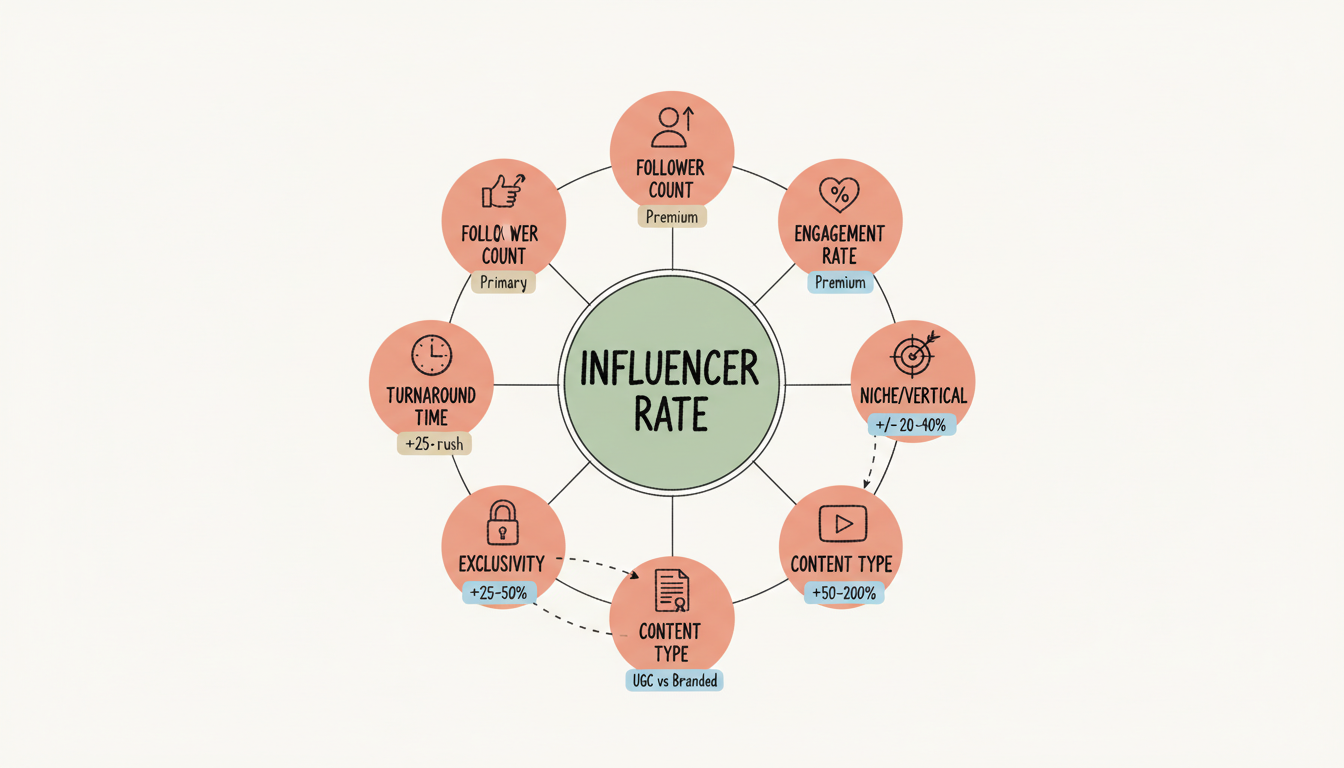
Factor | Impact on Rate |
Follower count | Primary pricing determinant |
Engagement rate | High engagement commands premium |
Niche/vertical | Finance, tech pay more than lifestyle |
Content type | UGC vs. branded content vs. reviews |
Usage rights | Paid media rights increase cost 50-200% |
Exclusivity | Category exclusivity adds 20-50% |
Turnaround time | Rush delivery can add 25-50% |
A creator with 50K followers and 8% engagement rate often commands higher rates than one with 200K followers and 1% engagement. When evaluating creators, calculate:
Engagement Rate = (Likes + Comments + Shares) / Views × 100
Prioritize creators with engagement rates above platform averages:
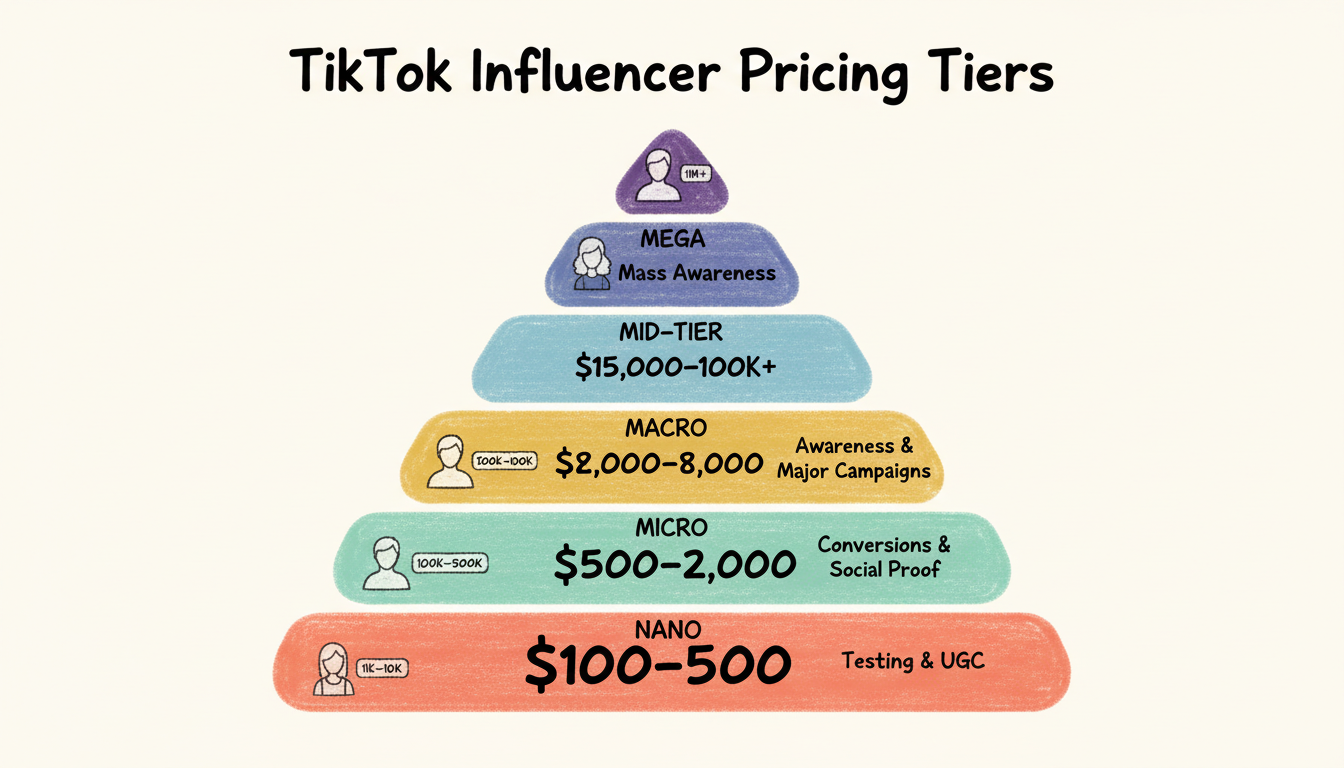
According to influencer marketing research, nano-influencers typically charge:
Content Type | Rate Range |
Single video post | $100-$500 |
Video with product mention | $150-$400 |
UGC for brand use | $50-$200 |
When to use nano-influencers:
Nano-influencers often accept product gifting plus small payments. Their audiences are highly engaged and trusting, making them valuable for conversion-focused campaigns despite smaller reach.
Micro-influencers represent the sweet spot for many brands. Industry pricing data shows typical rates:
Content Type | Rate Range |
Single video post | $500-$2,000 |
Multi-video campaign | $1,500-$5,000 |
UGC with paid media rights | $750-$3,000 |
Product review | $500-$1,500 |
When to use micro-influencers:
Micro-influencers often deliver the best ROI. Their audiences are large enough for meaningful reach while maintaining the trust and engagement that drives action. For brands looking to expand their reach through TikTok influencer marketing agencies, partnering with micro-influencers is often the most cost-effective starting point.
Mid-tier creators bridge the gap between niche influence and mass reach:
Content Type | Rate Range |
Single video post | $2,000-$8,000 |
Brand integration | $3,000-$12,000 |
Campaign ambassadorship | $10,000-$30,000/month |
UGC with paid media rights | $3,000-$10,000 |
When to use mid-tier influencers:
Macro-influencers command significant rates based on reach:
Content Type | Rate Range |
Single video post | $8,000-$15,000 |
Brand integration | $12,000-$25,000 |
Multi-video campaign | $25,000-$60,000 |
Exclusivity deals | $30,000-$100,000+ |
When to use macro-influencers:
Top-tier TikTok creators with massive followings:
Content Type | Rate Range |
Single video post | $15,000-$100,000+ |
Brand partnership | $50,000-$250,000+ |
Long-term ambassadorship | $100,000-$1,000,000+/year |
According to creator economy reports, top TikTok creators like Charli D'Amelio and Khaby Lame can command $100,000+ for a single branded video.
When to use mega-influencers:
Beyond follower count, content type significantly impacts pricing.
The creator develops and posts content featuring your product:
Content created for your brand to use in paid advertising:
Follower Tier | UGC Rate | With Whitelisting |
Nano | $50-$200 | $150-$400 |
Micro | $200-$500 | $500-$1,500 |
Mid-tier | $500-$1,500 | $1,500-$4,000 |
Macro | $1,500-$5,000 | $4,000-$12,000 |
UGC-only creators (who specialize in creating content without posting) often charge less than established influencers. Understanding how these creators fit into your broader TikTok ad creative best practices can help maximize the value of UGC content in paid campaigns.
In-depth reviews command premiums due to expertise required:
When brands boost creator content through TikTok's ad platform:
TikTok Shop live sessions have emerged as a distinct category:
Before discussing price, align on:
Element | Questions to Answer |
Content specs | Length, format, posting time |
Revisions | How many rounds included? |
Usage rights | Organic only or paid media? |
Duration | How long can you use content? |
Exclusivity | Any category restrictions? |
Multi-video packages typically offer 15-25% savings over individual posts. Consider:
Align creator compensation with results:
Model | Structure |
Affiliate commission | Base rate + % of sales driven |
Performance bonus | Extra payment if content exceeds metrics |
Revenue share | Percentage of attributed revenue |
According to e-commerce research, brands offering creators a financial stake in performance often see better content and stronger results.
Don't bundle paid media rights into base pricing. Negotiate:
Warning Sign | What It Means |
No rate card | Creator may inflate prices case-by-case |
Rates far above tier averages | Overvaluing their audience |
Inflated follower counts | Possible purchased followers |
Low engagement despite high followers | Bot followers or dead audience |
Refusal to show analytics | Hiding poor performance |
Before committing budget:
Influencer marketplaces like Creator Marketplace, Billo, and Insense provide rate benchmarks. Even if you don't use them for hiring, they help validate direct outreach pricing. For ecommerce brands, integrating creator partnerships with a strong TikTok ads for ecommerce strategy can amplify returns from influencer investments.
For a creator with 100K followers, expect to pay $500-$2,000 for a standard branded video post. Rates vary based on engagement rate, niche, and content type. Add 50-100% for paid media usage rights. Creators with above-average engagement (5%+) or in competitive niches like finance or tech may charge toward the higher end.
TikTok rates are generally 10-20% lower than Instagram for equivalent follower counts, though this gap is narrowing. TikTok often delivers better engagement and organic reach, making the effective cost-per-engagement competitive. Many creators price TikTok and Instagram separately, with TikTok sometimes lower due to less established rate norms. Understanding the TikTok CPM benchmarks can help you evaluate whether influencer pricing aligns with paid advertising costs.
A hybrid approach works best: pay a base flat fee to secure quality content, plus performance incentives (affiliate commission or bonuses) to align interests. Pure performance deals struggle to attract top creators, while pure flat fees don't maximize creator motivation. Start with 70% base / 30% performance split for new relationships.
By submitting this form, you agree to our Privacy Policy and Terms & Conditions.