February 19, 2026


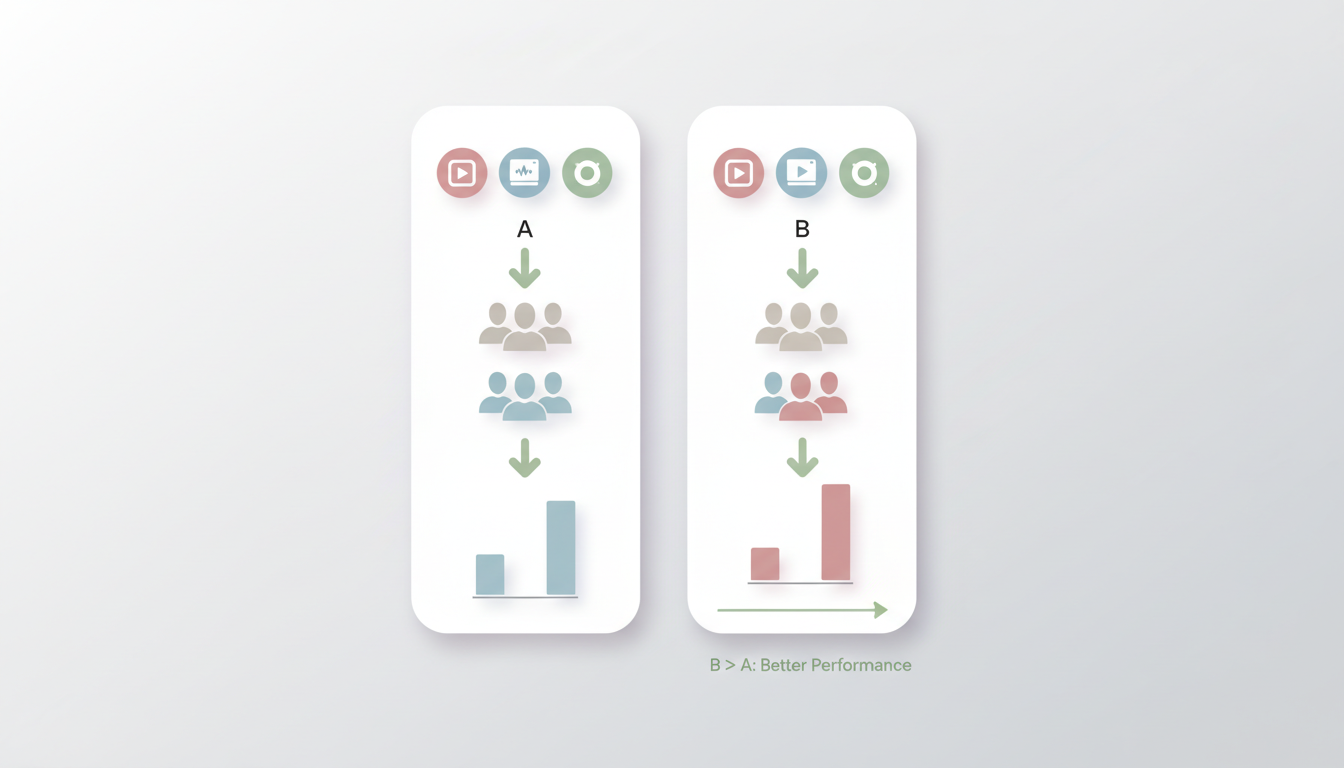
Running TikTok ads without A/B testing is like navigating without a map. You might eventually reach your destination, but you'll waste time and budget getting there. TikTok's Split Test feature in Ads Manager allows you to systematically identify what works best for your audience, from creative concepts to targeting strategies.
This guide covers the fundamentals of TikTok A/B testing, what variables to test, how to set up experiments correctly, and the common mistakes that undermine results.
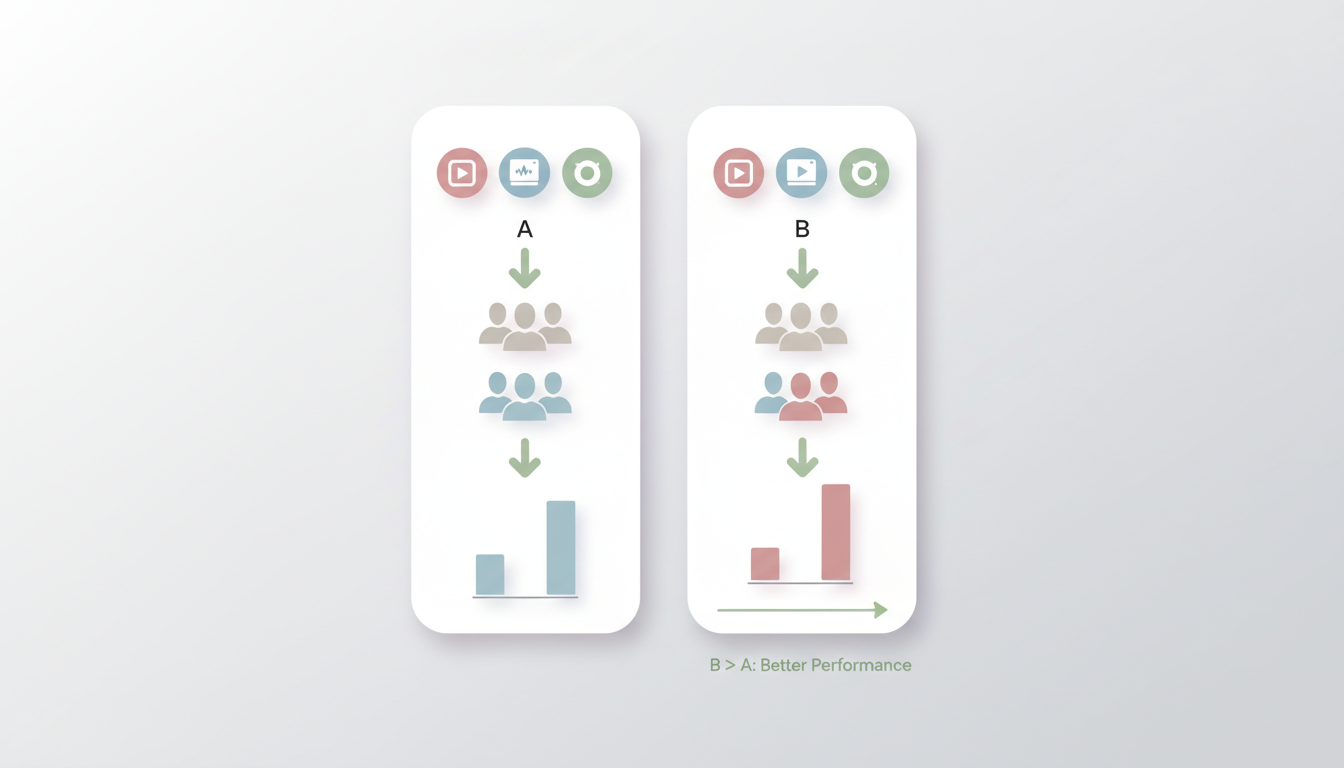
A/B testing (also called split testing) compares two or more variations of an ad element to determine which performs better. Rather than guessing what your audience prefers, you let data guide your decisions.
TikTok's algorithm prioritizes content that engages users quickly. According to industry research, 71% of whether users continue watching is determined in the first three seconds. Small creative changes—a different hook, alternative music, or varied text overlay—can dramatically impact performance.
The platform also experiences rapid trend cycles. What worked last month may underperform today. Continuous testing helps you stay ahead of shifting audience preferences.
TikTok Ads Manager includes a built-in Split Test tool that:
The 2026 update now includes Campaign-level Split Testing with Smart+ and Multi-Variable testing, expanding your ability to test across more variables simultaneously.
For reliable results, your tests need sufficient data. TikTok recommends:
Running tests with insufficient budget or duration leads to inconclusive results that may mislead your optimization decisions.
Not all variables have equal impact on performance. Focus your testing on elements that move the needle most significantly.
Creative Concepts Test fundamentally different approaches rather than minor tweaks. According to TikTok optimization guides, testing 5-10 creative concepts per campaign yields better results than testing minor variations.
Consider testing:
Hook Variations The first three seconds determine success. Test different opening approaches:
Call-to-Action (CTA) Different CTAs drive different behaviors. Test variations like:
Music and Sound Audio significantly impacts engagement. Test:
Video Length While shorter videos (under 20 seconds) generally perform better, your audience may differ. Test:
Text Overlays Test whether text enhances or distracts:
Audience Targeting Compare performance across:
When developing your TikTok ads targeting options guide, systematically test each audience segment to identify your highest-performing demographics.
Optimization Goals Test different bidding strategies:
Proper test setup ensures your results are valid and actionable.
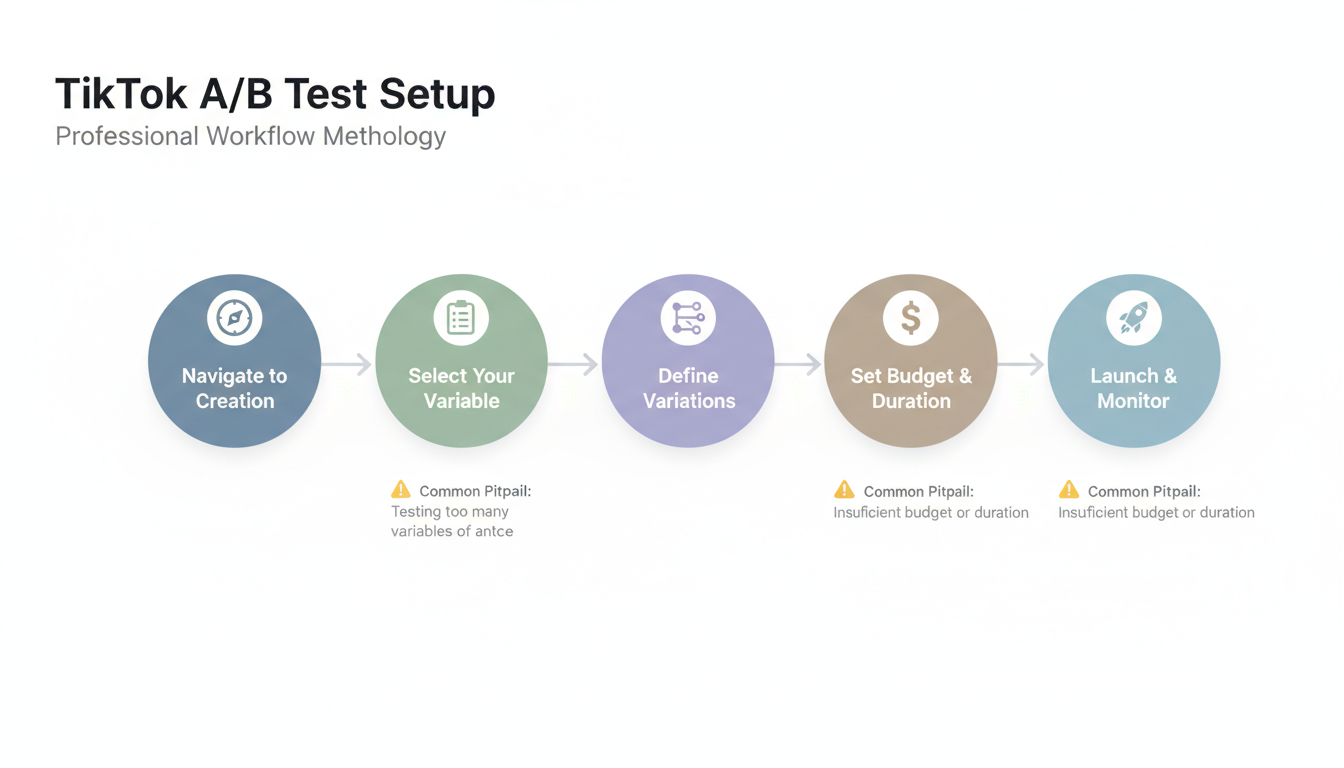
1. Navigate to Campaign Creation In TikTok Ads Manager, start creating a new campaign. Toggle on "Create Split Test" before proceeding.
2. Select Your Variable Choose one variable to test per experiment. TikTok allows testing:
3. Define Your Variations Create 2-5 variations of your chosen variable. Keep everything else identical to isolate the variable's impact.
4. Set Budget and Duration Allocate sufficient budget—remember the 20x CPA rule. Set duration to at least 7 days, ideally 14 for statistical confidence.
5. Launch and Monitor TikTok automatically splits traffic evenly. Monitor daily but avoid making changes mid-test.
Isolate Single Variables Test only one element at a time. If you change both the hook and the CTA, you won't know which drove the performance difference.
Use Significant Variations Testing a red button vs. an orange button rarely yields meaningful insights. Test meaningfully different approaches—like humor vs. seriousness, or UGC-style vs. polished production.
Match Test Conditions Run variations simultaneously to account for time-based factors like day-of-week performance or seasonal trends.
Document Everything Keep records of what you tested, when, and the results. This builds institutional knowledge that compounds over time.
Raw numbers don't tell the whole story. Proper analysis reveals actionable insights.
Primary Metrics (by objective):
Understanding your TikTok ROAS benchmarks helps you evaluate whether your test results represent meaningful improvement or statistical noise.
Supporting Metrics:
TikTok provides a "Winning Probability" indicator showing how confident you can be in results. Look for:
When you identify a winner:
Remember that test results apply to the specific context tested. A winning hook in one campaign may not transfer perfectly to another.
Avoid these pitfalls that invalidate results or mislead optimization decisions.
The most common mistake is calling winners before achieving statistical significance. Run tests for 7-14 days minimum even if early results look conclusive. TikTok's algorithm needs time to optimize delivery, and audience behavior varies throughout the week.
Changing the font color or button shade rarely produces meaningful differences. Focus on substantive variations that represent different strategic approaches.
Seasonality, competitor activity, and platform changes all influence results. A test run during a holiday period may not apply to regular weeks. Account for context when interpreting findings.
Multi-variable tests require exponentially more data for significance. Start with single-variable tests. Only attempt multi-variable testing with substantial budgets and clear hypotheses.
The purpose of testing is optimization. If you test but don't implement findings, you've wasted budget. Create a workflow that translates test results into immediate campaign changes.
If you're experiencing delivery issues, check our troubleshooting guide on TikTok ads not spending before launching new tests—poor delivery can invalidate your results.
TikTok's audience evolves rapidly. A/B testing should be continuous because what works today may not work in three months. Retest winning approaches periodically to confirm they still perform.
For reliable results, budget at least 20 times your target CPA across your test variations. For example, if your target CPA is $25, allocate at least $500 per variation ($1,000 minimum for two variations). Smaller budgets may produce results, but with lower confidence levels.
Run tests for 7-14 days minimum. This allows TikTok's algorithm to optimize delivery and captures performance variation across different days of the week. Shorter tests often produce unreliable results that may mislead optimization decisions.
TikTok's Split Test feature tests one variable at a time for clear results. While multi-variable testing is now available in beta, it requires significantly larger budgets to achieve statistical significance. Start with single-variable tests until you have substantial testing budget.
By submitting this form, you agree to our Privacy Policy and Terms & Conditions.