February 19, 2026


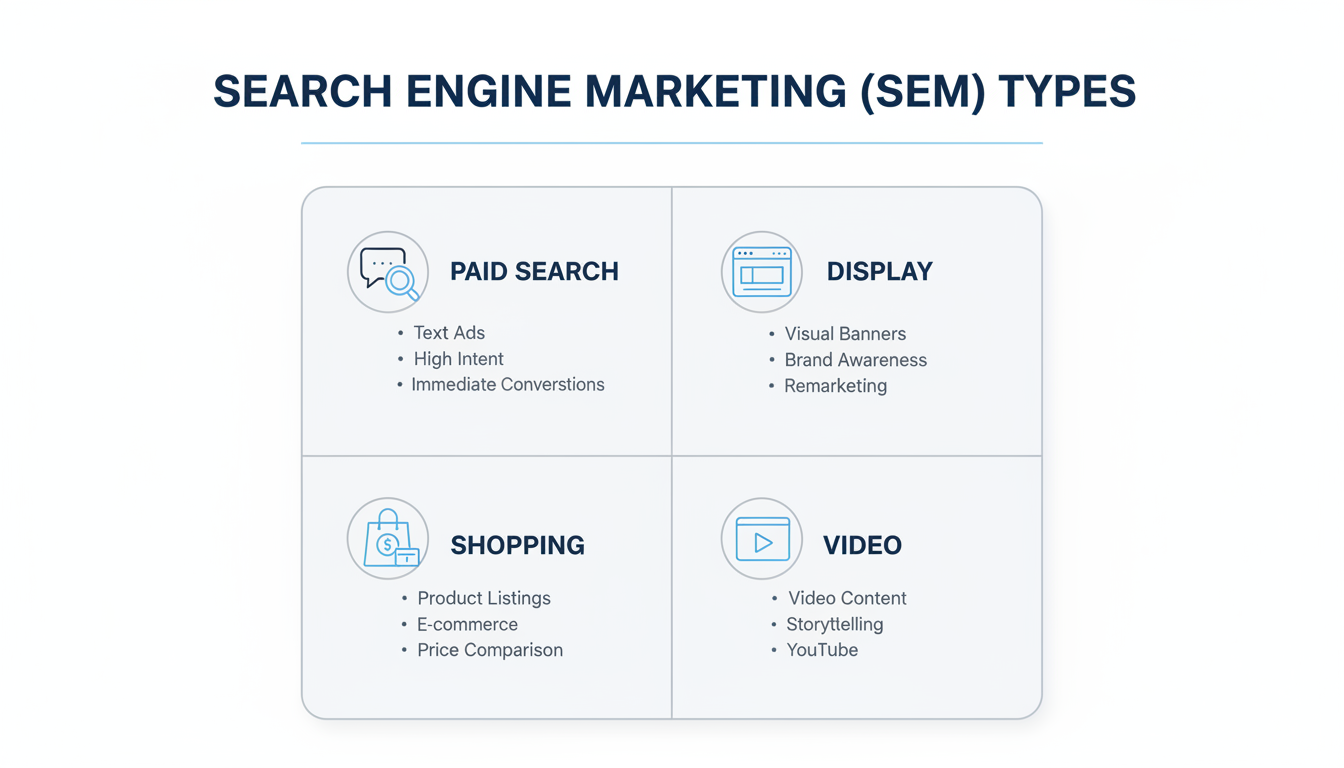
Search engine marketing (SEM) encompasses multiple advertising formats, each designed for specific business objectives. Understanding the different types of search engine marketing helps you choose the right approach for your goals—whether that's capturing high-intent buyers, building brand awareness, or driving e-commerce sales. This guide covers the major SEM types available on platforms like Google Ads and Microsoft Advertising.
Search engine marketing is a digital strategy that increases website visibility through paid advertising on search engine results pages (SERPs). Unlike organic SEO that builds traffic over time, SEM provides immediate visibility by allowing businesses to pay to appear at the top of search results.
SEM operates primarily through a pay-per-click (PPC) model where advertisers bid on keywords and pay only when users click their ads. Major platforms include Google Ads and Microsoft Advertising, which together reach the vast majority of search users. For those new to the space, a comprehensive SEM marketing beginners guide can help establish foundational knowledge.
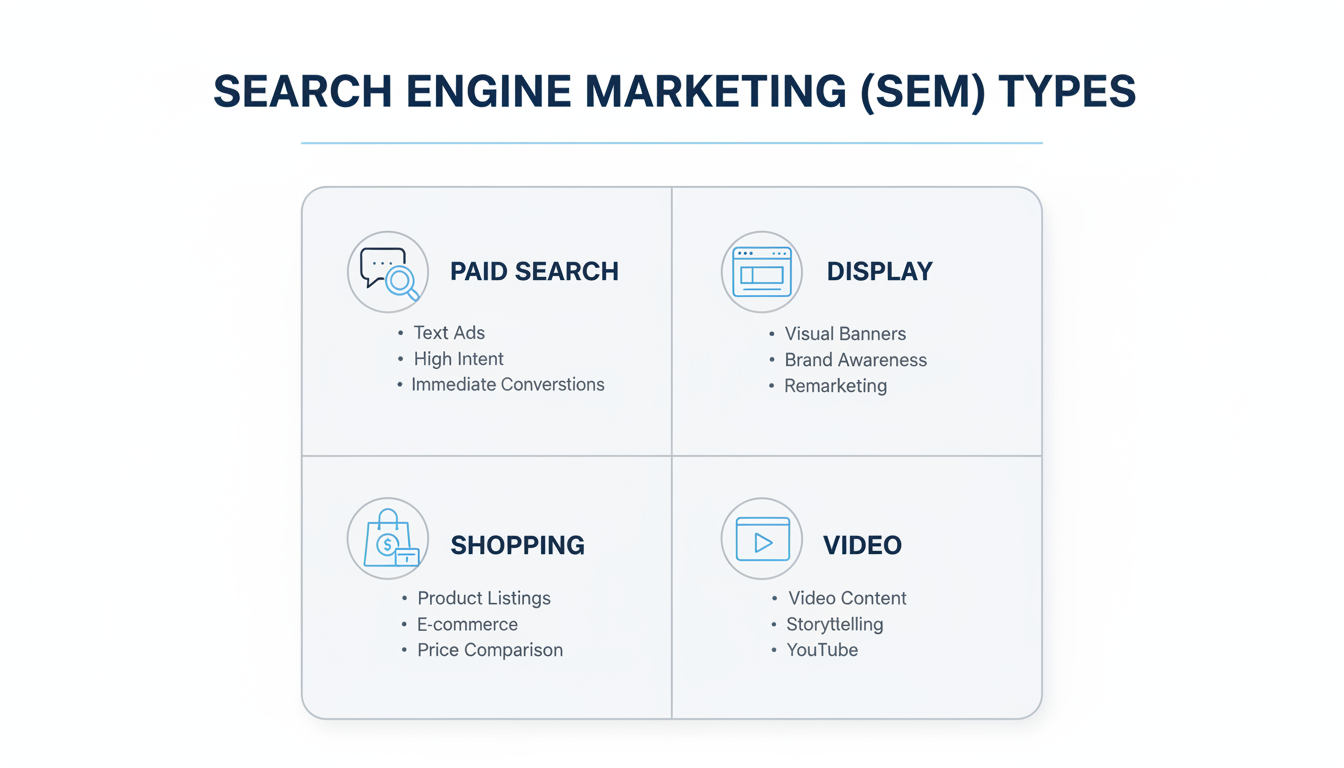
Paid search ads are text-based advertisements that appear above and below organic search results when users search for specific keywords.
When someone searches for a keyword you're targeting, your ad enters an auction against other advertisers. Your ad's position depends on:
Paid search ads excel at capturing high-intent users. They're ideal for:
According to Bluehost, search ads target users with high-intent queries, making them effective for immediate conversions. To see how these ads perform in real-world scenarios, explore various paid search advertising examples from successful campaigns.
Display ads are visual banner advertisements that appear across networks of partner websites, apps, and platforms.
Rather than appearing on search results, display ads show on websites within ad networks:
Display targeting options include:
Display advertising works best for:
Display ads reach users before they actively search, making them valuable for demand generation and staying top-of-mind with potential customers.
Shopping ads display product images, prices, and merchant information directly in search results.
Shopping campaigns pull product information from a data feed submitted through:
Ads appear on search results pages, dedicated shopping tabs, and partner sites. Unlike search ads, you don't bid on keywords directly—the platform matches your products to relevant searches based on your feed data.
Shopping ads are essential for:
Shopping ads display products directly in search results, capturing users at the moment they're comparing options.
Video advertising delivers video content across platforms like YouTube and partner video networks.
Video campaigns run across:
Advertisers can target by demographics, interests, keywords, placements, or remarketing lists.
Video advertising offers multiple formats:
Format | Length | Skippable | Best For |
Skippable In-Stream | Any length | After 5 seconds | Brand awareness |
Non-Skippable In-Stream | 15-20 seconds | No | Key messages |
Bumper Ads | 6 seconds | No | Quick impressions |
In-Feed (Discovery) | Any length | N/A | Engagement |
Video ads excel at:
Video reaches audiences where they consume content, building familiarity before they ever search for your products.
Selecting the appropriate type of search engine marketing depends on your business goals, audience, and budget.
Business Goal | Recommended SEM Type |
Immediate leads/sales | Paid Search Ads |
E-commerce product sales | Shopping Ads |
Brand awareness | Display + Video Ads |
Remarketing warm audiences | Display Ads |
Product demonstrations | Video Ads |
Local service inquiries | Paid Search + Local Ads |
Different SEM types serve different funnel stages:
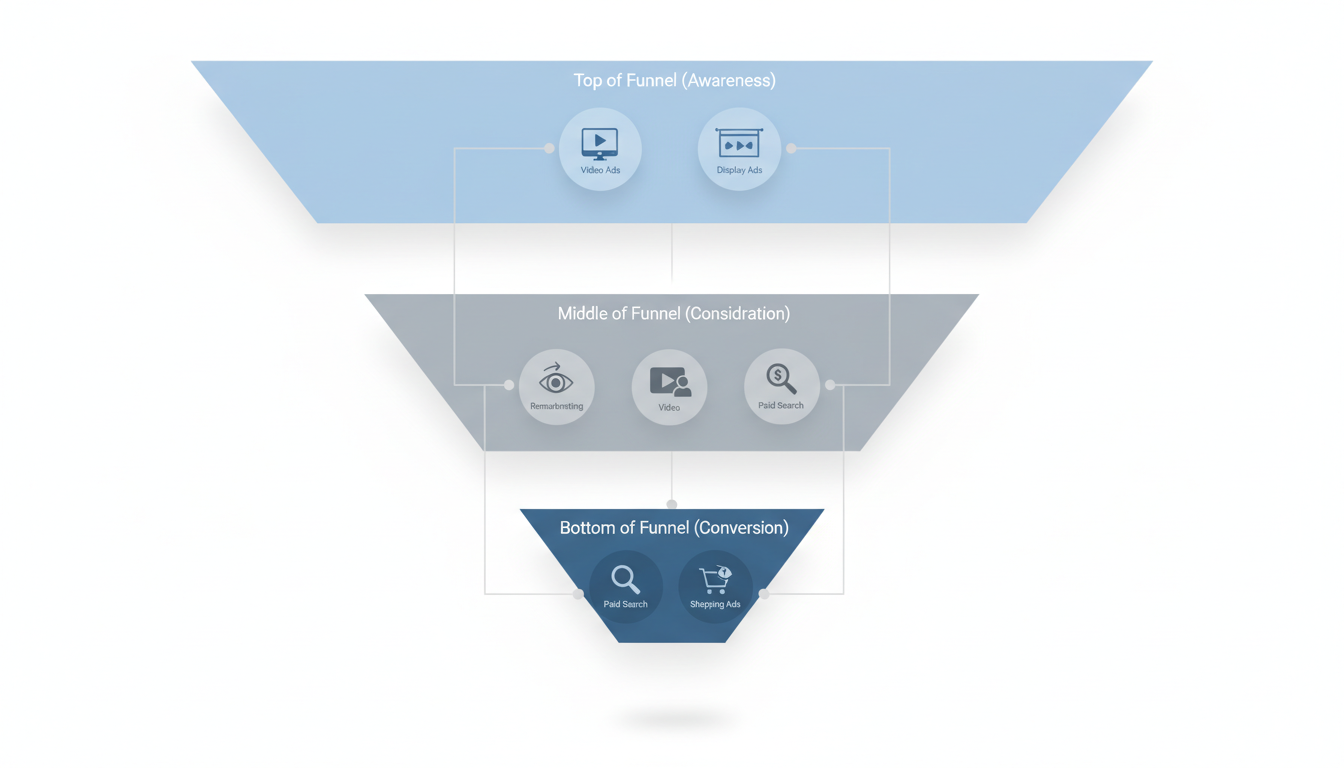
Both Google Ads and Microsoft Advertising offer these SEM types, but with important differences. For a detailed breakdown, see our Microsoft Ads vs Google Ads comparison:
Many successful advertisers run campaigns on both platforms to maximize reach while optimizing costs. When evaluating paid search advertising platforms comparison, consider your specific industry and target audience demographics.
If you're new to SEM:
The main types of SEM include paid search ads (text ads on search results), display advertising (visual banner ads on websites), shopping ads (product listings with images and prices), and video ads (video content on YouTube and partner sites). Each type serves different marketing objectives.
Paid search ads are typically best for beginners because they target users actively searching for your products or services. Start with a small budget, target high-intent keywords, and scale based on performance. Display remarketing is a good second step.
Yes, using multiple SEM types together is a best practice. Paid search captures ready-to-buy customers, display remarketing brings back visitors, shopping ads showcase products, and video builds awareness. Most successful advertisers use an integrated approach.
By submitting this form, you agree to our Privacy Policy and Terms & Conditions.