
February 19, 2026


Search engine marketing (SEM) is one of the most powerful ways to reach potential customers exactly when they're searching for products or services like yours. For businesses looking to generate leads and sales quickly, SEM offers immediate visibility and measurable results.
In this beginner-friendly guide, you'll learn exactly what SEM is, how it works, why businesses invest in it, and how to get started with your first campaigns.
Search engine marketing (SEM) is a form of digital marketing where advertisers pay to display targeted ads alongside search engine results. When someone searches for a keyword you're bidding on, your ad can appear at the top of the results page—above organic listings.
SEM is also commonly called:
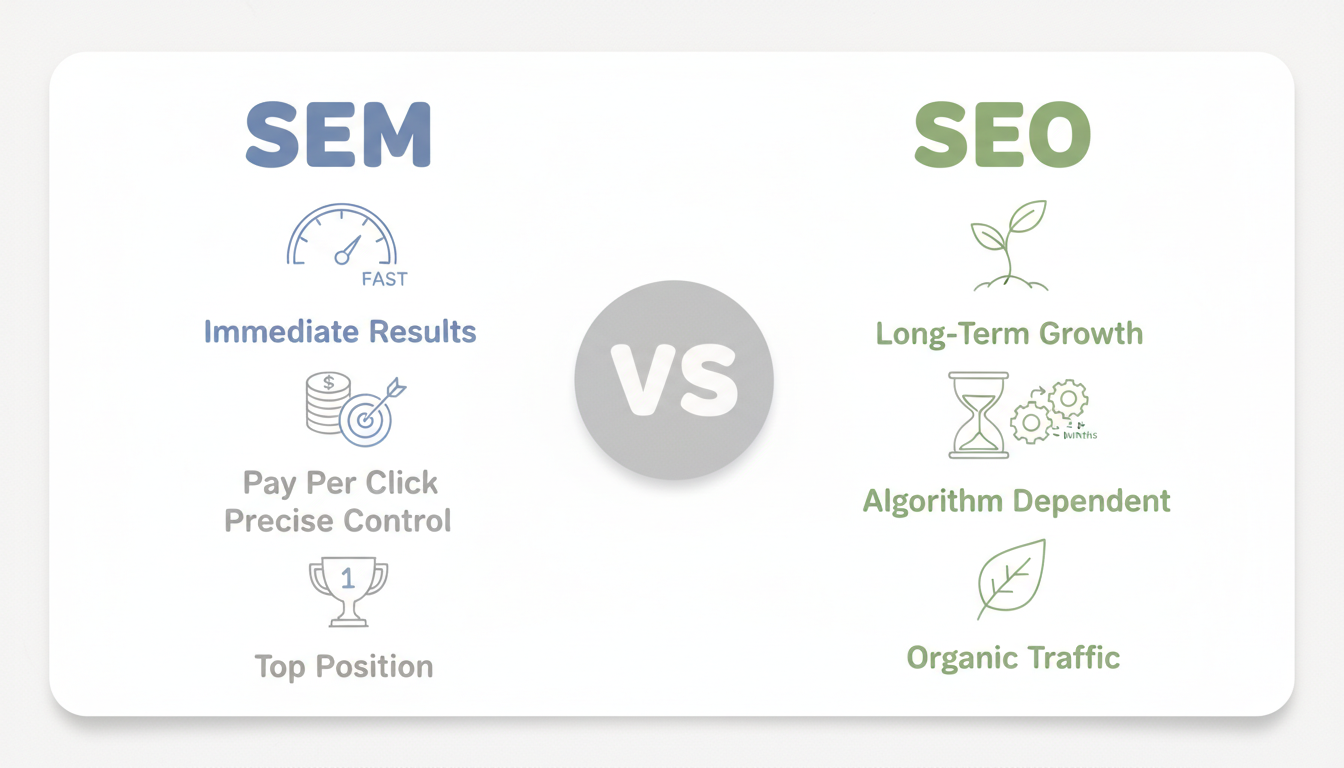
While both SEM and SEO focus on search engines, they work differently:
Factor | SEM (Paid) | SEO (Organic) |
Cost Model | Pay per click | Time and labor investment |
Speed to Results | Immediate | 3-6+ months |
Position | Top of page (ad section) | Below ads |
Control | High (budget, targeting) | Limited (algorithm dependent) |
Sustainability | Stops when ads stop | Long-lasting results |
Most successful businesses use both: SEM for immediate traffic and testing, SEO for long-term sustainable growth.
Understanding the SEM process helps you make smarter advertising decisions. Here's what happens behind the scenes.
Every time someone searches, an auction occurs in milliseconds:
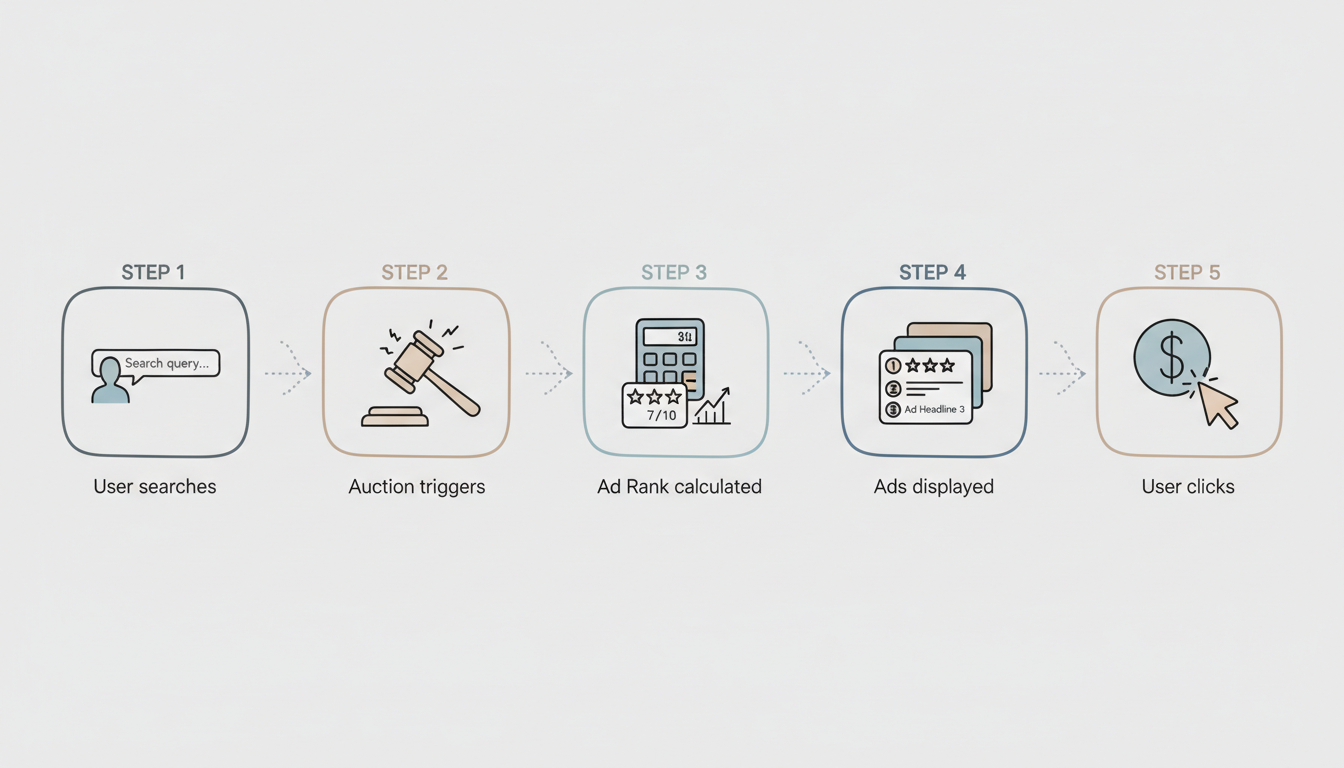
According to Google Ads documentation, Ad Rank considers multiple factors:
Quality Score is Google's 1-10 rating of your keywords' quality and relevance. A perfect 10/10 Quality Score can make your ads significantly cheaper than competitors with poor scores.
Quality Score is based on:
Higher Quality Scores mean lower costs and better ad positions—a win-win.
SEM offers unique advantages that other marketing channels can't match.
Unlike SEO that takes months, SEM campaigns can generate traffic within hours of launch. This makes it ideal for:
SEM lets you reach exactly who you want:
Microsoft Ads even offers exclusive LinkedIn profile targeting—reaching users by job title, industry, and company size.
Every aspect of SEM is trackable:
According to PPC research, 61% of B2B marketers say PPC is the most effective paid channel for content marketing, beating social media advertising (49%) and sponsorships (48%).
You decide exactly how much to spend:
While Google dominates, other platforms offer unique advantages.
Google controls approximately 89.62% of global search traffic, making it the primary SEM platform. For businesses getting started with Google PPC advertising, key features include:
The average CPC on Google Ads is $1-$2, though this varies significantly by industry.
Microsoft powers search on Bing, Yahoo, and AOL, with about 4% of global search traffic. Despite smaller volume, it offers:
When evaluating Microsoft Ads vs Google Ads, consider that Microsoft's platform often delivers better ROI for B2B campaigns due to its professional audience demographics.
Among PPC marketers:
Most advertisers run both Google and Microsoft Ads to maximize reach and diversify traffic sources.
Here's how to launch your first SEM campaign.
Before creating campaigns, clarify what success looks like:
Your goals determine campaign structure, bidding strategy, and success metrics.
Find the search terms your customers use:
Focus on keywords that indicate buying intent rather than just research.
Write ads that stand out and drive clicks:
Test multiple ad variations to find what resonates best.
Your landing page should:
Sending ads to generic homepages wastes money. Dedicated landing pages convert significantly better.
Before launching, implement conversion tracking:
Without tracking, you're flying blind and can't optimize effectively. Understanding Microsoft Ads reporting metrics is essential for measuring campaign success across platforms.
Start with modest budgets and:
Optimization is ongoing—the best campaigns are constantly refined. Many businesses find value in working with a PPC management agency to maximize their return on ad spend.
The SEM landscape continues to evolve rapidly.
75% of PPC professionals now use generative AI at least sometimes for writing ads. Platforms increasingly push automated bidding and AI-generated ads.
Over 58% of Google queries in the US result in zero clicks, with users getting answers directly in search results. This increases competition for clicks that do occur.
Search marketing in 2026 now includes AEO (Answer Engine Optimization)—optimizing for AI citations and answer engines alongside traditional SEM and SEO.
SEM costs vary widely by industry and competition. The average Google Ads CPC is $1-$2, but highly competitive industries like legal, insurance, and finance can see CPCs of $50 or more. You control your budget—start small (even $500/month) and scale based on results.
Neither is universally "better"—they serve different purposes. SEM delivers immediate traffic but stops when you stop paying. SEO takes longer but builds sustainable, free traffic over time. Most successful businesses invest in both for a balanced marketing strategy.
SEM can generate traffic within hours of launching campaigns. However, optimization for best results typically takes 2-3 months as you gather data, refine targeting, and improve Quality Scores. Expect to see consistent ROI patterns after 90 days of active management.
For budgets under $2,000/month, self-management can work if you have time to learn and monitor campaigns. For larger budgets or if you'd rather focus on your business, professional management typically delivers better ROI through expertise and optimization.
By submitting this form, you agree to our Privacy Policy and Terms & Conditions.



