
February 19, 2026


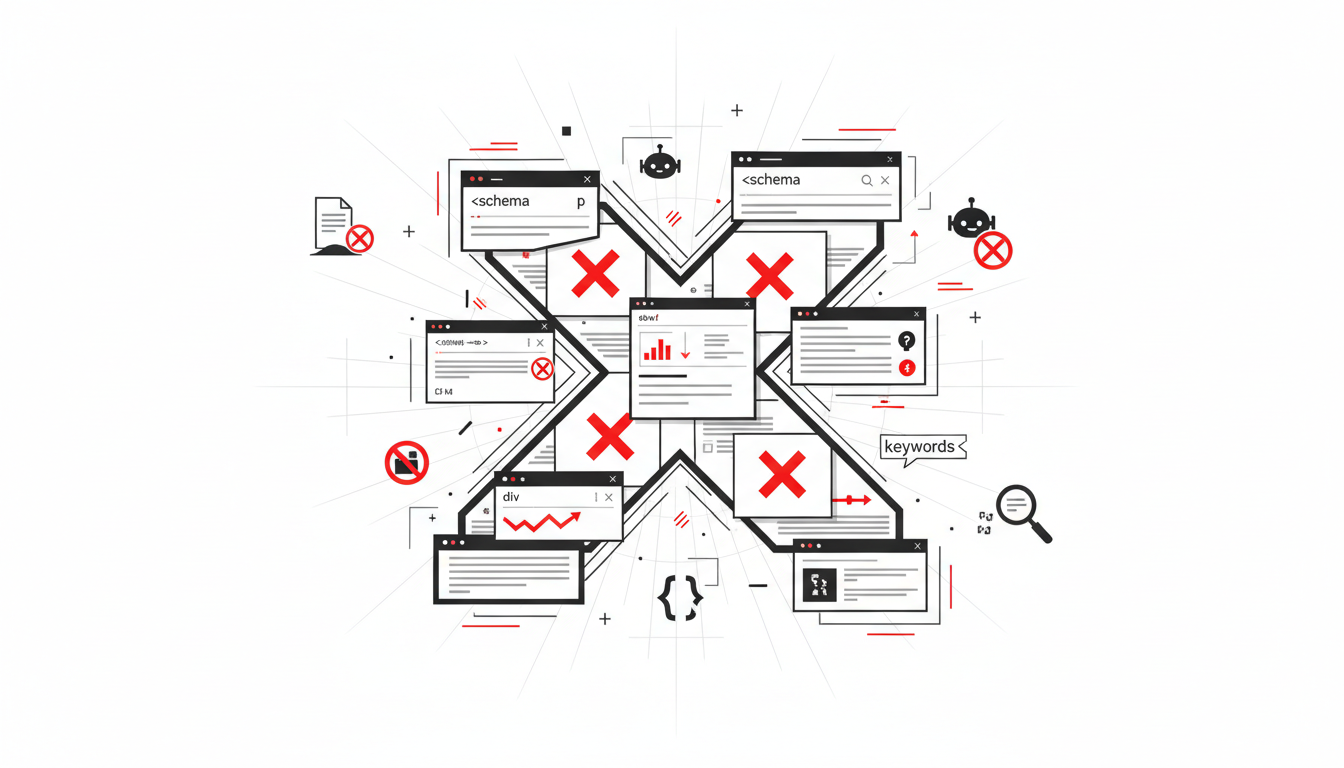
Answer engine optimization offers tremendous opportunity for brands seeking AI search visibility—but common mistakes can undermine even well-intentioned efforts. Understanding what breaks AEO success helps avoid wasted resources and missed visibility opportunities across ChatGPT, Perplexity, Google AI Overviews, and other AI platforms.
According to Addlly AI's AEO checklist, ignoring conversational and long-tail search intent can hurt your AEO results. Users now type and speak questions using natural language, especially in voice search. If your content does not address these specific user queries, AI engines may skip over your site.
The most damaging AEO errors often involve how content is structured and presented to AI systems.
AI systems look for immediate, clear responses. Hiding key information deep in content reduces citation probability significantly.
According to ClickRank's AEO guide, publishing accurate content without clear headings or sections makes it difficult for AI systems to extract answers. Structure is required for visibility.
The fix: Lead every section with a direct answer in the first 1-2 lines. Aim for 40-50 words that can stand alone if extracted.
Old SEO habits damage AEO performance. Forced optimization confuses AI systems.
According to ClickRank, keyword stuffing confuses intent and reduces readability. Answer engines avoid content that feels unnatural. Clear language always outperforms forced optimization in AEO environments, which is why understanding the fundamentals of search engine optimization with AI is essential for modern marketers.
AI systems need precision. Generic, unclear responses get skipped.
According to Addlly AI, providing vague or fluffy answers limits AEO success. AI engines reward content that delivers direct, specific answers to user questions.
Question-and-answer formats signal extractable content. Skipping FAQ sections loses citation opportunities.
Best practice: Include 5-15 FAQs per content piece using real search queries as questions with 40-60 word answers.
Technical mistakes prevent AI systems from properly crawling, understanding, and citing your content.
Schema provides explicit signals AI systems rely on for content understanding.
According to Addlly AI, overlooking schema markup is a common mistake that limits your AEO success. Implementing proper schema markup for AI search optimization helps AI platforms understand what your content is about. If you skip this step, your site is less likely to be picked for featured snippets, voice search, or AI generated summaries.
Having schema that doesn't match visible content confuses AI systems.
According to Listing Studios' AEO guide, common pitfalls include mismatches between visible text and JSON-LD and missing required properties. Keep a validation cadence to prevent schema drift.
Restrictive robots.txt settings prevent AI systems from discovering your content entirely.
According to Eesel AI's visibility guide, a common mistake is having great content that AI crawlers can't access due to technical issues like a restrictive robots.txt file or heavy JavaScript rendering.
Voice search drives significant AEO traffic. Ignoring mobile experience hurts performance.
According to Addlly AI, neglecting voice search and mobile optimization reduces your AI visibility. AI engines reward websites that are easy to use and navigate with fast load times and mobile-friendly design.
Beyond content and technical factors, strategic mistakes limit overall AEO success.
Traditional SEO tactics don't translate directly to AI optimization.
According to Prodigmar's AEO trends guide, many brands over-optimize for keywords while ignoring structure. Both approaches reduce credibility and suppress visibility inside answer engines.
Unedited AI content lacks the authenticity signals AEO requires.
According to Prodigmar, publishing AI-generated text without human refinement reduces credibility. Answer engines prioritize content that demonstrates genuine expertise.
Not all content benefits equally from AEO optimization. Building an effective AEO strategy requires focusing on high-value content that AI systems are most likely to cite.
According to SpearPoint Marketing's AEO guide, companies waste months optimizing low-value pages that rarely appear in answer engine contexts. A common mistake: optimizing product specifications pages when AI systems preferentially cite educational content like comparison guides and how-to articles.
Focusing on keywords without understanding intent limits AI visibility.
According to LinkedIn analysis on SEO mistakes, chasing keywords instead of intent is a major error. In 2026, SEO rewards clarity, expertise, structure, and consistency.
Balance is essential. Excessive formatting hurts readability.
According to SpearPoint Marketing, over-structuring content can hurt readability and user experience. When every paragraph becomes a rigid Q&A format, the content feels robotic and unnatural. Balance structured extraction points with natural narrative flow that serves human readers first.
Traditional analytics don't capture AEO performance.
According to Prodigmar, traditional metrics fail in answer-first environments. Visibility now extends beyond traffic. Measuring brand mentions, AI citations, and impression share offers a clearer performance picture. Consider using tools like HubSpot's AI search grader to track your performance across AI platforms.
AEO requires ongoing attention as AI systems and content both evolve.
According to LinkedIn analysis, treating SEO like a one-time task is a critical mistake. AI platforms continuously update how they select and cite sources.
Addressing these errors requires systematic improvement across content, technical, and strategic dimensions.
Immediate fixes:
Mistake Category | Quick Fix |
Buried answers | Move key information to first paragraph |
Missing schema | Add FAQPage and Article schema |
Blocked crawlers | Update robots.txt for AI bots |
No tracking | Implement AI visibility monitoring |
Ongoing improvements:
Avoiding AEO marketing mistakes requires awareness across content, technical, and strategic dimensions:
According to Siege Media's GEO analysis, letting AI take over without oversight can lead to off-brand messaging, factual errors, or bland writing that doesn't resonate—making human review essential for sustainable AEO success.
By submitting this form, you agree to our Privacy Policy and Terms & Conditions.



