February 19, 2026


Search engine optimization with AI represents a fundamental shift in how businesses approach digital visibility. Artificial intelligence now powers both sides of the equation—search engines use AI to understand and serve results, while marketers use AI tools to optimize content more effectively.
This guide explains how AI has changed SEO and what strategies work in the current landscape.
Modern search algorithms have moved far beyond simple keyword matching. AI-powered systems now evaluate content based on multiple sophisticated factors.
Search engines in 2026 primarily analyze user intent rather than exact keyword matches. When someone searches, AI algorithms assess:
This shift means optimization must focus on comprehensively answering user questions rather than repeating keywords throughout content.
AI engines now analyze content in real time, evaluating freshness, accuracy, and authenticity. Outdated information gets deprioritized. Content that demonstrates genuine expertise signals quality to AI systems.
Users can now search using text, images, voice, and video. AI systems interpret queries across these formats, meaning content optimization must account for how information appears across different media types.
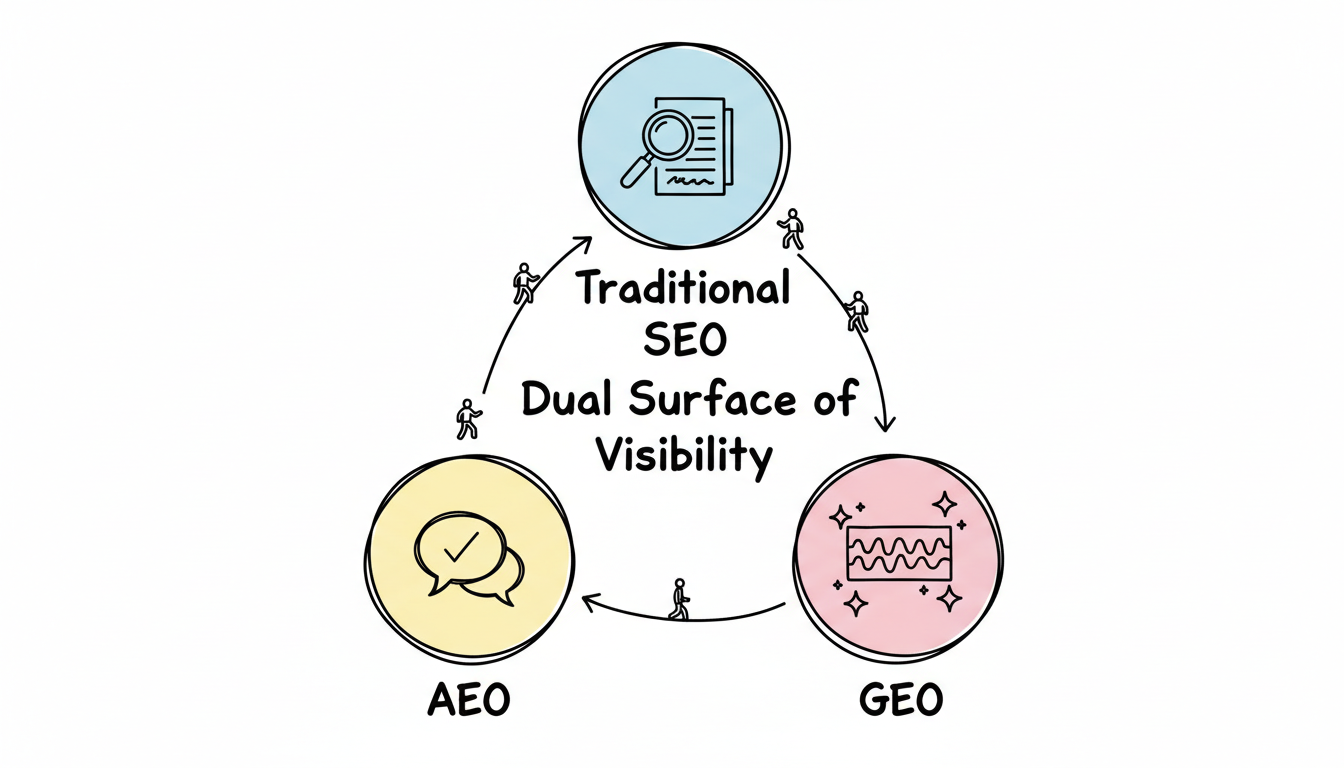
Search behavior has fundamentally changed. While Google maintains dominant market share for traditional search, AI discovery engines like ChatGPT and Perplexity have created what industry experts call a "parallel surface of visibility."
Today's search marketing includes:
Users now move between traditional search and AI assistants throughout their research journeys. Understanding answer engine optimization vs generative engine optimization helps brands achieve visibility across both surfaces.
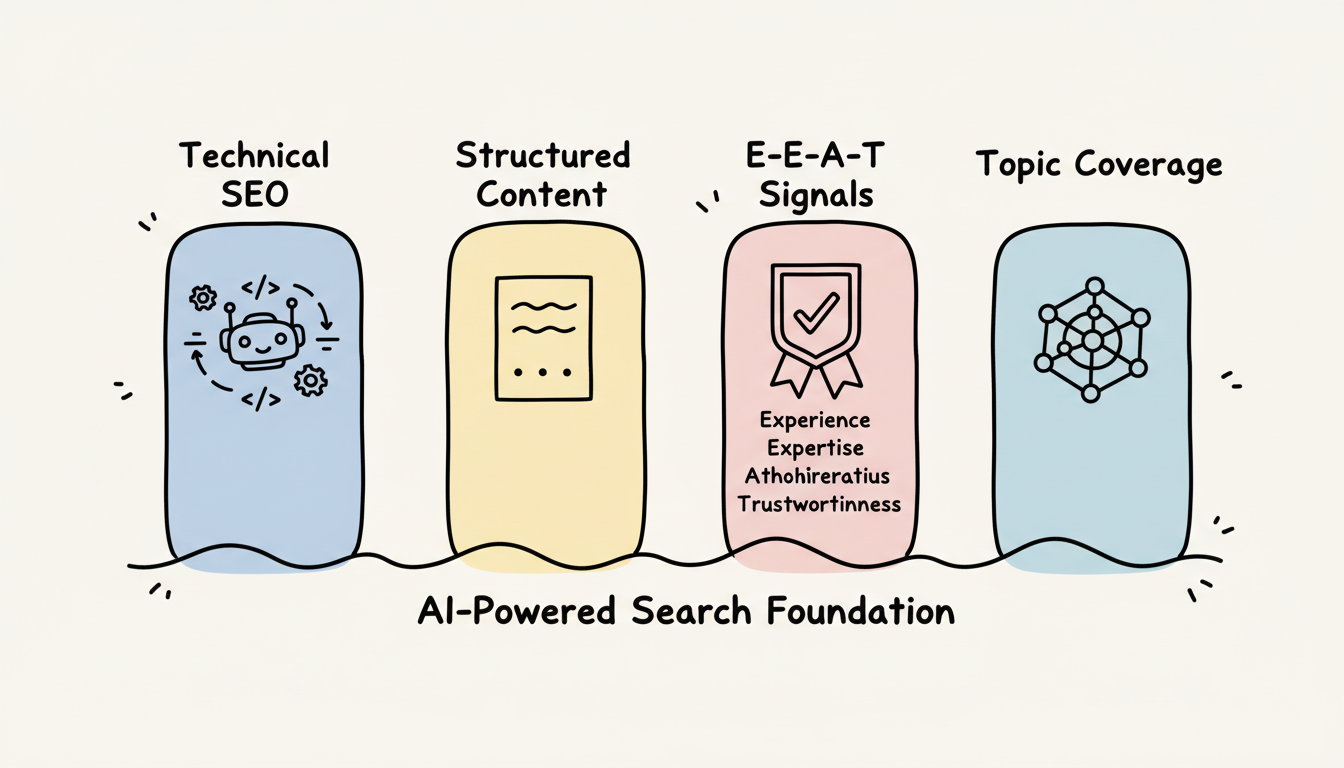
Optimizing for AI-driven search requires building on traditional SEO foundations while adding new approaches.
Technical SEO remains essential for AI visibility. Without clean technical foundations, AI systems cannot effectively crawl, understand, or cite your content.
Key technical requirements:
These elements make content machine-readable for both traditional search crawlers and AI systems. Tools like schema markup validators can ensure your structured data is properly implemented.
AI systems extract information at the paragraph and statement level. Content structure matters more than ever:
Content optimized this way performs better in both traditional featured snippets and AI-generated responses.
Experience, Expertise, Authoritativeness, and Trustworthiness (E-E-A-T) signals influence both traditional rankings and AI citations. AI systems evaluate these signals when deciding which sources to cite.
Strengthen E-E-A-T through:
AI systems prefer sources that demonstrate deep expertise on topics. Rather than creating thin pages targeting individual keywords, build comprehensive content ecosystems around core subjects.
Topic authority signals include:
AI also transforms how marketers approach optimization work. AI tools now assist with:
Research and Analysis
Content Creation Support
Performance Monitoring
The most effective approaches use AI as a tool while maintaining human expertise for strategy, quality control, and brand voice. When selecting platforms, reviewing an AI search platform comparison helps identify which tools best fit your needs.
Traditional SEO metrics remain relevant but require supplementation:
Traditional Metrics
AI-Era Metrics
Organizations succeeding in 2026 track both sets of metrics, recognizing that visibility now spans multiple surfaces. Implementing proper AEO measurement and tracking ensures you monitor performance across all relevant channels.
Search engine optimization with AI requires adapting to fundamental changes in how search works while maintaining proven SEO foundations.
The essential insight: AI hasn't replaced SEO—it has expanded it. Traditional optimization remains the foundation; AI optimization layers on top.
Where to focus: Build excellent technical SEO, structure content for extraction, strengthen authority signals, and monitor performance across both traditional search and AI platforms.
The ongoing evolution: AI search continues developing rapidly. Strategies that work today will require continuous adaptation as AI capabilities advance.
Organizations that embrace AI-driven search optimization position themselves for visibility wherever users look for information—whether clicking through traditional results or receiving AI-generated answers.
No. AI-powered search builds on traditional SEO foundations. Without proper technical optimization, quality content, and authority signals, AI systems have nothing reliable to cite. Think of AI optimization as an evolution layered on top of traditional SEO, not a replacement.
Manual testing remains essential. Search your target queries in ChatGPT, Perplexity, and Google AI Overviews to see if your brand gets cited. Analytics can show referral traffic from AI platform domains. Specialized tools like Conductor track citations across AI systems.
Yes. The fundamentals—quality content, clear structure, technical excellence—benefit businesses of any size. Start by ensuring existing content is well-structured and answers user questions directly. These improvements help both traditional rankings and AI visibility.
Ignoring AI search entirely. By the time AI search becomes fully mainstream, brands that haven't invested in optimization will be catching up to competitors who spent years building citation authority. Start building AI visibility now, even with modest efforts.
By submitting this form, you agree to our Privacy Policy and Terms & Conditions.