
February 19, 2026


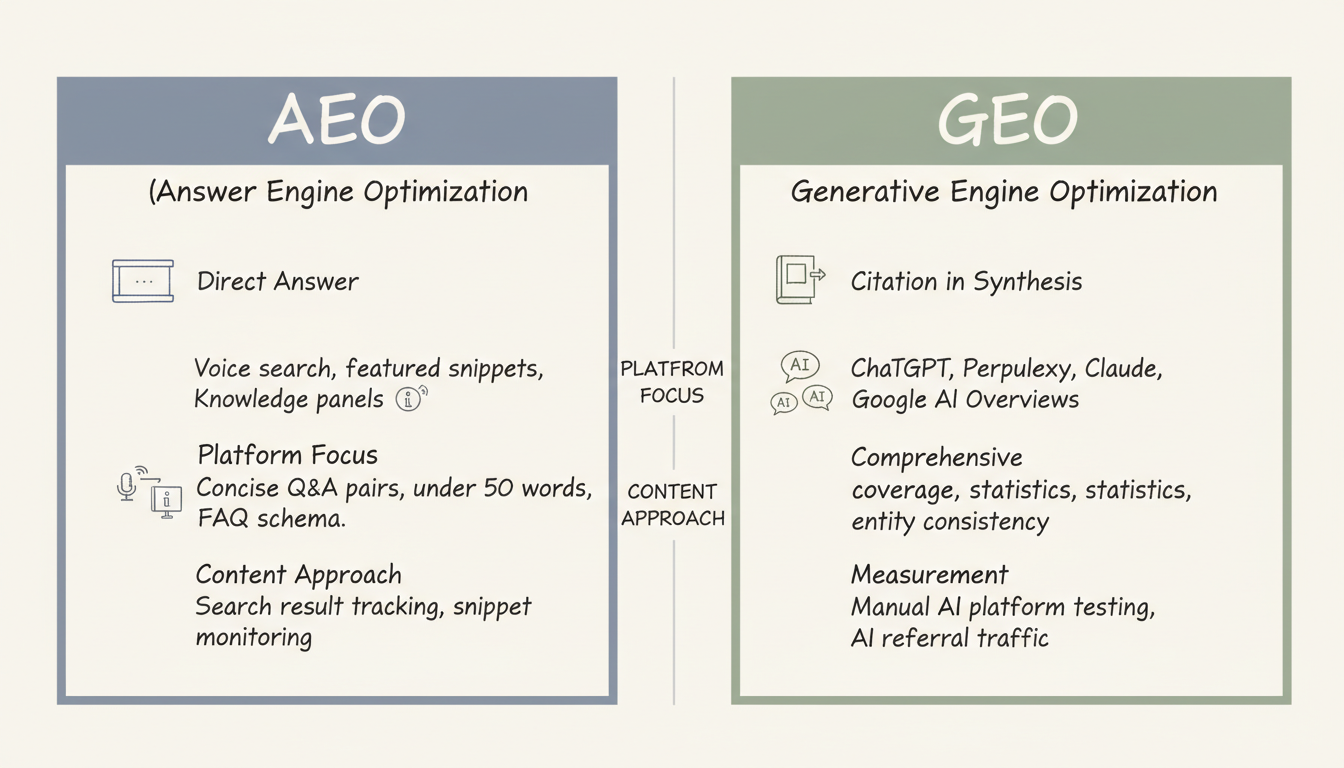
The rise of AI-powered search has introduced new terminology that often creates confusion. Two terms in particular—Answer Engine Optimization (AEO) and Generative Engine Optimization (GEO)—are frequently used interchangeably despite having distinct meanings and applications.
Understanding the differences between AEO and GEO helps you allocate optimization efforts effectively across different AI search experiences.
Answer Engine Optimization (AEO) focuses on structuring content so search platforms and AI assistants can provide direct answers to user queries. Rather than simply returning links to web pages, AEO-optimized content gets extracted and displayed as the answer itself.
AEO targets include:
The core principle of AEO is answering questions clearly, concisely, and in formats that AI systems recognize as authoritative. When someone asks what is an answer engine and gets an immediate answer without clicking any links—that's AEO at work.
Generative Engine Optimization (GEO) specifically targets AI-powered platforms that generate synthesized responses by combining information from multiple sources. GEO focuses on getting content cited within longer-form AI outputs rather than extracted as standalone answers.
GEO targets include:
GEO content optimization makes information machine-readable, evidence-based, and authoritative so AI models can confidently reference it when synthesizing responses across multiple queries. Learn more about what is geo search engine optimization and its applications.
While both disciplines aim for AI visibility, they differ in important ways.
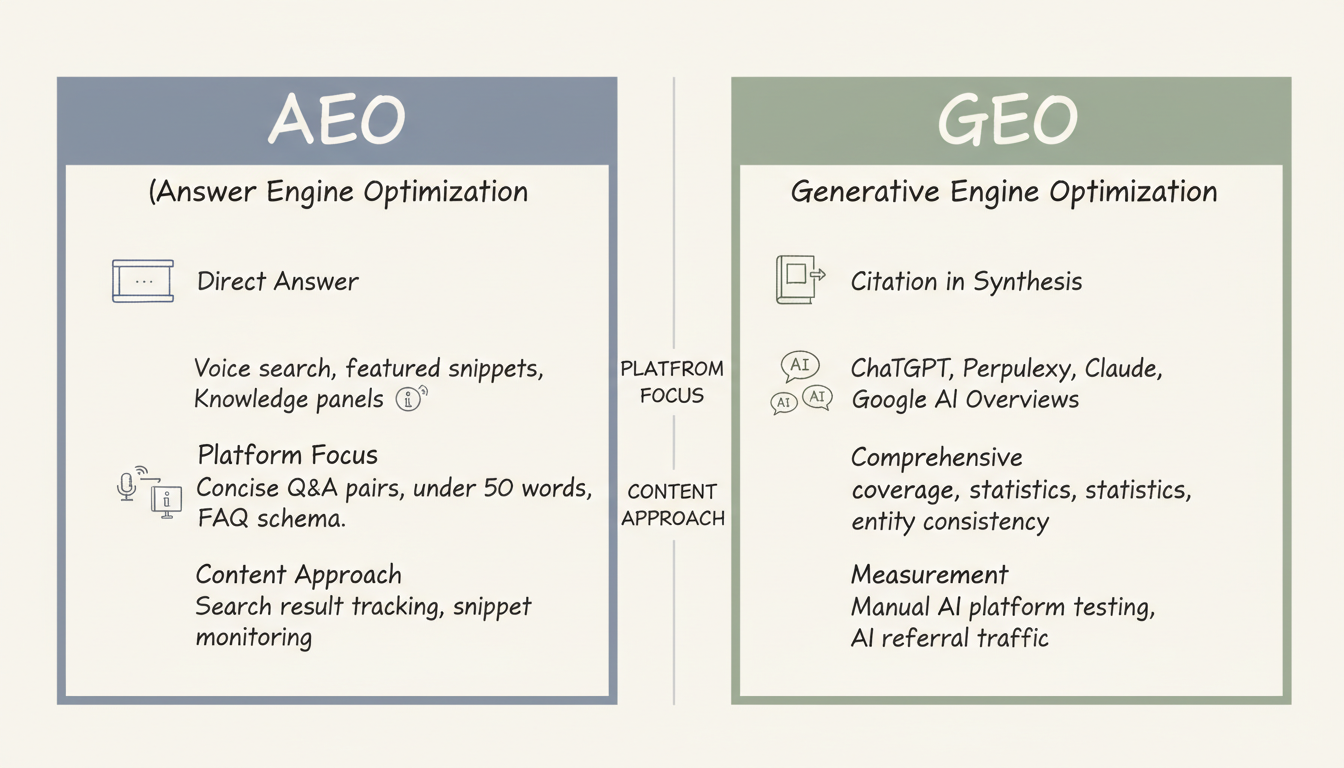
AEO targets direct answer extraction—your content becomes THE answer displayed to users in a featured position.
GEO targets citation within synthesized responses—your content is referenced as a source alongside other information in AI-generated paragraphs.
AEO applies broadly across voice search, featured snippets, and any interface providing direct answers. This includes traditional search engines with answer features.
GEO focuses specifically on large language models and generative AI platforms that create novel responses by combining multiple sources.
AEO emphasizes:
GEO emphasizes:
AEO success shows in featured snippet appearances, voice search answers, and direct answer placements you can track in search results.
GEO success requires monitoring citations across AI platforms—manually testing queries in ChatGPT, Perplexity, and similar tools to see if your brand appears.
Despite differences, AEO and GEO share significant overlap. Both require:
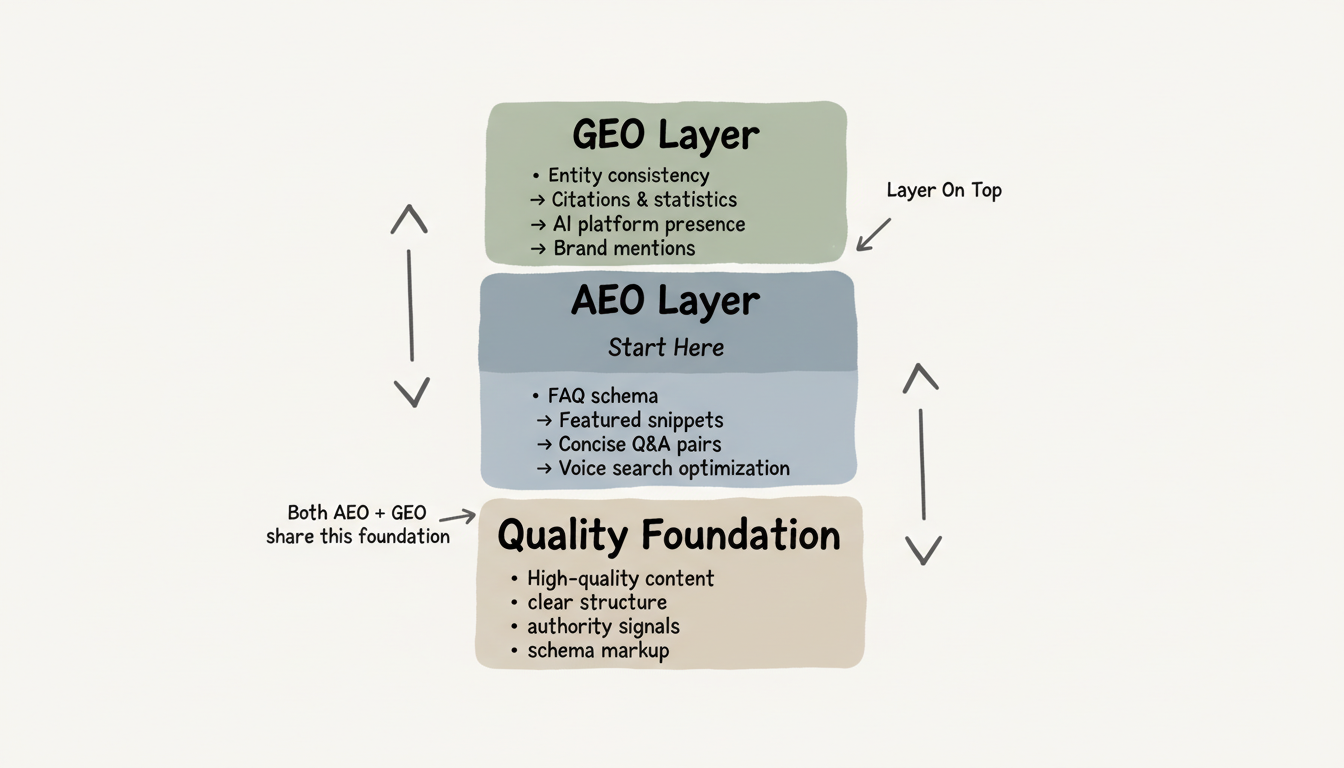
Think of GEO as a specialized subset of the broader AEO discipline. AEO covers all answer-focused optimization including traditional featured snippets. GEO specifically addresses the newer category of generative AI platforms.
Many optimization tactics serve both goals simultaneously. Content structured for featured snippet extraction also tends to perform well in generative AI responses because both require clear, authoritative, well-organized information. Understanding how ai seo works can help you leverage these synergies.
For most organizations, the best approach integrates AEO and GEO rather than choosing between them.
Start with AEO fundamentals:
Layer in GEO optimization:
Measure and adjust:
AEO and GEO address related but distinct aspects of AI visibility. AEO broadly covers optimization for any answer-focused experience. GEO specifically targets generative AI platforms that synthesize information from multiple sources.
The practical distinction: AEO gets you featured as the direct answer. GEO gets you cited within generated responses.
The strategic approach: Build strong AEO foundations first, then layer GEO-specific optimizations to capture visibility across the full spectrum of AI search experiences.
Both disciplines will continue evolving as AI search matures. Organizations that understand and optimize for both position themselves for sustained visibility regardless of how users choose to find information.
No. GEO focuses specifically on generative AI platforms while AEO covers broader answer optimization including voice search and featured snippets. Both remain relevant, and many optimization tactics serve both goals.
AEO typically comes first because it builds foundational practices—schema markup, FAQ formatting, clear content structure—that also support GEO success. Start with AEO fundamentals, then add GEO-specific optimizations.
Usually not. Well-structured, authoritative content serves both purposes. The difference is emphasis: AEO prioritizes extractable short answers while GEO emphasizes comprehensive coverage and citation-worthiness. The same content can be optimized for both.
GEO success requires manual testing across AI platforms. Test relevant queries in ChatGPT, Perplexity, and Google AI Overviews to see if your brand gets cited. Track AI referral traffic in analytics by filtering traffic from ai.com domains.
By submitting this form, you agree to our Privacy Policy and Terms & Conditions.



