
February 19, 2026


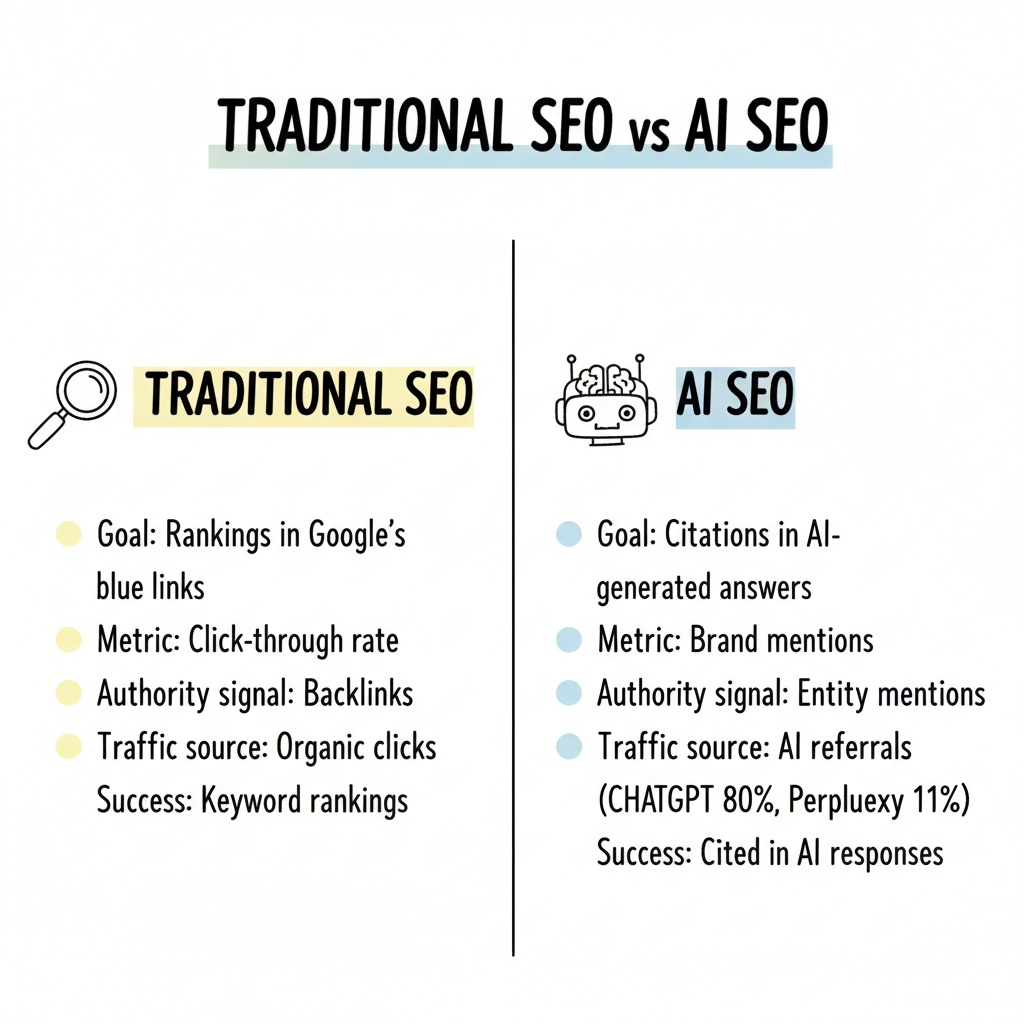
AI SEO represents a fundamental shift in how search optimization works. Unlike traditional SEO focused on ranking in Google's blue links, AI SEO optimizes content to be discovered, understood, and cited by AI-powered search platforms like ChatGPT, Google AI Overviews, and Perplexity. Understanding how AI SEO works is essential for any business wanting to maintain visibility as search evolves.
AI SEO, also known as Large Language Model (LLM) optimization, is the practice of optimizing content so it appears in AI-generated responses. According to Search Engine Journal, foundational SEO technical elements now act as a translation layer between your content and AI systems.
The key difference from traditional SEO lies in the success metrics. Traditional SEO measured rankings and clicks. AI SEO measures citations, brand mentions, and inclusion in AI-generated answers. As Semrush research shows, ChatGPT now commands approximately 80% market share among AI discovery platforms, with Perplexity at 11% and Microsoft Copilot growing to 5%.
AI search engines work fundamentally differently from traditional search. Here's the process:
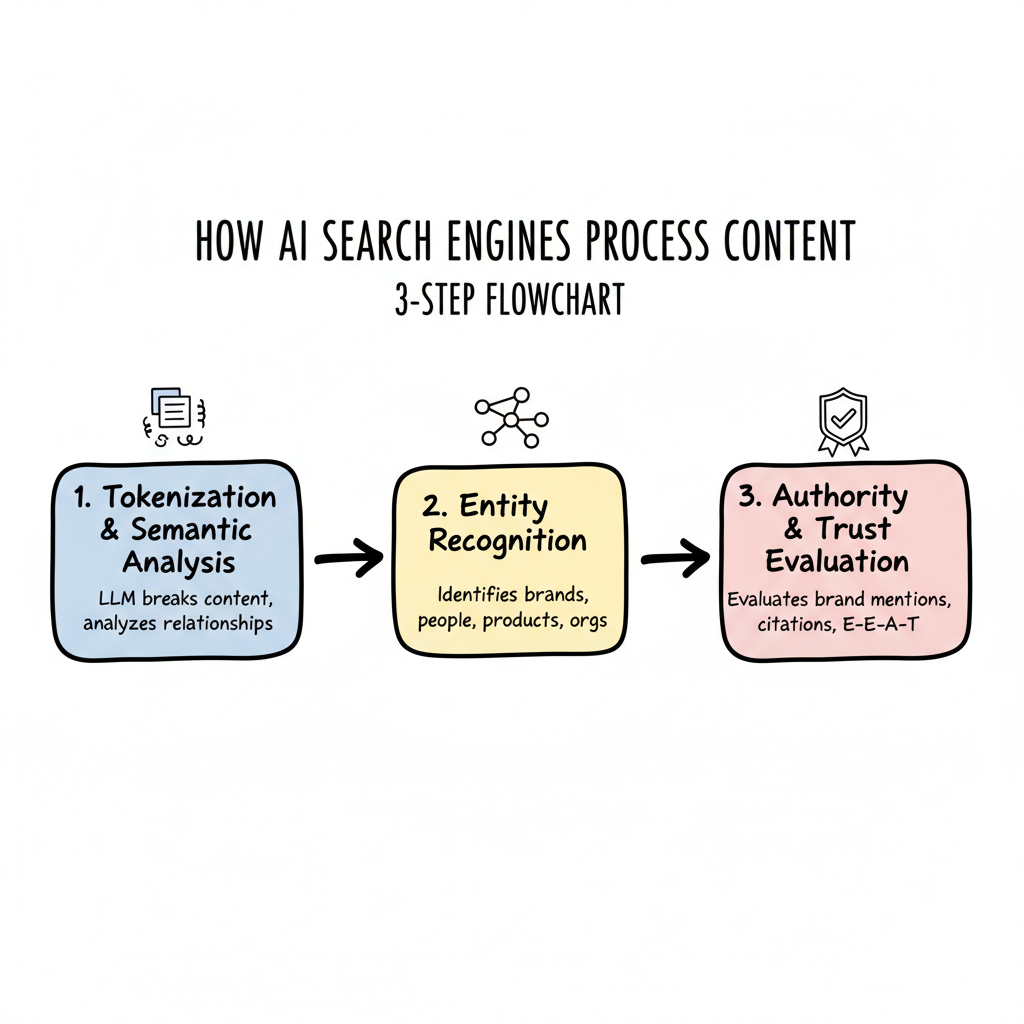
Large language models break content into tokens—words and phrases—then analyze their semantic relationships. According to newsdata.io, LLMs interpret content through tokenization, analyzing importance and making sense of the whole text rather than matching individual keywords.
AI systems identify and map entities—brands, people, products, organizations—and their relationships. Strong entity signals help AI understand who you are, not just what you say. This means maintaining consistent brand details across your website, social platforms, Wikidata, and business directories.
Unlike traditional SEO's heavy reliance on backlinks, LLMs evaluate authority through multiple signals:
Research from Kevin Indig found that classic SEO metrics like backlinks have weak correlations with AI citations. Instead, LLMs favor comprehensive, easy-to-read content that helps models extract clear, factual answers.
AI systems prioritize content that is:
According to Microsoft's official guidance, AI systems may not render hidden content, so avoid hiding critical information in tabs or expandable menus. This is why implementing clear definitions content for AEO is crucial for AI visibility.
AI SEO shifts focus from exact-match keywords to semantic relevance. Content must:
Technical SEO remains foundational for AI visibility. Semrush's study found that pages cited by AI platforms show higher user engagement metrics, including longer session durations and more pages per visit.
Key technical factors include:
Getting your content into AI responses requires two steps:
The LLM must find your content through:
Your content must be deemed credible and useful enough to cite. This requires:
LinkedIn analysis highlights that AI-powered systems can answer queries directly without users clicking through to websites. Optimize by:
According to Search Engine Land, brand mentions have moved from a nice-to-have tactic to core infrastructure in AI search. LLMs evaluate mentions, context, and repeated co-occurrence between your brand and target topics. Consider working with an answer engine optimization agency to build systematic brand presence across AI platforms.
Schema markup provides AI engines with a roadmap to understand:
Using QAPage schema for AI content helps AI systems quickly identify and extract question-answer pairs from your content.
MonsterInsights research found that content over 3,000 words wins 3x more traffic than average-length content. Additionally, 88.1% of queries triggering AI Overviews are informational—make sure your content answers questions thoroughly. Proper list formatting for LLM optimization helps AI systems parse and cite your structured information more effectively.
Traditional metrics need expansion for AI SEO:
Metric | Traditional SEO | AI SEO |
Primary goal | Rankings | Citations |
Success measure | Click-through rate | Brand mentions |
Traffic source | Organic clicks | AI referrals |
Authority signal | Backlinks | Entity mentions |
Track these AI-specific metrics:
AI SEO works by optimizing content for machine understanding rather than just keyword matching. Success requires comprehensive, authoritative content structured for easy AI extraction, strong brand signals across the web, and technical foundations that make your site machine-readable. The fundamentals of quality content and user value remain essential—AI SEO builds on traditional SEO rather than replacing it.
By submitting this form, you agree to our Privacy Policy and Terms & Conditions.



