February 19, 2026


AI systems don't guess at meaning—they select content that explicitly states it. Pages with clear, direct definitions consistently outperform vague or implicit explanations when it comes to AI citations. The difference isn't marginal: research shows a 17.46% improvement in citation rates for content that leads with clear definitions.
Here's how to structure definitions for maximum AI visibility in 2026.
According to Yoast's 2025 SEO wrap-up, search systems now retrieve answers, not pages. AI-driven experiences pull snippets, definitions, and summaries instead of directing users to full articles. Literal language still matters—terminology choices directly affect retrieval.
How AI evaluates definitions:
According to Wellows' schema and NLP guide, AI systems look for depth, intent, and meaningful connections between topics and entities. Repeating keywords matters less than fully explaining the core concept.
According to Mat Nelson's generative SEO guide, the most effective definition format follows the BLUF method—Bottom Line Up Front. Start every major section with a direct, 30-50 word summary of the answer. AI models often pull this specific paragraph to form the "snapshot" answer at the top of search results.
BLUF definition structure:
This pattern works because AI systems need extractable text. A definition buried in the third paragraph rarely gets cited—the one in the first sentence almost always does.
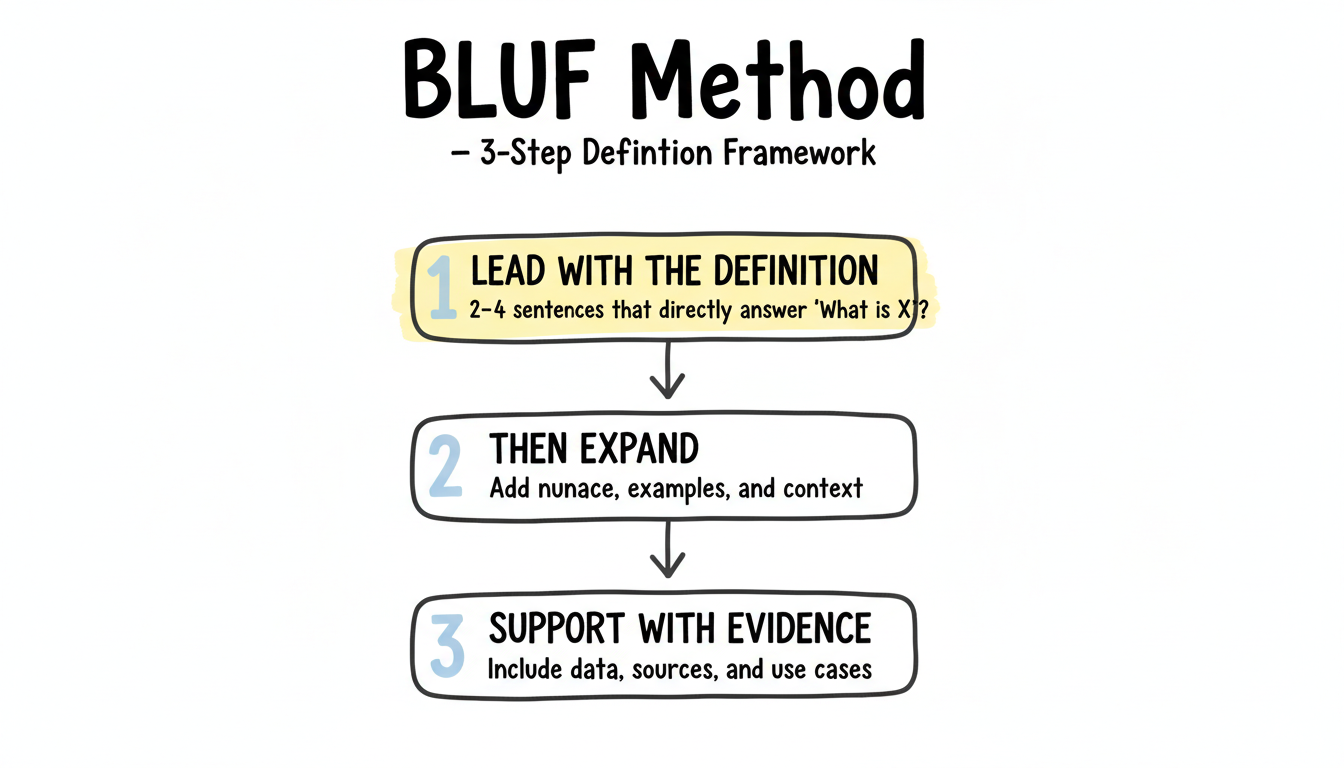
According to Pipeline Velocity's AEO guide, concise direct answers should come first, then elaboration. For each key question, follow a simple pattern: lead with a direct answer (2-4 sentences), then expand with nuance, examples, and context.
Effective definition formats:
Format | When to Use | Example |
Single sentence | Simple concepts | "AEO is the practice of optimizing content for AI citation." |
Two-sentence | Moderate complexity | Definition + key distinction |
Bulleted list | Multi-part concepts | Core components listed |
Table | Comparisons | Side-by-side definitions |
According to Elsner Technologies' AEO analysis, content should be structured for clarity with information organized into headings, short paragraphs, and schema markup to help search engines identify answers. Understanding aeo-metrics-kpis helps you measure how effectively your definitions perform across AI platforms.
According to Virtuosity Digital's 2026 SEO analysis, using clear headings, bullet points, tables, and FAQ sections helps AI and search engines understand your content and show it in featured snippets or AI-generated responses.
Header formats that trigger citations:
Instead of:
Use:
Question-based headers map directly to user queries. When someone asks ChatGPT "What is AEO?", content with that exact header has a structural advantage for citation. Tools designed for ai-citation-tracking-tools reveal which header formats generate the most AI visibility.
According to Firebrand Marketing's GEO best practices, maintaining consistent terminology matters because LLMs reward clarity. Use your boilerplate messaging to craft summary sections that tie your product or service to the subject matter.
Terminology consistency rules:
AI systems build entity understanding from patterns. Inconsistent definitions across your site confuse these systems and reduce citation likelihood. Following ai-seo-mastering-generative-engine-optimization-geo principles ensures your terminology aligns with AI system expectations.
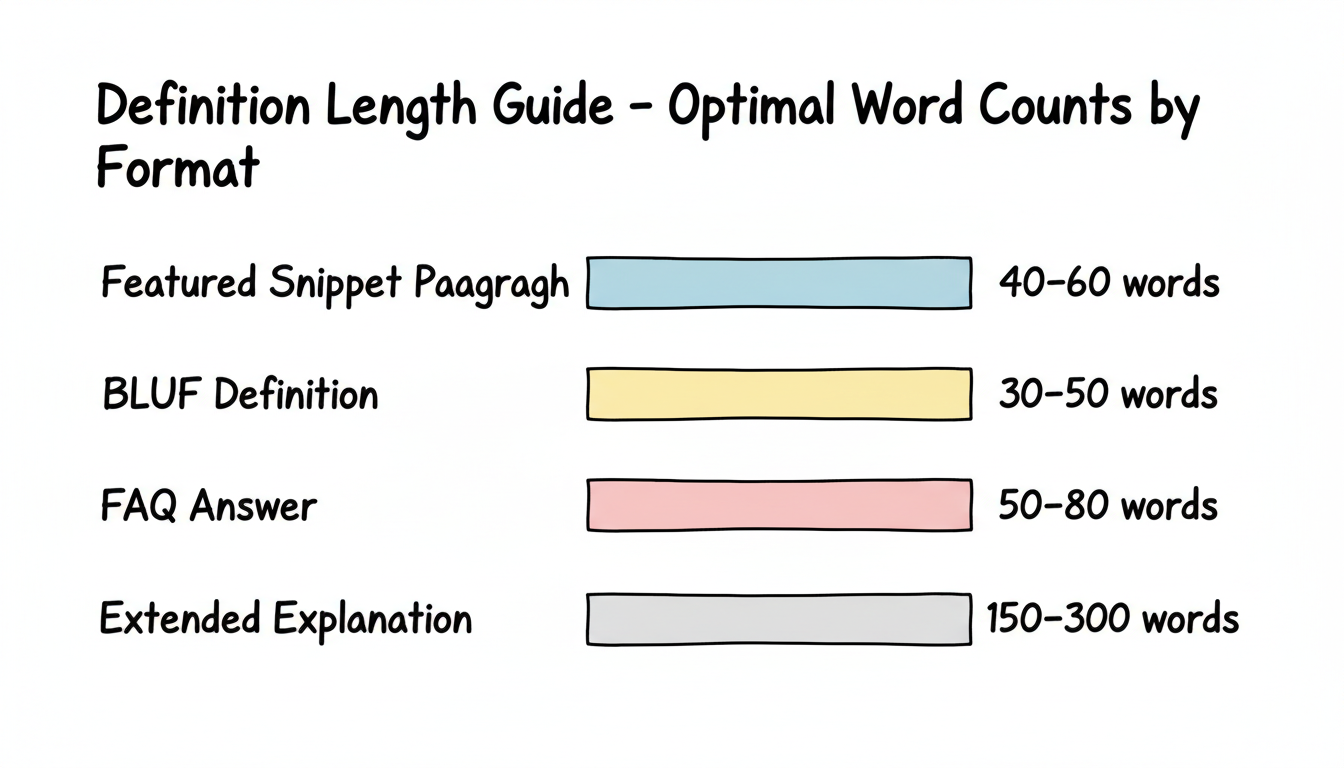
According to ALM Corp's AI search optimization guide, 40-60 words is optimal for paragraph snippets. Structure content to answer questions directly in the first paragraph using clear, concise language.
Length guidelines by format:
Format | Optimal Length |
Featured snippet paragraph | 40-60 words |
BLUF definition | 30-50 words |
FAQ answer | 50-80 words |
Extended explanation | 150-300 words |
According to Search Engine Journal's 2026 SEO predictions, focus on how content is chunked, cited, and trusted by AI systems. Build authority signals machines can verify: structured data, consistent sourcing, and entity clarity.
According to PageTraffic's AI search optimization guide, structured data helps AI systems parse and extract definitions reliably.
Key schema types for definitions:
Schema doesn't replace good definition writing—it supplements it. AI systems use both the markup and the actual content to determine citation-worthiness. Professional aeo-consulting-services often focus on implementing schema properly to maximize AI extraction rates.
Clear definitions drive measurably better AI citation rates:
Making your definitions unmistakably clear positions your content as the answer AI systems select and cite.
By submitting this form, you agree to our Privacy Policy and Terms & Conditions.