
February 19, 2026


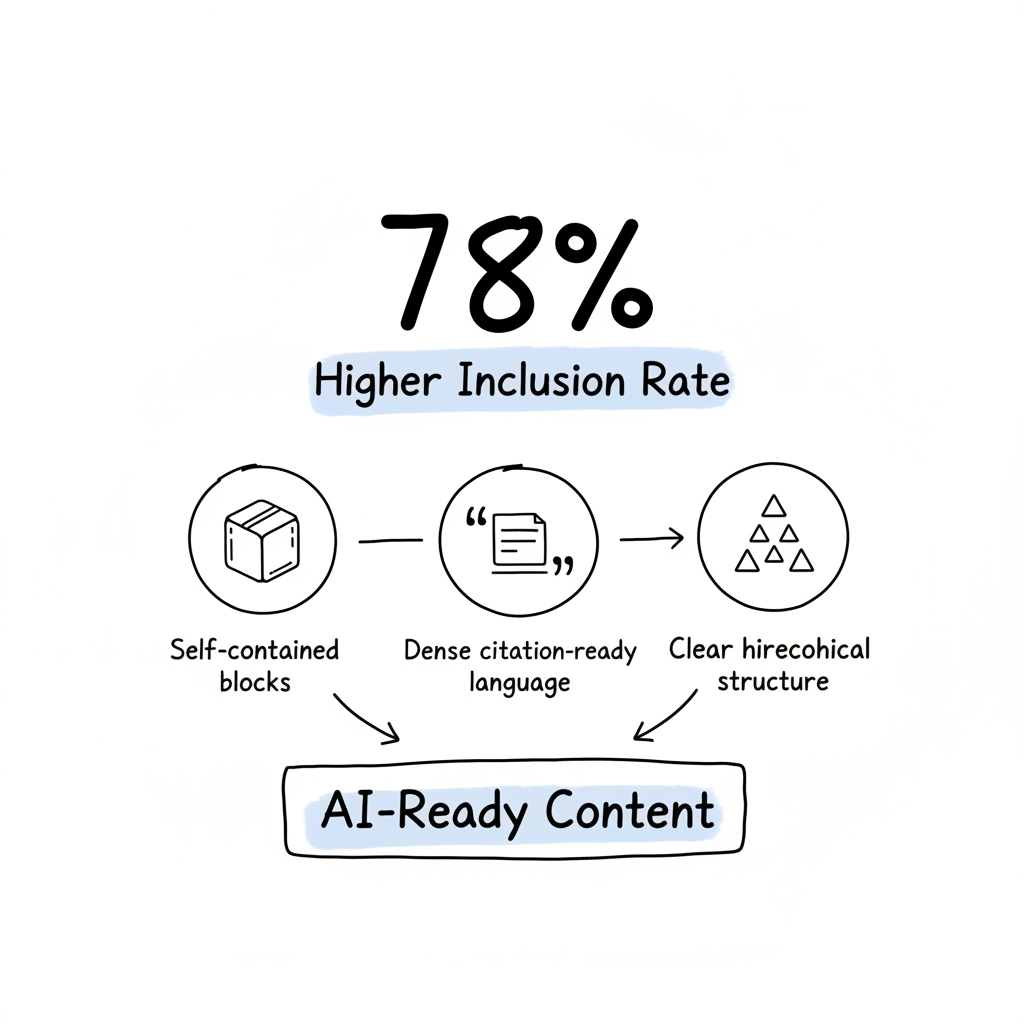
AI systems don't read content the way humans do. They scan for extractable information—structured, self-contained blocks they can quote directly. Research shows that properly formatted lists achieve up to 78% higher inclusion rates in AI-generated responses than unstructured paragraphs.
Here's how to format your content so LLMs actually cite it.
Princeton and Georgia Tech researchers tested Generative Engine Optimization (GEO) methods across 10,000 queries and 9 authoritative sources. Their findings revealed that content structure directly impacts citation probability.
Key research findings:
The pattern is clear: AI systems prefer content they can extract cleanly. Lists, tables, and structured blocks make extraction easy.
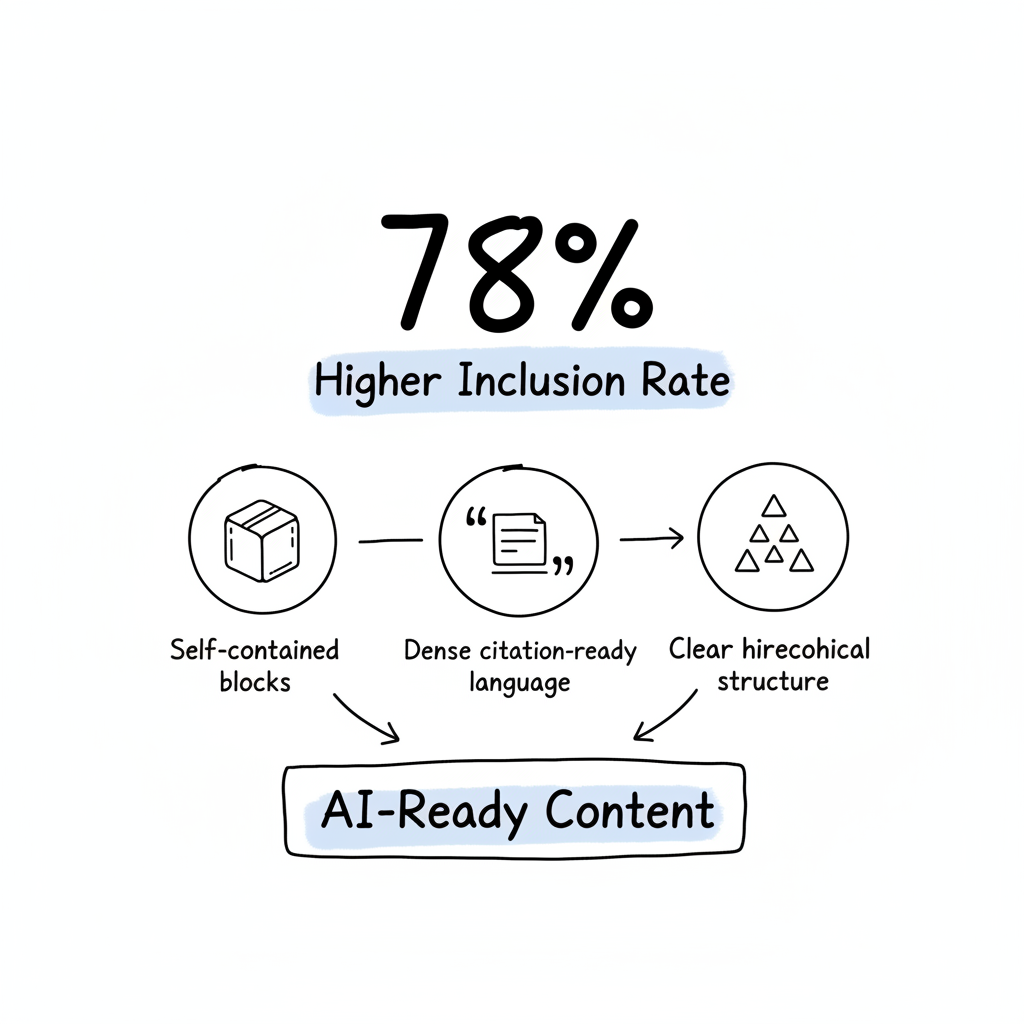
Content formatted as lists gets included in AI responses 78% more often than equivalent information buried in paragraphs. The formula combines three elements:
1. Self-contained blocks: Each list item delivers complete, quotable information without requiring surrounding context.
2. Dense, citation-ready language: Every item packs maximum information into minimum words—exactly what AI systems want to quote.
3. Clear hierarchical structure: Headers, subheaders, and list levels tell AI systems how information relates.
When your content checks all three boxes, AI platforms can grab and cite it instantly.
Different list types serve different purposes for AI citation:
Bullet points work best for:
Numbered lists work best for:
AI systems recognize these patterns. A numbered list signals "follow these steps in order." A bullet list signals "here are equivalent options." Match your format to your content's natural structure.
Research-backed techniques that improve LLM extraction:
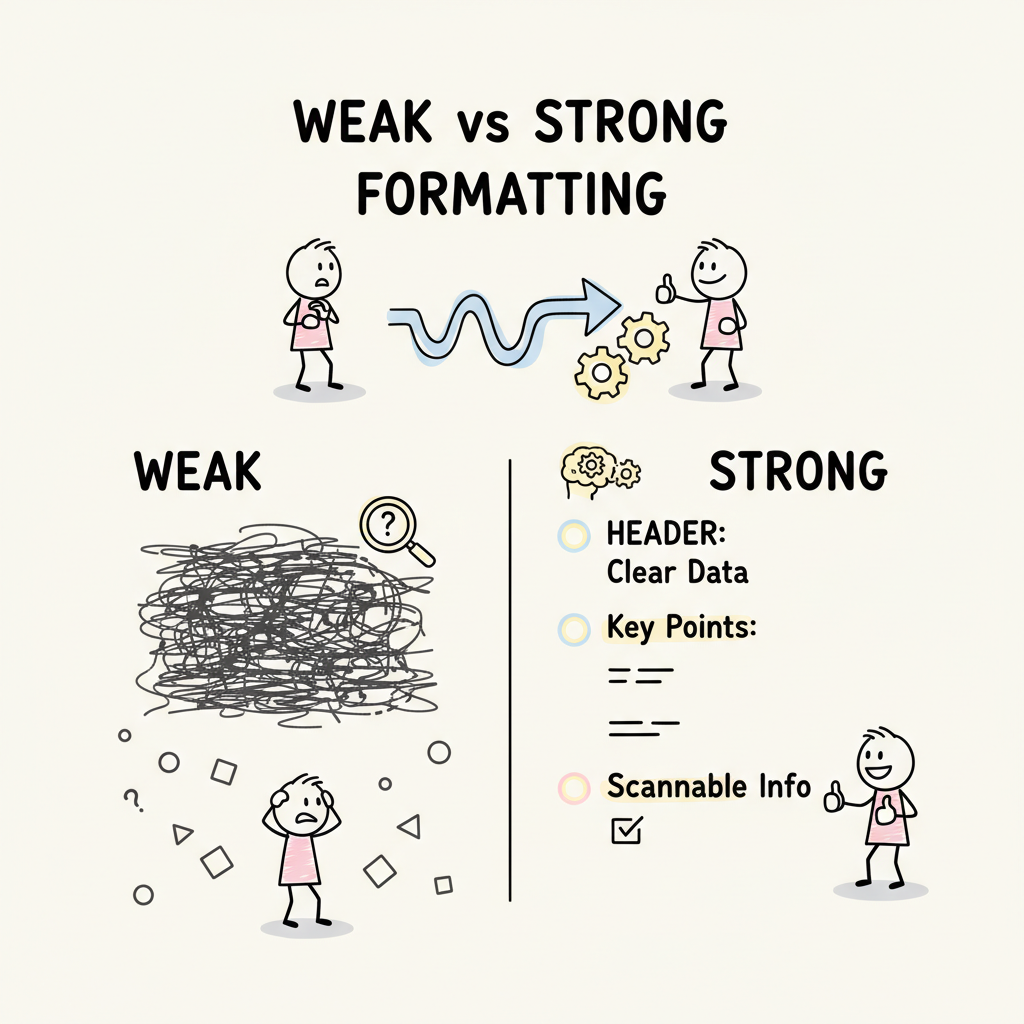
Weak formatting: "When considering the various aspects of implementing AEO strategies, one should note that the typical cost ranges from $50,000 to $500,000 annually for enterprise implementations."
Strong formatting:
The second version gives AI exactly what it needs to cite.
AI systems favor concrete data over vague claims. Statistics in list format are particularly citation-friendly:
Numbers make your content verifiable and quotable.
When headers match how users phrase questions, AI systems connect content to queries more easily:
Not all list formatting helps. Some practices actively hurt citation rates:
Keyword stuffing: Negative impact confirmed by research. AI systems recognize and penalize unnatural keyword repetition.
Lists without substance: Empty bullet points that don't add value get skipped. Each item must contribute meaningful information.
Inconsistent formatting: Mixing styles within a single list confuses AI parsing. Maintain parallel structure throughout.
Overly long list items: If a bullet point runs 3+ sentences, it's a paragraph pretending to be a list. Keep items concise.
Tables combine the benefits of lists with visual structure AI systems can parse. When you're implementing on-page AEO optimization, tables are particularly effective for presenting structured data:
Format Type | Best Use Case | Citation Impact |
Bullet list | Features, options | High |
Numbered list | Steps, processes | High |
Table | Comparisons, data | Very high |
Inline list | Quick references | Medium |
Tables work especially well for comparisons, specifications, and data presentation. They're easily extractable and naturally cite-ready.
Apply these techniques to improve your content's AI citation rate:
Most do. Perplexity, ChatGPT, and Google AI Overviews all show preference for structured, extractable content. The specific impact varies—Perplexity shows stronger preference for quotations (37% improvement), while other platforms respond more to statistics and citations.
Yes. Content that's nothing but lists loses narrative flow and may fail to establish the contextual expertise AI systems also evaluate. Balance structured lists with explanatory content that demonstrates deep understanding.
Prioritize high-value pages first. Focus on content targeting questions users commonly ask AI platforms—how-to guides, comparisons, and reference material benefit most from list formatting optimization. For comprehensive guidance on optimizing different content types, review our LLM optimization guide.
By submitting this form, you agree to our Privacy Policy and Terms & Conditions.



