
February 19, 2026


AI-powered search is transforming customer support from a cost center into a competitive advantage. When customers can find answers instantly—without waiting for agent responses—satisfaction increases while support costs decrease.
According to HeroHunt's industry analysis, 80% of customer service interactions are expected to be handled by AI by 2025, with that percentage continuing to climb in 2026. The question isn't whether to implement AI search in customer support—it's how to do it effectively.
This guide covers the leading AI search platforms for help desks, implementation strategies, and how to measure ROI.
AI search for customer support goes beyond keyword matching. It uses natural language processing (NLP) and machine learning to understand customer intent, search knowledge bases semantically, and deliver accurate answers—even when customers phrase questions in unexpected ways.
Core capabilities include:
According to Knowmax's 2026 analysis, the most effective AI customer service implementations combine help desk software with AI knowledge management—creating systems that both find and deliver the right information at the right time. These capabilities are central to how AI SEO works in understanding user intent and delivering relevant content.
The customer support software market has rapidly integrated AI capabilities. Here's how the leading platforms compare.
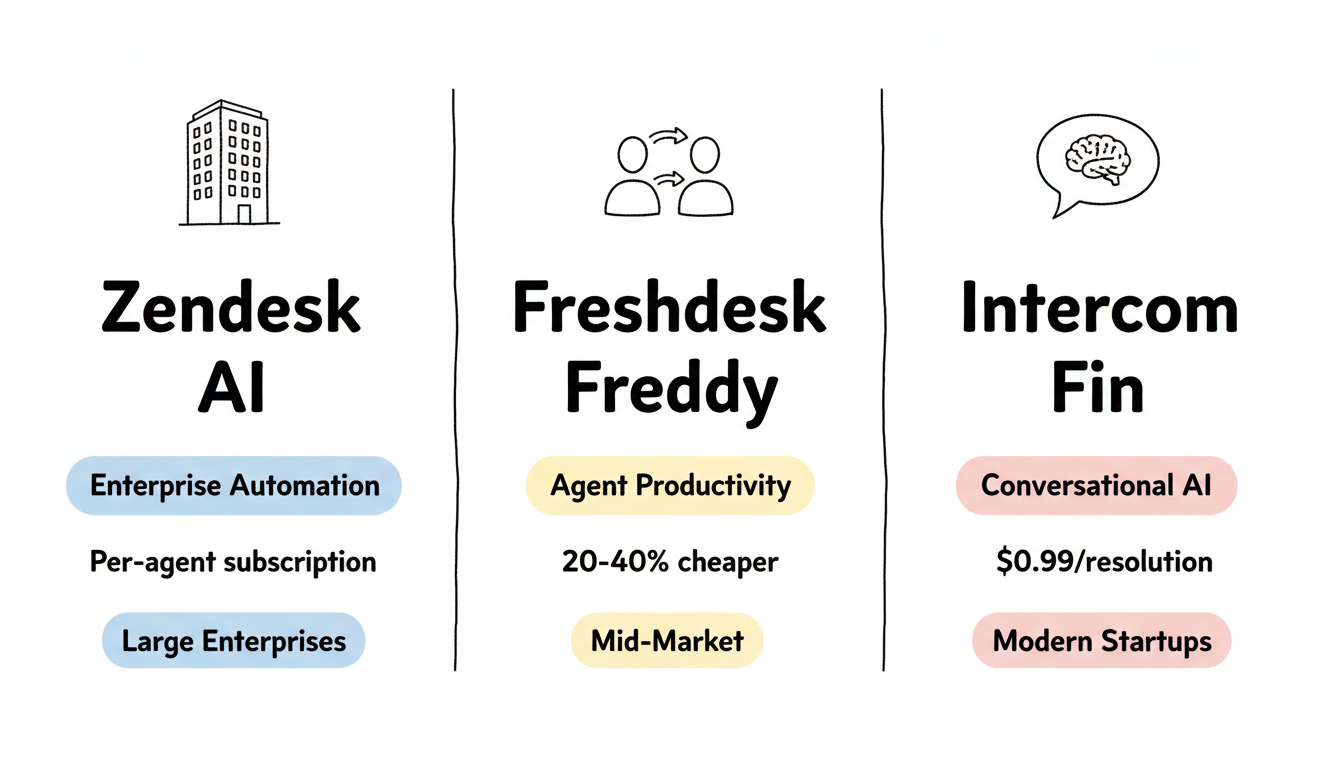
Zendesk's AI features focus on enterprise scalability and intelligent routing.
Key features:
According to SmartRole's help desk comparison, Zendesk excels at handling high-volume enterprise support with sophisticated automation rules.
Best for: Large enterprises with complex support workflows and existing Zendesk investments.
Freshdesk offers Freddy AI as its intelligent assistant across the support workflow.
According to HiverHQ's platform analysis, Freshdesk is 20-40% cheaper than Zendesk while offering comparable AI capabilities for small to mid-sized teams.
Key features:
Best for: Small to mid-sized companies wanting enterprise-level AI at lower costs.
Intercom Fin represents the new generation of AI-native support agents.
According to DevRev's platform comparison, Intercom Fin is powered by GPT-4 and offers resolution-based pricing at $0.99 per resolution, with base plans starting at $39/seat/month. This reflects broader trends in generative AI SEO optimization where advanced language models are being deployed for specialized search applications.
Key features:
Best for: Companies wanting cutting-edge conversational AI with predictable per-resolution costs.
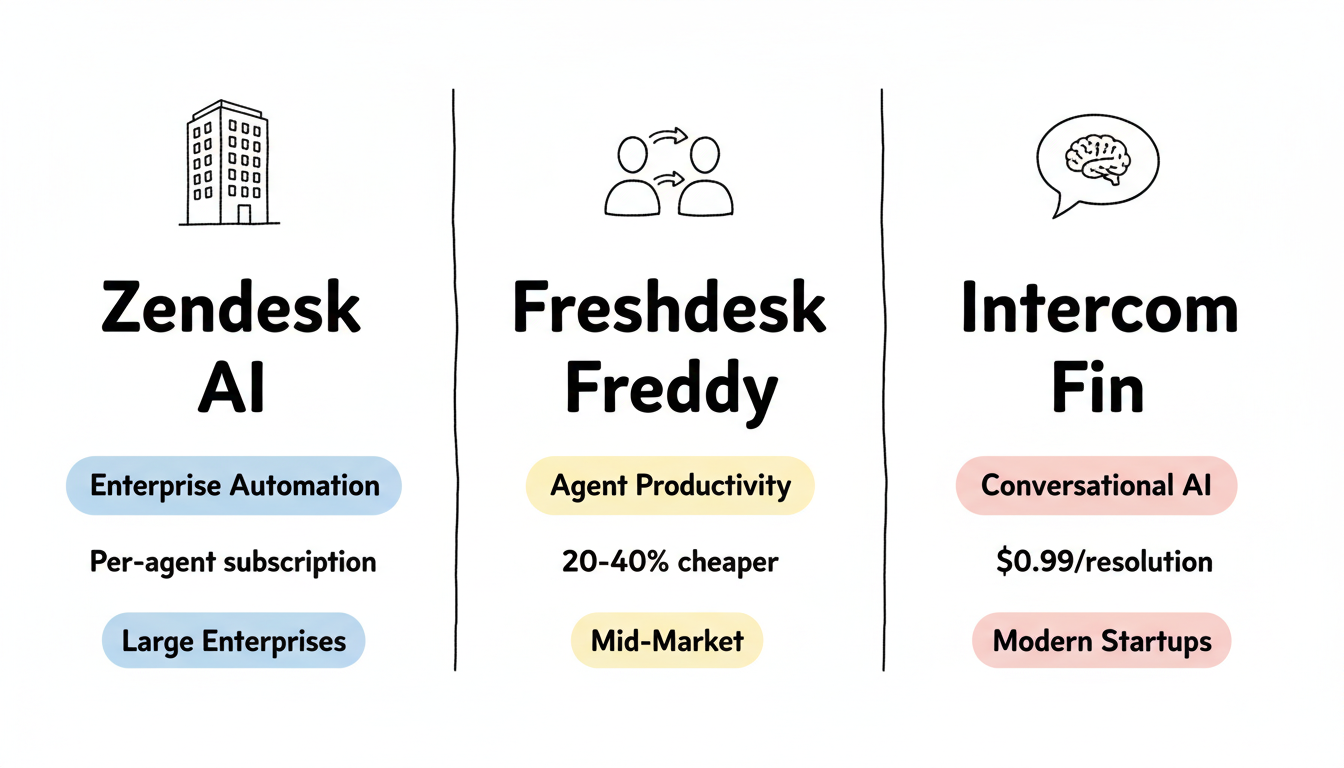
Platform | AI Capability | Pricing Model | Best For |
Zendesk AI | Enterprise automation | Per-agent subscription | Large enterprises |
Freshdesk Freddy | Agent productivity | Per-agent (20-40% cheaper) | Mid-market |
Intercom Fin | Conversational AI | $0.99/resolution + $39/seat | Modern startups |
Successful AI search implementation requires more than software installation. Follow this framework to maximize results.
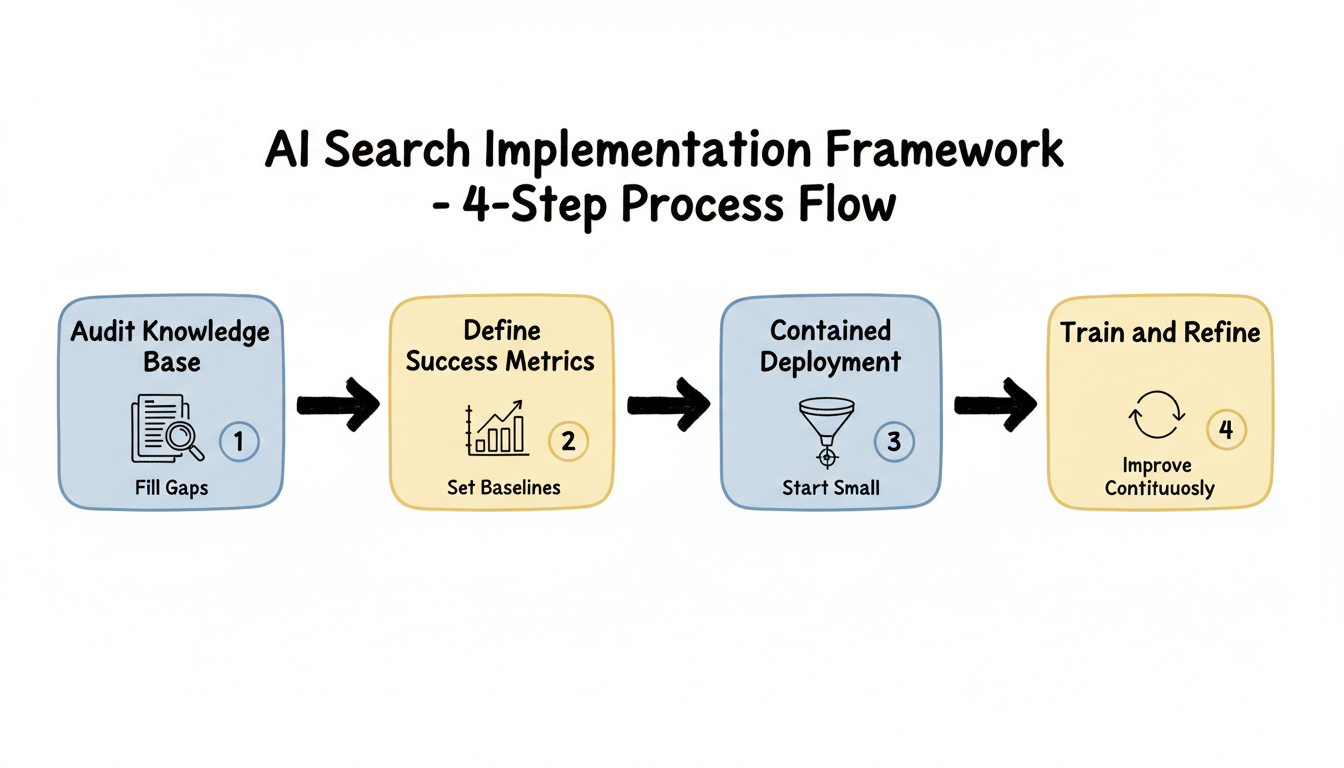
AI search is only as good as the knowledge it can access. Before implementation:
Establish baseline metrics before implementation:
Metric | Pre-AI Baseline | Target |
First response time | Measure current | 50-70% reduction |
Self-service resolution rate | Measure current | 30-50% improvement |
Customer satisfaction (CSAT) | Measure current | Maintain or improve |
Cost per ticket | Calculate current | 20-40% reduction |
Don't enable AI across all channels immediately:
AI search improves through feedback:
AI search investments deliver measurable returns when implemented correctly.
According to HeroHunt's analysis, Klarna's AI assistant handles the equivalent of 700 full-time human agents' workload. This represents massive cost savings while maintaining customer satisfaction.
Investment Area | Expected Return |
Self-service deflection | 30-50% ticket reduction |
Agent productivity | 20-30% more tickets handled |
First response time | 50-70% faster |
Cost per resolution | 20-40% lower |
Certain conditions delay returns:
Avoid these pitfalls when deploying AI search.
AI amplifies existing content quality—good and bad. Teams that launch AI search without auditing their knowledge base often see worse customer satisfaction as AI confidently delivers outdated or incorrect information. This is similar to challenges in landing page optimization for AI search where content quality directly impacts results.
According to Pylon's 2026 guide, legacy support tools have "bolted-on AI" that feels disconnected from customer experience. Gradual rollout with human oversight prevents negative customer experiences from immature AI responses.
AI search changes agent workflows. Without proper training:
Measuring only cost reduction misses the point. Customer satisfaction and resolution quality matter as much as ticket deflection rates.
Select based on your specific situation:
Choose Zendesk AI if:
Choose Freshdesk Freddy if:
Choose Intercom Fin if:
AI search transforms customer support economics when implemented thoughtfully:
The 80% AI-handled interaction future is arriving. Companies implementing AI search effectively now will have significant advantages over those waiting on the sidelines.
By submitting this form, you agree to our Privacy Policy and Terms & Conditions.



