February 19, 2026


AI SEO in 2026 is fundamentally different from traditional optimization. It's no longer just about ranking pages—it's about being the source AI systems trust and cite. As Sitebulb's expert roundup summarizes: "Write for AI answers. Make content structured and easy to reference."
This guide covers the best practices that help your content get discovered, cited, and recommended by AI platforms like ChatGPT, Perplexity, Google AI Overviews, and Claude.
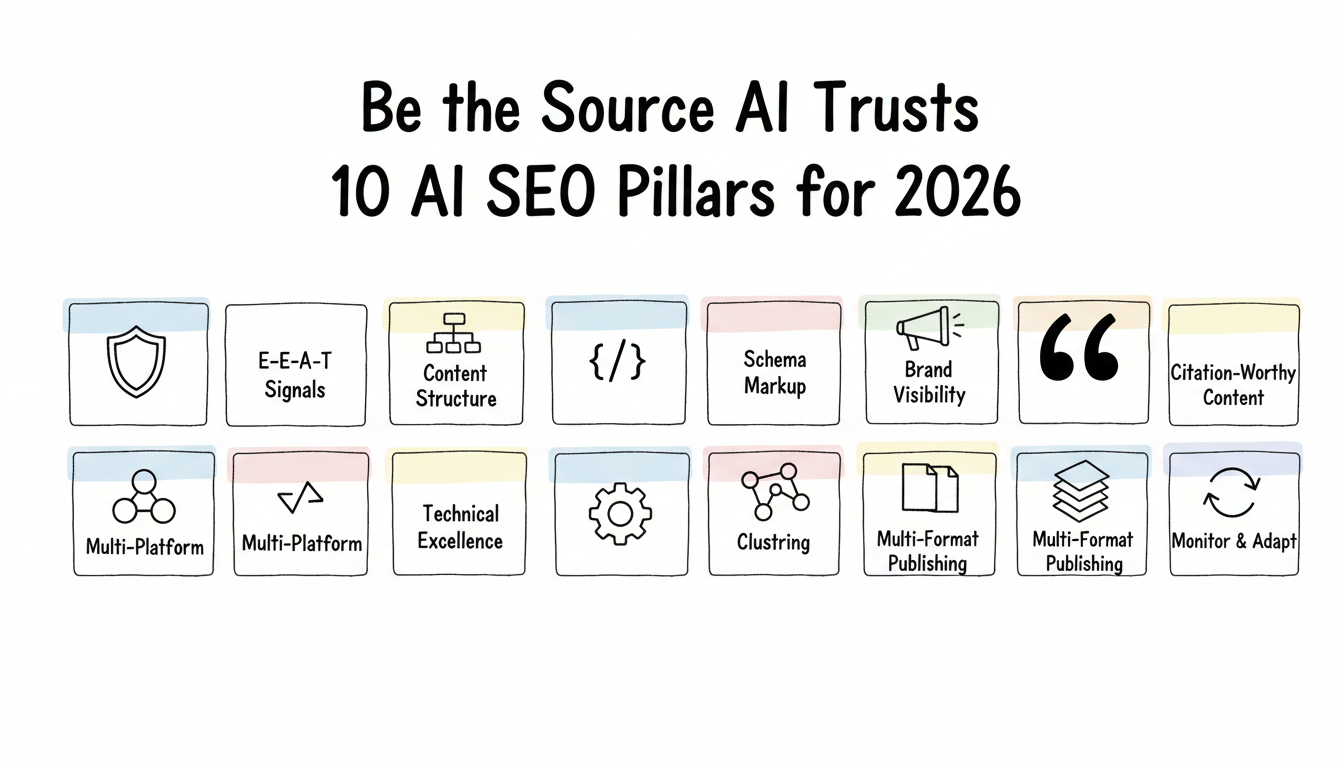
E-E-A-T (Experience, Expertise, Authoritativeness, Trustworthiness) is more important than ever for AI SEO. AI systems are trained to identify and prioritize authoritative sources.
How to demonstrate E-E-A-T:
According to Search Engine Journal's 2026 trends report, E-E-A-T and content diversity will matter more than ever for both SEO and AI success.
Implementation tips:
AI systems need to easily understand and quote your content. Poor structure means AI can't find or cite your best information.
Content structure best practices:
Element | Why It Matters |
Clear H2/H3 hierarchy | Helps AI navigate and understand content organization |
Direct answers immediately after headings | Makes key information extractable |
Bullet points and numbered lists | Enables easy parsing and citation |
Summary paragraphs | Provides quotable snippets |
FAQ sections | Directly matches how users query AI |
Example transformation:
Instead of:
"When considering various factors that influence optimization, it's important to understand that many elements come into play..."
Write:
What factors influence AI SEO rankings? Three primary factors influence AI SEO: content authority, structural clarity, and brand visibility. Content authority demonstrates expertise through E-E-A-T signals...
As Sitebulb's expert roundup notes: using schema and structured data helps AI systems reference your content.
Schema markup helps AI interpret your content as specific content types (FAQs, how-tos, products, organizations).
Priority schema types for AI SEO:
Implementation example:
{
  "@context": "https://schema.org",
  "@type": "FAQPage",
  "mainEntity": [{
    "@type": "Question",
    "name": "What is AI SEO?",
    "acceptedAnswer": {
      "@type": "Answer",
      "text": "AI SEO is the practice of optimizing content to be discovered, understood, and cited by AI systems like ChatGPT, Perplexity, and Google AI Overviews."
    }
  }]
}
According to Search Engine Journal, implementing schema markup helps AI agents accurately understand pricing, availability, reviews, and specifications.
AI systems don't just crawl your website—they synthesize information from across the internet. Brand mentions matter, even without backlinks. This is especially critical when implementing entity optimization for AI search strategies that help AI platforms recognize your brand.
Brand visibility strategies:
According to Footbridge Media's GEO guide: "If people talk about your business online—even without linking to you—those mentions can influence whether you're included in an AI-generated answer."
AI systems favor content they can confidently cite. Generic content rarely gets referenced.
What makes content citation-worthy:
Content quality checklist:
For organizations considering professional support, reviewing AEO services deliverables can help identify what citation-worthy content should include.
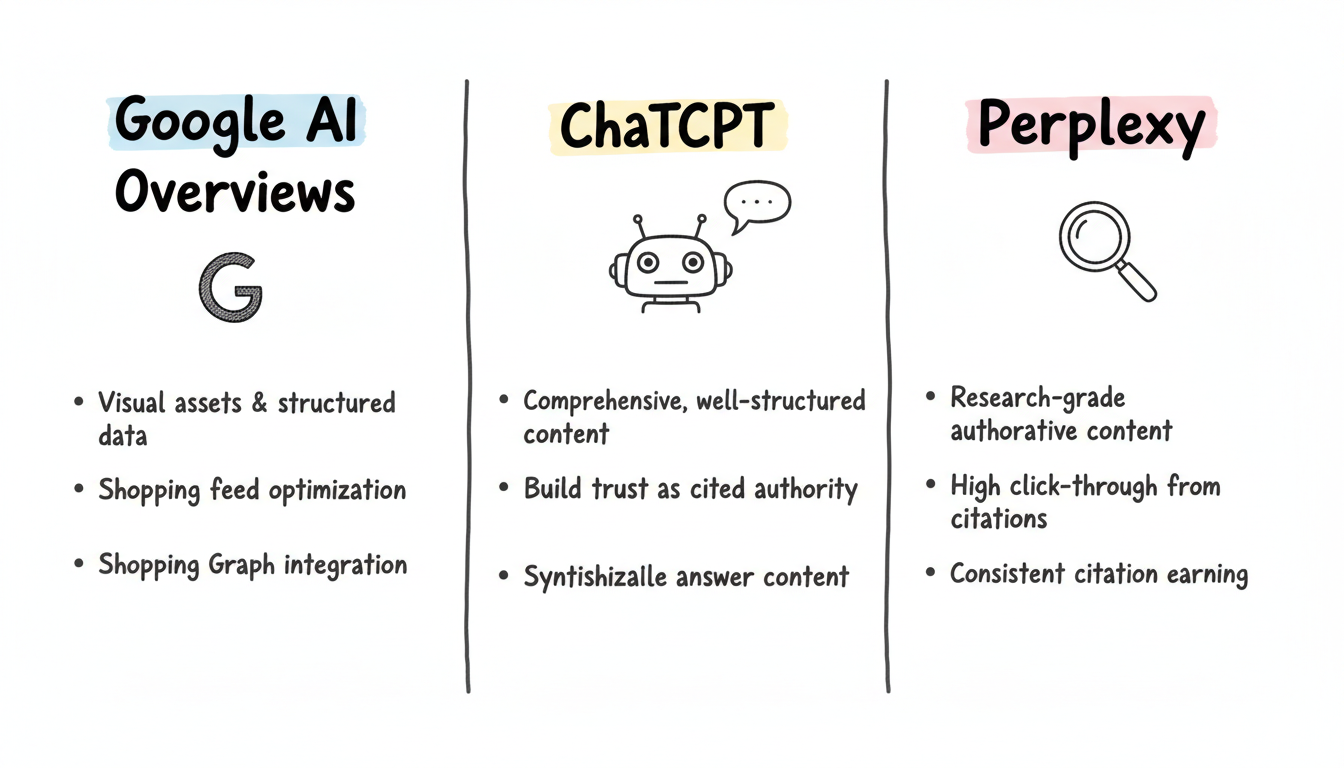
Different AI platforms have different priorities. According to Search Engine Journal, you need platform-specific strategies:
Google AI Overviews:
ChatGPT:
Perplexity:
Understanding the differences between platforms is crucial—see our detailed analysis of Perplexity vs ChatGPT for SEO to learn which platform to prioritize.
AI systems still depend on technical SEO fundamentals. If AI agents can't access your content, they can't cite it.
Technical priorities for AI SEO:
Factor | Why It Matters |
Site speed | AI agents need real-time access to content |
Crawlability | Content must be accessible to AI crawlers |
Mobile optimization | Many AI interactions happen on mobile |
Clean URL structure | Helps AI understand site architecture |
Internal linking | Builds topical relationships AI can follow |
According to Search Engine Journal, prioritize site speed, crawlability, and technical health so AI agents can access your content in real-time conversations.
AI systems understand topics, not just pages. Building interconnected content helps establish topical authority.
Content clustering strategies:
As Sitebulb's experts recommend: "Create structured, interconnected content... Add meaning, context, and relationships between items, collections, and categories so LLMs can easily interpret them."
AI systems gather information from diverse sources. Multi-format content increases your citation opportunities. When planning your resource allocation for multi-platform AI search, consider how different formats serve different AI discovery patterns.
Format diversification:
According to Search Engine Journal: "Publishing across multiple content formats increases citation stability."
AI SEO is rapidly evolving. What works today may need adjustment tomorrow.
Monitoring activities:
The AI SEO best practices for 2026 center on one principle: be the source AI systems trust. This means:
As SEO strategist Aimee Jurenka noted in Sitebulb's roundup: "The smartest SEOs aren't chasing AI-overview hacks. They're using the hype itself to finally get the foundational work prioritized."
Building genuine E-E-A-T signals. AI systems are designed to identify and cite authoritative sources. Without demonstrated expertise and trustworthiness, other tactics have limited impact.
Start with content structure and schema markup—these have immediate impact. Brand visibility and E-E-A-T building are longer-term investments that compound over time.
No. Traditional SEO remains foundational. AI systems tend to cite sources that already perform well in traditional search. Layer AI-specific optimizations onto your existing SEO foundation.
By submitting this form, you agree to our Privacy Policy and Terms & Conditions.