
February 19, 2026


The fragmentation of search across multiple AI platforms creates unprecedented resource allocation challenges. Organizations must now optimize for Google (including AI Overviews), ChatGPT, Perplexity, and emerging platforms—each with distinct requirements. Strategic resource allocation determines whether multi-platform efforts generate compounding returns or diluted results.
Traditional SEO resource planning assumed a single dominant platform. Multi-platform AI search invalidates that assumption.
The new reality:
Organizations cannot simply multiply their SEO budget by the number of platforms. Smart allocation requires understanding where investment generates the highest returns. Effective AEO content strategy now requires balancing resources across traditional and AI-powered search surfaces.
Research on enterprise marketing budgets reveals emerging allocation patterns for AI-era search.
Overall digital marketing allocation: Industry data shows 25-30% of total marketing budget typically flows to content marketing and SEO/AEO combined. Within this allocation, organizations are increasingly carving out dedicated AI search budgets.
AI search-specific allocation:
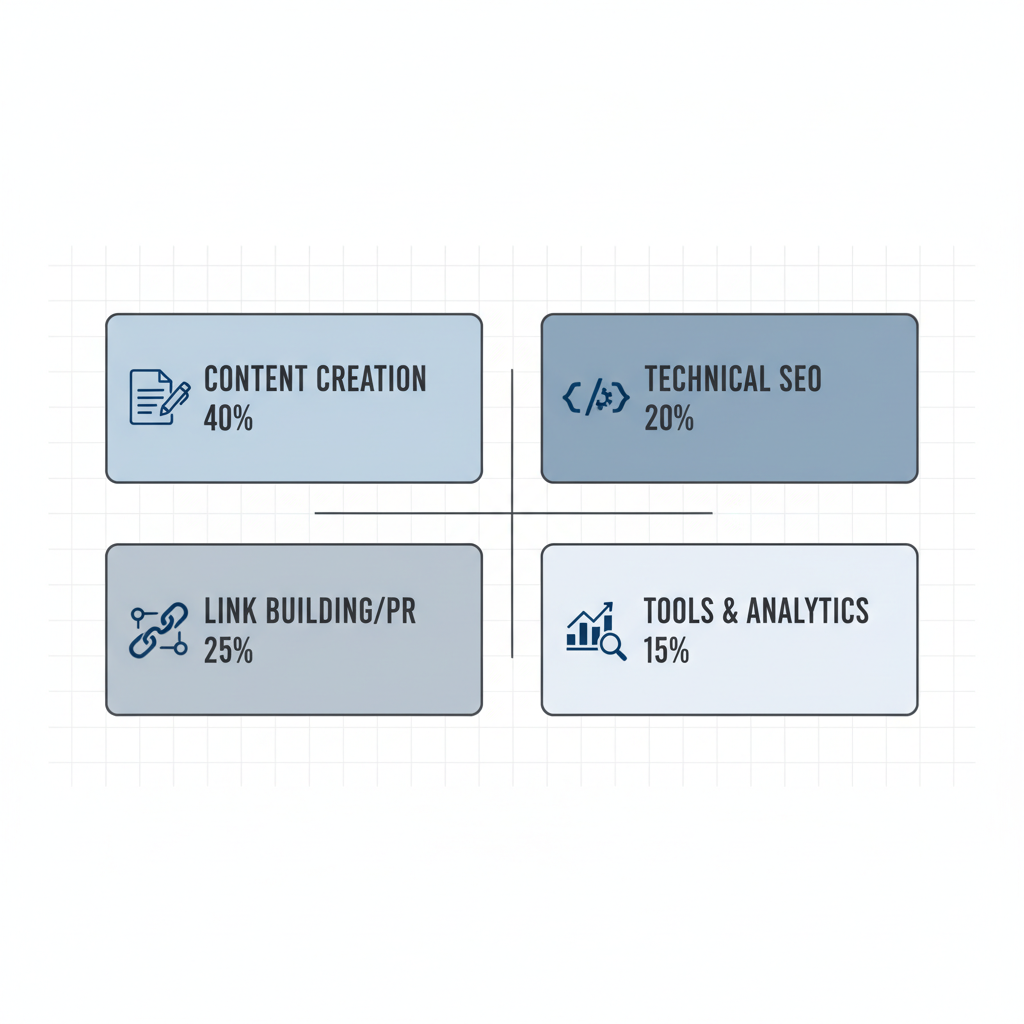
Recommended budget distribution:
Category | Allocation | Focus Areas |
Content Creation | 40% | AI-optimized content, comprehensive coverage |
Technical SEO | 20% | Schema markup, structured data, crawl optimization |
Link Building/PR | 25% | Authority signals, citation-worthy assets |
Tools & Analytics | 15% | Multi-platform tracking, AI monitoring |
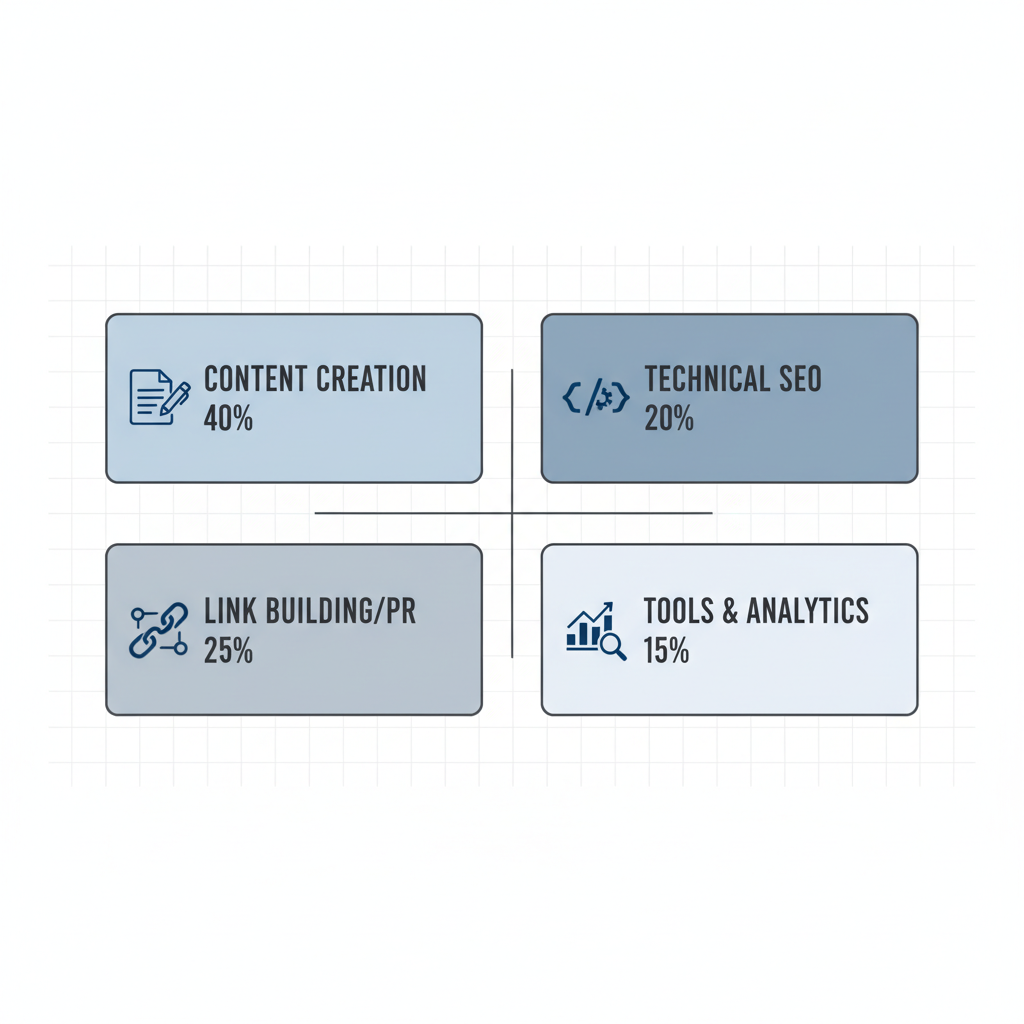
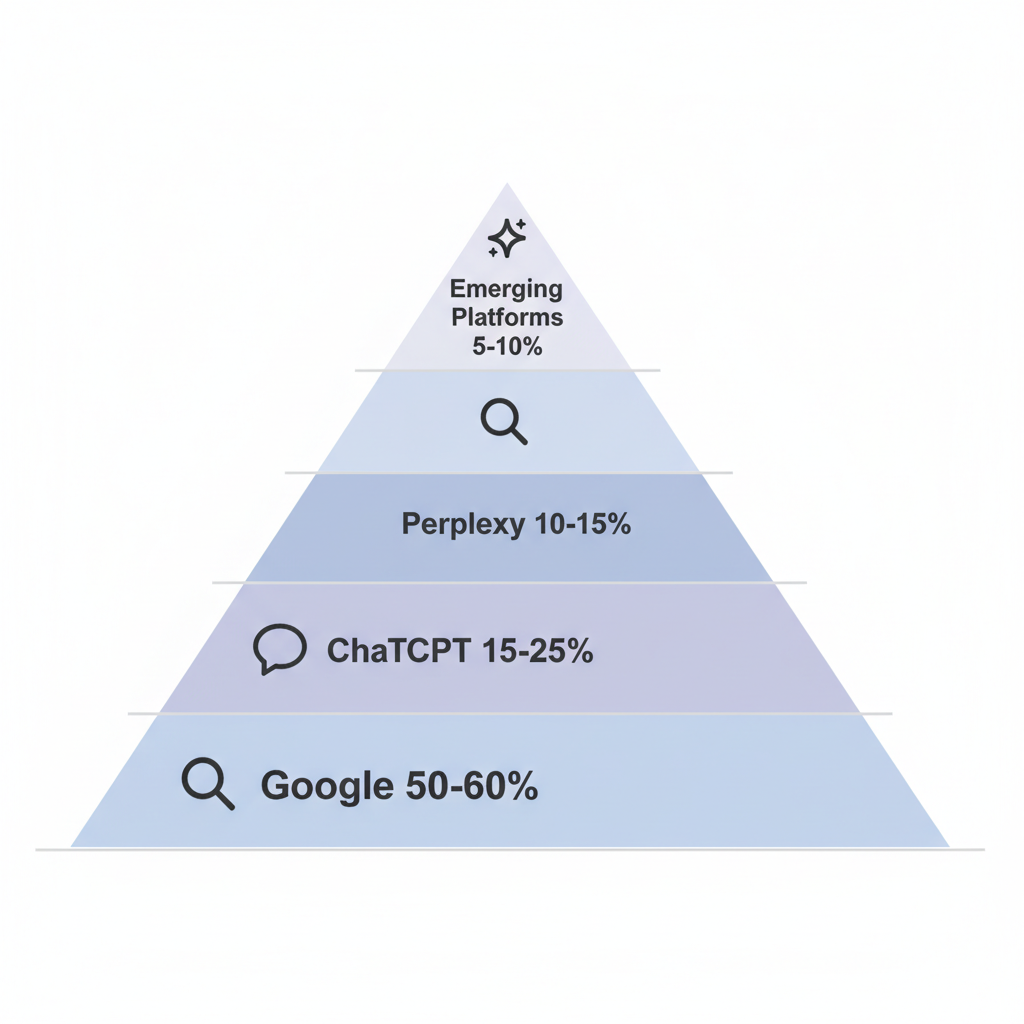
Not all platforms deserve equal investment. Allocate based on audience presence and return potential. Understanding the strengths and weaknesses revealed in an AI-powered search engines comparison helps inform these allocation decisions.
Google (including AI Overviews): Remains foundational. Pages ranking in Google's top 10 show ~0.65 correlation with LLM mentions, and 76% of AI Overview citations pull from top-10 positions. Google investment supports AI visibility broadly.
Recommended allocation: 50-60% of total search budget for most organizations.
ChatGPT: Drives majority of measurable AI referral traffic (89%). Shows stronger correlation with domain authority (0.161) than other platforms. Valuable for brands with established authority.
Recommended allocation: 15-25% depending on domain authority strength.
Perplexity: Higher referral efficiency suggests strong conversion potential despite smaller market share. Rewards comprehensive, research-grade content more than authority signals alone.
Recommended allocation: 10-15% for organizations producing in-depth content.
Emerging platforms: Reserve budget for testing emerging AI search surfaces as they gain traction.
Recommended allocation: 5-10% for experimentation and early positioning.
Multi-platform optimization requires evolved team capabilities. Organizations face the strategic decision of in-house vs agency AEO execution, which directly impacts resource allocation and team structure.
Core competencies needed:
Team structure by organization size:
Small teams (1-3 people): Generalists handling all platforms with platform-specific focus days. Use tools heavily to automate monitoring. Prioritize the 2-3 platforms most relevant to your audience.
Mid-size teams (4-10 people): Dedicated specialists for content, technical SEO, and analytics. One person developing AI-specific expertise across platforms. Regular cross-training to avoid knowledge silos.
Enterprise teams (10+ people): Platform-specific specialists or pods. Dedicated AI search strategist role. Integration with broader marketing for coordinated messaging. Centralized measurement and distributed execution.
Tool selection significantly impacts multi-platform effectiveness.
Recommended tool allocation:
Tool Category | Budget % | Purpose |
CRM/Automation | 35% | Workflow management, content scheduling |
AI Content Tools | 20% | Content creation, optimization assistance |
Analytics Platforms | 20% | Multi-platform tracking, attribution |
SEO/AEO Tools | 15% | Keyword research, rank tracking, technical audits |
Emerging Tools | 10% | AI citation monitoring, platform-specific tools |
Essential tool capabilities:
Emerging tool categories: AI citation monitoring tools are rapidly evolving. Budget for testing new solutions as the market matures. Early adopters of effective monitoring gain competitive intelligence advantages.
Content creation represents the largest budget category. Allocate strategically across content types. Leveraging proven AEO content templates can accelerate production while maintaining quality standards across platforms.
High-ROI content investments:
Comprehensive pillar content: Long-form, authoritative content earns citations across platforms. Perplexity particularly rewards depth (0.191 word count correlation). Investment in 2,500+ word definitive guides pays dividends across multiple platforms.
Structured, extractable content: FAQ sections, comparison tables, and clearly structured explanations extract well for AI synthesis. Moderate investment with high multi-platform utility.
Video and visual content: YouTube content earns 25% citation rate in Google AI Overviews but minimal ChatGPT citations. Invest based on Google AI Overview priority versus other platforms.
Regular content updates: Freshness matters across platforms. Budget for systematic content refreshes, not just new creation. Many organizations underinvest in updates relative to new content.
Resource allocation requires ROI measurement across platforms.
Key metrics by platform:
Google/AI Overviews:
ChatGPT:
Perplexity:
Cross-platform metrics:
Static allocation underperforms in rapidly evolving landscape. Establish triggers for budget reallocation.
Increase platform investment when:
Decrease platform investment when:
Quarterly review cadence: Review allocation quarterly at minimum. AI search evolves too quickly for annual planning cycles. Build flexibility into budgets for mid-quarter adjustments.
Practical allocation varies by organizational scale.
Startups and small businesses: Focus resources on 1-2 primary platforms. Typically Google plus one AI platform where your audience is active. Avoid spreading thin across all platforms. Use free/low-cost tools initially. Invest in content quality over quantity.
Mid-market companies: Establish presence across 3-4 platforms with differentiated strategies. Dedicated budget for AI-specific optimization. Investment in proper measurement infrastructure. Balance between foundational SEO and AI-specific tactics.
Enterprise organizations: Full multi-platform presence with platform-specific teams or specialists. Significant investment in measurement and attribution. Custom tool development or enterprise-tier solutions. Integration with broader digital marketing investments.
Avoid these frequent resource allocation errors.
Over-diversification: Spreading resources across too many platforms dilutes effectiveness. Better to dominate 2-3 platforms than underperform on 6.
Neglecting foundations: AI optimization built on weak SEO foundations fails. Ensure core SEO investment before AI-specific budget.
Static allocation: Set-and-forget budgets miss platform shifts. Build in quarterly reallocation reviews.
Tool over-investment: Tools support strategy but don't replace it. Ensure adequate content and execution budget before expanding tool stack.
Ignoring measurement: Allocation without ROI tracking leads to continued misallocation. Invest in measurement before expanding platform coverage.
Start with 10-15% of existing SEO budget dedicated to AI-specific tactics beyond foundational SEO. As AI search matures and measurement improves, organizations typically increase this to 20-25%. The exact percentage depends on your audience's AI search adoption and your competitive landscape.
For mid-market and enterprise organizations, dedicated AI search expertise increasingly delivers value. However, smaller teams should develop AI capabilities within existing roles rather than hiring specialists. The field evolves too quickly for narrow specialization to remain current without broader SEO context.
Implement multi-platform tracking through citation monitoring tools, referral traffic analysis, and brand mention tracking. Compare investment per platform against traffic quality and conversion metrics from each source. Attribution remains imperfect, but directional measurement enables informed allocation decisions.
By submitting this form, you agree to our Privacy Policy and Terms & Conditions.



