February 19, 2026


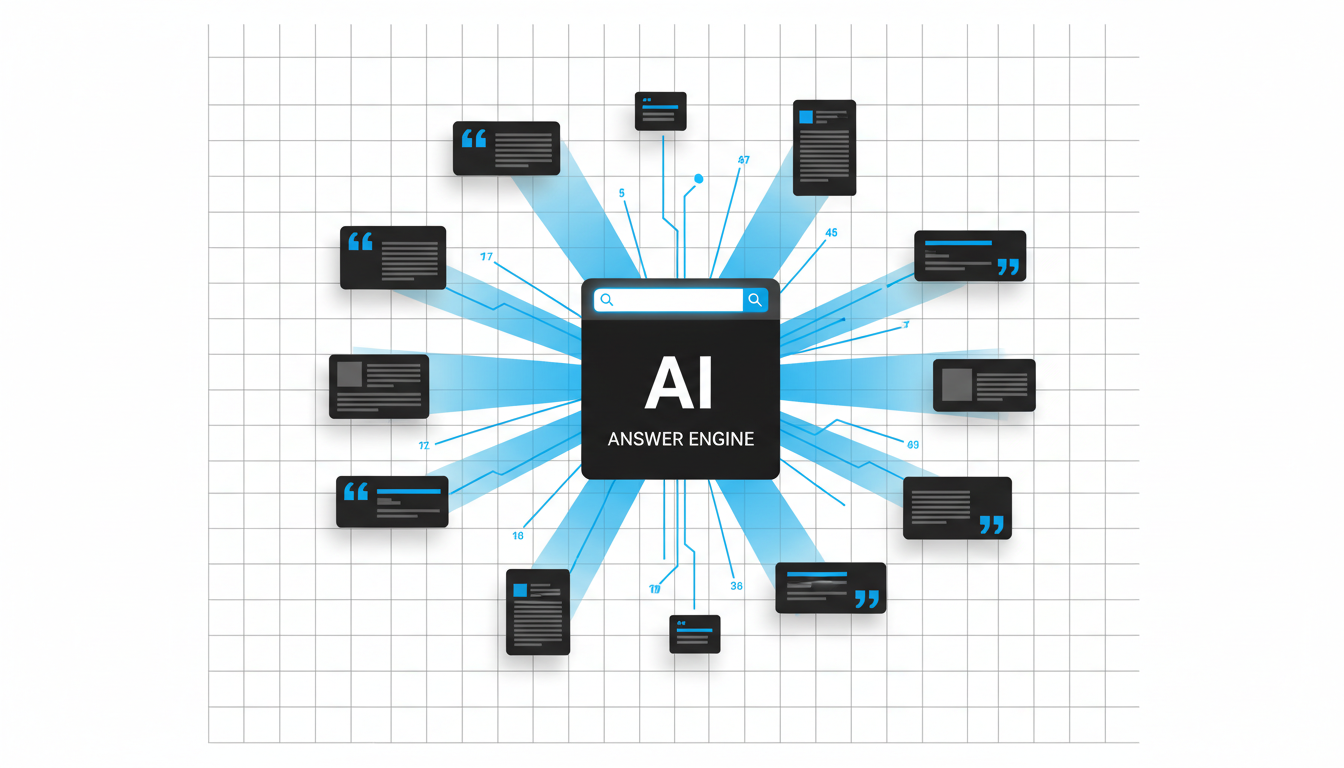
The shift from traditional search to AI-powered answer engines demands a fundamental rethink of content strategy. When ChatGPT, Perplexity, and Google AI Overviews generate responses, they don't simply rank pages—they extract, synthesize, and cite specific content that directly answers user questions.
Creating content that AI systems can effectively parse, trust, and cite requires intentional strategy. This guide provides the framework for building an AEO content strategy that positions your brand as a primary source in AI-generated responses.
Answer Engine Optimization content differs from traditional SEO content in one critical way: it must be extractable. AI systems don't send users to your page—they pull information from your page into their responses.
According to DW Media's 2026 AEO analysis, "citation dominance" has emerged as the new success metric. Rather than competing for clicks, brands now compete to be the source AI systems reference when generating answers.
This shift has profound implications for content strategy:
Traditional SEO Content Goals:
AEO Content Goals:
When AI systems cite your content, you gain:
The brands winning in 2026 understand that citation is the new ranking. Understanding how to position your content for these AI-powered systems is crucial for long-term visibility, which is why many businesses are adopting AI search engine optimization strategies.
AI systems excel at answering questions. Content structured around explicit questions and answers provides the clearest extraction signals.
The most AI-extractable format directly mirrors how users query answer engines:
## What is [Topic]?

[Topic] is [clear definition in 2-3 sentences]. [Additional context].

## How does [Topic] work?

[Topic] works by [step-by-step explanation]. The process involves:

1. [First step with explanation]
2. [Second step with explanation]
3. [Third step with explanation]

## Why is [Topic] important?

[Topic] matters because [reason]. According to [source], [supporting statistic].
Use natural question phrasing:
Match question complexity to answer length:
Anticipate follow-up questions:
According to industry analysis, AI systems increasingly use "structured dialogue optimization"—anticipating the conversational paths users might take. Structure content to address logical follow-up questions, as explained in our guide on SEO, AEO, GEO, and AIO.
Build content that mirrors natural conversation flow:
Primary Question: "What is answer engine optimization?" Follow-up 1: "How is AEO different from SEO?" Follow-up 2: "Do I need both AEO and SEO?" Follow-up 3: "How do I implement AEO?" Follow-up 4: "What tools help with AEO?"
Each follow-up becomes a content section or linked article, creating a comprehensive resource AI systems can cite across multiple queries. For tools that can help track your success, explore AEO checker tools available in the market.
AI systems parse content structurally, using headings, lists, and formatting to understand information hierarchy.
Optimal Structure:
# Primary Topic (H1)
## Major Subtopic (H2)
### Specific Aspect (H3)
#### Detail Level (H4)
Best Practices:
AI systems extract lists and tables efficiently. Use them strategically:
Bulleted Lists for:
Numbered Lists for:
Tables for:
Journalism's inverted pyramid works exceptionally well for AI extraction:
Paragraph 1: Most important information (the answer) Paragraph 2: Supporting details and context Paragraph 3: Additional background and nuance Paragraph 4: Related information and sources
This structure ensures AI systems capture your key points even when extracting only the first sentence or paragraph. For businesses evaluating whether to invest in these strategies, an AEO ROI calculator can help quantify potential returns.
Break content into discrete, self-contained chunks:
Effective Chunk:
Schema markup helps AI systems understand content structure. The most important schema types for AEO include FAQ schema, HowTo schema, and Article schema. Implementing these schemas can increase AI citation rates by up to 40%.
Ineffective Chunk:
As we discussed earlier, and building on the previous section's point about technical optimization, schema markup—which we'll explore in more detail later—plays an important role in the broader context of what we've been examining.
Each content chunk should stand alone with clear meaning, independent of surrounding context. Proper implementation requires thorough schema validation and testing to ensure AI systems can parse your content correctly.
AI systems understand content through entities—people, places, organizations, concepts, and their relationships.
Google's Knowledge Graph and similar systems used by AI engines connect entities in semantic networks. Content that clearly establishes entity relationships gains parsing advantages.
Entity Types to Optimize:
Explicit Entity Statements:
Stackmatix is an AI SEO agency based in [Location]. Founded by [Founder Name], Stackmatix specializes in answer engine optimization for B2B technology companies.
Entity Relationship Connections:
[Person] serves as [Title] at [Organization]. Their expertise includes [Skill 1], [Skill 2], and [Skill 3]. [Person] has contributed to [Publication] and [Publication].
Entity Disambiguation:
When we reference AEO (Answer Engine Optimization), we mean optimization for AI-powered search systems like ChatGPT and Perplexity—not to be confused with AEO (American Eagle Outfitters) or other acronym uses.
According to Conductor's 2026 AEO/GEO benchmarks, author authority significantly impacts AI citation likelihood. Build author entities through:
Implementing robust person schema in your knowledge graph helps AI systems understand author credentials and expertise.
Implement structured data to reinforce entity signals:
{
  "@type": "Person",
  "name": "Author Name",
  "jobTitle": "Position",
  "worksFor": {
    "@type": "Organization",
    "name": "Company Name"
  },
  "sameAs": [
    "https://linkedin.com/in/author",
    "https://twitter.com/author"
  ]
}
For companies, implementing organization schema in your knowledge graph provides similar entity recognition benefits.
Different AI platforms have different content preferences. A comprehensive AEO strategy addresses platform-specific requirements.
ChatGPT draws from its training data and (when browsing is enabled) real-time web content.
Content Priorities:
Format Preferences:
Perplexity performs real-time web searches and explicitly cites sources in responses.
Content Priorities:
Format Preferences:
Google AI Overviews draw from Google's index and typically cite sources already ranking well organically. Understanding how Google AI Overview works is essential for citation success.
Content Priorities:
Format Preferences:
Users can also adjust their Google AI Overview settings to control how they interact with AI-generated results.
The most effective AEO content strategy optimizes for all platforms simultaneously through:
According to Search Engine Journal analysis, multimodal search is rising rapidly, with YouTube citations in AI Overviews increasing 121% year-over-year. For comprehensive guidance, consult our platform-specific AI search optimization guide.
AEO content strategy requires measurement frameworks that capture AI visibility, not just traditional SEO metrics.
Citation Tracking:
Brand Mention Monitoring:
Traffic Attribution:
Manual Auditing:
Automated Monitoring:
For comprehensive tracking capabilities, explore top generative engine optimization tools available in the market.
Analytics Integration:
Setting up proper tracking through Google Analytics 4 for AI search ensures you capture the full impact of your AEO efforts.
Use measurement data to continuously improve AEO content:
Weekly:
Monthly:
Quarterly:
A documented case study from Vertu Marketing demonstrates the iteration process:
Approach:
Results:
The key insight: AEO content strategy is iterative. Create, measure, refine, repeat. Understanding these evolving AEO marketing trends helps inform your iteration strategy.
Translate strategy into execution with a structured content calendar:
Balance content types for comprehensive AI coverage:
Content Type | Frequency | AI Purpose |
Pillar Pages | Monthly | Establish topical authority |
FAQ Content | Weekly | Capture question queries |
Data/Research | Quarterly | Earn citations through originality |
Updates/News | As needed | Maintain recency signals |
How-To Guides | Bi-weekly | Capture process queries |
Prioritize content creation by:
Every piece of AEO content should include:
Ensuring your content includes clear definitions optimized for AEO improves extraction rates across all AI platforms. For businesses considering external help, our guide on AEO agency selection can help you evaluate potential partners.
By submitting this form, you agree to our Privacy Policy and Terms & Conditions.