February 19, 2026


Generative engine optimization tools help brands track and improve their visibility in AI-powered search results. With ChatGPT, Perplexity, Google AI Overviews, and Claude now influencing how users discover information, monitoring your presence across these platforms has become essential.
But with dozens of GEO tools on the market, choosing the right one depends on your specific situation. This guide recommends tools based on your team size, budget, and primary monitoring needs.
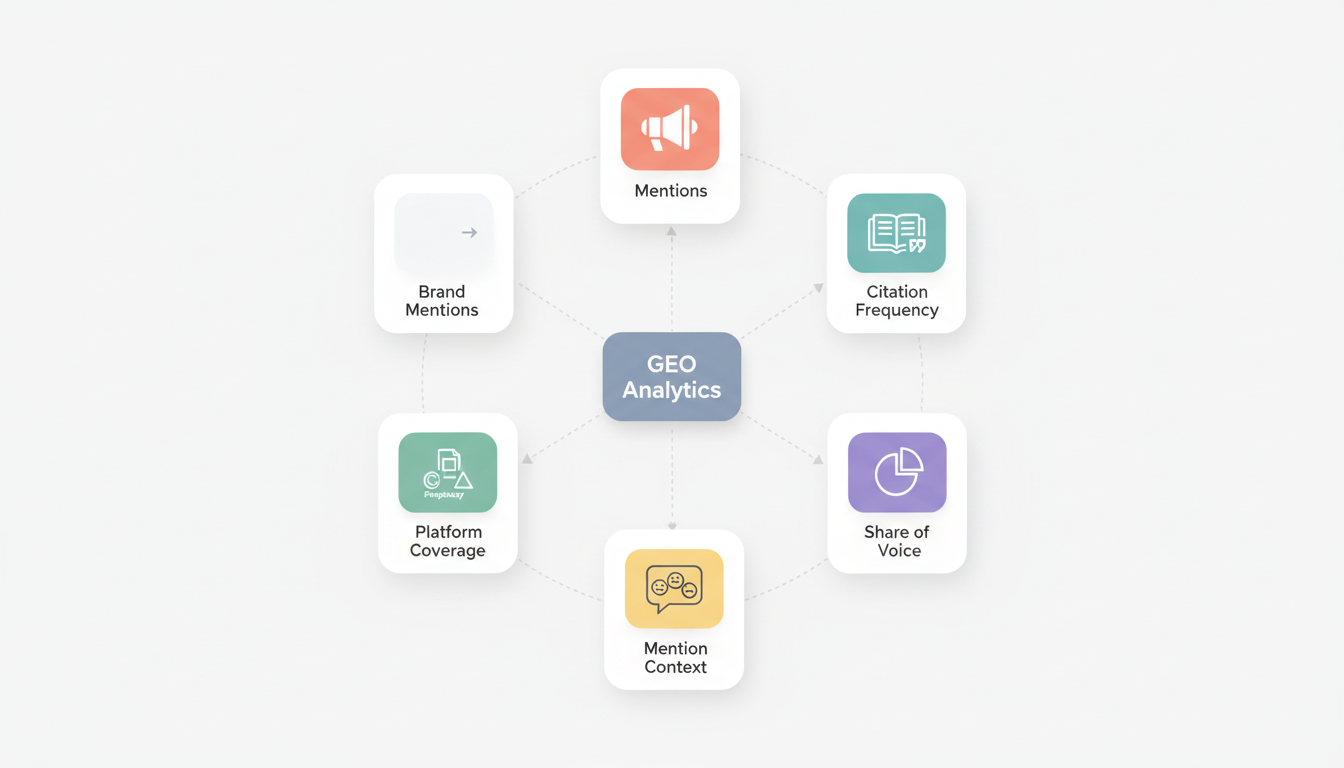
Before selecting a tool, understand what they track:
Core metrics across GEO tools:
Metric | What It Tells You |
Brand mentions | When AI systems recommend or reference your brand |
Citation frequency | How often AI cites your content as a source |
Share of voice | Your visibility compared to competitors |
Mention context | How AI describes your brand (positive, neutral, negative) |
Platform coverage | Which AI systems include you (ChatGPT, Perplexity, etc.) |
Source attribution | Which specific pages AI pulls information from |
Unlike traditional SEO tools tracking rankings, GEO tools track whether AI platforms mention, cite, or recommend your brand when generating answers.
Best choice: Otterly.AI
Otterly provides multi-LLM tracking at an accessible price point. Starting at $29/month, it monitors your brand across ChatGPT, Perplexity, and other platforms without overwhelming complexity.
Why it works for small teams:
Limitations: Less granular analytics than enterprise tools. Limited historical data at lower tiers.
Alternative: AI Product Rankings (Free tier available)
For brands testing GEO concepts before committing budget, AI Product Rankings offers free topic monitoring. Useful for validating whether AI visibility matters for your category before investing in comprehensive tools.
Best choice: Peec AI
Peec AI balances capability with usability at €89-499/month. Its visibility scoring system quantifies AI presence in ways that translate easily into executive reports.
Why it works for growing teams:
Limitations: European-based pricing. Some features limited to higher tiers.
Alternative: Writesonic GEO
Teams already using Writesonic for content creation benefit from built-in GEO tracking. The combined monitoring and optimization workflow reduces tool sprawl.
Best choice: Scrunch AI
Scrunch AI handles multi-client monitoring with cross-platform mention tracking and crawler logging that documents exactly how AI systems access content.
Why it works for agencies:
Limitations: Higher starting price ($417+/month). Learning curve for full feature utilization.
Alternative: Gauge
Gauge's citation intelligence specifically reveals which sources AI engines favor. Its gap analysis highlights prompts where clients should appear but don't—actionable information for agency recommendations.
Best choice: Bluefish
Bluefish provides enterprise-grade multi-engine visibility across ChatGPT, Gemini, Perplexity, and Google AI Overviews with advanced metrics including favorability, sentiment, safety, and accuracy. Understanding how Google selects AI Overview sources becomes critical at this level, and Bluefish's platform tracks these selection patterns across multiple AI engines.
Why it works for enterprise:
Limitations: Custom pricing requires sales conversation. May be overkill for simpler monitoring needs.
Alternative: Profound
Enterprise organizations managing multiple brands benefit from Profound's citation workflows designed for scale. Its enterprise architecture handles complex organizational structures.
Recommended: Semrush AI Toolkit
E-commerce brands already using Semrush benefit from integrated AI visibility scores alongside existing keyword and ranking data. The unified workflow connects GEO insights to product-level performance.
Key features for e-commerce:
Recommended: Gauge
When primary concern is how AI represents your brand—not just whether it mentions you—Gauge's citation intelligence reveals the context of AI mentions.
Key features for reputation:
Recommended: Addlly AI
Teams wanting both monitoring and optimization guidance benefit from Addlly's custom AI agents and GEO auditing that identify specific content improvements.
Key features for optimization:
Recommended: Ahrefs Brand Radar
Organizations with heavy technical SEO investment benefit from Ahrefs' combined backlink and AI visibility data. Understanding how traditional authority signals affect AI citations requires this integrated view. Many technical teams use this alongside competitive AI search benchmarking to understand their position relative to competitors.
Key features for technical teams:
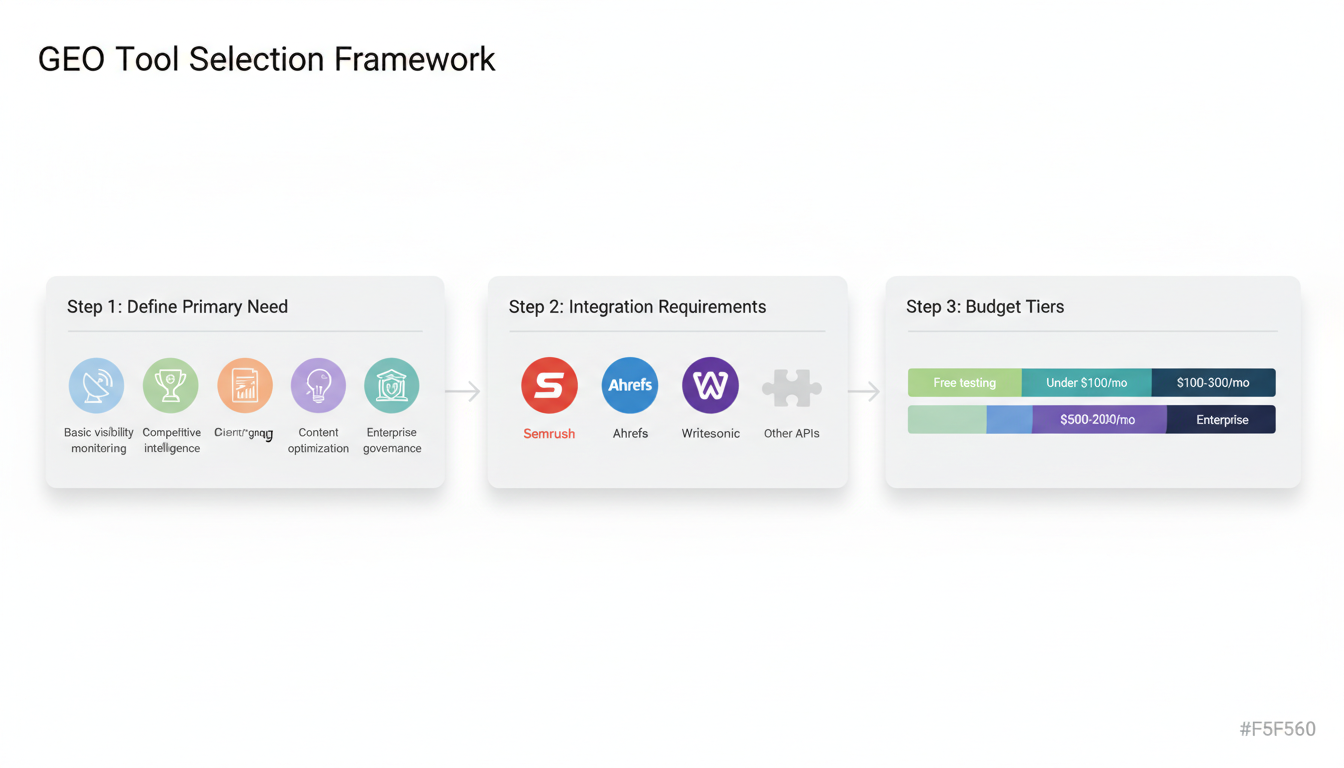
Use this decision framework to narrow choices:
Step 1: Define Primary Need
If your main need is... | Start with... |
Basic visibility monitoring | Otterly.AI or free tier options |
Competitive intelligence | Peec AI or Scrunch AI |
Client reporting | Scrunch AI or Gauge |
Content optimization | Addlly AI |
Enterprise governance | Bluefish or Profound |
Step 2: Consider Integration Requirements
Step 3: Evaluate Budget Constraints
Budget Range | Best Options |
Free testing | AI Product Rankings free tier |
Under $100/month | Otterly.AI, Mangools AI Search Watcher |
$100-500/month | Peec AI, Writesonic GEO |
$500-2,000/month | Scrunch AI, Gauge |
Enterprise budget | Bluefish, Profound |
Selecting a tool is only the first step. Effective implementation requires:
1. Establish Baselines Before Optimizing
Document current visibility across target queries before making changes. Without baselines, you can't measure improvement. Organizations often calculate expected returns using an AEO ROI calculator before committing to tool investments.
2. Track Relevant Prompts
Focus monitoring on queries your audience actually uses. Generic monitoring across all possible prompts dilutes actionable insights.
3. Connect to Business Metrics
Link visibility data to traffic and conversions where possible. Citation frequency matters most when it drives business outcomes.
4. Review Regularly
AI platforms change frequently. Monthly reviews ensure your monitoring strategy remains relevant.
5. Share Insights Across Teams
GEO data benefits content, PR, product, and marketing teams. Break silos to maximize tool value. Consider AEO training workshops to ensure all stakeholders understand how to interpret and act on AI visibility data.
For most organizations, start with accessible tools matching current needs rather than purchasing enterprise capabilities prematurely.
Recommended starting path:
The right GEO tool depends on your specific situation. Expensive tools don't automatically produce better results—matched capabilities do.
By submitting this form, you agree to our Privacy Policy and Terms & Conditions.