February 19, 2026


Google's AI Overviews now appear for over 80% of informational queries, fundamentally changing how content gets discovered. Understanding how Google's algorithm selects sources for these AI-generated summaries has become essential for maintaining search visibility in 2026.
While Google hasn't published an official algorithm specification for AI Overview source selection, extensive analysis of citation patterns reveals clear preferences that determine which content earns visibility in these prominent placements.
AI Overviews operate using advanced natural language processing models that evaluate content across multiple dimensions simultaneously. Unlike traditional ranking where position determines visibility, AI Overviews synthesize information from multiple sources—meaning your content competes not just with other websites but with the AI's ability to create comprehensive answers by combining various sources.
The selection process happens in real-time for each query. Google's systems scan indexed content, evaluate source credibility, assess answer completeness, and synthesize the most helpful response. This dynamic process means content quality and relevance matter more than ever.
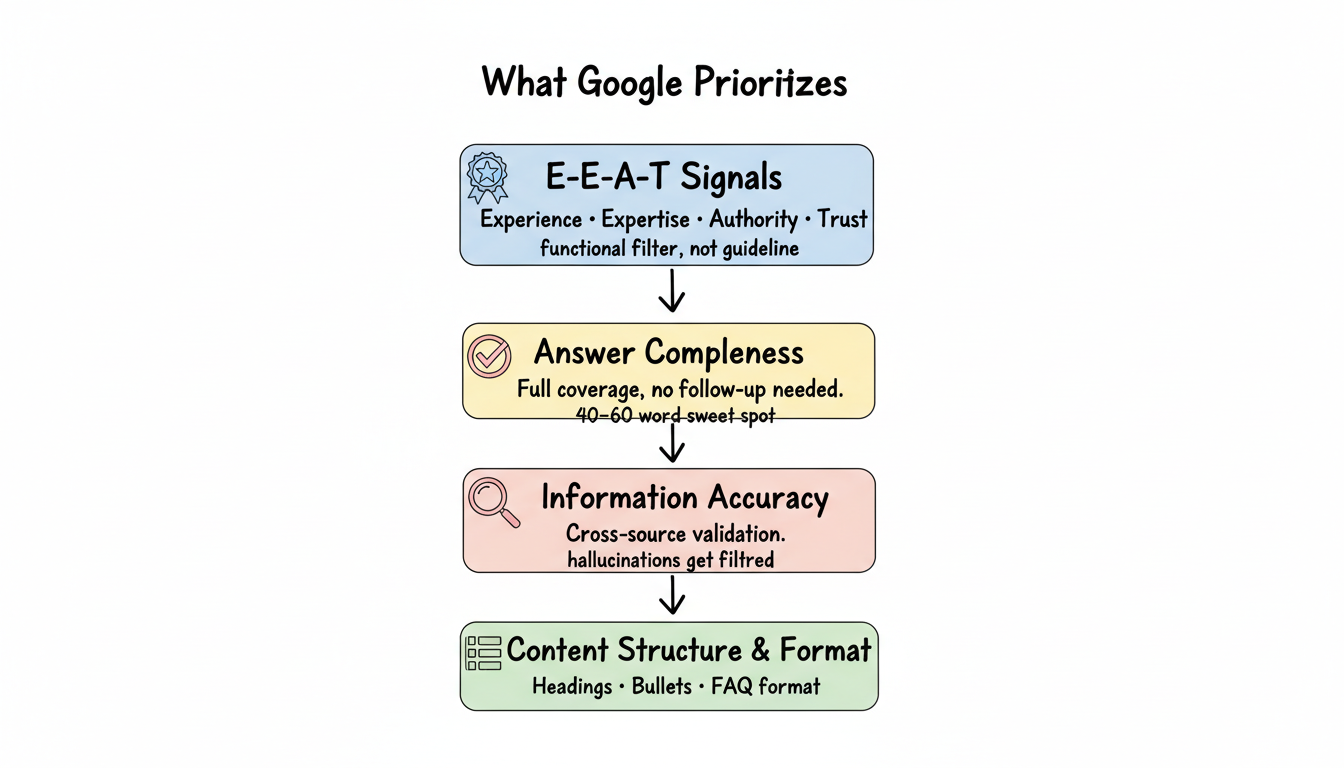
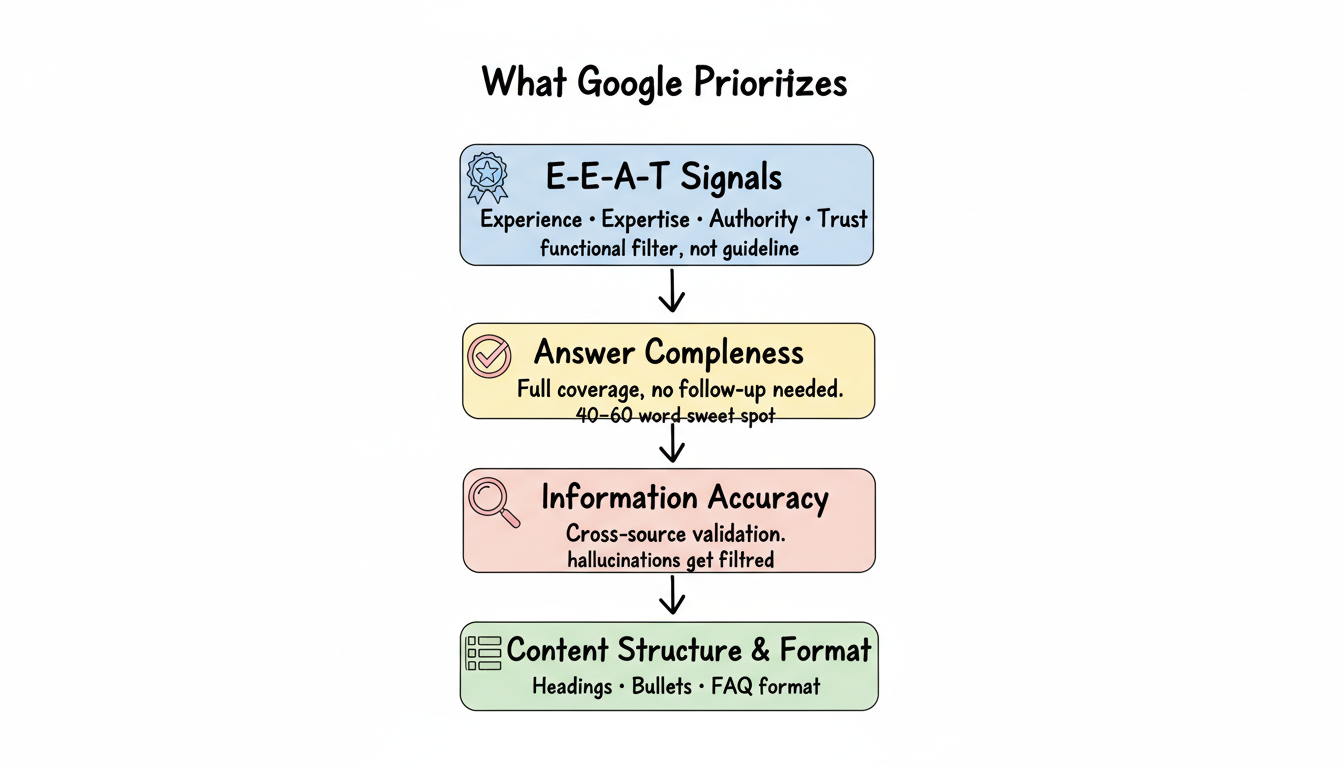
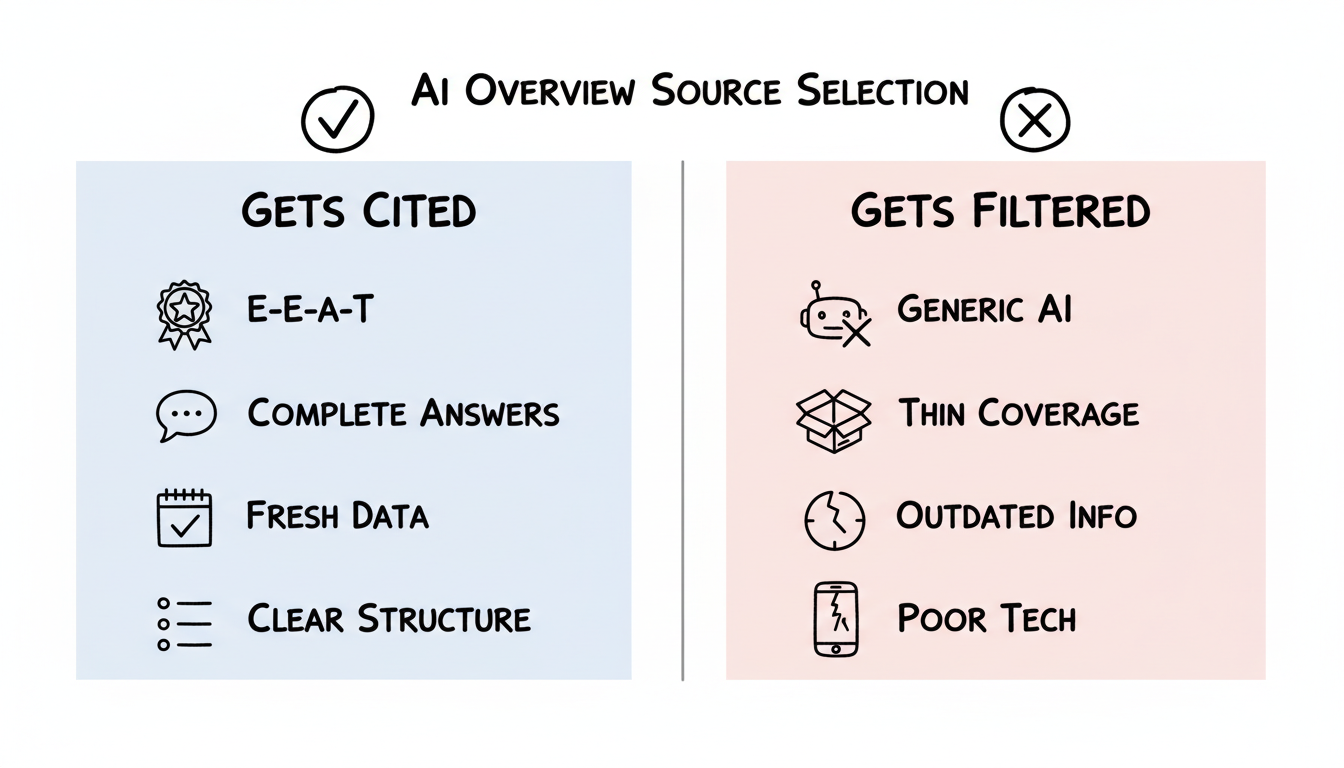
Experience, Expertise, Authoritativeness, and Trustworthiness have shifted from quality rater guidelines to functional ranking filters. In 2026, content without clear E-E-A-T signals increasingly fails to appear in AI Overviews regardless of other optimization efforts.
Experience has become particularly critical. Google's algorithms actively identify content created by people with demonstrated first-hand knowledge. This directly combats generic AI-generated content flooding search results. Signs of genuine experience include:
Expertise signals include author credentials, consistent publishing history, and depth of coverage. Pages cited in AI Overviews typically come from sites demonstrating topical authority through comprehensive content libraries rather than isolated articles.
Authoritativeness manifests through domain recognition, backlinks from respected sources, and industry mentions. Understanding entity optimization for AI search can help establish your brand as an authoritative source that AI systems recognize.
Trustworthiness encompasses accuracy verification, transparent sourcing, and website security. Content contradicting established facts gets filtered during selection.
AI Overviews prioritize sources that fully address user questions without requiring additional searches. The algorithm evaluates whether content:
Partial answers rarely get featured because AI systems prefer sources that reduce the need for users to click through to multiple websites. Content structured to comprehensively address topics from multiple angles receives preference.
Google's AI verifies factual claims by cross-referencing multiple sources. Content that introduces errors—particularly the "hallucinations" common in AI-generated text—gets filtered during the selection process.
Accuracy verification mechanisms include:
How information is organized significantly impacts citation probability. AI systems prefer content that:
The 40-60 word answer sweet spot remains relevant—Google frequently pulls responses of this length for featured snippets and AI Overview citations. Leveraging proven AEO content templates can help structure your content for maximum AI citation potential.
Sites with established authority in their niche receive preference over sites covering topics outside their demonstrated expertise. A B2B SaaS company writing about marketing automation will more likely be cited than a general blog without established authority in that space.
Domain signals include:
For topics where recency matters, Google's AI prioritizes recently published or updated content. Understanding content freshness signals for answer engines helps maintain relevance across AI platforms.
Freshness signals include:
AI Overviews don't trigger for all query types. Transactional searches ("buy project management software") and navigational queries ("LinkedIn login") typically bypass AI Overviews entirely. The algorithm selects sources that match informational intent with appropriate depth.
Content optimized for the wrong intent—commercial content appearing for informational queries—gets filtered regardless of other quality signals.
Understanding disqualification factors helps avoid common pitfalls:
Generic AI Content: Google's detection mechanisms identify AI-generated content through linguistic patterns, consistent depth across sections, and lack of specific citations. Sites publishing high volumes of AI content without human expertise signals face systematic devaluation.
Thin or Superficial Coverage: Content that scratches the surface without providing genuine insight loses to comprehensive alternatives. AI systems can recognize when content adds no unique value to existing information.
Outdated Information: Statistics, pricing, features, and other time-sensitive information must remain current. AI Overviews avoid citing sources with clearly outdated facts.
Poor Technical Foundation: Sites with slow load times, poor mobile experience, or problematic Core Web Vitals (especially INP—Interaction to Next Paint) receive lower selection priority. Google's December 2025 update weighted interactivity heavily.
Google Search Console now includes "AI Mode" reporting, allowing visibility into:
Tracking these metrics reveals optimization opportunities and validates strategy effectiveness.
To increase AI Overview citation probability:
Google's AI Overview algorithm continues evolving. The December 2025 core update specifically targeted AI content quality, broadened E-E-A-T requirements beyond YMYL topics, and enhanced behavioral signal weight. Sites investing in genuine expertise and user-focused content increasingly dominate these placements. Implementing universal AI search tactics ensures your content performs well across multiple AI platforms, not just Google.
The shift represents a fundamental change: ranking on page one no longer guarantees visibility when AI synthesizes answers from multiple sources. Success requires becoming the source AI systems trust to cite.
By submitting this form, you agree to our Privacy Policy and Terms & Conditions.