February 19, 2026


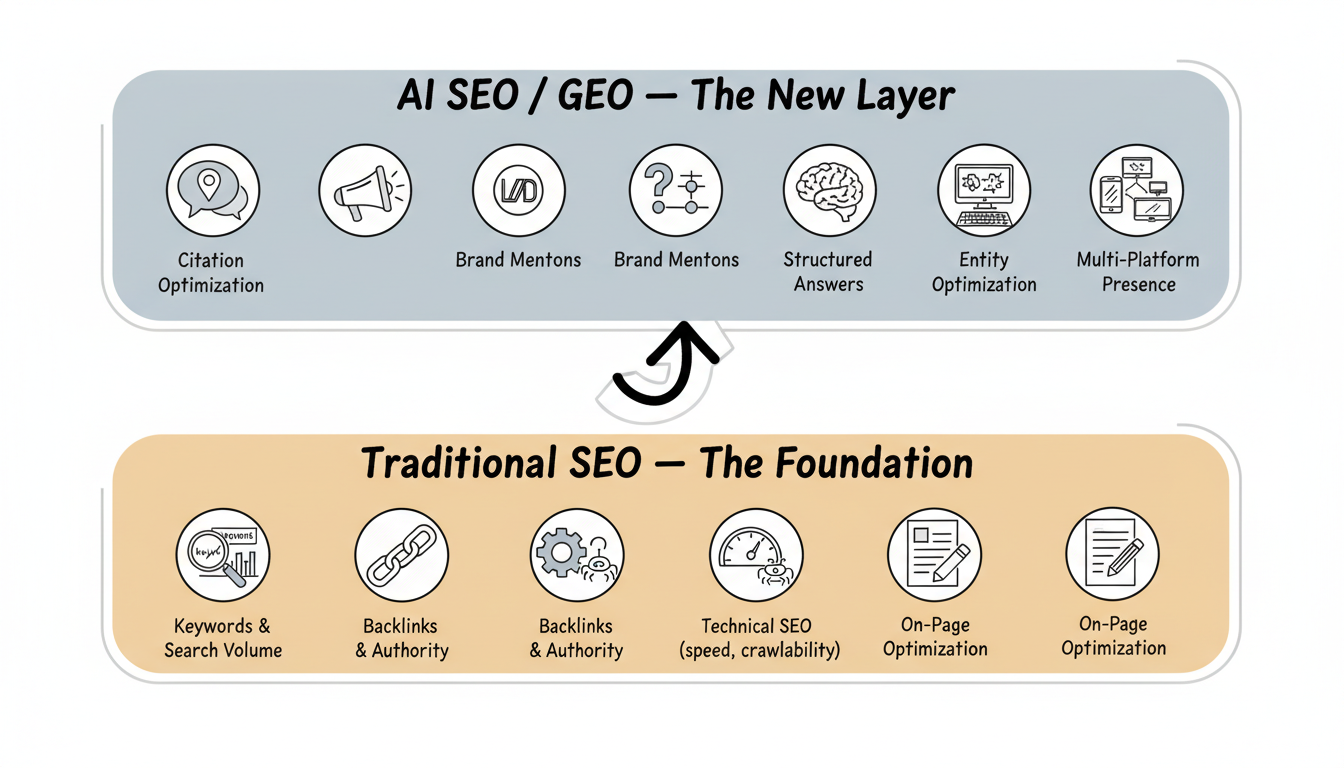
The SEO landscape has fundamentally shifted. In 2026, it's no longer just about Google—it's about Google plus AI. If you're still focusing exclusively on keywords and backlinks, you're falling behind competitors who have embraced AI-powered search optimization.
But here's the critical insight: AI SEO doesn't replace traditional SEO. According to NoGood's research, domains ranking well in traditional search also perform better in AI citations. The foundation still matters.
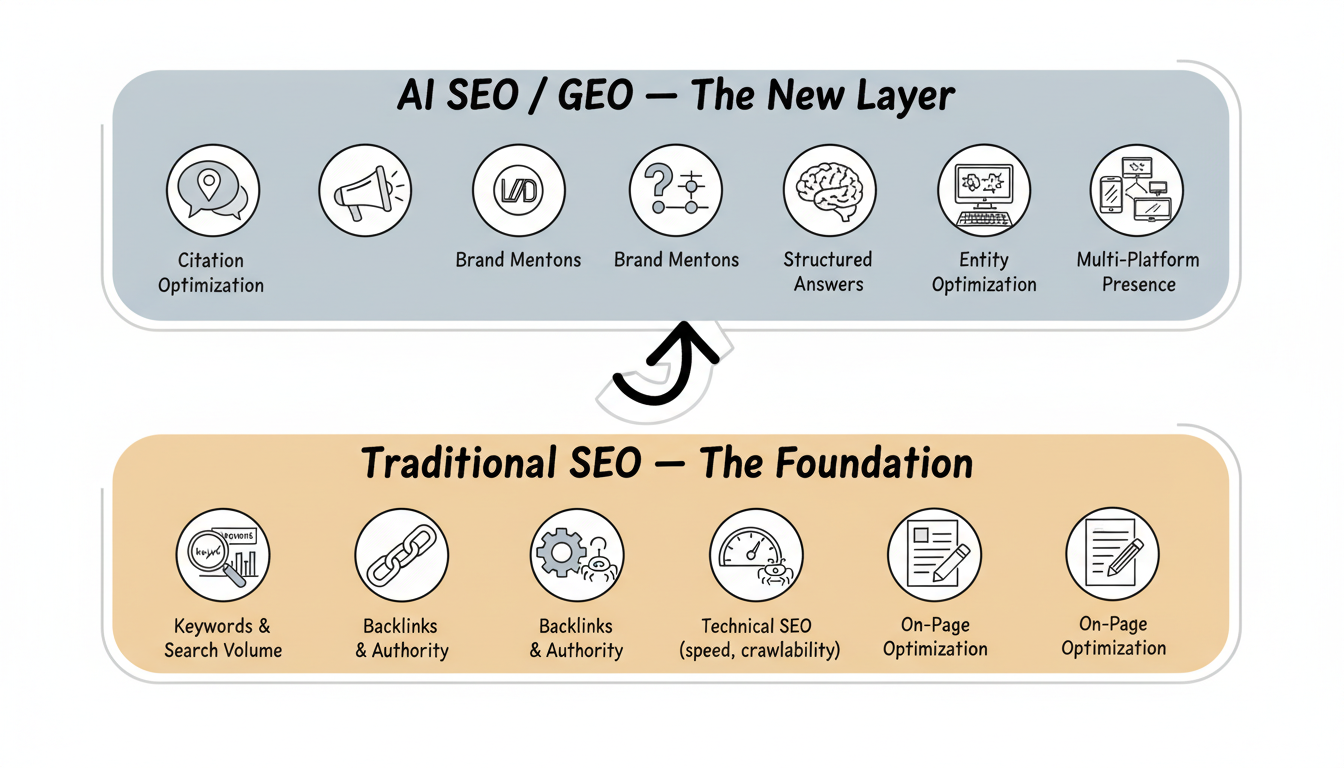
Traditional SEO focuses on ranking in Google's classic blue links through:
These fundamentals remain essential in 2026. Think of traditional SEO as building a house with a solid foundation, walls, and a roof. You need the house before adding solar panels and smart home technology.
AI SEO (also called Generative Engine Optimization or GEO) focuses on getting your content cited by AI-powered search tools like ChatGPT, Perplexity, and Google AI Overviews.
According to Search Engine Journal's enterprise trends report, AI-driven engines have introduced fundamentally different ways of searching for and consuming information, requiring new optimization approaches.
Key AI SEO tactics include:
Traditional SEO | AI SEO |
Choose topics based on search volume | Understand why people search |
Target exact-match keywords | Answer real questions comprehensively |
Optimize for specific phrases | Cover topics with semantic depth |
AI search engines now analyze why the user is searching, what problem they want solved, and whether content answers that intent clearly—not just whether keywords match. This shift aligns closely with voice search optimization for answer engines, where understanding natural language queries becomes critical.
Traditional SEO treats backlinks as the primary authority signal. AI SEO recognizes that brand mentions—even without links—significantly impact visibility.
According to WSI World's 2026 predictions, brand mentions now matter more than traditional backlinks for AI visibility. AI systems surface brands referenced across trusted sources including reviews, forums, podcasts, and social channels.
Traditional SEO success metric: Page 1 ranking position
AI SEO success metric: Being cited in AI-generated answers
With zero-click searches increasing, appearing within the AI response itself—not just ranking on the results page—becomes the goal. Tools like AI search citation tracking have emerged to help marketers monitor these new visibility metrics.
Traditional SEO optimized primarily for Google. AI SEO requires visibility across multiple platforms.
TheUSIM's Q4 2025 analysis confirms that effective strategy for 2026 means re-balancing traditional optimization with strategic participation in communities where audiences seek information—Reddit, publisher partnerships, Google's Preferred Sources, and emerging AI-powered browsers. This approach requires developing platform-specific content strategies tailored to each channel's unique audience and format expectations.
Old Approach | New Approach |
Writing for search crawlers | Writing for real people |
Keyword stuffing | Clear, helpful explanations |
Gaming algorithms | Demonstrating genuine expertise |
AI models trained on human feedback prioritize content that humans find genuinely useful, not content optimized for older algorithmic patterns.
Traditional SEO sometimes rewarded publishing volume. AI SEO heavily weights E-E-A-T signals:
AI systems are trained to identify and cite authoritative sources, making E-E-A-T more important than ever.
Don't abandon these fundamentals—they're prerequisites for AI SEO success:
Layer these new tactics onto your traditional SEO foundation:
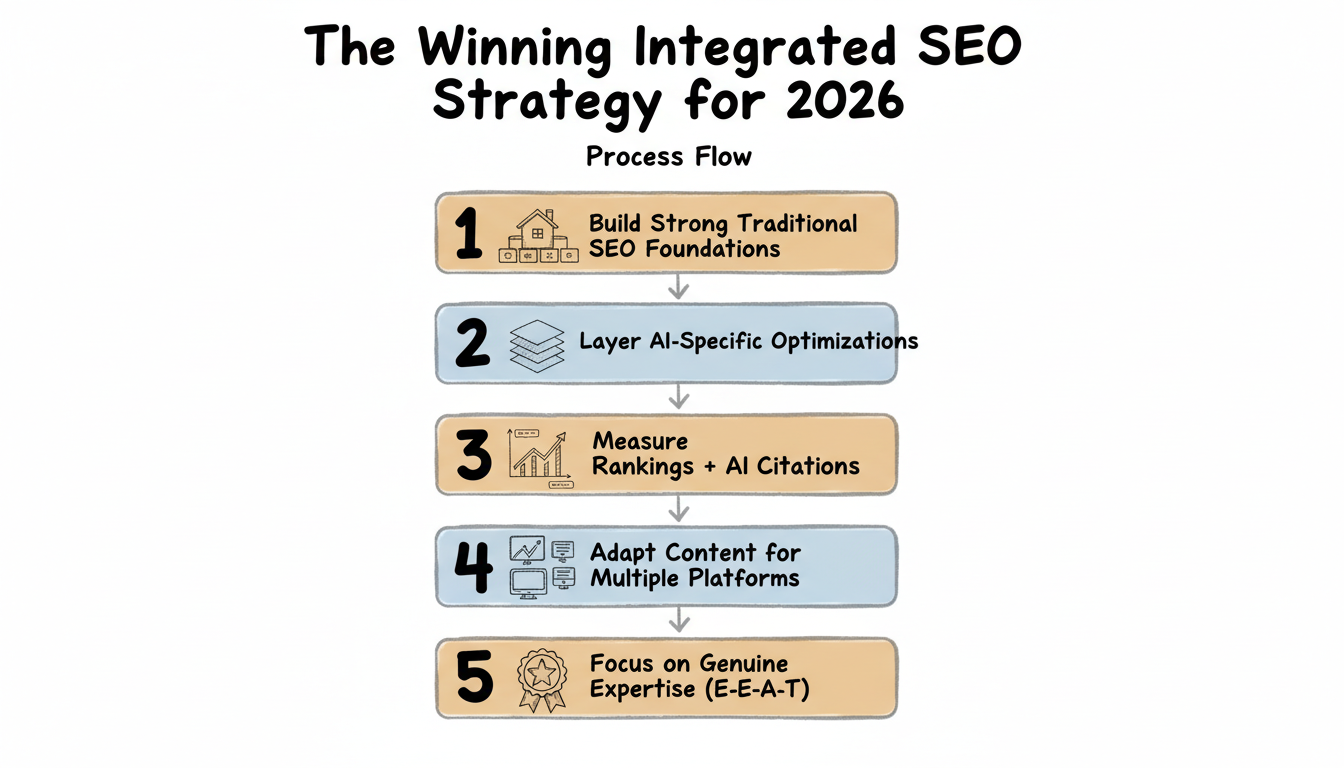
The marketers succeeding in 2026 aren't choosing between traditional SEO and AI SEO—they're doing both. As NoGood's research emphasizes, you cannot skip traditional SEO to go straight to AI optimization.
The winning strategy:
No. Traditional SEO remains the foundation for search visibility. AI systems tend to cite sources that already rank well in traditional search. The two approaches are complementary, not competing.
Look for agencies that offer integrated approaches. The best AI SEO agencies in 2026 understand both traditional search fundamentals and emerging AI optimization tactics.
Track AI referral traffic from domains like chat.openai.com and perplexity.ai. Monitor brand mentions across the web. Manually test whether AI tools cite your content for relevant queries.
By submitting this form, you agree to our Privacy Policy and Terms & Conditions.