
February 19, 2026


Amazon PPC advertising has become essential for sellers who want visibility on the world's largest marketplace. With millions of products competing for attention, organic ranking alone rarely cuts it anymore.
This guide covers everything you need to know about Amazon PPC in 2026: the ad types available, targeting options that work, how to optimize your ACoS, and when it makes sense to bring in professional help.
Amazon PPC (pay-per-click) advertising lets sellers bid on placements throughout the shopping experience. You pay only when someone clicks your ad.
Amazon continues to dominate e-commerce, and advertising has become the primary way products get discovered. The platform keeps expanding ad placements—including new product detail page placements for Sponsored Brands, according to recent Amazon Ads updates. Understanding what is paid search advertising becomes increasingly important as Amazon's ad ecosystem expands.
Before diving into campaign setup, understand these core metrics:
Metric | Definition | Why It Matters |
ACoS | Ad spend ÷ Ad revenue | Measures advertising efficiency |
TACoS | Ad spend ÷ Total revenue | Shows ad impact on overall sales |
CPC | Cost per click | Determines how much you pay for traffic |
CTR | Clicks ÷ Impressions | Indicates ad relevance |
Conversion Rate | Orders ÷ Clicks | Shows how well your listing converts |
According to SalesDuo, the average cost per click on Amazon is about $0.91, though this varies significantly by category and competition level.
SalesDuo's 2026 analysis reports:
Amazon offers three primary advertising formats, each serving different purposes in your marketing strategy.
Sponsored Products are the foundation of most Amazon PPC strategies. These ads promote individual product listings and appear in search results and on product detail pages.
According to Bridgeway Digital, mid-size brands typically allocate up to 60% of their ad spend to Sponsored Products.
Best for:
Key features:
Sponsored Brands display your logo, custom headline, and multiple products—typically at the top of search results. In 2026, Amazon has expanded Sponsored Brands to product detail pages, giving brands more visibility during the purchase decision.
Best for:
According to Bridgeway Digital, some brands report conversion rates as high as 95% when Sponsored Brands campaigns are crafted around multiple products and customer journeys.
Sponsored Display ads retarget shoppers both on and off Amazon, keeping your brand visible throughout the buyer journey.
Best for:
SalesDuo reports that Sponsored Display video ads deliver a 9% higher click-through rate than non-video campaigns.
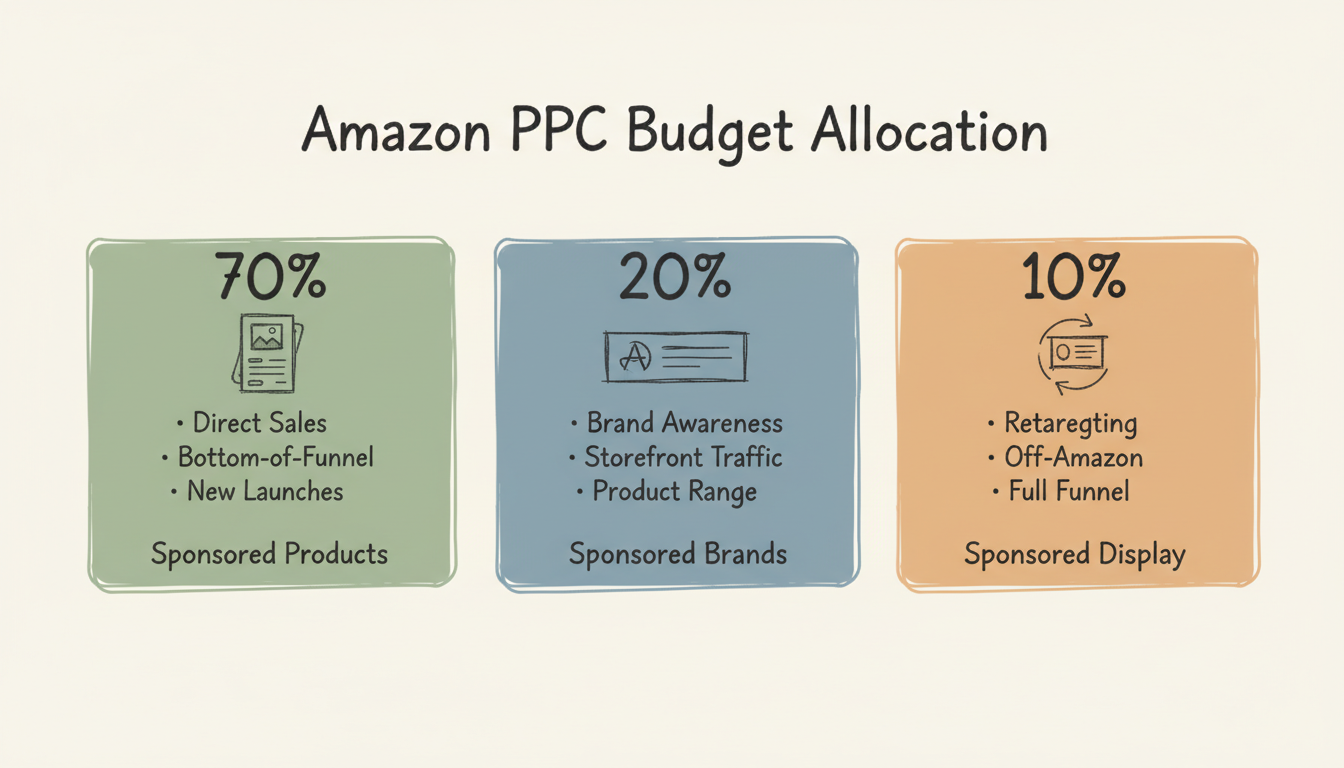
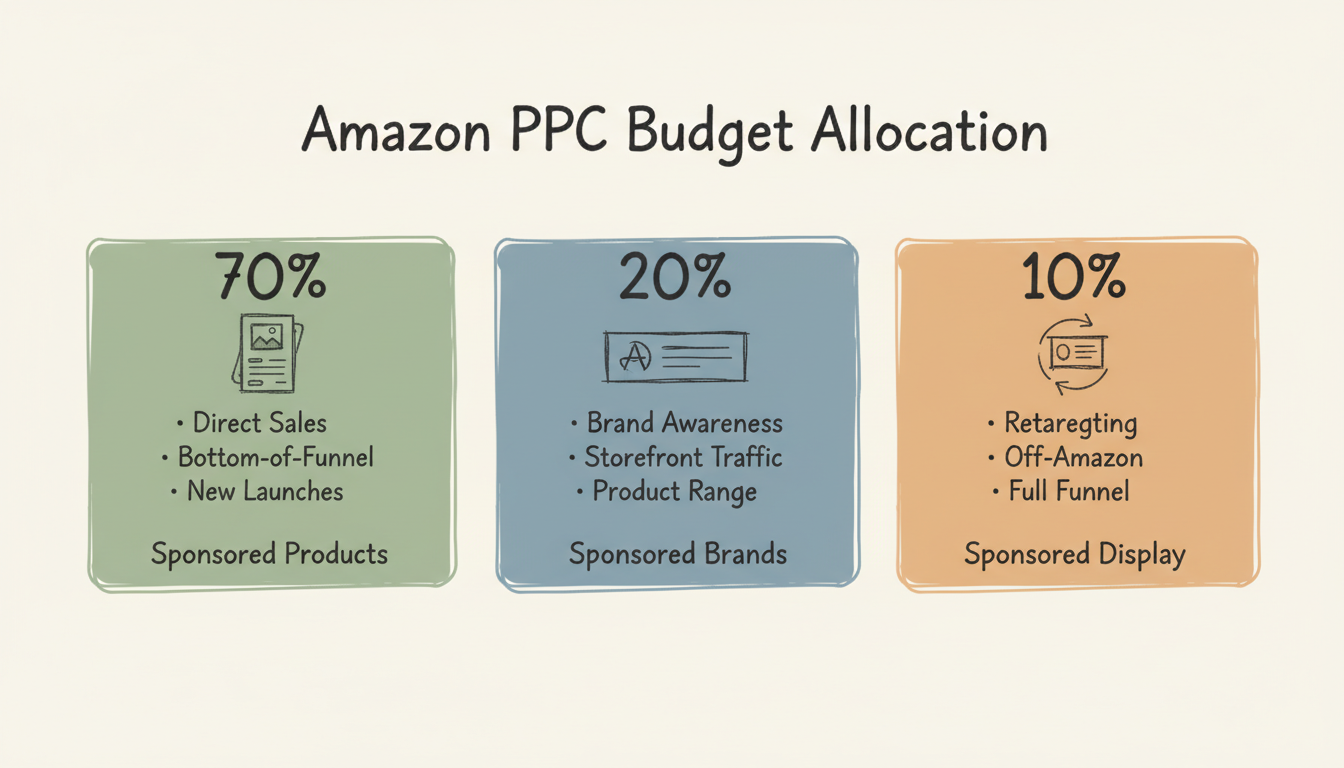
Based on SalesDuo's recommendations and industry best practices:
Ad Type | Budget Allocation | Purpose |
Sponsored Products | 70% | Direct sales, conversion |
Sponsored Brands | 20% | Brand awareness, visibility |
Sponsored Display | 10% | Retargeting, full-funnel coverage |
Amazon offers two primary targeting approaches, each with distinct advantages.
Target specific search terms shoppers use to find products.
Match types:
Best practices:
According to SalesDuo, adding negative keywords can lower Amazon PPC cost by up to 30%. These same principles apply across best ppc platforms tools beyond Amazon.
Target specific products, categories, or competitor ASINs. Your ads appear on those product detail pages.
Use cases:
Product targeting works across all three ad types, though Sponsored Products delivers the most clicks and purchases according to Amazon ranking experts.
Sponsored Display offers unique audience options:
ACoS (Advertising Cost of Sale) measures how efficiently your ads generate revenue. Lower ACoS means more profit per dollar spent—but the "right" ACoS depends on your goals and margins.
According to SellerMetrics:
SalesDuo recommends this formula:
Break-even ACoS = (Profit Margin ÷ Product Price) × 100
Example: If your margin is 30% and product sells for $50, your break-even ACoS is 30%.
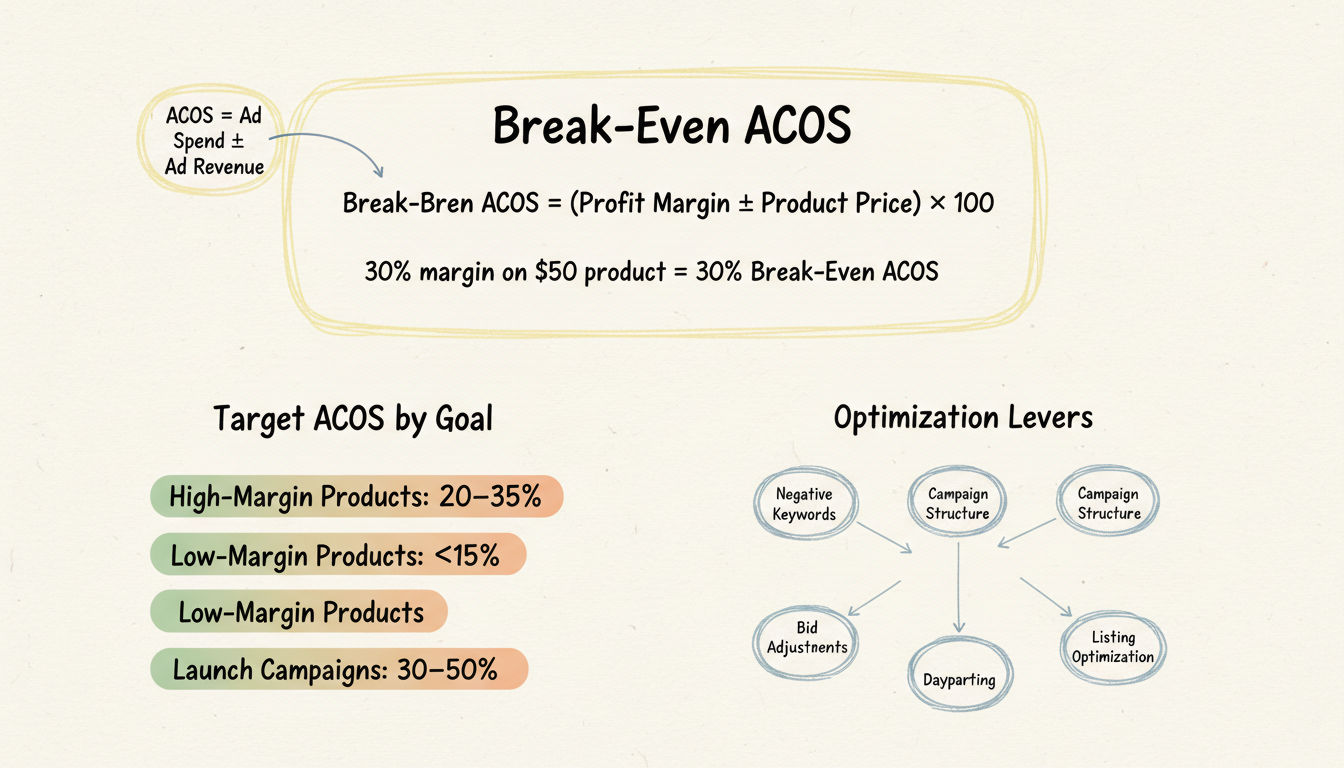
1. Aggressive negative keyword management Review search term reports weekly and add irrelevant terms as negatives.
2. Structure campaigns properly Separate branded from non-branded keywords. Keep campaigns organized for easier optimization. These ppc campaign optimization tips apply across all major advertising platforms.
3. Adjust bids based on performance Don't set and forget. Review performance weekly and adjust bids up on winners, down on losers.
4. Use dayparting Increase bids during peak shopping hours when conversion rates are highest.
5. Optimize product listings Better images, A+ content, and compelling bullet points improve conversion rates—which directly impacts ACoS.
According to SalesDuo, tracking TACoS (Total Advertising Cost of Sale) provides a more complete picture. TACoS measures ad spend against total revenue, including organic sales.
A rising ACoS with falling TACoS often indicates success—your ads are driving organic ranking improvements.
Managing Amazon PPC effectively requires significant time and expertise. Here's when to consider bringing in professional help.
1. Time constraints Amazon PPC optimization requires weekly attention. If you're spending hours on ads instead of product development and sourcing, you're limiting growth.
2. Plateaued performance If ACoS has stalled or worsened despite your efforts, fresh expertise often breaks through plateaus. Knowing how to find the best ppc agency can make the difference between stagnation and growth.
3. Scaling challenges What works at $1,000/month in ad spend often breaks at $10,000. Agencies have systems for scaling profitably.
4. Lacking technical skills Advanced tactics like dayparting, placement adjustments, and DSP advertising require specialized knowledge.
According to SalesDuo, typical management fees run 10-15% of ad spend.
Services typically included:
Factor | DIY | Agency |
Monthly spend under $1,000 | Recommended | Usually not cost-effective |
Monthly spend $3,000+ | Time-intensive | Often better ROI |
Technical expertise | Required | Provided |
Time investment | 5-10+ hours/week | 1-2 hours/week for reviews |
Start with enough budget to generate meaningful data. According to SalesDuo, most businesses spend $50-$3,000 monthly. For new sellers, begin with $500-$1,000/month across 3-5 campaigns to gather conversion data before scaling.
Healthy conversion rates typically range from 10-15% according to industry analysis. However, this varies significantly by category, price point, and competition. Focus on improving your own conversion rate over time rather than chasing arbitrary benchmarks.
Use both. Start with automatic campaigns to discover which keywords and products convert, then graduate winners to manual campaigns with tighter control. According to Amazon ranking experts, this combination provides the best balance of discovery and optimization.
By submitting this form, you agree to our Privacy Policy and Terms & Conditions.



