
February 19, 2026


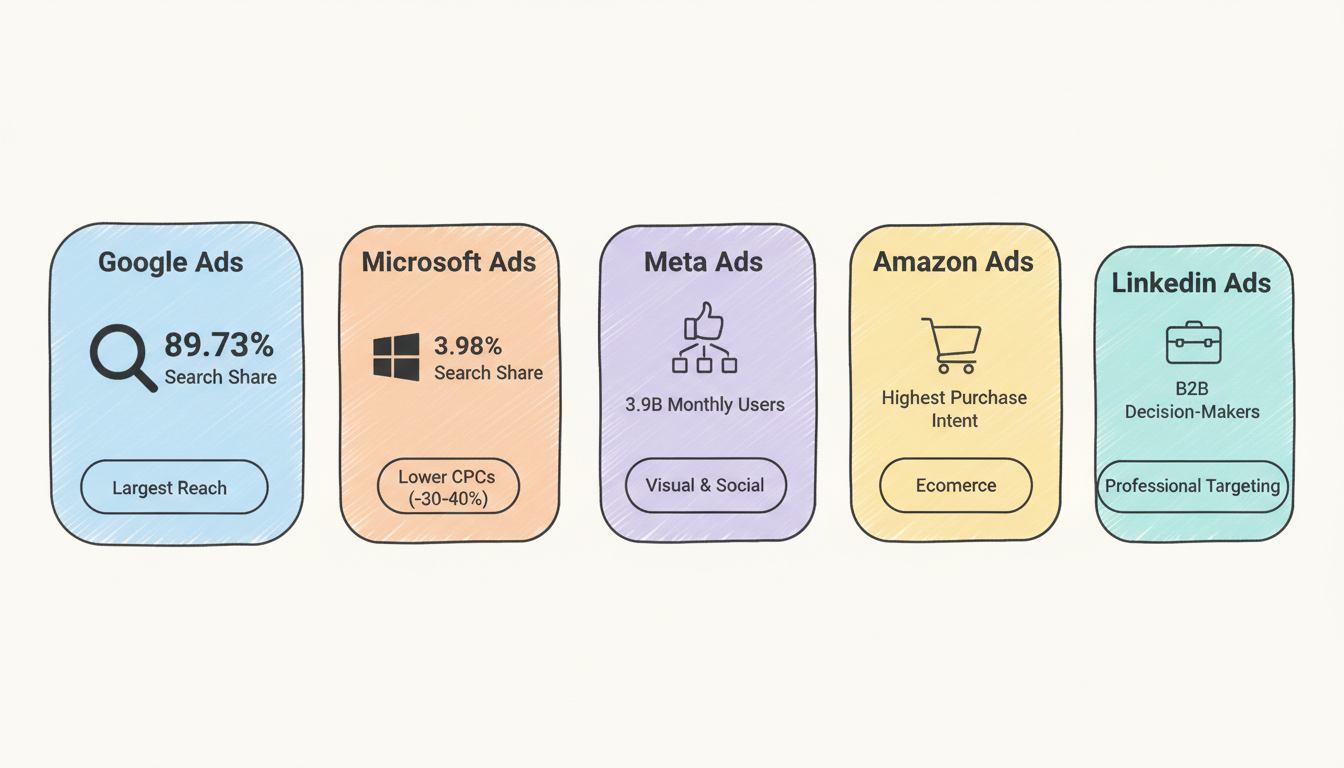
Choosing the right PPC advertising platforms can make or break your digital marketing results. With Google processing over 8.5 billion searches daily and Microsoft Advertising offering 30-40% lower CPCs, the platform you choose directly impacts your cost per acquisition and overall ROI.
In this guide, we'll compare the top PPC platforms available in 2026, review essential management tools, and help you determine which combination works best for your business goals.
The PPC landscape in 2026 is dominated by a handful of major platforms, each with distinct advantages for different business types and marketing objectives. Understanding these types of digital marketing helps you select the most effective channels for your campaigns.
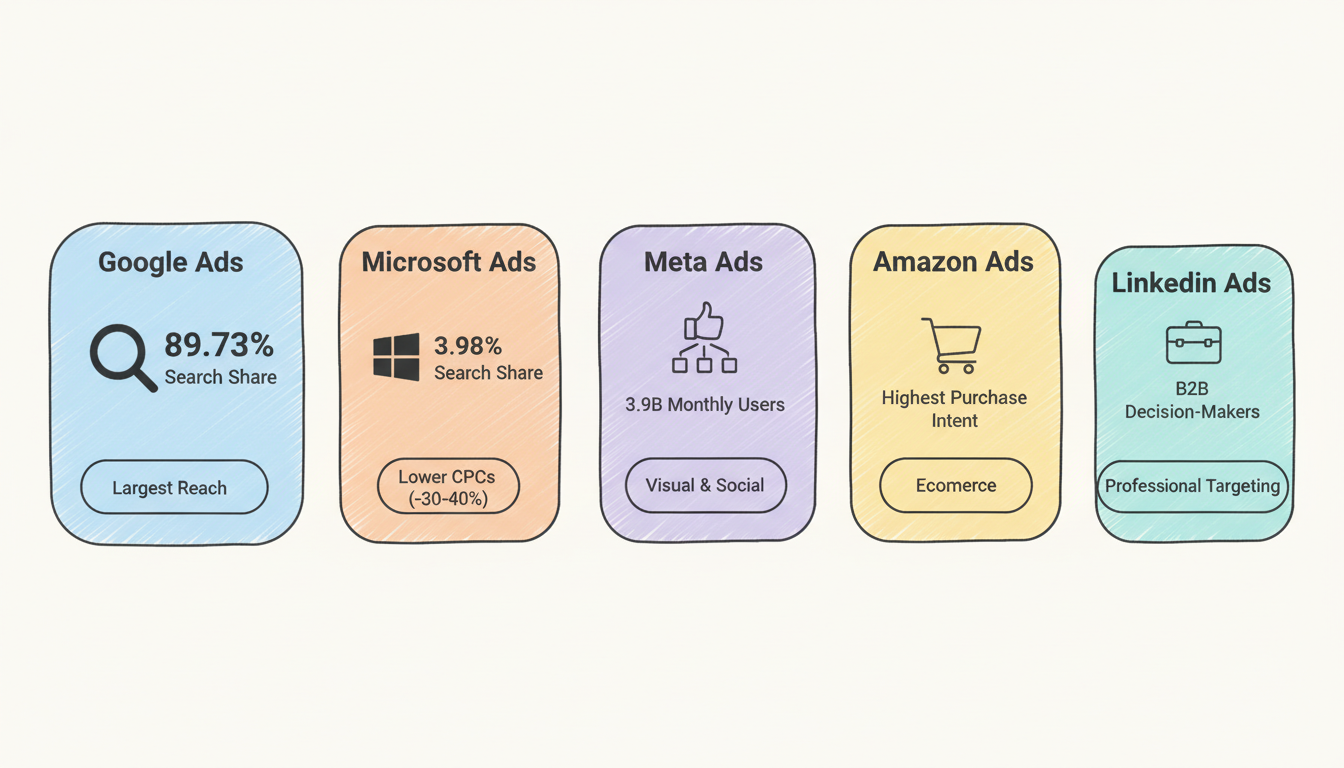
Platform | Search Market Share | Best For | Unique Advantage |
Google Ads | 89.73% | Broad reach, high-intent traffic | Largest audience, most ad formats |
Microsoft Ads | 3.98% | B2B, desktop users, lower CPCs | LinkedIn targeting integration |
Meta Ads | N/A (social) | Brand awareness, visual products | 3.9B monthly active users |
Amazon Ads | N/A (ecommerce) | Product sales, retail | High purchase intent |
LinkedIn Ads | N/A (professional) | B2B decision-makers | Professional targeting |
Microsoft Advertising (formerly Bing Ads) powers ads across Bing, Yahoo, and AOL search networks, reaching 724 million monthly searchers. For businesses looking beyond Google's competitive landscape, Microsoft offers compelling advantages for reaching specific demographics.
LinkedIn Profile Targeting: Microsoft's exclusive integration with LinkedIn data allows advertisers to target users based on:
This B2B targeting capability is unavailable on any other search platform, making Microsoft Ads particularly valuable for enterprise and professional services marketing.
Performance Max Campaigns: Microsoft recently expanded search themes to 50 per campaign, giving advertisers more control over AI-driven automation while maintaining targeting precision.
Copilot Integration: Microsoft's AI assistant helps advertisers create ads, optimize campaigns, and identify opportunities through natural language interactions. If you're new to the platform, consider reviewing our Bing ads tutorial training guide for implementation best practices.
Microsoft Ads reaches a distinctly different audience than Google:
Google Ads remains the dominant PPC platform, capturing approximately 85-90% of all search ad spend. Its massive scale and sophisticated features make it essential for most advertisers pursuing paid search advertising strategies.
Search Network: Text ads appearing on Google search results for high-intent keywords. Ideal for capturing users actively searching for your products or services.
Display Network: Visual ads across over 2 million partner sites and apps, reaching over 90% of internet users globally.
YouTube Advertising: Video ads on the platform's 2.5 billion logged-in monthly users, offering both awareness and direct response formats.
Performance Max: AI-driven campaigns that automatically optimize across all Google properties. According to Google's data, campaigns using AI Max with Smart Bidding see an average 18% increase in unique search query categories with conversions.
Beyond the two search giants, several platforms offer unique targeting and audience access.
Meta's advertising platform reaches 3.9 billion monthly active users across Facebook, Instagram, and Messenger. Understanding display advertising vs paid search helps determine when to prioritize visual platforms over search networks. Best for:
Meta's Advantage+ campaigns use machine learning for automated audience targeting and creative rotation, reducing manual optimization needs.
For ecommerce businesses, Amazon Ads captures users with the highest purchase intent. Products appear directly in search results where customers are ready to buy. Our Amazon PPC advertising seller guide covers platform-specific optimization tactics.
The premier B2B advertising platform for reaching professionals by:
Higher CPCs than other platforms but often delivers more qualified B2B leads.
Growing rapidly for reaching younger demographics through short-form video content. Best for brand awareness and viral potential rather than direct response.
Managing PPC campaigns efficiently requires specialized tools beyond the native platform interfaces. The right SEM marketing tools and software can significantly improve campaign efficiency and ROI.
Modern PPC success depends on AI-driven optimization. According to recent data, 75% of PPC professionals use generative AI at least sometimes for writing ads, and 60% use it for keyword research.
Key automation tools include:
Tool | Primary Function | Best For |
Optmyzr | Rules-based automation, scripts | Agencies, advanced advertisers |
WordStream | Simplified management, alerts | SMBs, solo practitioners |
Marin Software | Cross-platform bid management | Enterprise advertisers |
Adalysis | Automated auditing, testing | Quality score optimization |
For advertisers running campaigns across multiple platforms, unified management tools save significant time:
Adzooma: AI-driven platform offering campaign management, optimization, and automation across Google, Facebook, and Microsoft advertising. Features one-click optimizations and customizable reporting.
AdEspresso: Streamlines paid advertising across Facebook, Instagram, and Google Ads with A/B testing capabilities and detailed analytics for fine-tuning advertising strategies.
Accurate tracking and clear reporting separate profitable PPC programs from money pits.
Understanding which channels actually drive conversions has become increasingly complex with privacy restrictions. Leading attribution tools include:
AgencyAnalytics: Built specifically for agencies with over 75 integrations covering SEO, social media, and PPC. Features automated reports and client login portals.
DashThis: Automated reporting with customizable templates for presenting PPC performance to clients or stakeholders.
MonsterInsights: Connects WordPress sites to Google Analytics 4, automatically tracking conversions and feeding data to AI tools for optimization.
Automation in 2026 has moved from optional to essential. The platforms themselves now require AI-driven approaches for optimal performance.
Google Performance Max: Uses machine learning to show ads across Google's entire network, automatically optimizing based on your conversion goals and audience signals.
Microsoft Copilot: AI assistant integrated into Microsoft Advertising for campaign creation, optimization recommendations, and natural language querying of performance data.
Meta Advantage+: Automated audience targeting and creative optimization that reduces manual campaign setup while improving performance.
Beyond native tools, specialized automation platforms offer additional capabilities:
Selecting the optimal PPC platform mix depends on several factors specific to your business. Whether you're exploring PPC for beginners or refining existing campaigns, understanding your audience is critical.
Start with your audience:
Consider your budget:
When evaluating PPC agency pricing, understand that platform selection directly impacts overall costs and expected ROI.
Match platform to goals:
Goal | Primary Platform | Secondary Platform |
B2B lead generation | Microsoft Ads | LinkedIn Ads |
Ecommerce sales | Google Ads | Amazon Ads |
Brand awareness | Meta Ads | YouTube (via Google) |
Local services | Google Ads | Microsoft Ads |
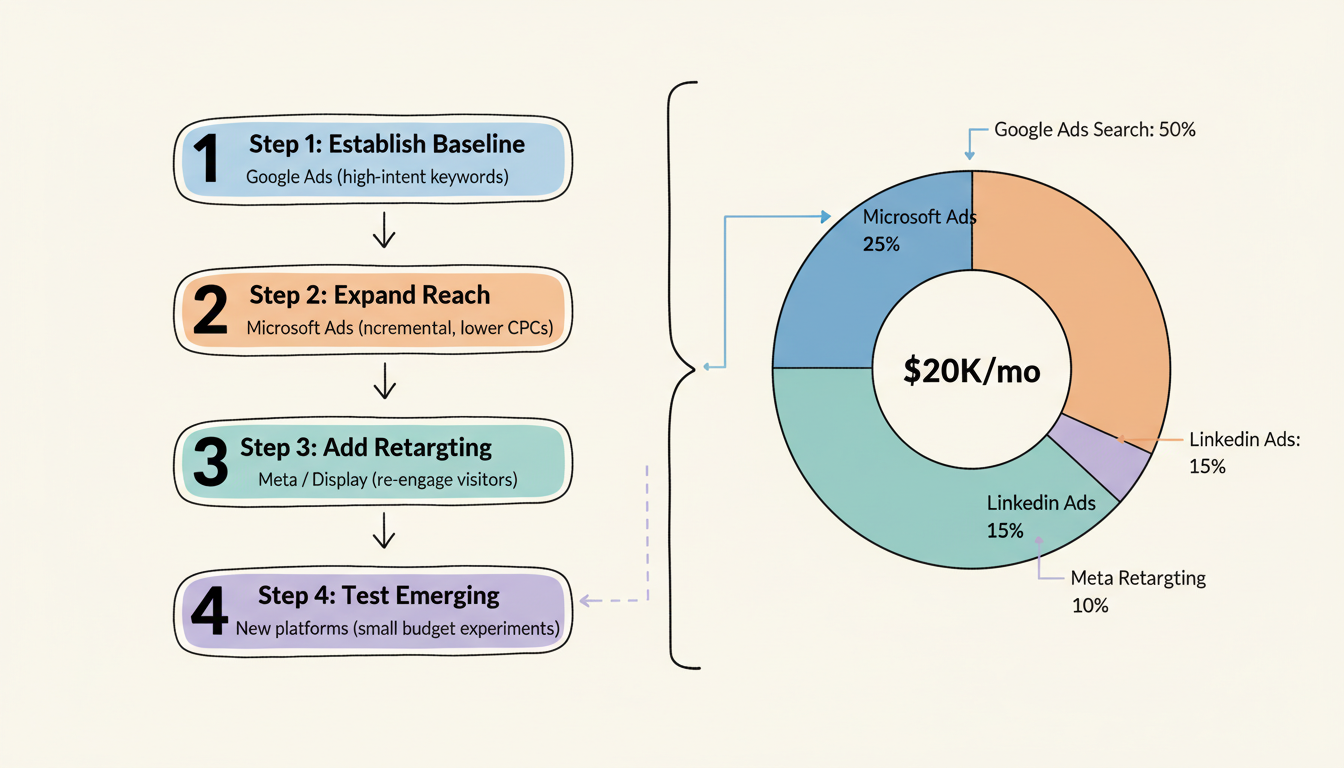
Most businesses achieve best results by diversifying across platforms:
According to industry experts, multi-channel PPC is no longer optional in 2026. Consumers interact with brands across multiple touchpoints before converting. Developing comprehensive paid search advertising strategies requires coordinating efforts across these channels.
For a B2B software company with $20,000/month PPC budget:
Google Ads offers the most educational resources and largest advertiser community, making it accessible for beginners. However, Microsoft Ads provides a simpler interface with lower competition, making it a good starting point for those with limited budgets. Start where your audience is most active rather than defaulting to the largest platform.
Most businesses should start with at least $1,000-2,000/month per platform to gather sufficient data for optimization. Below this level, data collection takes too long for effective learning. Scale budget based on performance metrics rather than arbitrary targets.
Yes, and most advertisers should. Microsoft Ads reaches audiences that don't use Google heavily and typically offers 30-40% lower CPCs. You can import existing Google Ads campaigns directly into Microsoft Advertising to simplify setup. Our guide on how to advertise on Bing walks through the import process.
Professional agencies typically use a combination of: bid management platforms (Optmyzr, Marin), reporting tools (AgencyAnalytics, DashThis), attribution software (Northbeam, Triple Whale), and automation tools for scaling optimizations across multiple client accounts.
By submitting this form, you agree to our Privacy Policy and Terms & Conditions.



