What is Paid Search Advertising? Complete Guide

Paid search advertising puts your business at the top of search engine results pages exactly when potential customers are looking for what you offer. Unlike organic search results that take months to achieve, paid search delivers immediate visibility and measurable results.

In this guide, you'll learn what paid search advertising is, how it works, and how to get started with your first campaigns.

Definition: What is Paid Search Advertising?

Paid search advertising is a digital marketing model where advertisers pay to display ads within search engine results. When someone searches for keywords you're targeting, your ad can appear at the top or bottom of the results page—marked with an "Ad" or "Sponsored" label.

Paid search is also known as:

  • PPC (Pay-Per-Click): You only pay when someone clicks your ad
  • SEM (Search Engine Marketing): The broader practice of marketing through search engines
  • Search Ads: Advertisements that appear alongside search results

How Paid Search Differs from Organic Search

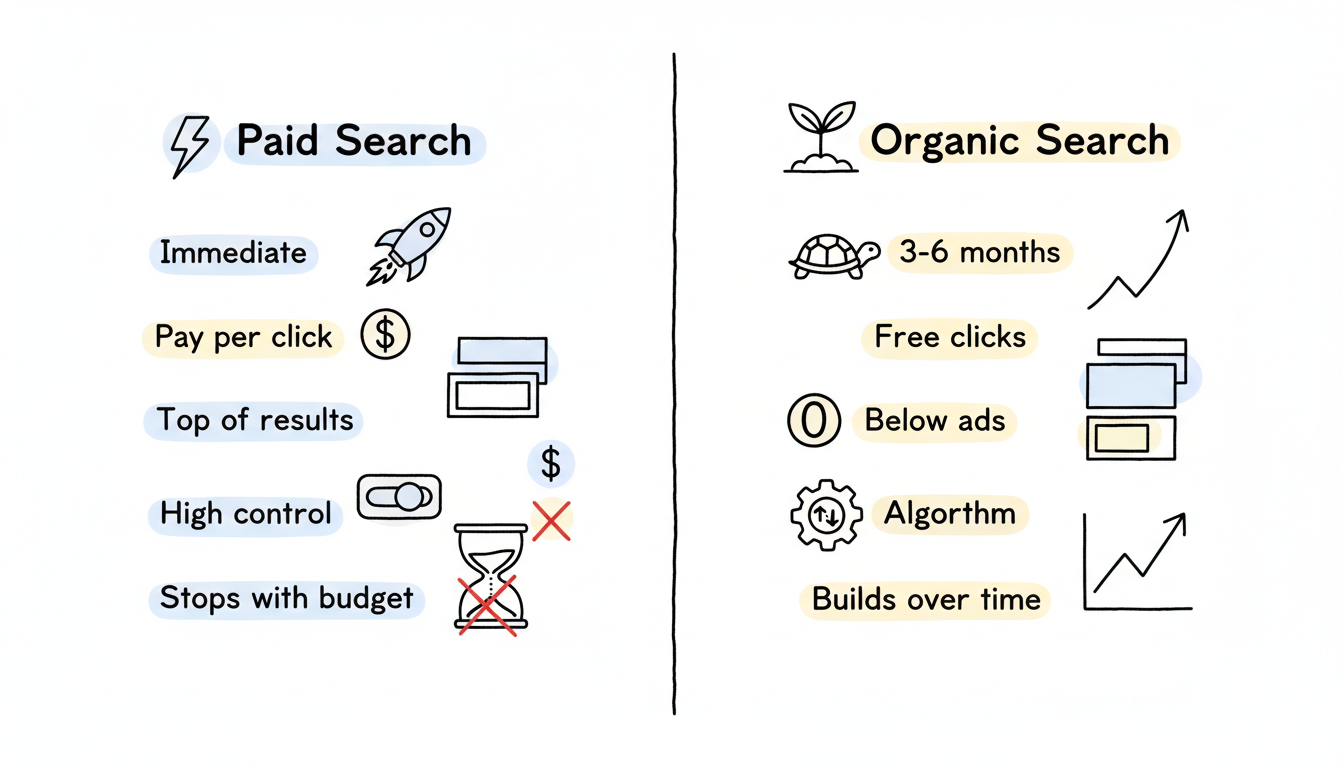
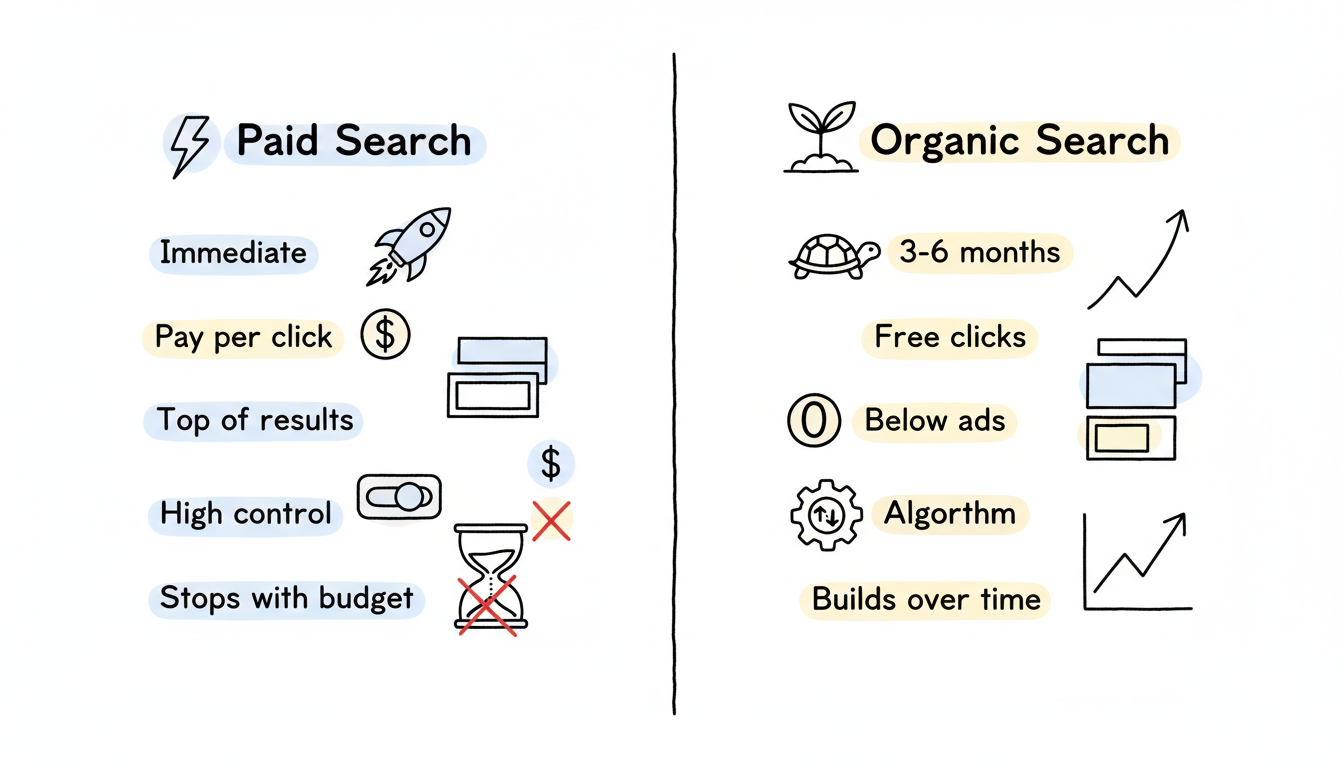
Aspect Paid Search Organic Search (SEO)
Cost Pay per click Free clicks (after investment)
Speed Immediate visibility Takes 3-6+ months
Position Above organic results Below paid ads
Control High (targeting, budget) Limited (algorithm-dependent)
Longevity Stops when budget stops Builds over time

Most successful businesses use both approaches—paid search for immediate results and testing, organic search for long-term sustainable growth.

How Paid Search Advertising Works

Understanding the mechanics behind paid search helps you make smarter advertising decisions.

The Auction System

Every search triggers a real-time auction that happens in milliseconds:
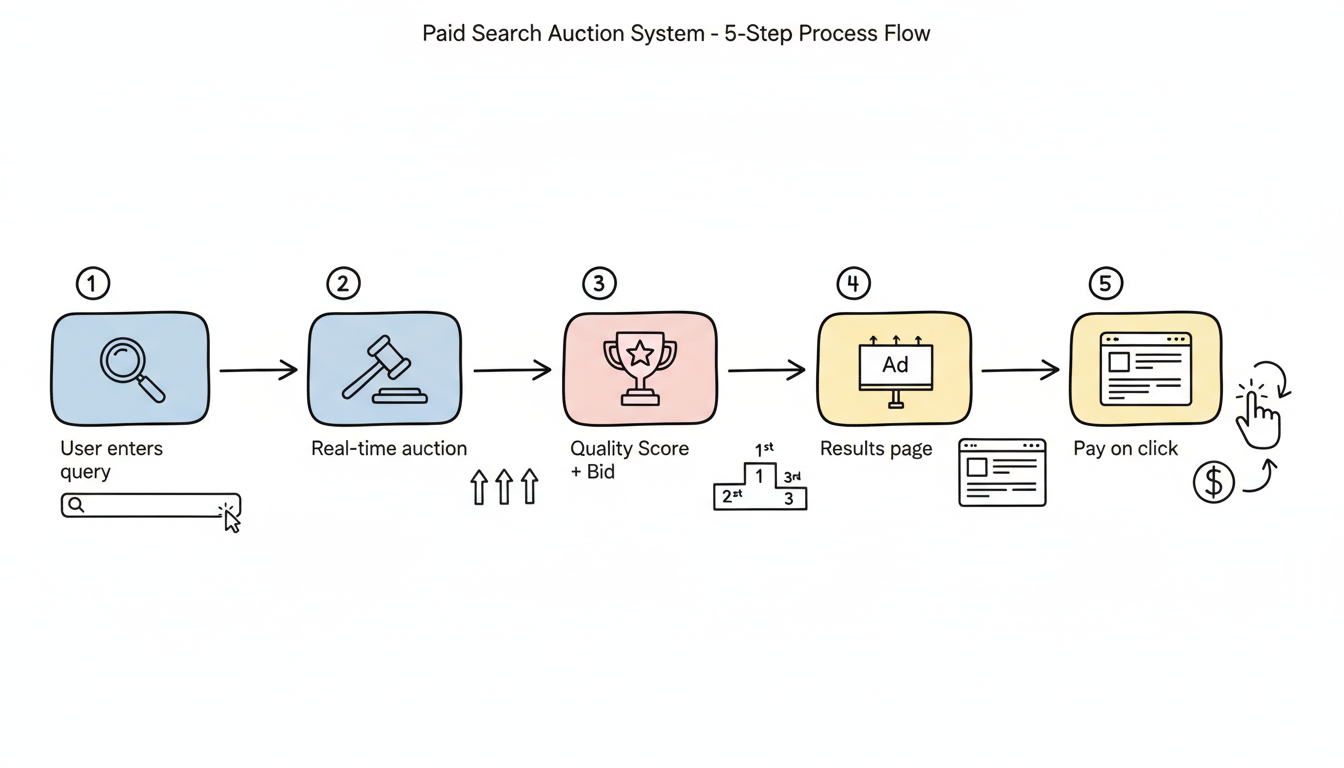
  1. User searches: Someone enters a query like "accounting software"
  2. Auction begins: Advertisers targeting that keyword enter the auction
  3. Winners determined: The platform calculates which ads to show and in what order
  4. Ads displayed: Winning ads appear on the search results page
  5. Payment triggered: Advertiser pays only when their ad gets clicked

What Determines Ad Position?

Your ad's position depends on multiple factors, not just your bid:

  • Bid amount: Maximum you're willing to pay per click
  • Quality Score: Platform's rating of your ad's relevance and quality
  • Expected click-through rate: How likely users are to click your ad
  • Landing page experience: How useful your destination page is
  • Ad relevance: How closely your ad matches the search intent

Higher Quality Scores can help you achieve better positions while paying less than competitors with lower scores.

The Pay-Per-Click Model

PPC pricing typically ranges from $0.01 to several dollars per click, depending on:

  • Industry competitiveness: Legal, insurance, and finance keywords cost more
  • Keyword intent: High-purchase-intent keywords command premium prices
  • Geographic targeting: Major metros typically cost more than rural areas
  • Platform: Different platforms have different pricing dynamics

Benefits of Paid Search Advertising

Paid search offers unique advantages that other marketing channels can't match.

Immediate Results

Unlike SEO that requires months of effort, paid search campaigns can generate traffic within hours of launch. This makes it ideal for:

  • Product launches
  • Seasonal promotions
  • Market testing
  • Quick lead generation

Precise Targeting

Paid search lets you reach exactly who you want:

  • Keywords: Target specific search terms your customers use
  • Location: Show ads only in areas you serve
  • Demographics: Target by age, income, and other factors
  • Device: Customize campaigns for mobile vs desktop users
  • Time: Display ads during business hours or peak buying times

Measurable Performance

Every aspect of paid search is trackable:

  • Impressions and clicks
  • Cost per click and cost per conversion
  • Return on ad spend (ROAS)
  • Revenue attributed to specific keywords

This data-driven approach allows continuous optimization and clear ROI calculation.

Budget Control

You decide exactly how much to spend:

  • Set daily or monthly budget caps
  • Pause campaigns instantly
  • Adjust bids based on performance
  • Scale up or down as needed

Major Paid Search Platforms

While Google dominates, multiple platforms offer paid search advertising opportunities.

Google Ads

Google controls the largest share of search traffic, making Google Ads the primary paid search platform for most advertisers. Features include:

  • Largest reach and search volume
  • Advanced automation and AI-powered bidding
  • Search, Display, Shopping, and Video campaign types
  • Extensive audience targeting options

Microsoft Advertising

Microsoft powers search on Bing, Yahoo, and AOL, reaching a different audience segment. Key advantages:

  • Lower CPCs: Typically 30-40% less than Google
  • Less competition: Fewer advertisers bidding on keywords
  • Unique demographics: Older, more affluent audience
  • LinkedIn integration: B2B targeting by job title, company, and industry

Other Platforms

  • Amazon Ads: Essential for ecommerce sellers on Amazon
  • Apple Search Ads: For app promotion in the App Store
  • Retail media networks: Walmart, Target, and others for product advertising

Getting Started with Paid Search

Here's how to launch your first paid search campaign.

Step 1: Define Your Goals

Before creating ads, clarify what success looks like:

  • Leads: Form submissions, phone calls, demo requests
  • Sales: Online purchases and transactions
  • Awareness: Website visits, video views
  • App downloads: Mobile application installs

Your goals determine campaign structure, bidding strategy, and how you measure success.

Step 2: Choose Your Platform

Start with the platform that best matches your audience:

  • Google Ads: Best for most businesses due to search volume
  • Microsoft Advertising: Good for B2B and reaching older demographics
  • Both: Most advertisers benefit from running on multiple platforms

Step 3: Research Keywords

Find the search terms your customers actually use:

  • Start with your products and services
  • Use keyword research tools (built into ad platforms)
  • Consider search intent (informational vs. purchase-ready)
  • Look at competitor keywords

Step 4: Create Compelling Ads

Write ads that stand out and drive clicks:

  • Headlines: Include keywords and highlight benefits
  • Descriptions: Explain your value and include calls-to-action
  • Extensions: Add sitelinks, phone numbers, and additional information

Step 5: Set Up Conversion Tracking

Before launching, implement tracking to measure results:

  • Install conversion tracking codes
  • Track all valuable actions (forms, calls, purchases)
  • Connect to analytics for deeper insights

Without proper tracking, you can't optimize effectively or prove ROI.


Frequently Asked Questions

How much does paid search advertising cost?

Costs vary widely by industry and competition. Small businesses typically invest $100-$10,000 per month in PPC, plus management fees if using an agency ($100-$5,000/month). You control your budget and can start small while learning.

Is paid search better than SEO?

Neither is universally better—they serve different purposes. Paid search delivers immediate traffic but stops when you stop paying. SEO takes longer but builds sustainable, free traffic over time. Most successful businesses invest in both.

How long does it take to see results from paid search?

You can see traffic and leads within hours of launching. However, optimization for best results typically takes 30-90 days as you gather data and refine targeting. Expect consistent performance patterns after 2-3 months of active management.

Can I do paid search myself?

Yes, the platforms are designed for self-service. For smaller budgets (under $2,000/month), self-management can work well. For larger budgets or if you'd rather focus on your business, professional management often delivers better results through expertise and optimization.


Key Takeaways

  • Paid search advertising displays ads in search results when users search for your keywords
  • You pay per click, with costs varying by industry and competition
  • Immediate visibility is the primary advantage over organic search
  • Google Ads dominates but Microsoft Advertising offers lower costs and unique B2B targeting
  • Quality Score matters—better scores mean lower costs and better positions
  • Start with clear goals and proper conversion tracking
  • Most businesses benefit from combining paid search with organic SEO

Ready to launch your first paid search campaign? Talk to our experts about building a search advertising strategy that drives real results.

Contact us | Get a free consultation

Get started with Stackmatix!

Get Started

Share On:

blog-facebookblog-linkedinblog-twitterblog-instagram

Join thousands of venture-backed founders and marketers getting actionable growth insights from Stackmatix.

Thank you! Your submission has been received!
Oops! Something went wrong while submitting the form.

By submitting this form, you agree to our Privacy Policy and Terms & Conditions.

Related Blogs