
February 19, 2026


Last Updated: January 2026
Ask Engine Optimization—also commonly called Answer Engine Optimization (AEO)—refers to optimizing your content for the AI-powered platforms where users ask questions and receive direct answers. As search evolves from "type and browse" to "ask and receive," understanding how to appear in these AI-generated responses becomes essential for digital visibility.
This guide explains what is AEO marketing and how to implement it effectively in 2026.
Ask Engine Optimization is the practice of structuring digital content so AI platforms cite and recommend it when users ask questions. The term reflects how search behavior has shifted—users now ask AI assistants questions conversationally rather than entering keyword queries into search boxes.
Major "ask engines" include:
When users ask these platforms questions, the AI generates answers by synthesizing information from sources it considers trustworthy. Ask Engine Optimization determines whether your content becomes one of those cited sources.
The term emphasizes the fundamental behavioral shift: users now ask questions rather than search keywords.
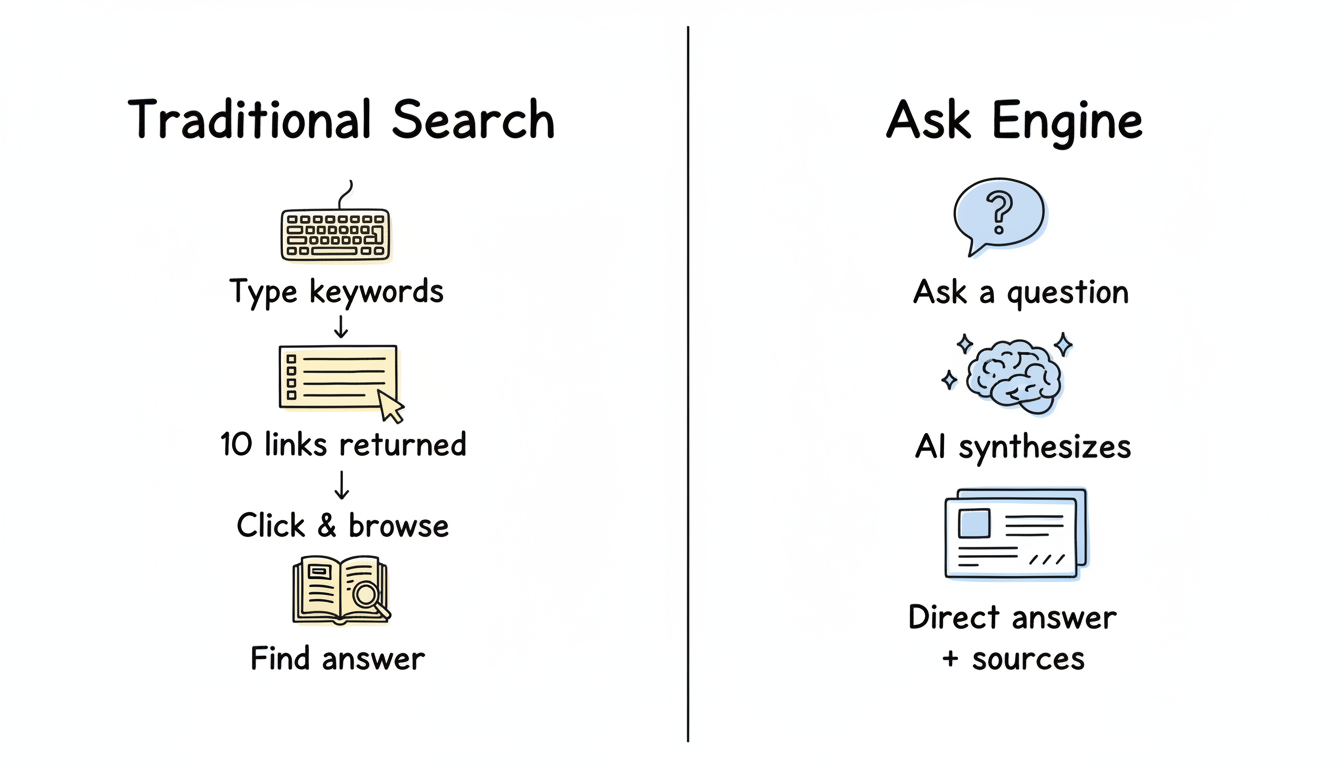
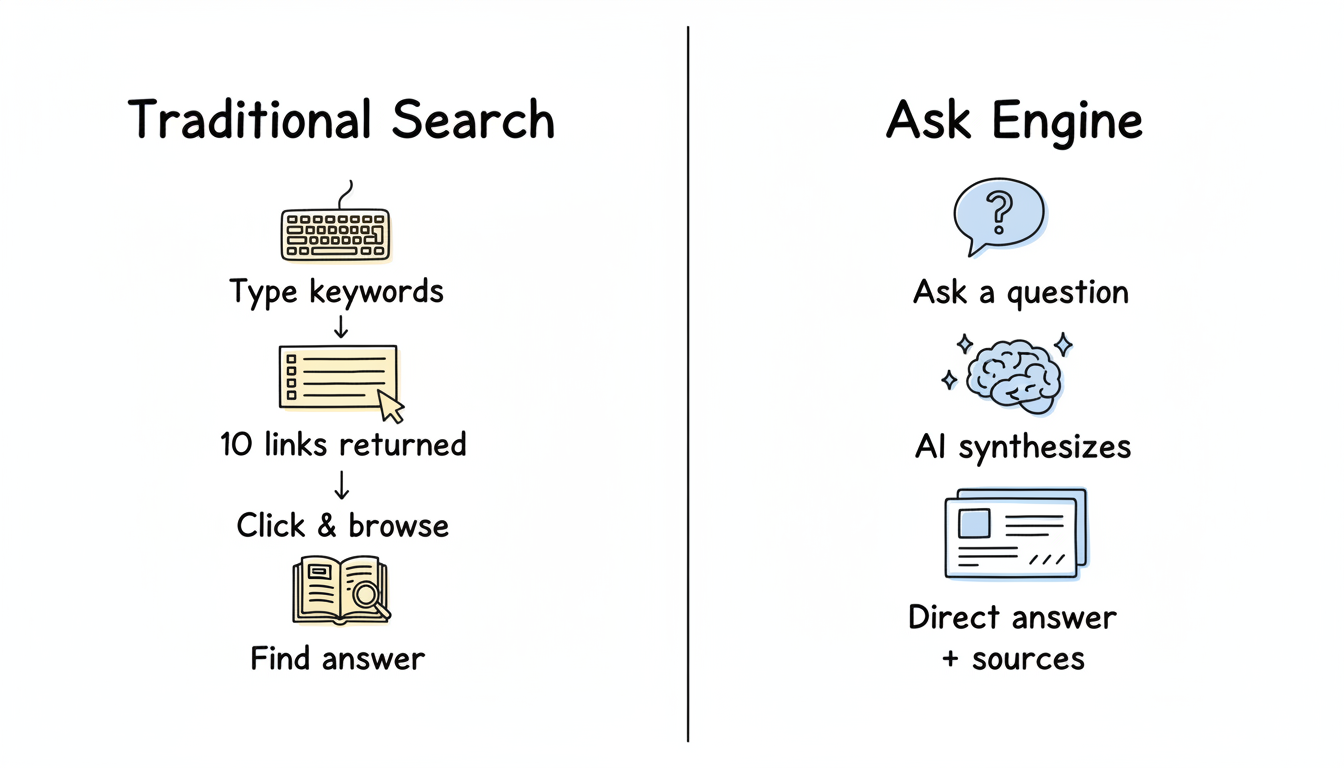
Traditional Search Behavior: User types "best running shoes" → receives list of 10 links → clicks and browses → finds answer
Ask Engine Behavior: User asks "What are the best running shoes for marathon training?" → receives synthesized answer with cited sources → gets information directly
This shift from searching to asking changes what content succeeds. Ask engines don't rank pages—they cite sources. They don't reward keyword optimization—they reward clear, authoritative answers.
Understanding your audience's questions—not just their keywords—becomes the foundation of effective Ask Engine Optimization.
AI platforms evaluate potential sources through several criteria:
Ask engines favor content that directly answers specific questions. Content must:
AI systems assess whether content comes from credible sources:
Building organization schema knowledge graph connections strengthens these authority signals across platforms.
AI systems parse structured content more effectively:
Recent or recently-updated content earns citation preference. Display clear publication dates and update content regularly to signal currency.
Identify what questions your audience actually asks AI platforms. Methods include:
Document questions where your expertise provides genuine value.
Reorganize content around questions rather than keywords:
Before: Generic topic headings with buried answers After: Question-format headings with immediate answers
Example transformation:
Before:
## Features of Project Management Software
Project management software includes various features...
After:
## What Features Should Project Management Software Have?
Essential project management software features include task tracking,
team collaboration, timeline management, and reporting dashboards.
Here's what each provides...
Ask engines extract portions of content for their answers. Make extraction easy:
Strengthen the expertise signals AI systems evaluate:
Keep content current through systematic updates:
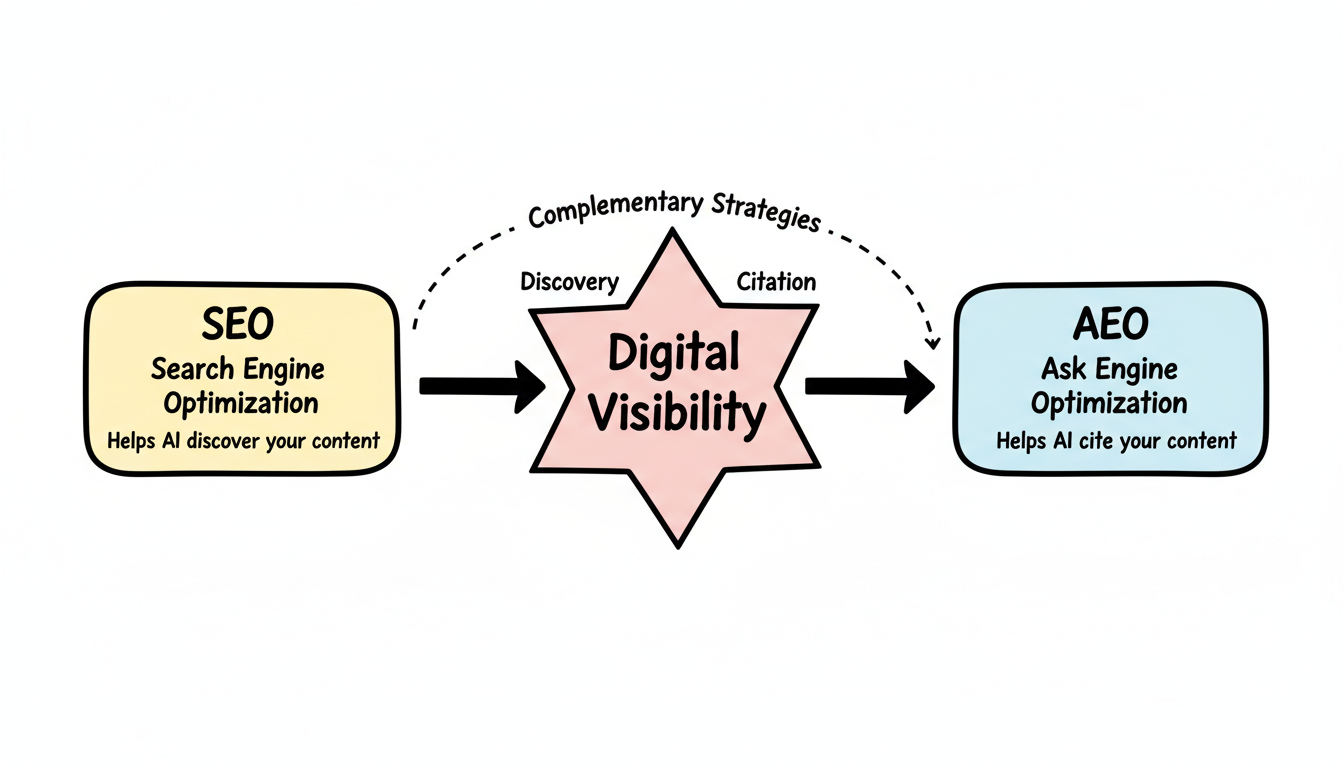
Ask Engine Optimization complements rather than replaces traditional SEO. Understanding the SEO AEO GEO comparison helps clarify how these strategies work together:
Aspect | SEO | Ask Engine Optimization |
Goal | Rank in search results | Get cited in AI answers |
Success metric | Position and traffic | Citation frequency and accuracy |
Content focus | Keyword optimization | Question answering |
Authority signals | Backlinks primarily | Multi-platform presence |
User outcome | Click to website | Information delivery |
Both matter for comprehensive digital visibility. Strong SEO helps AI systems discover your content; Ask Engine Optimization ensures they select it for citation.
Track these indicators:
Direct Metrics:
Indirect Metrics:
Several tools now offer AI visibility tracking: Rankscale, Otterly, Peec AI, and others monitor citations across major ask engines.
Ignoring question format: Content optimized for keywords but not questions misses ask engine criteria.
Burying answers: Lengthy introductions before answering questions reduce citation likelihood.
Neglecting freshness: Outdated content loses citation priority regardless of quality.
Website-only thinking: Ask engines evaluate authority across platforms, not just your site.
Treating it as separate from SEO: Ask Engine Optimization works best integrated with comprehensive SEO strategy.
As AI assistants become default information sources for more users, Ask Engine Optimization grows in importance. Voice interfaces, multimodal AI, and increasingly sophisticated answer engines will expand where optimization matters. Learn more about AEO future trends shaping this evolution.
The fundamentals remain consistent: provide clear answers to real questions, demonstrate genuine expertise, and maintain content quality that AI systems recognize as authoritative.
By submitting this form, you agree to our Privacy Policy and Terms & Conditions.



