February 19, 2026



Answer engine optimization continues evolving rapidly as AI search platforms mature and user behaviors shift. Understanding emerging trends helps organizations prepare strategies that remain effective through ongoing changes. This guide examines the AEO developments expected through 2026-2027 and their implications for digital marketing strategy.
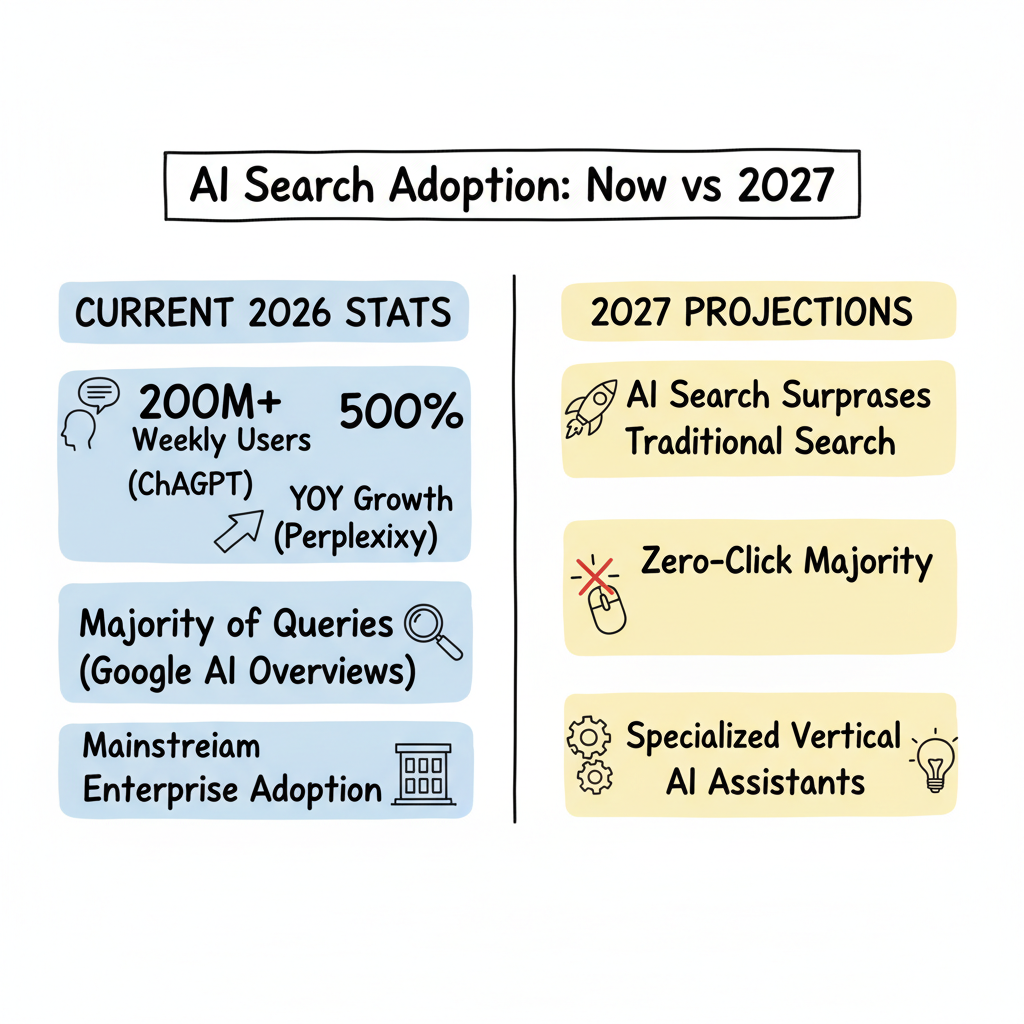
AI search adoption accelerates faster than most predictions anticipated.
Current adoption indicators (2026):
Projected trajectory:
Organizations not investing in AEO risk declining visibility as AI intermediates more information discovery.
Several trends shape the near-term AEO landscape.
AI platforms increasingly process and cite multiple content formats.
Emerging capabilities:
Optimization implications:
Organizations limited to text content may miss citation opportunities as multimodal AI matures.
AI platforms increasingly prioritize current information over static knowledge. Understanding how Google AI Overview works internationally reveals how different platforms handle real-time information across markets.
Trend drivers:
Strategic adaptations:
Freshness becomes a primary citation factor for many query types.
AI systems increasingly customize responses based on user context.
Personalization dimensions:
AEO implications:
Single-answer content may yield to segmented, context-aware approaches. Organizations implementing GEO optimization tactics can better prepare for geographic personalization in AI responses.
AI agents performing tasks on behalf of users represent an emerging channel.
Agent use cases:
Optimization considerations:
Agent-friendly content may become a distinct optimization category.
Major AI platforms will evolve in distinct directions.
OpenAI's platform continues expanding capabilities. Understanding how to rank on ChatGPT becomes increasingly important as the platform expands its citation sources.
Expected developments:
Optimization focus: Build comprehensive authority content that serves both training data influence and real-time citation.
Google deepens AI integration across search products.
Expected developments:
Optimization focus: Maintain strong traditional SEO while optimizing answer formatting for AI extraction.
Challenger platforms continue innovating.
Expected developments:
Optimization focus: Monitor emerging platforms and adapt quickly to new citation opportunities.
Prepare for AEO evolution with forward-looking strategies.
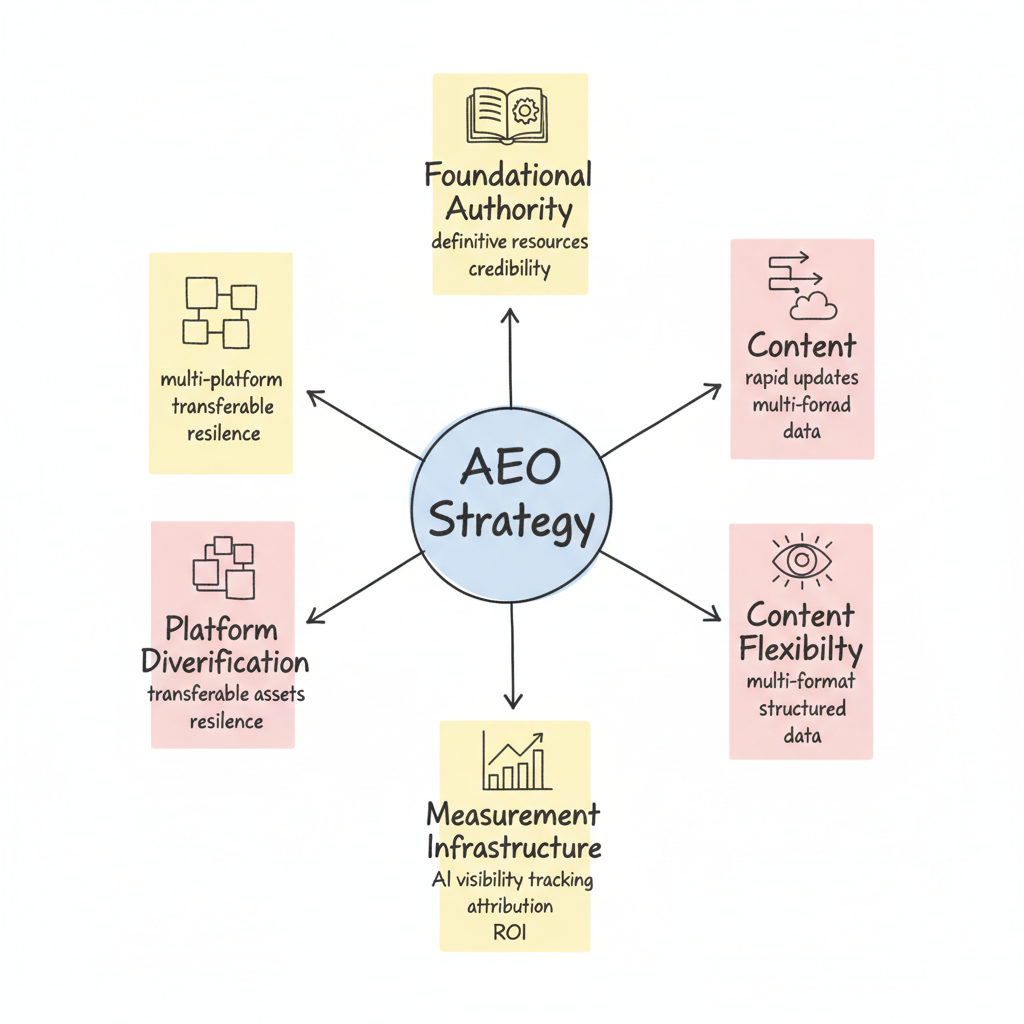
Long-term authority building becomes increasingly important.
Authority investments:
Authority advantages compound over time as AI systems learn source reliability patterns. Building entity-based SEO and topical authority creates foundational signals that AI platforms increasingly rely on.
Prepare for changing content requirements.
Flexibility capabilities:
Organizations with agile content operations adapt faster to platform changes.
Measurement capabilities will evolve alongside platforms.
Infrastructure investments:
Early measurement investment enables data-driven optimization as the field matures.
Avoid over-reliance on any single AI platform.
Diversification approach:
Platform market share will shift—diversified strategies provide resilience.
AEO prediction inherently involves uncertainty.
Managing uncertainty:
Organizations treating AEO as static face obsolescence risk—continuous adaptation is required.
AEO increasingly integrates with broader marketing strategy.
Integration trends:
Siloed AEO programs yield to integrated approaches where AI visibility supports holistic marketing objectives.
Organizations need evolving capabilities for AEO success.
Emerging skill requirements:
AEO expertise becomes a core marketing competency rather than specialist function.
AEO complements rather than replaces SEO. Traditional search remains significant, and many SEO fundamentals (technical optimization, content quality, authority building) apply directly to AEO. Expect integration rather than replacement—effective strategies address both.
Rapidly. Strategies effective in early 2026 may require adjustment by mid-year. Major platform updates occur quarterly or more frequently. Organizations need ongoing monitoring and adaptation rather than static approaches.
No. Early investment builds advantages that compound over time. Organizations establishing AI visibility now gain authority and learning that later entrants must work harder to achieve. The cost of waiting exceeds the cost of early experimentation.
By submitting this form, you agree to our Privacy Policy and Terms & Conditions.