February 19, 2026


GEO optimization tactics turn strategy into action. While understanding Generative Engine Optimization principles matters, execution determines results. This guide provides specific, actionable tactics you can implement immediately to improve brand visibility across ChatGPT, Perplexity, Google AI Overviews, and other AI search platforms.
Each tactic includes clear implementation steps and explains why it works for AI citation optimization.
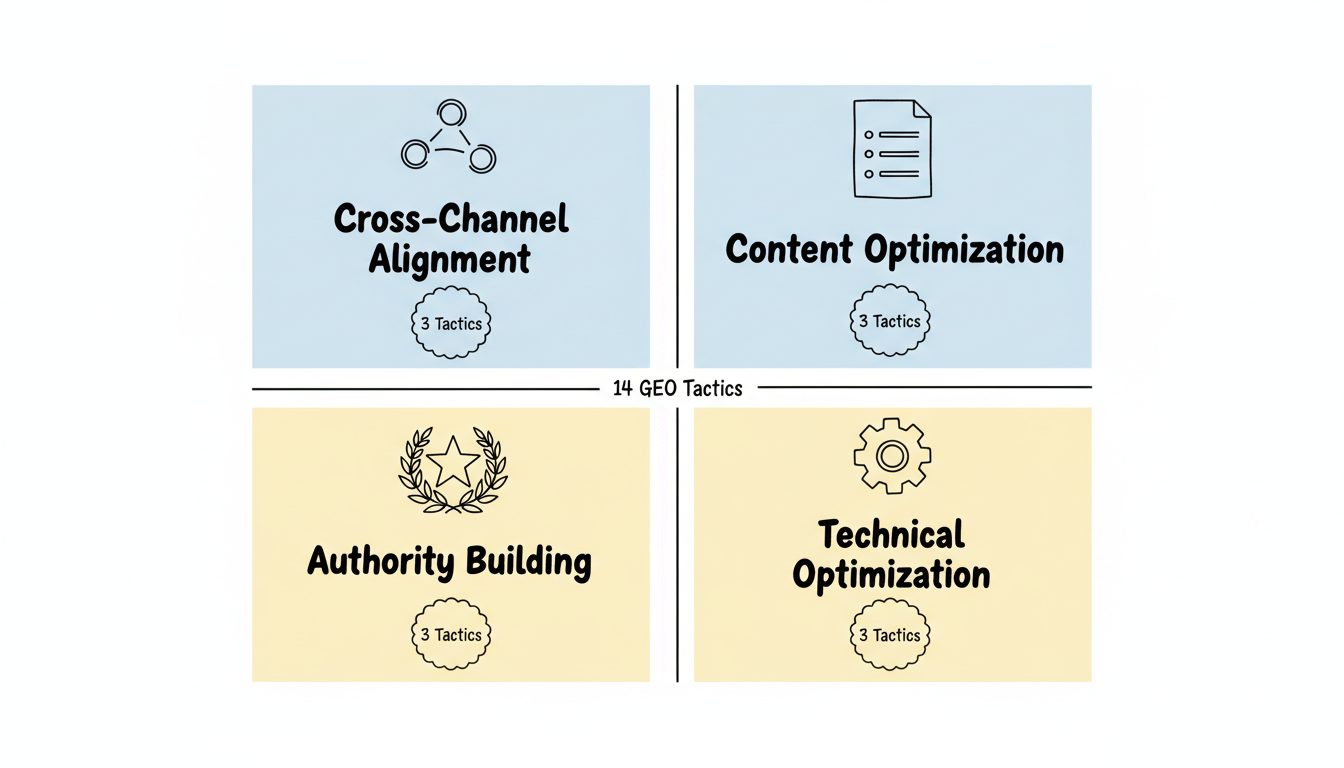
Effective GEO requires coordinated tactics across multiple channels. AI systems learn about brands by observing patterns across the web.
AI systems build brand understanding from multiple sources. Inconsistent messaging creates confusion that reduces citation likelihood.
Implementation steps:
Why it works: AI systems gain confidence citing brands they understand clearly. Consistency reinforces your entity identity.
Media mentions amplify content authority. When you publish important content, coordinate PR outreach to generate external validation.
Implementation steps:
Why it works: External mentions from authoritative sources signal to AI systems that your brand deserves citation.
Research shows Reddit appears in approximately 40% of AI citations. Strategic community presence influences AI responses.
Implementation steps:
Why it works: AI systems weight community discussion and user-generated endorsements as authenticity signals.
How you structure and present content directly affects extraction and citation likelihood.
AI systems extract specific passages as citations. Intentionally create quotable blocks throughout content.
Implementation steps:
Why it works: Ready-to-cite statements reduce AI effort in synthesizing answers, increasing selection likelihood.
AI systems frequently cite comparison content when users ask about alternatives or options. When evaluating different AI search platforms, creating structured comparison tables helps both users and AI systems understand key differences.
Implementation steps:
Why it works: Structured comparisons provide exactly what AI systems need to answer comparison questions.
FAQ content matches conversational AI query patterns directly.
Implementation steps:
Why it works: Question-answer pairs align with how users query AI systems and how AI systems structure responses.
AI systems prioritize authoritative sources. These tactics build the signals that earn citation priority.
Original data gives AI systems unique information to cite.
Implementation steps:
Why it works: AI systems cite original research because it provides information unavailable elsewhere. Learning from AEO success stories and case studies can help you design research that resonates with AI systems.
Being cited by respected publications builds authority AI systems recognize.
Implementation steps:
Why it works: External expert appearances signal to AI systems that you're a credible source worth citing.
Wikipedia and Google's Knowledge Graph influence how AI systems understand entities.
Implementation steps:
Why it works: Knowledge base presence helps AI systems confidently identify and cite your brand.
Technical factors determine whether AI systems can access and process your content.
AI crawlers need explicit access permission. Many sites inadvertently block them.
Implementation steps:
Why it works: Blocked crawlers mean zero visibility on those platforms regardless of content quality.
Schema helps AI systems understand your content structure and entity relationships. Proper implementation of structured data is essential for AI search content structure optimization.
Implementation steps:
Why it works: Structured data provides explicit signals reducing AI interpretation effort.
Some AI systems use llms.txt files (similar to robots.txt) for content guidance.
Implementation steps:
Why it works: Direct guidance helps AI systems understand your content organization and priorities.
Continuous improvement requires tracking what works.
You can't improve what you don't measure.
Implementation steps:
Why it works: Baselines reveal improvement opportunities and enable progress tracking. Understanding trends through GEO optimization trends analysis helps contextualize your performance data.
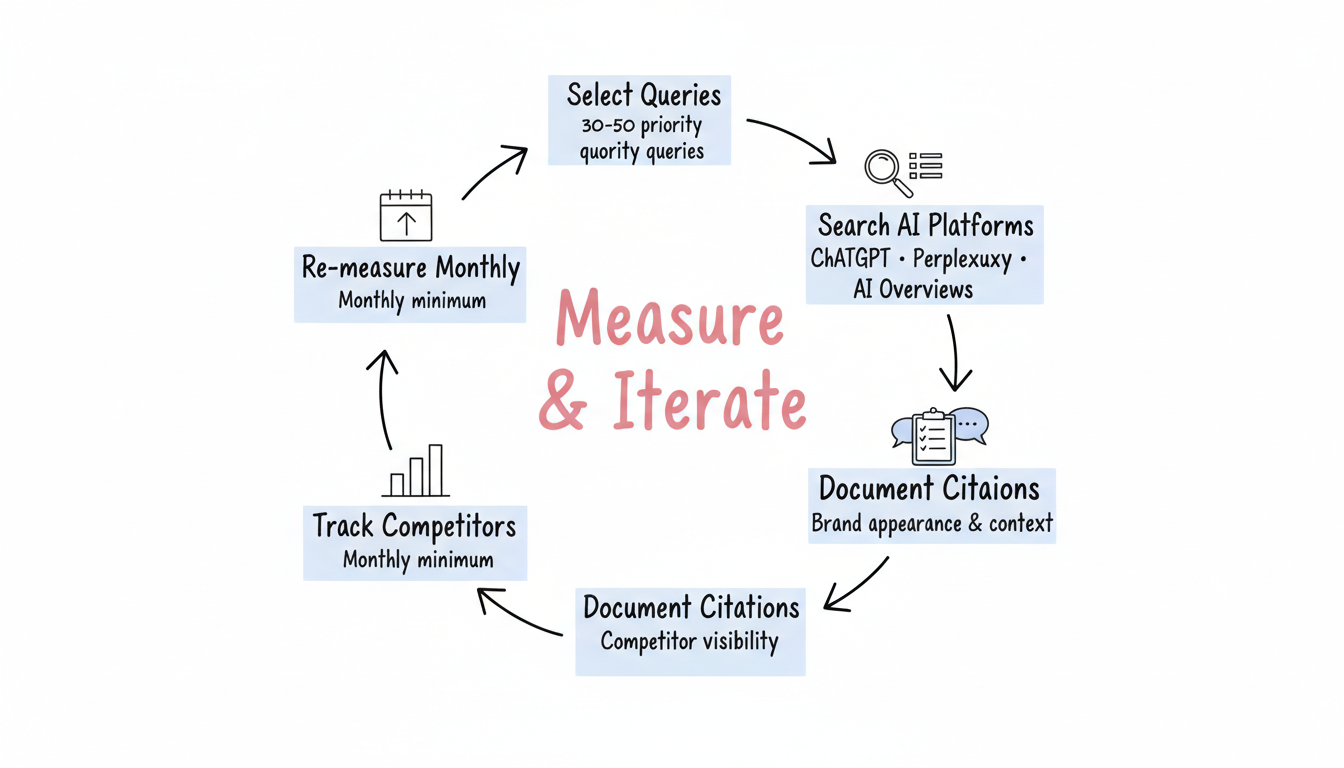
Different tactics work differently for different brands and topics.
Implementation steps:
Why it works: Data-driven prioritization focuses resources on tactics that actually move the needle.
Technical fixes (crawler access, schema markup) and content structure improvements often show results within weeks. Authority building tactics require months for accumulated signals to influence AI citation patterns.
Start with foundational tactics—crawler access, content structure, messaging consistency. Add authority building tactics as capacity allows. Implementing everything simultaneously makes it difficult to identify what produces results.
Core tactics apply broadly, but emphasis varies by industry. B2B brands benefit more from research and expert positioning. Consumer brands gain more from community presence and comparison content.
By submitting this form, you agree to our Privacy Policy and Terms & Conditions.