
February 19, 2026


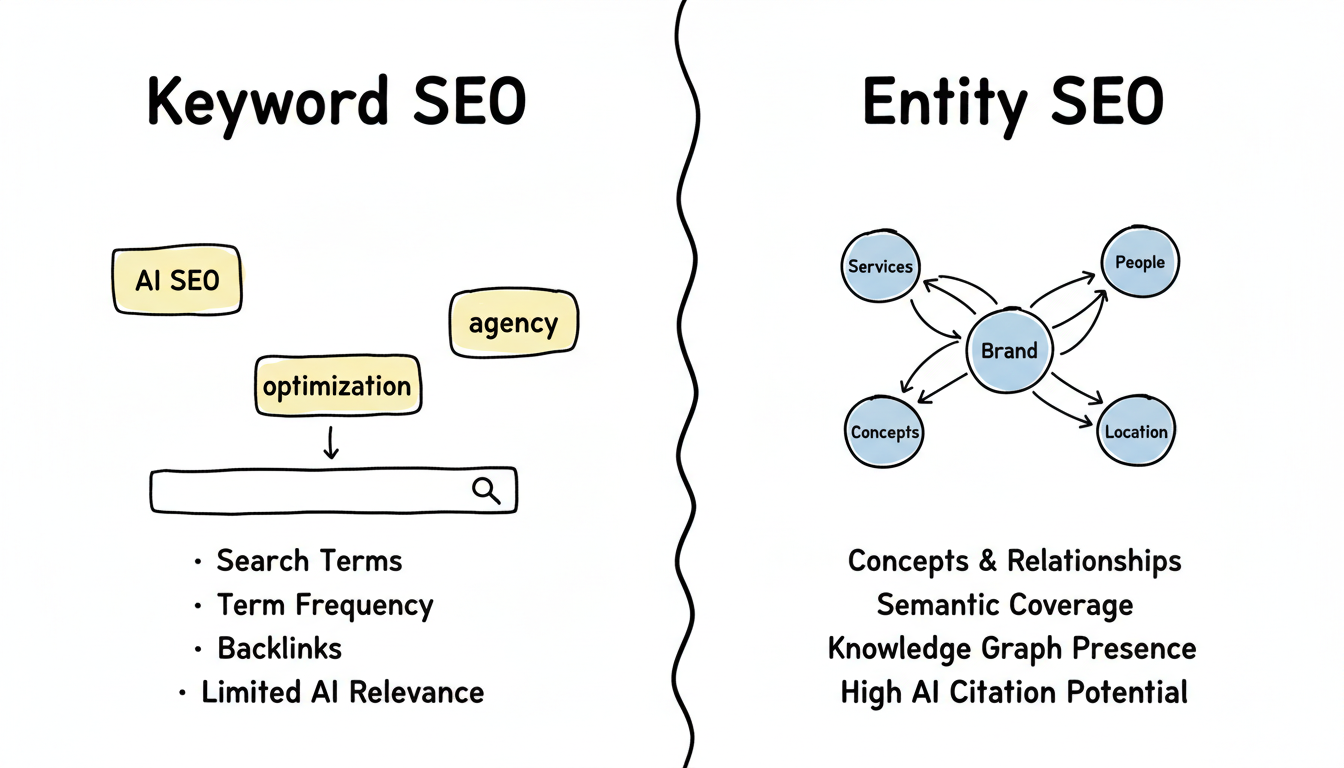
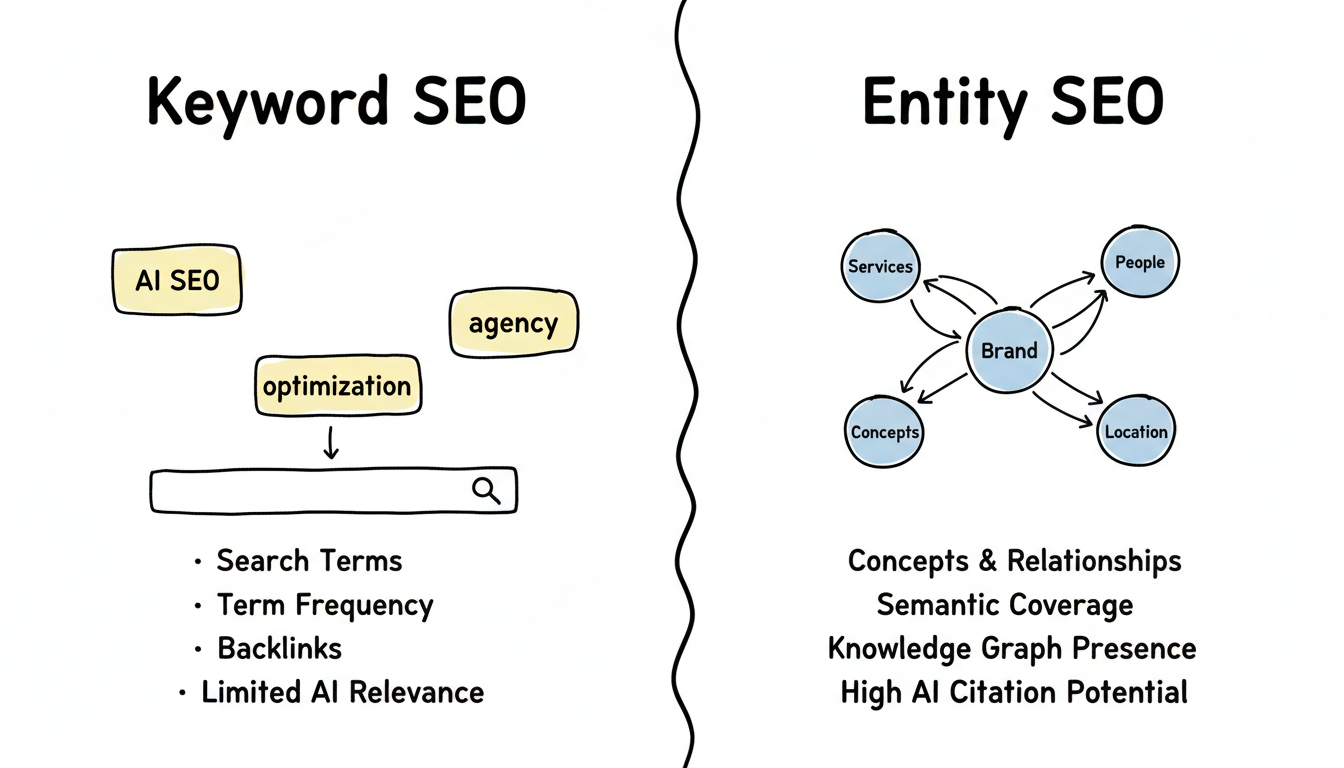
Search engines no longer match keywords—they understand topics, entities, and relationships. In 2026, entity-based SEO represents the shift from optimizing for terms to becoming a recognized concept within search engines' Knowledge Graphs.
For brands competing in AI-powered search, entity recognition determines whether you're cited as an authority or overlooked entirely. This guide explains how entity-based SEO builds topical authority and positions your brand for both traditional and AI search visibility.
Entity-based SEO focuses on how search engines identify and classify the "who, what, where, and why" of your content and brand. Rather than treating your website as a collection of keyword-optimized pages, entity SEO positions your brand as a defined concept with clear relationships to other recognized entities.
Aspect | Keyword SEO | Entity SEO |
Focus | Search terms | Concepts and relationships |
Optimization | Term frequency | Semantic coverage |
Authority | Backlinks | Knowledge Graph presence |
AI relevance | Limited | High citation potential |
Google's Knowledge Graph maps entities and their relationships. When you search for "Apple," Google understands whether you mean the company, the fruit, or a related concept based on context and entity relationships.
For your brand, entity recognition means Google understands:
This understanding influences how Google and AI systems present your content—as a relevant authority or an unknown source. Understanding the key AI search ranking factors helps you optimize for entity recognition across both traditional and emerging search platforms.
Topical authority comes from demonstrating comprehensive expertise within a defined subject area. Entity-based SEO accelerates topical authority by making relationships explicit.
Rather than creating isolated pages, build an interconnected content ecosystem that mirrors how Knowledge Graphs work.
Process:
Group content around core entities to demonstrate depth. According to industry research, semantic SEO via schema markup is foundational for entity-based search visibility in 2026. When implementing structured data, it's important to understand the difference between JSON-LD and Microdata for Knowledge Graph optimization.
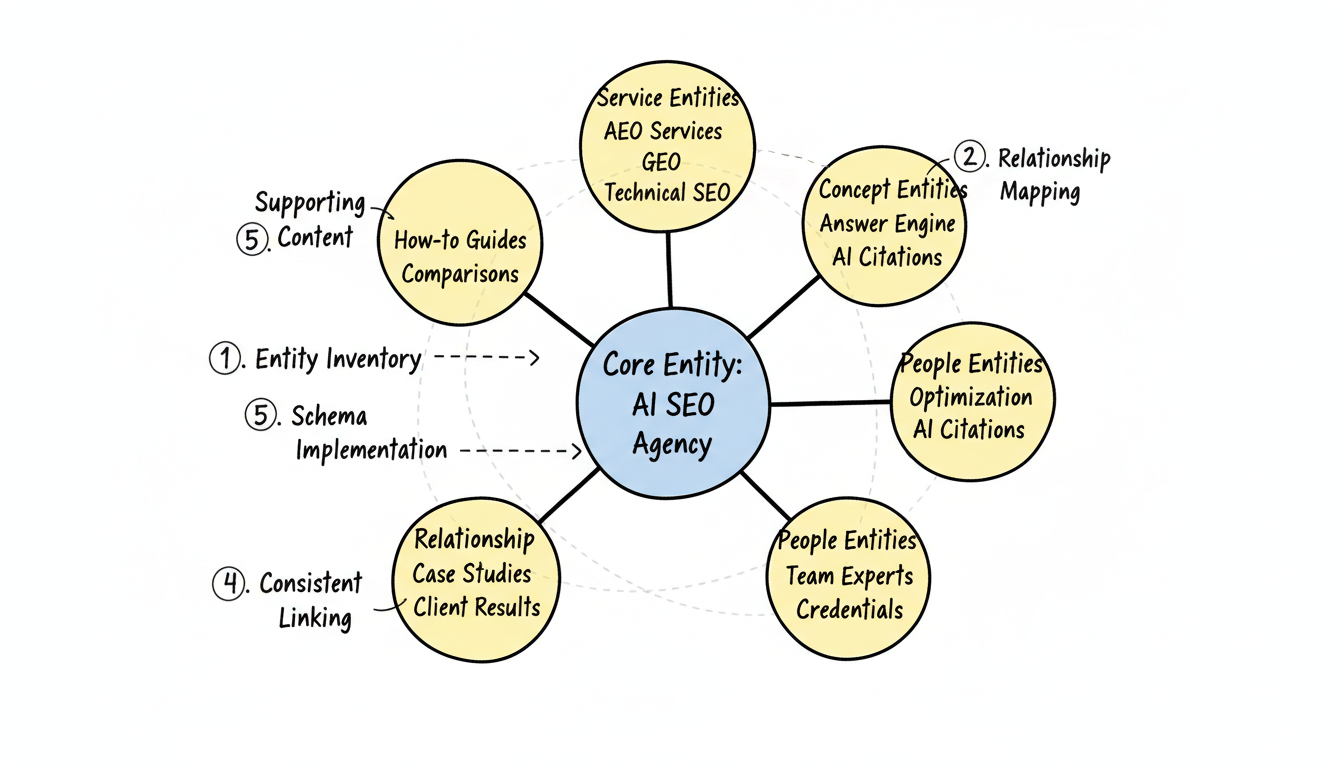
Example cluster structure:
Core Entity: "AI SEO Agency"
├── Service entities: AEO services, GEO services, Technical SEO
├── Concept entities: Answer Engine Optimization, AI citations
├── People entities: Team experts with credentials
├── Relationship entities: Case studies, client results
└── Supporting content: How-to guides, comparisons, research
Each piece of content reinforces relationships and builds the entity definition.
Search engines detect "thin semantic coverage." According to current SEO research, repeating keywords without covering related concepts fails to build authority.
Modern search expects content about "AI SEO" to also mention:
Missing these related concepts signals incomplete understanding—undermining entity authority.
Becoming a node in Google's Knowledge Graph requires strategic entity building. Many organizations have achieved significant visibility improvements through systematic Knowledge Graph optimization, as demonstrated by various knowledge panel success stories.
Business entities need:
Personal entities (for thought leadership) need:
Structured data explicitly defines entities for search engines. Priority schema types for entity SEO:
Organization schema:
{
  "@type": "Organization",
  "name": "Your Brand",
  "sameAs": [
    "https://linkedin.com/company/yourbrand",
    "https://twitter.com/yourbrand"
  ],
  "knowsAbout": ["AI SEO", "Answer Engine Optimization"]
}
Person schema (for authors):
{
  "@type": "Person",
  "name": "Expert Name",
  "jobTitle": "AI SEO Specialist",
  "worksFor": {"@type": "Organization", "name": "Your Brand"},
  "sameAs": ["https://linkedin.com/in/expertname"]
}
Article schema with authorship:
{
  "@type": "Article",
  "author": {"@type": "Person", "name": "Expert Name"},
  "about": {"@type": "Thing", "name": "Entity-Based SEO"}
}
Build explicit relationships through content structure:
In AI-powered search, entity recognition determines citation likelihood. According to authority building research, brands need to transform from keyword collections into recognized concepts within the AI Knowledge Graph.
AI systems prefer citing recognized entities because:
Key actions:
Understanding what is AEO in digital marketing helps you align your entity-building strategy with the optimization techniques that improve visibility in AI-powered answer engines.
According to case study data, a two-year entity reinforcement campaign yielded 119.5% increase in organic traffic and 14.1% Domain Authority gain. Entity building compounds over time.
Assess current state:
Define core entities:
Implement foundations:
Build relationships:
Track these metrics:
Metric | Measurement | Target |
Knowledge Panel | Brand search results | Appearance |
Entity recognition | Structured data testing | All entities defined |
Citation rate | AI response monitoring | Increasing mentions |
Topic coverage | Content audit | Comprehensive clusters |
Entity authority builds gradually. Initial schema implementation can show results in weeks, but significant Knowledge Graph recognition typically takes 6-12 months of consistent entity building.
Yes. Even local businesses benefit from entity recognition. Google Business Profile optimization, local schema markup, and consistent NAP information build entity authority that improves local search and AI citation potential.
Entity SEO is a subset of semantic SEO. Semantic SEO focuses on meaning and context broadly; entity SEO specifically addresses how search engines identify and classify concepts, brands, and people.
Yes. Wikipedia helps establish entity recognition but isn't required. Consistent business information, schema markup, authoritative content, and earned mentions build entity authority regardless of Wikipedia presence.
By submitting this form, you agree to our Privacy Policy and Terms & Conditions.



